





 Portuguese
  English
  Spanish
  4 min of reading
  0 comments


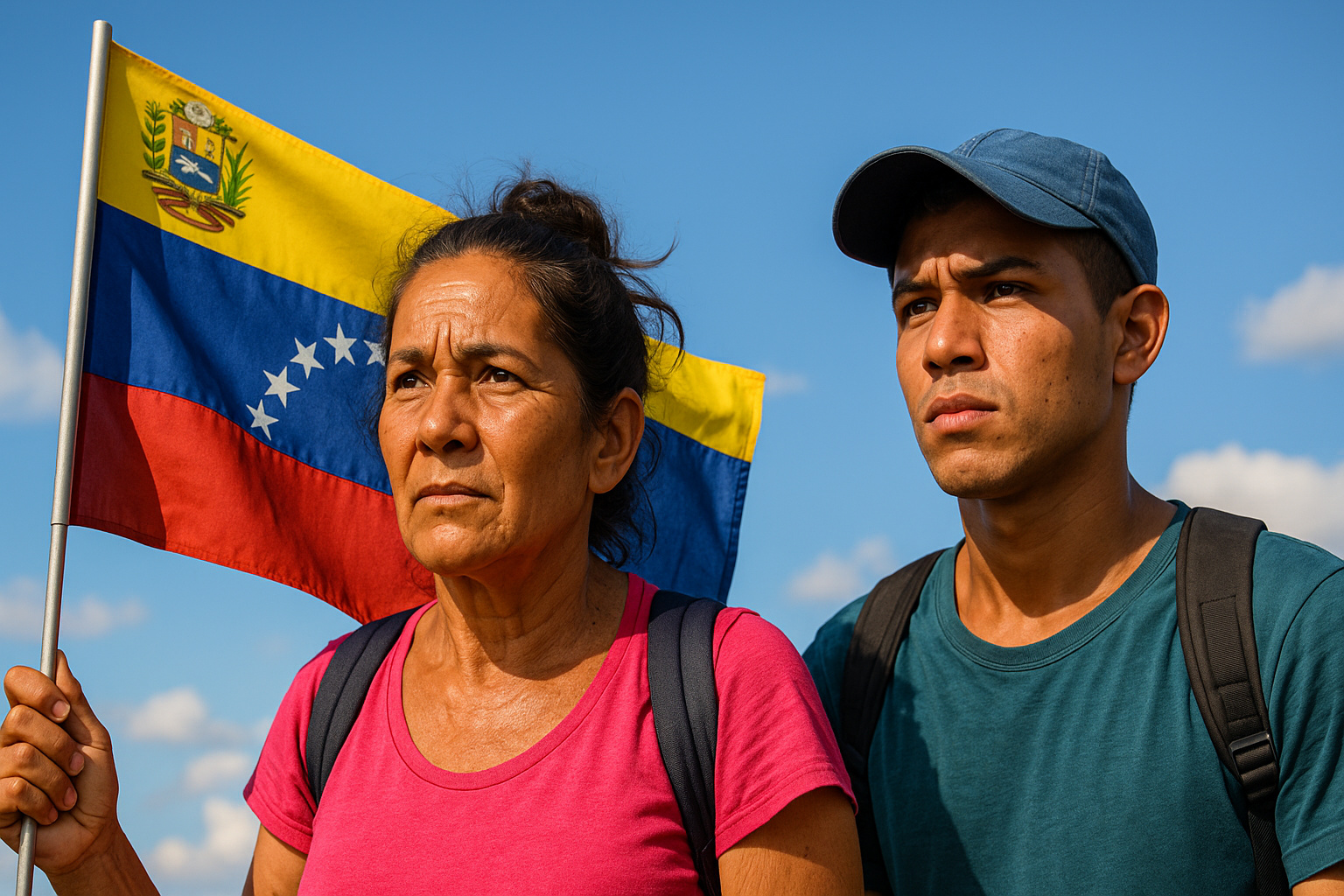
The Greatest Migration Crisis in Latin America in the 21st Century: Venezuelans Decided to Rebuild Their Lives Abroad
Since 2014, Venezuela has been experiencing the greatest migration crisis in Latin America in the 21st century. It is estimated that more than 8 million people have left the country in search of survival and opportunities. This exodus surpasses, in absolute numbers, war-torn countries like Syria and Ukraine.
The crisis originates from a combination of falling oil prices, poor economic management, and political instability. The result has been a social collapse: inflation at historic levels, shortages of food and medicine, and a minimum wage that now amounts to only a few dollars per month. Research indicates that 60% of the Venezuelan population still wishes to emigrate.
Where Are the Venezuelans Going?
The main destination for Venezuelans is South America itself. Colombia hosts about 2.8 million refugees, Peru has already received 1.7 million, and Brazil has over 626,000 Venezuelans integrated across different regions.
-
SUS surpasses Brazil and inspires a revolution in health: agreement with Mexico could bring universal, free, and more accessible care to millions of people outside the country.

-
With a total blockade of software, data, and connected systems, the U.S. has completely closed its doors to Chinese cars and transformed vehicles into geopolitical weapons, creating a new technological battlefield that could reshape the global automotive industry.

-
With US$ 65.8 billion and 34 new ships, the U.S. launches a mega naval plan that prioritizes nuclear submarines, strengthens military logistics, and repositions the strategy for prolonged conflicts in the Pacific.

-
Trump pressures NATO in Europe with threats regarding bases and the use of troops in Spain and Germany to punish allies and change the military balance in the bloc.
These three countries concentrate most of the outflow due to combined factors: accessible land borders, more open welcoming policies, and relatively large economies capable of absorbing migrant labor.
However, the same cannot be said for the Guianas, despite their geographic proximity. Only 71,000 Venezuelans are in the region, with 29,000 in Guyana and 42,000 in Suriname. In French Guiana, a French overseas region, there are no official statistics, but estimates suggest about 30,000 people.
Geography and Borders: A Natural Barrier
While the Guianas may seem close on the map, they are in practice very far apart. The border between Venezuela and Guyana, for example, extends for 743 km and is fully covered by the Amazon rainforest, without any passable roads.
The only land access goes through the state of Roraima in Brazil. This means that a Venezuelan wishing to reach the Guianas must take much more expensive and complex routes — by plane, ship, or river paths. For those emigrating with very few resources, this option becomes unfeasible.
Political Barriers and Lack of Welcoming Structure
In addition to geography, there are legal barriers. Guyana requires visas and regular documentation, which already reduces the flow. Suriname has similar requirements. In the case of French Guiana, as part of the European Union, entry is even more restricted, following the same rules imposed on those wishing to immigrate to France.
Another obstacle is the low institutional capacity for acceptance. Unlike Colombia, which created the Temporary Protection Status to regularize millions, or Peru, which implemented the Temporary Stay Permit, the Guianas do not have robust integration programs. This makes a difference for refugees arriving with little or no resources who need immediate support to settle down.
Economy and Opportunities: The Weight of the Labor Market
Venezuelans are also looking for countries that offer a minimum of economic stability. Brazil, the largest economy in Latin America, has a diversified market and a Refugee and Immigration Law considered welcoming. Colombia and Peru, with larger populations and more open economies, also offer employment opportunities.
In contrast, the Guianas have small populations — none exceeding 1 million inhabitants — and very limited labor markets. This reduces their attractiveness for those who need to rebuild their lives quickly.
The Cultural Barrier
Another often-overlooked factor is the cultural difference. Most of South America shares Ibero-American roots, with either Spanish or Portuguese as the primary language and a Catholic tradition. This facilitates the integration of Venezuelans in neighboring countries.
However, the Guianas are an exception. Guyana has English as its official language, a result of its British colonial past. Suriname speaks Dutch, in addition to local dialects like Sranan Tongo. French Guiana maintains French as its language and follows the European system. The cultural diversity is significant, with a strong presence of descendants of Africans, Indians, and Javanese.
For those leaving a Spanish-speaking country and arriving without a support network, this linguistic and cultural barrier increases isolation.
A Contrast That Explains the Choice of Destinations
In practice, Venezuelans opt for routes that offer familiar language, clear welcoming policies, and economies with more opportunities. That is why, even traveling thousands of kilometers, they prefer to go to Colombia, Peru, or Brazil rather than crossing geographically closer borders that are politically and culturally more distant.
Since 2018, the Brazilian government has maintained the Welcome Operation in Roraima to register, vaccinate, and integrate Venezuelans into other cities across the country. This policy reinforces Brazil’s image as a destination of hope and viability.
Leave your opinion in the comments.









Seja o primeiro a reagir!