Portuguese
  Spanish


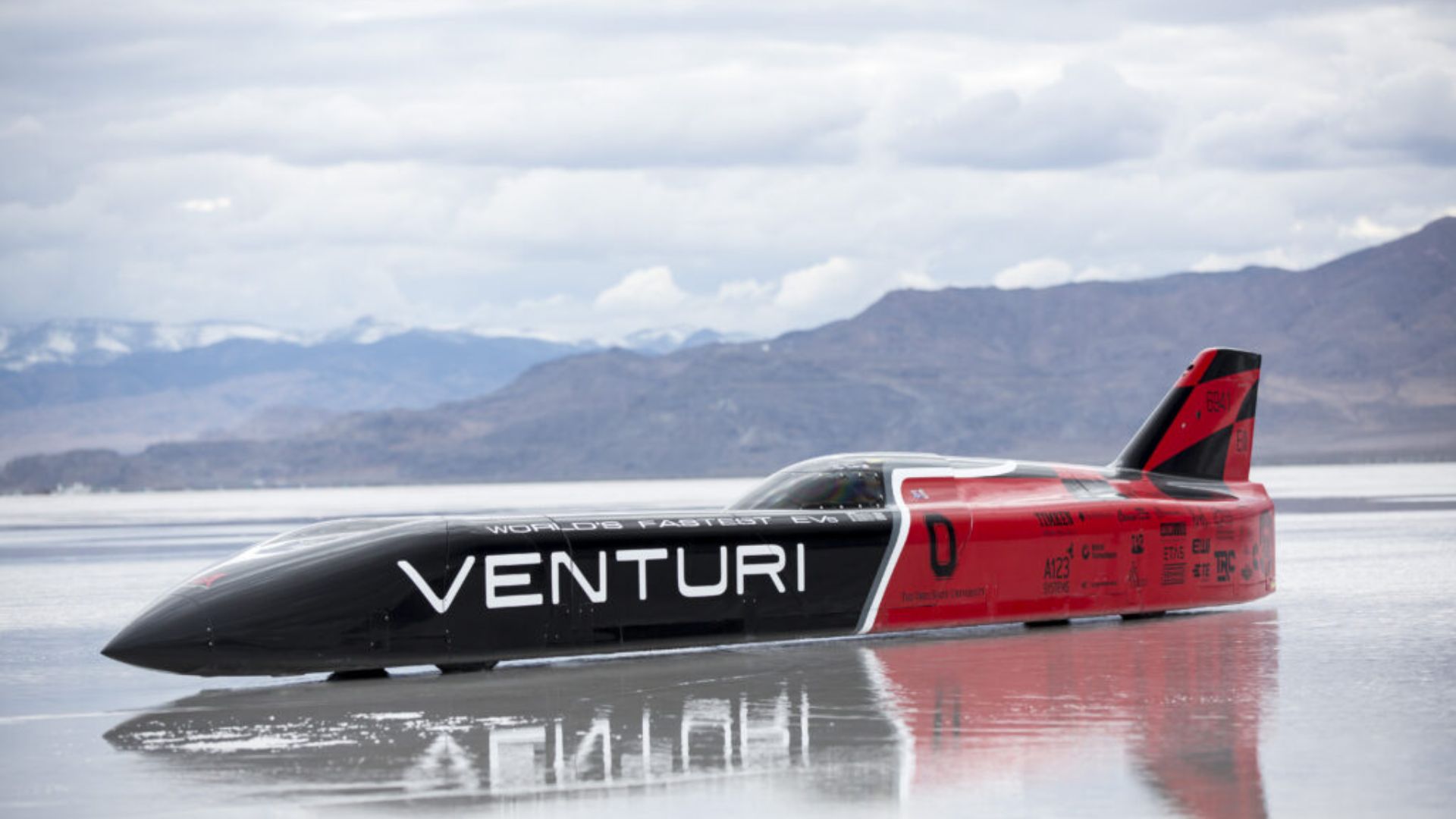


With Two 1,500 Hp Engines and Engineering Focused on Land Speed, the Venturi VBB-3 Achieves Performance Equivalent to Four Ferraris at Full Acceleration, Breaking Records and Redefining the Limits of Electric Propulsion
When thinking of speed, the term horsepower quickly comes to mind, and few names are as closely linked to this concept as Ferrari. The iconic Ferrari 12Cilindri delivers an impressive 819 hp from its V12 engine, a maximum symbol of Italian engineering. However, this time the spotlight goes to a less-known model, but absolutely revolutionary: the Venturi Buckeye Bullet 3 (VBB-3).
This electric prototype developed by Venturi Automobiles in partnership with the Center for Automotive Research at Ohio State University hides numbers that seem straight out of science fiction. Equipped with two electric motors of 1,500 hp each, the VBB-3 totals 3,000 horsepower, which is equivalent to having four Ferraris accelerating at the same time.
As reported in specialized articles, this machine is not just a theoretical study, but a test vehicle designed to challenge the limits of electric speed on land.
-
End of an era in Brazil: beloved sedan by Brazilians is discontinued despite having a 2.0 engine with 151 hp, CVT transmission, 466-liter trunk, and up to 650 km of range.

-
New Law Proposal in Brazil Could Heavily Penalize Drivers: Dangerous Overtaking May Become a Serious Offense with Fines Increased Tenfold and a 12-Month License Suspension; Update on 2026 Progress

-
Electric Revolution: Watts W125 Motorcycle Offers 160 km Range, 90 km/h Speed, and Affordable Price Starting at $3,000
-
General Motors Replaces Over a Thousand Workers with 50 Cobots at Electric Vehicle Plant, UAW Union Criticizes Move Amid Industry’s Automation Push



The Fastest Electric Car in the World Has Already Reached 549 Km/h
Called the fastest electric car on the planet, the VBB-3 was designed to exceed the 400 mph (643 km/h) barrier. In initial tests conducted at the legendary Bonneville Salt Flats, the machine has already recorded speeds close to 300 mph (482 km/h) and broke the official electric speed record by reaching 549 km/h.

This achievement puts the prototype on a level far above traditional supercars. For comparison, while Ferrari showcases glamour on European tracks and circuits, the VBB-3 silently dominates the North American salt flats, demonstrating how electric propulsion can combine brute force and aerodynamic efficiency.
Despite all its power, the vehicle maintains thermal safety thanks to a closed-loop cooling system, capable of withstanding extreme energy demands. Moreover, its body was constructed to be light and rigid, ensuring stability even under extremely high-speed pressures.
Cutting-Edge Engineering: How the 3,000 Hp Are Distributed
The secret of the Venturi VBB-3 lies in its innovative electric architecture. Each propulsion unit features two motors that share a common axle, totaling four motors distributed between the front and rear axles. This configuration guarantees instant acceleration and linear power delivery, something unthinkable for combustion engines.

All this power is fueled by lithium-ion batteries, capable of providing enough energy to propel the machine to unprecedented numbers. Even with extremely high consumption during full acceleration, the system was designed to operate continuously without compromising performance.
This information was highlighted by experts in electric vehicles, who see the VBB-3 as a true wheeled laboratory, prepared not only to break records but to shape new generations of automotive engineers focused on the future of electric mobility.
Why Such a Powerful Car Remains Little Known
Although the Venturi VBB-3 is celebrated in the automotive engineering community, outside of this circle it remains a well-kept secret. The reason is simple: it is an experimental prototype, developed to challenge the 400 mph barrier and explore the limits of electric propulsion on land.
According to information released by international publications, the vehicle was conceived to serve as a research platform, preparing engineers for the future of mobility and helping to break paradigms about how far electric cars can go. Its mission is not to shine in showrooms or be driven by celebrities, but to inspire new technical solutions and prove that EVs can compete in extreme performance.
The Future of Supercars: Ferrari and Venturi from Distinct Perspectives
While Ferrari bets on tradition and combines combustion engines with hybrid solutions, the VBB-3 represents a complete break with the past. With 3,000 hp, ultra-sleek design, and focus on aerodynamics, the electric prototype has not only reached 549 km/h but has also shown that engineering can deliver numbers equivalent to four Italian supercars combined.
This direct comparison makes it clear that the race of the future will not be just about the luxury or tradition of brands, but about the ability to integrate power, energy efficiency, and technological innovation.
Even without the pomp of major manufacturers, the Venturi VBB-3 has already left its mark as one of the most powerful and visionary vehicles ever built, redefining the concept of speed on land.
A Prototype That Screams the Future in Silence
The Venturi VBB-3 may not have the media appeal of a Ferrari or Porsche, but its relevance goes far beyond that. It is living proof that electric propulsion can break historical barriers and redefine the limits of what we call a supercar.
While Ferrari showcases its excellence on the tracks with 819 hp, the Venturi emerges as a 3,000 hp laboratory, capable of running at over 549 km/h. And although it is a prototype, its impact already resonates as a turning point in the automotive industry.