





 Portuguese
  English
  Spanish
  5 min of reading
  0 comments


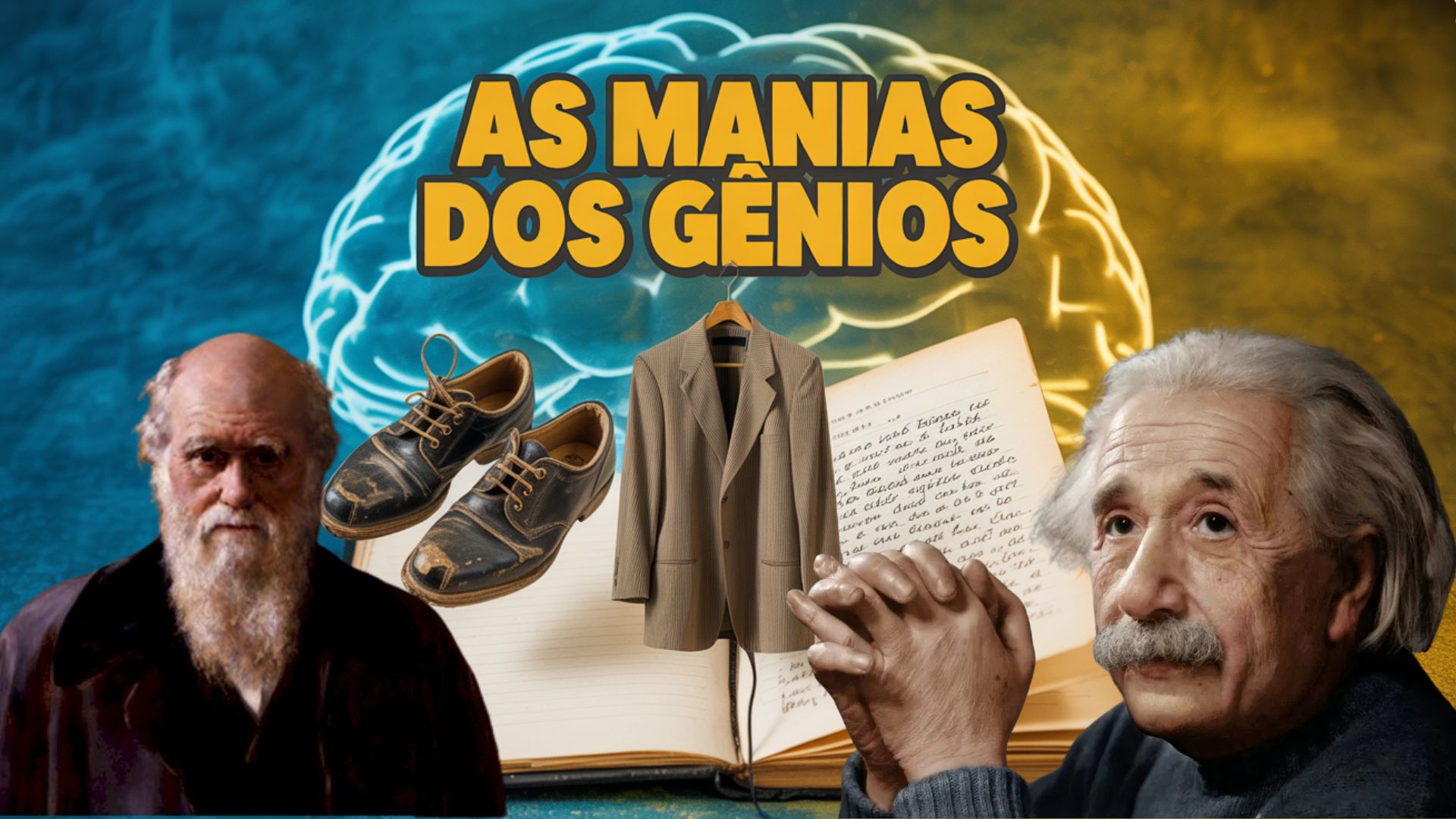
Unique Habits of Great Thinkers Reveal How Unusual Routines Can Connect to Creativity and Intellectual Performance, Opening Pathways to Better Understand the Relationship Between Genius, Emotion, and Innovation.
An array of seemingly eccentric habits — long walks, simplifying clothing, written daily journals, and the act of nail biting — frequently appears in the biographies of brilliant creators.
The psychology suggests that these habits, when observed in context, can signal traits associated with high cognitive ability and creativity, although they do not solely define who is or is not a genius.
Habits and Creativity in History
Over time, names such as Walt Disney, Pablo Picasso, and Albert Einstein have been associated with genius much more by their original output than by school grades.
-
They were brilliant! Scientists discover that our ancestors in China were already making super advanced tools 160,000 years ago, changing everything we knew.

-
Scientists unveil 3 million years of climate secrets hidden in the ice of Antarctica.

-
Ancient farmers created “aggressive plants” that changed nature forever.

-
Astronomers find a “backward” solar system that ignores all the rules of space and leaves scientists scratching their heads!

The pattern repeats in other fields: Charles Darwin organized ideas during walks, while Virginia Woolf turned to journals to structure thought and style.
In common, there is a search for personal strategies to deal with complex problems, manage emotions, and maintain focus on long-term projects.
IQ Is Not Synonymous with Genius
The intelligence quotient (IQ) measures performance on standardized tests compared to the population average.
A high score indicates ease in specific tasks related to reasoning, memory, and information processing. Still, it is not enough to explain genius.
Psychological literature distinguishes performance on tests from components such as creativity, curiosity, intrinsic motivation, and original vision, factors that contribute to the production of new and useful ideas.
In practical terms, someone can have a high IQ without generating transformative work — and the opposite can also happen.
The Value of Lateral Thinking
Known as lateral thinking, this is the ability to escape linear reasoning, connect distinct domains, and test non-obvious angles. The concept became popular in describing how impactful ideas arise when breaking mental routines.
Frequently cited historical examples include Steve Jobs and Leonardo da Vinci, who combined artistic, scientific, and technical references to solve problems.
In the corporate environment, this type of approach is valued by creative teams, especially when the task requires new solutions to complex obstacles.
Four Habits Linked to High-Performance Profiles
Long Walks to Think Better
Charles Darwin took daily walks around a circuit near his home, recording hypotheses and doubts with each lap.
This practice served as a “mobile laboratory,” allowing him to reorganize ideas, refine arguments, and test connections between observations.
Psychologically, rhythmic movement reduces distractions, aids in the incubation of problems, and fosters so-called diffuse attention, which is useful for insights.
Simplifying Clothing to Save Mental Energy
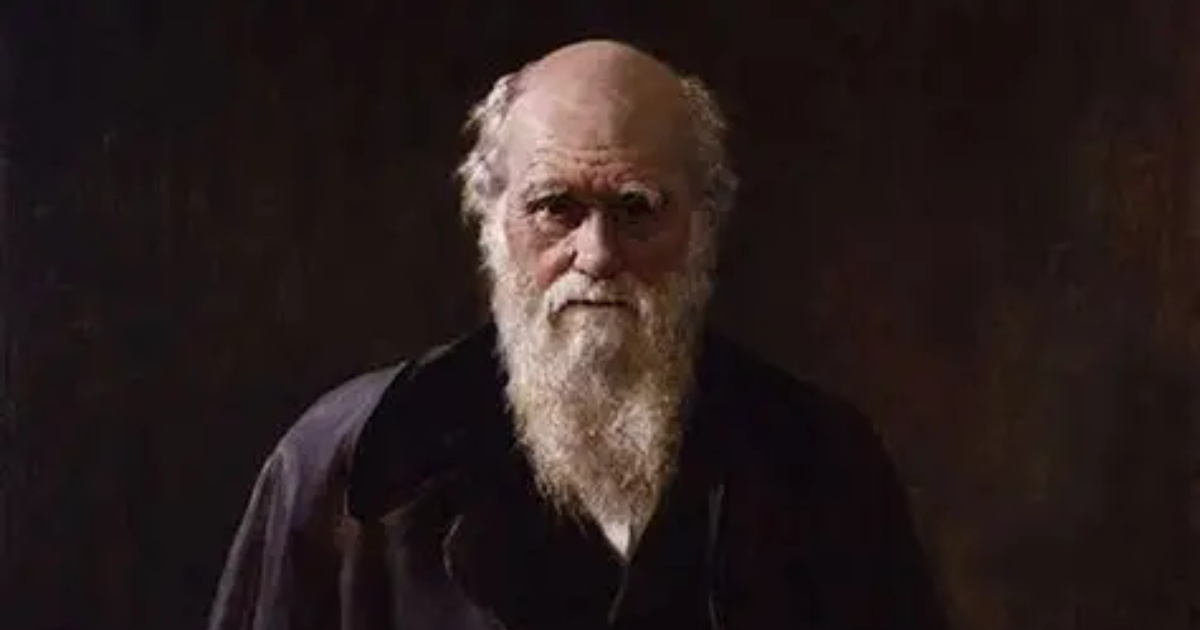
With Albert Einstein, biographies describe a preference for simple clothes and little attachment to formalities, a strategy associated with conserving low-impact decisions in day-to-day life.
The logic is well-known: reducing trivial choices frees cognitive resources for relevant decisions. However, it is worth noting — the idea of a rigid “uniform” does not consistently hold up in historical records.
What is observed is a policy of simplicity, not necessarily an exact repetition of clothing pieces.
Journals as a Tool for Refinement
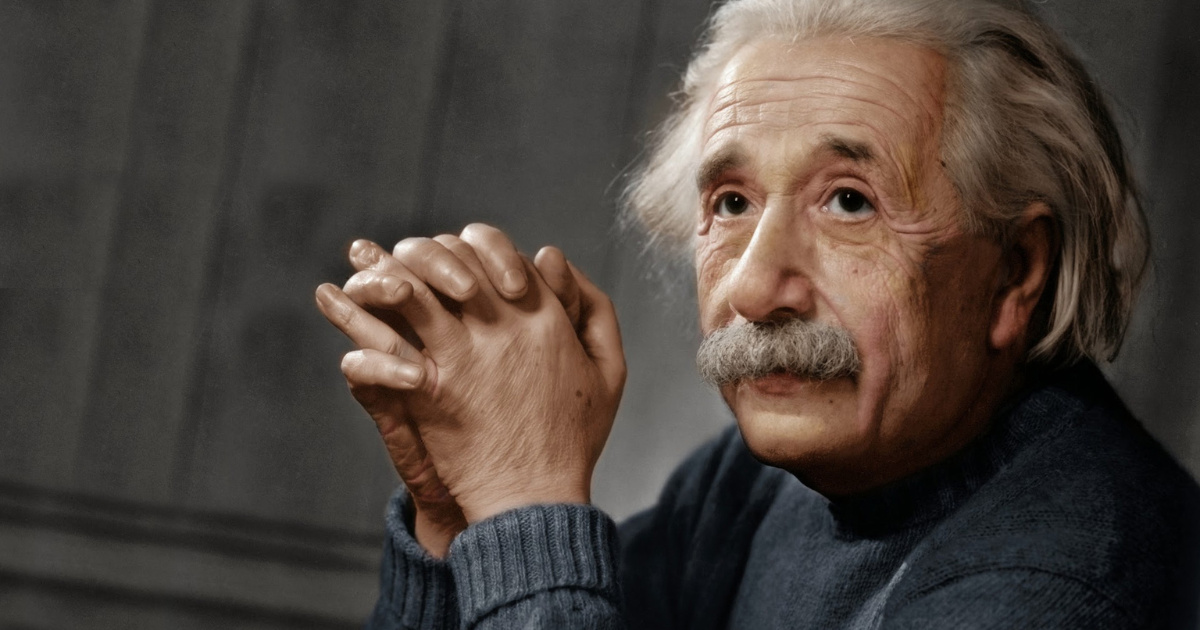
Virginia Woolf maintained extensive journals, in which she tested structures, rhythms, and images before bringing them into her fiction.
The habit of writing daily also functions as a record of thought patterns, a problem map, and a repository for unfinished ideas.
Cognitively, the practice solidifies memory, reduces emotional noise, and accelerates the transformation of intuitions into projects.
Nail Biting: Anxiety, Control, and Perfectionism
Onychophagia (nail biting) is often found associated with anxiety and body-focused repetitive behaviors.
In some studies, the pattern also appears in individuals with traits of perfectionism, who seek relief during moments of cognitive tension. This does not imply greater intelligence, however.
Rather, it indicates a coping style to deal with internal discomfort while attempting to maintain performance on demanding tasks.
Common Traits in Creative Profiles
In various accounts, individuals with above-average intellectual performance tend to exhibit high emotional sensitivity, periods of productive isolation, and a preference for abstract or symbolic thinking.
Many prefer to explore a variety of topics rather than settle early on a specialty.
Meanwhile, they alternate phases of intense immersion with moments of quiet observation, a resource that protects concentration and sustains originality.
Examples of Unconventional Thinking
Cases like Salvador Dalí, who explored the subconscious to create unusual images, and Richard Feynman, known for didactic approaches and ingenious solutions in physics, reinforce the idea that unconventional methods can broaden horizons.
Another recurring name is Nikola Tesla, whose technical imagination favored inventions that shape electrical systems to this day.
Although they work in distinct areas, the three illustrate a pattern: persistent curiosity, tolerance for ambiguity, and personal rituals for thinking.
Stimuli for Creative Intelligence
There are simple strategies to foster originality without relying on innate talent.
One of them is producing unfiltered idea lists, postponing judgment to later stages.
Another is breaking routines from time to time, changing work locations, task sequences, or focus times.
This type of variation tends to unlock new associations. It also helps to read outside the main area, crossing artistic, scientific, and technical references.
Finally, turning mistakes into raw material accelerates learning: innovation often arises from hypotheses that failed on the first attempt.
Why Habits Don’t Explain Everything
On the whole, the four habits make sense when connected to clear objectives.
Walking favors the incubation of ideas. Writing structures reasoning. Simplifying clothing reduces decision noise. And biting nails, while linked to anxiety, may signal a search for control in pressure situations.
Still, none of them is a sufficient marker of genius. What matters is the combination of analytical ability, imagination, and persistence in transforming intuitions into visible results.
If you observe any of these habits in your daily life, how can you turn them into allies for better thinking and creating original solutions?







Seja o primeiro a reagir!