





 Portuguese
  English
  Spanish
  5 min of reading
  0 comments


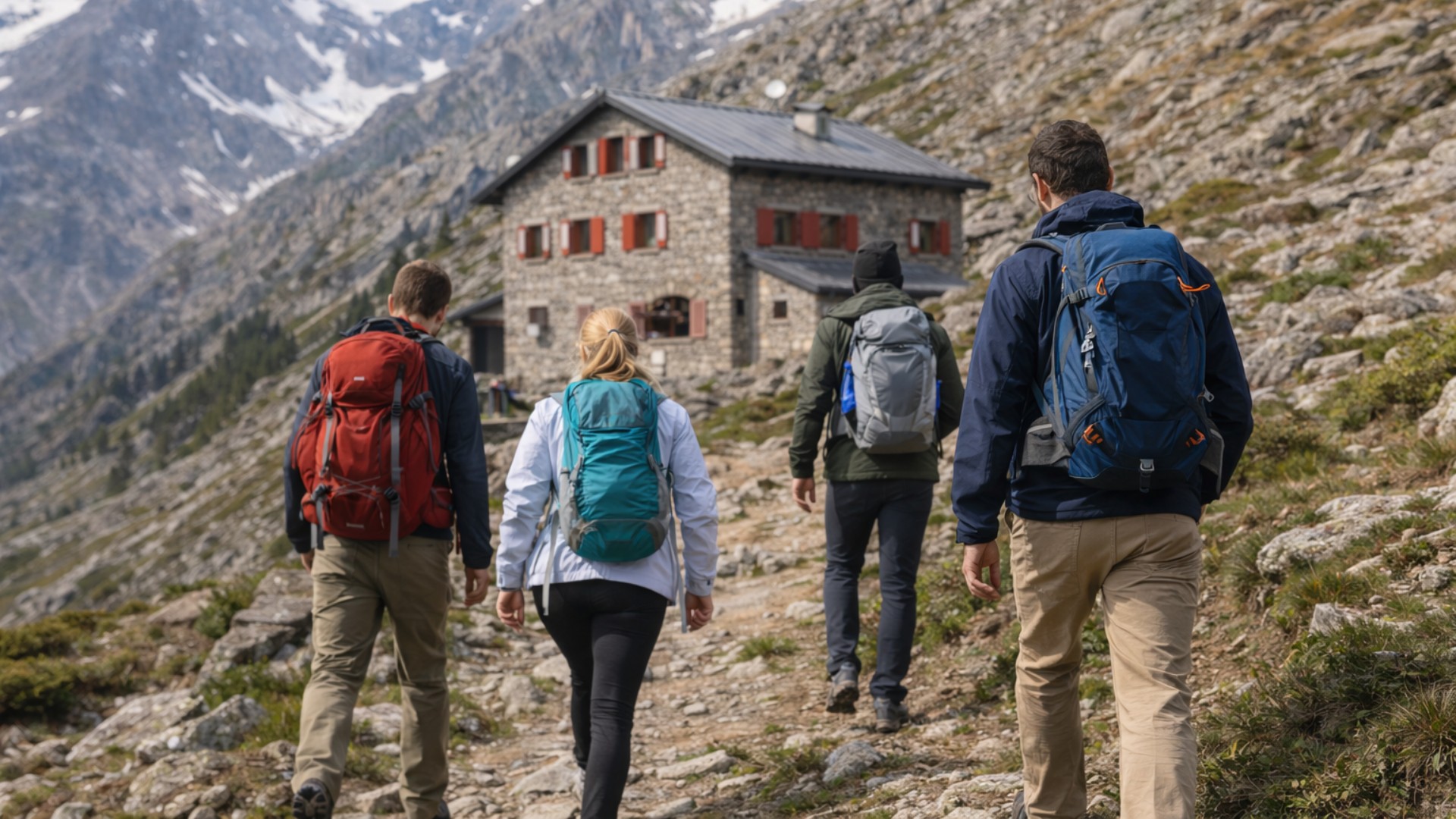
Experiment in moderate altitude offers participation in scientific research in the Italian Alps with rigorous medical monitoring, controlled routine, and detailed analysis of the effects of the mountainous environment on the human body over a month.
Eurac Research, a research center based in Bolzano, northern Italy, has opened a call for volunteers aged 18 to 40 to participate in a study on the effects of moderate altitude on the human body.
The proposal includes accommodation and meals covered by the organization, as well as a reimbursement of 400 euros gross for those who stay for four weeks at the Rifugio Nino Corsi, in the Stelvio National Park, as a central stage of the MAHE project.
Study in moderate altitude seeks unique answers
The research targets a point that is still little explored by the scientific literature: the impact of prolonged stays at altitudes between 2,000 and 2,500 meters, a range in which millions of people live or travel worldwide, but which receives less attention than studies conducted at extreme altitudes.
-
Goodbye to kitchen cabinets: innovation retires the traditional furniture of Brazilian kitchens by introducing modern pantries with modules of up to 2.40 m, 40% more organization, ergonomic access, adjustable shelves, and smart lighting in 2026.

-
After the union of Brazil and China, BRICS plays a leading role in the merger between two powers: Egypt and India move forward with agreements exceeding US$ 4 billion, expanding industrial capacity in strategic sectors and accelerating the establishment of factories and global production chains.

-
Church from 1888 becomes a mansion of over 330 m² in Canada after a renovation of R$ 3.4 million and is eventually sold for nearly R$ 4.3 million.

-
How an innovative city combines high technology, well-being, and sustainability to become the largest reference in clean energy on the planet.

According to Eurac itself, the initiative aims to fill this gap with physiological measurements taken before, during, and after the stay in the mountains.
According to the official description, participants will not simply be taken to the top of the mountain for 30 days and released for a contemplative experience.

The schedule includes an initial week at low altitude, in Silandro, for baseline measurements, followed by four consecutive weeks at the alpine refuge and follow-up visits in Bolzano after the return.
The organization also informs that the starts will be staggered, indicating a logistics divided into groups, although the project foresees 24 participants in total.
Continuous monitoring and routine maintained during the experience
During this period, the scientific team will monitor a series of indicators related to the body’s adaptation to moderate altitude.
Among the variables listed by Eurac are sleep, body composition, metabolism, appetite, vascular function, hemoglobin mass, physical performance, and sympathetic nervous activity, a marker associated with cardiovascular control.
The stated goal is to observe how the body reacts when a person remains in a mountain environment without completely breaking their usual routine.
The logic of the experiment depends precisely on this partial maintenance of daily life.
Outside of scheduled measurements, volunteers will be able to work remotely, study, or organize their free time as they wish, but with one important condition: they should not increase their usual level of physical activity or change altitude during the research.
At the same time, meals will be provided throughout the study, and the project informs that diet and physical activity will be closely monitored to reduce external interference in the results.
Rigorous criteria for selection of volunteers
The requirements for selection are also more stringent than a generic public call usually suggests.
In addition to the age range of 18 to 40 years, candidates must have a weight within the range considered normal by the body mass index established by the study.
Excluded are smokers, people with hypertension, users of chronic medication, individuals with alcohol or drug abuse, pregnant women, people with known iron deficiency, relevant food allergies or intolerances, eating disorders, and those following specific diets, such as vegan.
The call also excludes those who engage in resistance training more than twice a week or have recently stayed above 1,500 meters of altitude.


Why altitude can influence health
This focus helps explain the scientific interest of the project.
Moderate altitude imposes lower availability of oxygen than at sea level, but without necessarily reproducing the extreme responses observed at high altitudes.
For researchers, understanding this intermediate range can help clarify more precisely whether staying in mountainous regions produces measurable effects on blood pressure, metabolism, and other mechanisms related to cardiovascular health.
Eurac states that the work aims to evaluate how prolonged exposure to this environment affects the health and physical performance of healthy people living near sea level.
International project and scientific base
The MAHE project is underway from January 2025 to December 2026 and brings together researchers from the Eurac Institute of Emergency Medicine in the Mountains, in partnership with specialists from Switzerland.
Funding, according to the institution, comes from the joint program between the Province of Bolzano and the Swiss National Science Foundation, and the protocol has been approved by the ethics committee of the Bolzano Hospital.
This institutional design reinforces the academic nature of the call, which is not presented as a promotional action or as a tourist experience, but as recruitment for a controlled biomedical research.
Although publications on social media and news sites have highlighted the alpine scenery and the payment offered, the main appeal for the selected participants is the possibility of contributing to a field that is still poorly documented.
Eurac itself notes that more than 200 million people live at altitudes above 2,000 meters worldwide, while many others frequent these areas for work, tourism, or sports.
Still, the effects of so-called moderate altitude remain less understood than those observed in regions above 3,000 meters, a range that dominates much of the classic research.
In practice, the study seeks to answer whether staying in a relatively accessible mountain environment, but physiologically challenging, consistently alters parameters that are usually associated with cardiovascular risk and metabolic functioning.
The data collected over the weeks should serve as a basis for comparisons between the pre-stay period, the stay at the refuge, and the subsequent follow-up phase, in a design intended to separate the effects of altitude from abrupt lifestyle changes.






Seja o primeiro a reagir!