





 Portuguese
  English
  Spanish
  6 min of reading
  0 comments


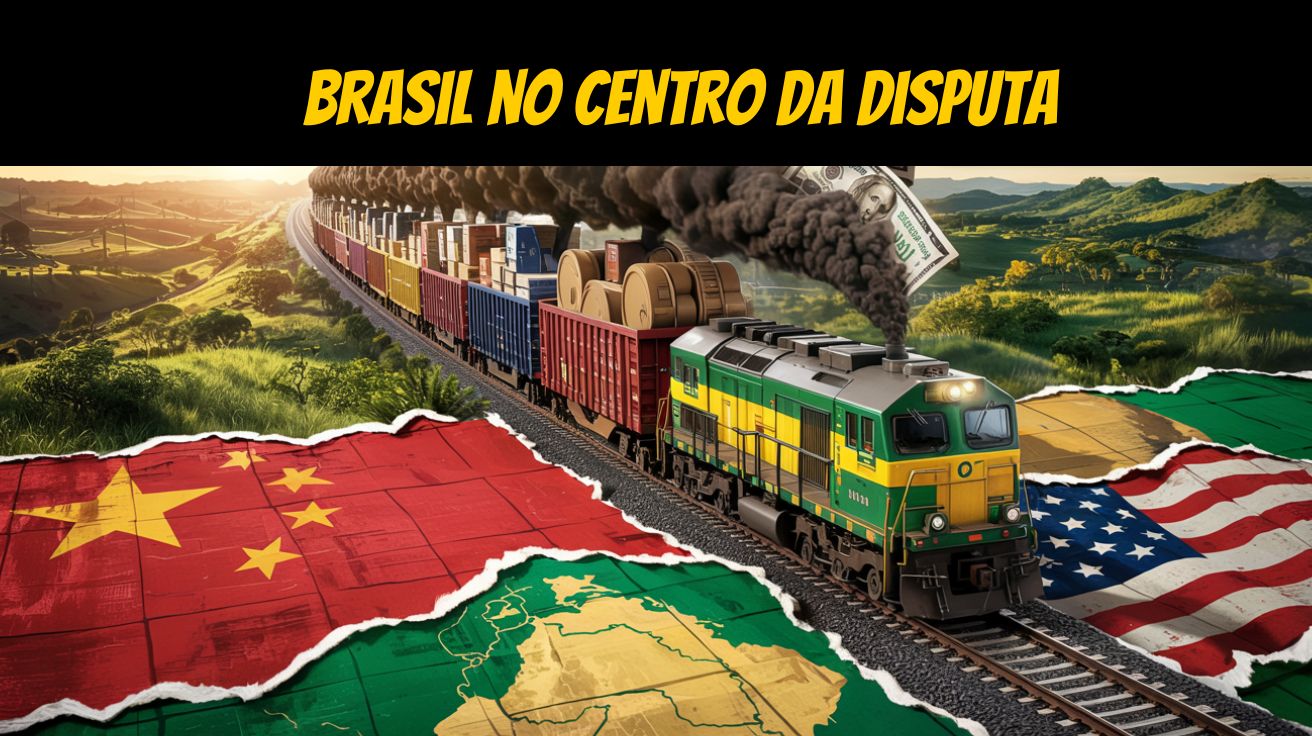
Billion-Dollar Railway Project Connects Brazil to the Pacific and Challenges the Traditional Route of Commerce, Generating Economic and Geopolitical Impacts That Could Transform the Dynamics of the South American Market and Global Influence in the Region.
The United States is paying attention to an ambitious Chinese project that promises to change the course of international trade in South America.
This is the Bioceanic Railway, a rail corridor that will connect Brazil to the Pacific Ocean, creating an alternative route to the Panama Canal — currently controlled by the U.S.
According to experts, this initiative could transform Latin America into an important industrial and logistics hub, boosting regional development under Chinese influence, which threatens traditional American hegemony in the region.
-
A promise made to their father led three men to unearth a forgotten house that had been swallowed by time for over 70 years, in a story of memory, abandonment, and reconstruction that seems straight out of a movie.
-
A strong earthquake in Indonesia affects houses and schools, causes panic, triggers a tsunami alert, and records a rise in sea level of up to 30 centimeters in some areas.

-
The Argentine government celebrates the lowest poverty rate in 7 years, but experts warn that the methodology has changed, real wages have fallen, unemployment has risen, and the number of people on the streets of Buenos Aires has increased by 57% since Milei took office.

-
7.8 magnitude earthquake in Indonesia frightens the population, triggers tsunami alert, and hits an island with over 200,000 inhabitants this Thursday.


The Ministry of Economy of Peru recently confirmed that it intends to advance negotiations with Brazil and China to enable the project, seeking high-level meetings to accelerate the implementation of this interoceanic railway.

The concept of the Bioceanic Railway dates back to the 1950s but only gained real momentum from the 2000s onwards with the creation of the Initiative for the Integration of Regional Infrastructure in South America (IIRSA), signed by 12 countries on the continent.
In 2008, IIRSA was incorporated into the South American Council of Infrastructure and Planning (Cosiplan), linked to the Union of South American Nations (Unasur), expanding the debate on the continent’s logistical integration.
The Project as a Geopolitical and Economic Challenge
Vitor Stuart de Pieri, a professor in the Department of Human Geography at the State University of Rio de Janeiro (UERJ), in an interview with the website Brasil247, highlights that the project represents direct competition to the Panama Canal and could cause discomfort in Washington, which has intensified efforts to counter Chinese influence in South America.
According to him, while the Panama Canal faces a water crisis that limits its operational capacity, the railway emerges as a strategic alternative that can reduce U.S. dominance and increase Chinese prominence in the region.
“Chinese presence has been troubling Washington a lot. The world is undergoing a power shift, with the relative decline of the West and the emergence of new global actors, especially China,” Pieri explains.
He adds that China is betting on infrastructure investments to strengthen ties with South American countries, unlike the United States, which tends to focus on more direct geopolitical disputes.
The possibility of the U.S. attempting to sabotage the project cannot be ruled out.
Pieri assesses that the country may use indirect diplomatic means, such as stimulating political and environmental instabilities, or resort to a “hybrid war,” involving NGOs and formal and informal media to destabilize the initiative.

Environmental and Economic Challenges of the Bioceanic Railway
However, the challenges for the implementation of the railway are significant, especially due to the high financial cost, which will require substantial private investments, in addition to environmental and social concerns.
The impact on forest areas and indigenous communities along the route is one of the main issues to be resolved to ensure the project’s viability.
On the other hand, the project could boost important sectors of the local economy, such as agribusiness, mining, construction, and the port sector.
Moreover, the railway has the potential to promote the development of small towns and inland regions of the continent, often isolated.
“The arrival of the railway could transform previously peripheral locations into development hubs, revealing a new Chinese strategy of insertion that prioritizes infrastructure over the traditional conditional diplomacy of the U.S.,” Pieri points out.
In addition to the railway, Chinese presence has been growing in other strategic sectors in Latin America, such as energy and mining.
According to the professor, this engagement shows that China’s prominence on the global stage is “unstoppable” and has relatively positive effects, mainly due to its respect for multilateral organizations, unlike Western powers that, according to him, frequently disregard decisions from the UN.
The Shift in the Geopolitical Order with the Role of BRICS
This new geopolitical order, led by the BRICS countries, including China, is expected to consolidate and remain a dominant trend in the coming decades.
Gabriela Tamiris Rosa Corrêa, a PhD student in international political economy at UFRJ and a researcher at LabChina and GEAP, emphasizes that the United States is watching with concern the Chinese advance in Latin America and is intensifying efforts to maintain its influence in the region.
She highlights that, under American pressure, Panama recently abandoned the Chinese Belt and Road initiative and signed an agreement allowing the military presence of the U.S. in the country, contrary to the local Neutrality Treaty and alleging Chinese espionage without presenting concrete evidence.
“This is the bare and raw expression of American imperialism. There is no concrete evidence of Chinese espionage in Latin America, while U.S. interference in the region is well documented,” criticizes the researcher.
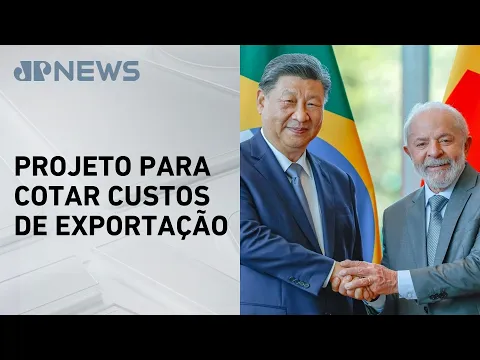

Chinese Investments in Infrastructure and the New PAC
China, in turn, has heavily invested in infrastructure in Latin America, as exemplified by the inauguration of the port of Chancay in Peru, which has become an important outlet for Asian trade.
These investments are part of the New PAC, a Brazilian program that includes the South American Integration Routes, where the Bioceanic Railway is a central piece.
Corrêa emphasizes that the railway and the port of Chancay gain even more importance in light of the water crisis threatening the operation of the Panama Canal, making the railway an increasingly attractive logistical alternative for China.
From the perspective of the United States, this growing Chinese participation is seen as a direct threat.
After Colombia joined the Silk Road initiative, former President Donald Trump warned that the U.S. would vigorously combat Chinese projects in Latin America, including using the Inter-American Development Bank (IDB) to block financing for companies linked to China.
Recently, the U.S. Secretary of Defense stated that Washington intends to “take back its backyard” in the Panama Canal, indicating that the American intention is to curb the expansion of Chinese influence in the region.
The Strategic Importance of the Railway for Latin America’s Autonomy
“The Bioceanic Railway responds to the need for autonomous regional connectivity and access to Asian markets, something that the United States does not prioritize for Latin American countries,” highlights Corrêa.
The creation of corridors connecting Latin America to Asia could transform the continent into a competitive industrial hub, attracting investments and companies seeking efficient logistical routes for export.
This alternative logistical integration also weakens U.S. geopolitical power by reducing the centrality of the Panama Canal and increasing the bargaining power of South American countries.
The announcement by the Peruvian government to bring together Brazil, China, and Peru to advance the railway project confirms the region’s strategic alignment in pursuit of greater autonomy from the United States.
“Latin American countries no longer want to be passive recipients of external investments. They seek to lead projects that boost their economies and increase their international relevance,” concludes the specialist.
This partnership with China expands financing possibilities and creates an important counterbalance to American influence, with terms more locally negotiated and a pragmatic stance.
Do you prefer Brazil to strengthen its historical relationship with the United States or to get closer to China? How do you see this growing Chinese rapprochement with Brazil and its impact on the country’s economic and geopolitical future?








Seja o primeiro a reagir!