





 Portuguese
  English
  Spanish
  3 min of reading
  0 comments


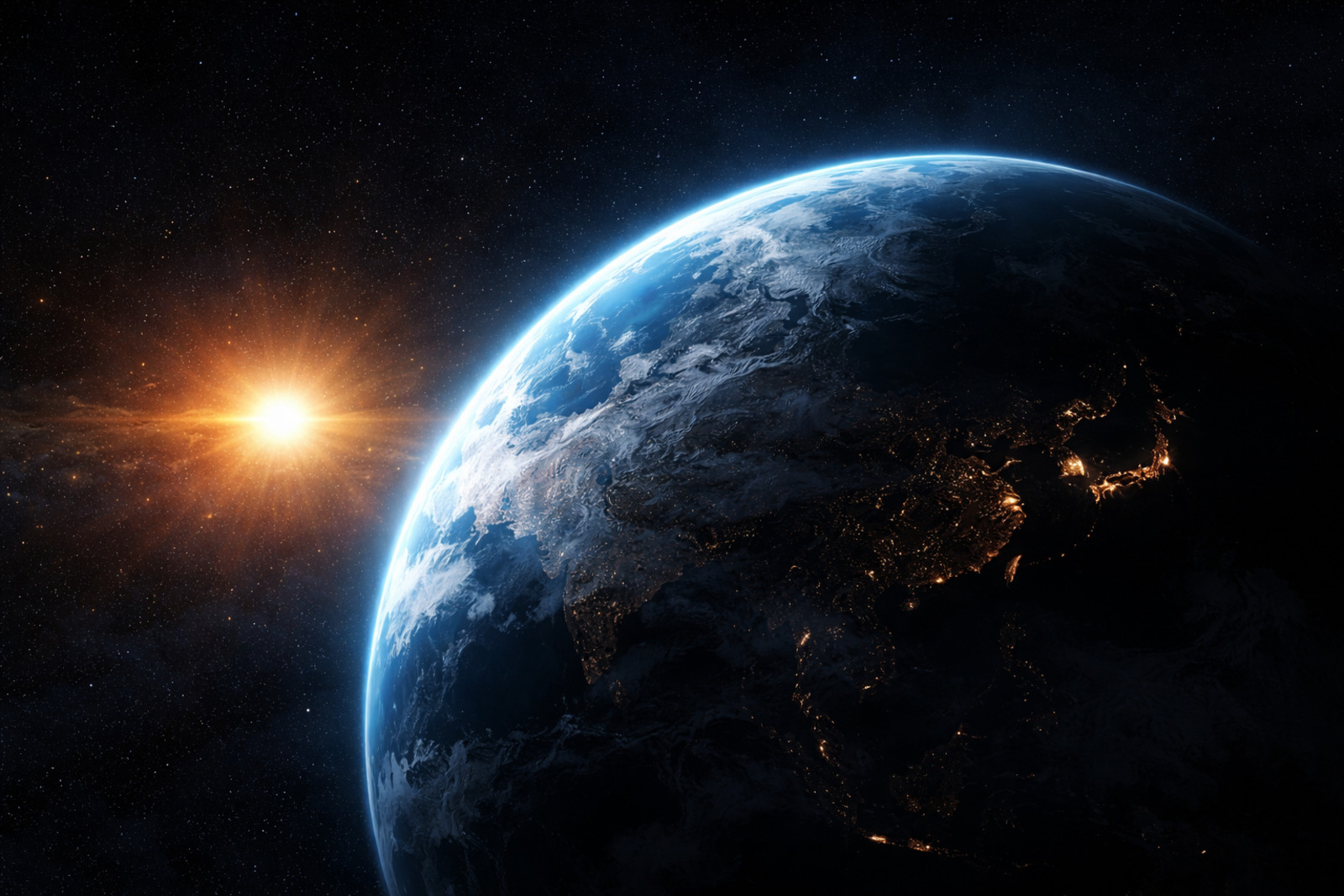
If the Sun disappeared suddenly, the Earth would still have 8 minutes of normal appearance before darkening, cooling, and entering global collapse
The Earth would appear normal for about 8 minutes and 20 seconds if the Sun were to disappear suddenly, but after that interval, the planet would plunge into darkness, lose its stable orbit, see temperatures drop rapidly, and enter environmental collapse.
The interval before darkness
For approximately 4.6 billion years, the Sun has sustained the Earth’s environment. The star keeps the Earth in a stable orbit and provides the essential energy for climate and biological balance on a planetary scale.
Therefore, the loss of the Sun would not be perceived at the same moment. Since sunlight takes about 8 minutes and 20 seconds to reach the planet, illumination would still be present for a brief period.
-
A 2,400-year-old iron foundry has been discovered in Senegal with 100 tons of slag, 35 furnace bases, and signs of nearly eight centuries of continuous metallurgical activity.

-
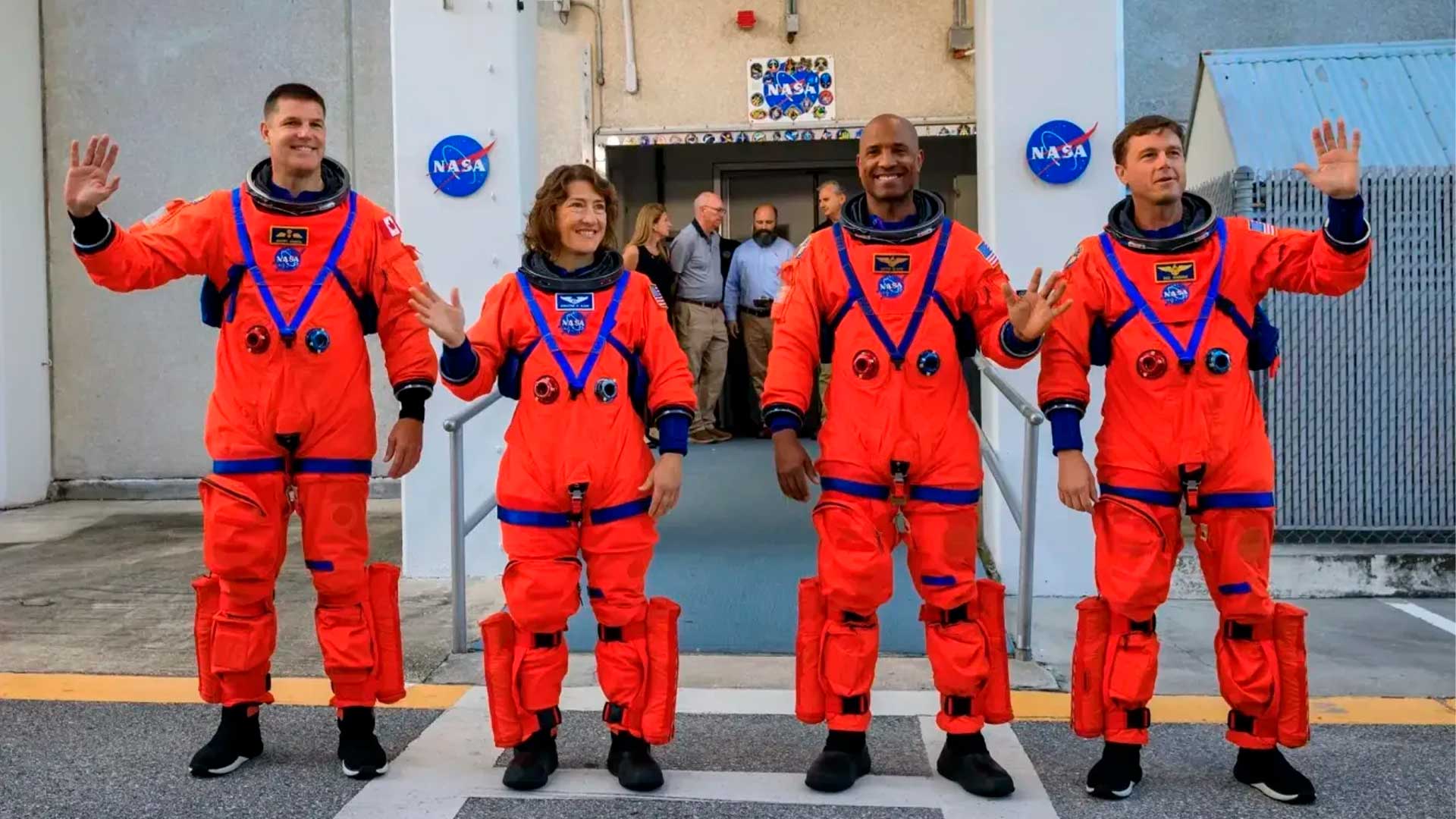
Four humans are flying towards the Moon inside the Orion capsule launched by the SLS rocket, and on April 6, Artemis II will disappear behind the far side of the Moon without communication with Earth for nearly an hour.
-
Worlds covered by water, atmospheres filled with hydrogen, and the possibility of life beyond Earth: ocean planets are rewriting the map of cosmic search and forcing scientists to rethink where to look.
-
Argentina achieves the unimaginable after more than 110 years and reintroduces the largest native herbivore of South America to the Chaco to restore a lost link in nature.
As soon as this delay ended, total darkness would set in. Timothy Cronin from MIT stated to Live Science that there would likely be no warning for people on Earth.
The Moon would also disappear from view, as it depends on sunlight to reflect brightness. After the blackout, only distant stars would remain visible in the sky.
Earth without orbit and without light
At the same time, the planet would lose the gravitational influence of the Sun. Instead of continuing on its current trajectory, the Earth would leave its orbit and move in a straight line through space.
This movement would also affect other bodies in the solar system. The scenario shows, on an immediate human and planetary scale, the degree of Earth’s dependence on the Sun.
The beginning of the collapse of life
Without sunlight, photosynthesis would cease almost instantly. This would interrupt the main energy source for plants and many microorganisms, quickly compromising the foundation of terrestrial ecosystems.
Michael Summers from George Mason University explained that most plants without artificial lighting would die within a relatively short period.
Some could remain dormant for weeks or months, as occurs in winter.
As a result, animals would lose their food source, and food chains would begin to crumble. Fungi might have a temporary boost from dead matter, but this effect would not last.
The extreme drop in temperature
Without the Sun’s energy, the Earth would begin to cool rapidly. Initial estimates suggest a reduction of about 20°C per day, according to data shared with Live Science.
In a few days, much of the planet would fall below freezing point. Small bodies of water would freeze within a week, while larger lakes would take longer in this process.
The oceans, due to their depth, could remain partially liquid for years or even decades.
In deep ocean areas heated by geothermal activity, liquid water could persist for much longer.
Limited refuges for survival
With the surface uninhabitable, human survival would depend on controlled environments and alternative energy.
Cronin stated that people could live underground or in caves, using geothermal or nuclear energy and plants under artificial light.
With information from Daily Galaxy.







Seja o primeiro a reagir!