





 Portuguese
  English
  Spanish
  5 min of reading
  0 comments


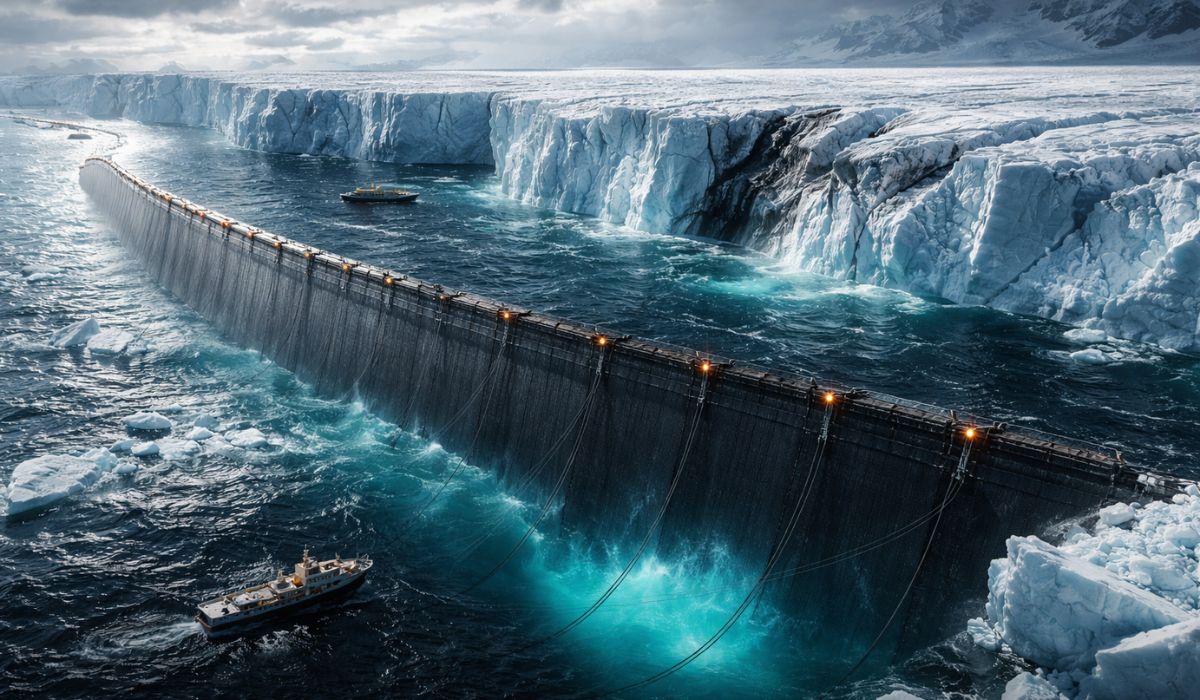
An extreme engineering proposal puts the Thwaites glacier back in the spotlight and expands the debate on coastal risks, polar research, and studied solutions to attempt to slow the loss of ice in Western Antarctica.
Thwaites Glacier and the risk of sea level rise
A flexible barrier anchored to the seabed, approximately 80 kilometers long and 152 meters high, is being studied as an alternative to slow the melting of the Thwaites glacier in Western Antarctica, internationally known as the “Doomsday Glacier.”
The proposal aims to reduce the entry of relatively warm ocean water beneath the glacier, where a significant portion of ice loss occurs.
Interest in the project has increased because Thwaites accounts for about 4% of the annual global sea level rise and, if it completely collapses over time, could contribute approximately 65 centimeters to ocean levels.
-
Why is Mercury so strange? The smallest planet in the Solar System has more iron than the others and days longer than years.

-
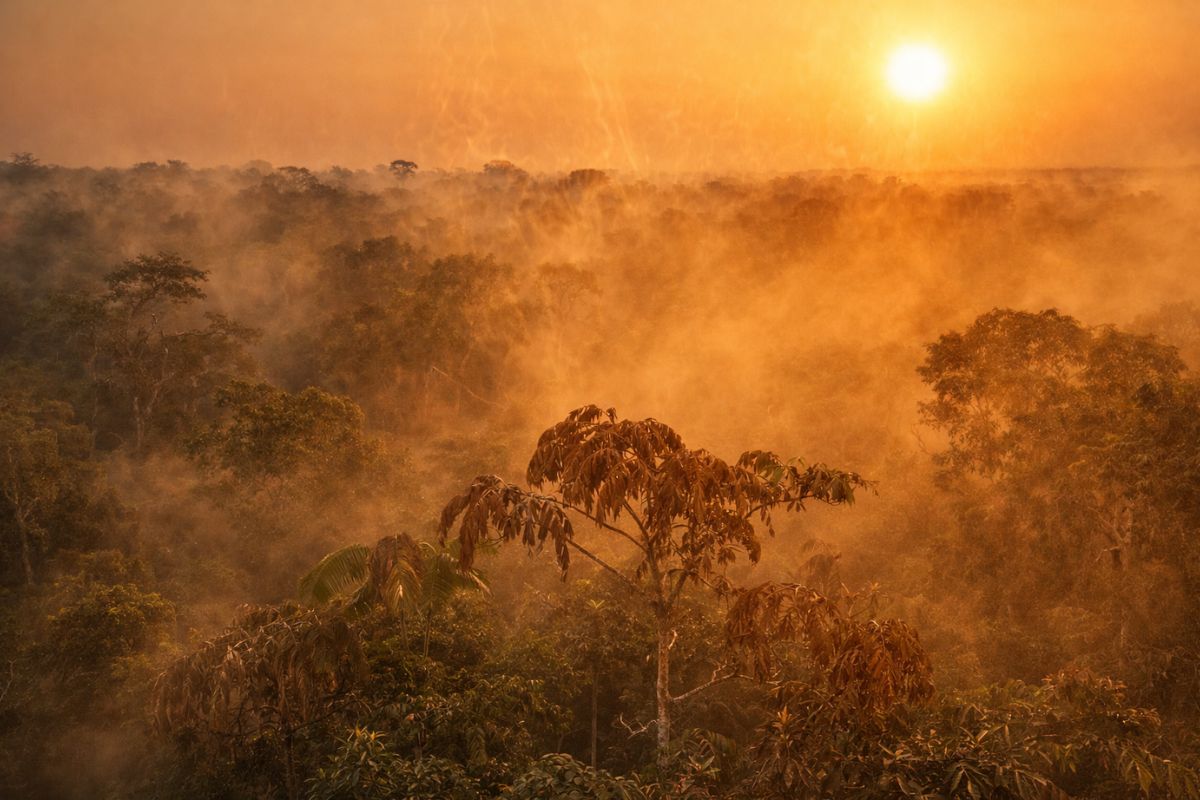
Tropical forests are nearing a temperature limit that could kill the leaves at the tops of trees and trigger a cascading collapse that would turn the planet’s largest carbon reservoir into a source of emissions.
-
The silent villain of the home office sits on the desk, stays on all day, and can increase the electricity bill.

-
Archaeologists are excavating Iron Age treasure in England and have found, among 950 metal pieces, rare remains of four-wheeled carts that could change what was known about transport and wealth in ancient Britain.

What is at stake with Thwaites
Located in the Amundsen Sea, Thwaites is monitored by researchers because its base is exposed to the infiltration of warmer water at depth.
This contact erodes the ice from below, weakens the so-called grounding zone — the point where the glacier is no longer supported by the seabed and begins to float — and promotes cracks, retreats, and mass loss.

The concern of scientists is not limited to the size of the glacier.
Thwaites is identified by research centers as a relevant area for the stability of part of Western Antarctica, and its prolonged deterioration could affect the behavior of neighboring glaciers.
Regarding the direct impact, the most cited estimate by scientific institutions is that the total melting of Thwaites itself could potentially raise the average sea level by about 65 centimeters.
How the proposed submarine curtain works
Unlike the idea of a rigid concrete wall, the project envisions a kind of curtain anchored to the ocean floor, made of flexible materials and supported by cables and floats.
The proposal is to block or divert the warmer and denser water circulating at depth before it reaches the base of the glacier.
According to the study’s authors, the measure would not aim to stop climate change but to reduce one of the forces accelerating local melting.
The initiative is developed under the Seabed Curtain Project, which describes this barrier as an intervention to protect platforms and glacial fronts from warm ocean water.
According to the project, the structure studied for the Thwaites region would have precisely the scale mentioned in the title: about 80 kilometers in length and 150 to 152 meters in height, installed in a strategic section of the seabed.
This point is central because part of the circulation of warmer water threatening the glacier operates at depth, not at the surface.
Thus, the proposal aims to act below the waterline, where a significant portion of the erosion at the base of the ice occurs.
Still, the authors themselves treat the solution as experimental and contingent on years of testing, modeling, and environmental assessment.

Polar research and what happens beneath the glacier
In recent years, scientific missions have focused efforts on measuring what occurs beneath Thwaites.
In January 2026, the British Antarctic Survey reported the start of a hot water drilling operation on the main platform of the glacier, aiming to create a hole of about 1,000 meters to the area near the grounding line.
The goal was to insert instruments to record temperature, water dynamics, and melting rates at one of the points monitored by researchers.
This method had already been used in polar expeditions.
The British Antarctic Survey itself reports having the capability to drill with hot water through ice layers up to 2.3 kilometers thick in remote areas, allowing access to subglacial zones that are difficult to reach by conventional techniques.
In the case of Thwaites, the recent drilling reinforced the assessment that the behavior of water beneath the glacier is one of the central factors for understanding its instability and, consequently, for analyzing the feasibility of physical containment proposals in the ocean.
Technical and environmental barriers in Antarctica
Despite gaining visibility, the idea is still far from the execution phase.
The first obstacle is technical.
A structure of this size would need to withstand pressure, intense cold, ocean currents, corrosion from saltwater, and occasional impacts with ice blocks, without losing anchorage or unpredictably altering local dynamics.
Therefore, initial studies focus on materials, structural design, fastening systems, and hydrodynamic performance before any real-scale deployment.
So far, the proposal remains in the realm of research and prototype development.
In addition to engineering, the discussion involves the environmental stage.
Researchers linked to the project state that an intervention on the Antarctic seabed would require a rigorous assessment of ecosystem impacts and also of international governance.
This means that it would not be enough to prove structural resistance; it would be necessary to demonstrate, with data, that the barrier would not cause undesirable effects in a sensitive region subject to specific agreements.

The debate on melting containment in Antarctica
The debate surrounding the submarine curtain shows that part of the scientific community has begun to consider localized interventions as an attempt to slow losses in critical ice areas.
In the case of Thwaites, the proposal is presented as a containment measure to reduce the action of warm water at the base of the glacier, and not as a definitive solution to global warming.
For now, what is confirmed by research institutions is the vulnerability of Thwaites, the influence of warm water at its base, and the potential impact of its mass loss on sea level.
Meanwhile, the feasibility of the submarine curtain still depends on testing, technical validation, environmental assessment, and eventual political and scientific consensus.




Seja o primeiro a reagir!