





 Portuguese
  English
  Spanish
  5 min of reading
  0 comments


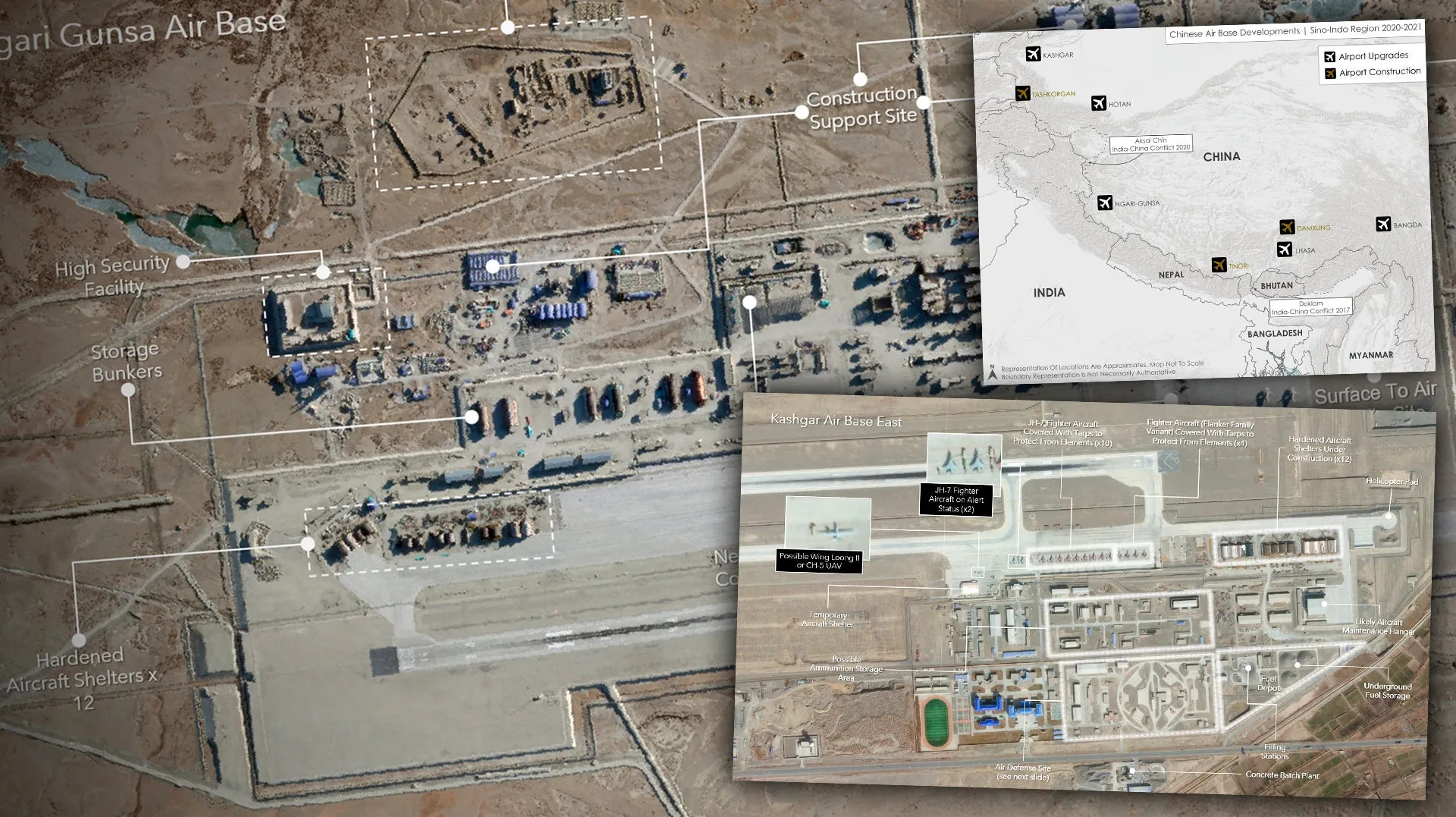
Dug Into Mountains, With Kilometer-Long Tunnels and Armored Doors, China’s Subterranean Air Bases Hide Entire Squadrons and Change the Logic of Modern Air Attack.
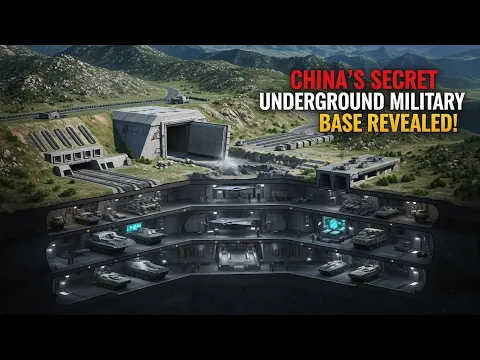
Modern air warfare is often narrated from the sky: stealth fighters, cruise missiles, drones, and satellites. But there is a decisive field that begins beneath the ground. Over decades, China has built an extensive network of underground air bases (UABs) dug into mountains, designed to hide, protect, and sustain entire squadrons even under intense attack. These are not makeshift caves: they are heavy engineering complexes, with kilometer-long tunnels, reinforced doors, and integrated logistics.
Why Hide Aircraft in Mountains?
The reasoning is simple and brutal. In conflicts between powers, the first strike typically targets runways, hangars, and aircraft on the ground.
If these assets survive the initial attack, the balance of the conflict shifts. Chinese UABs were designed to counter the effectiveness of a preemptive strike, ensuring that the air force continues to operate even after waves of missiles and bombings.
-
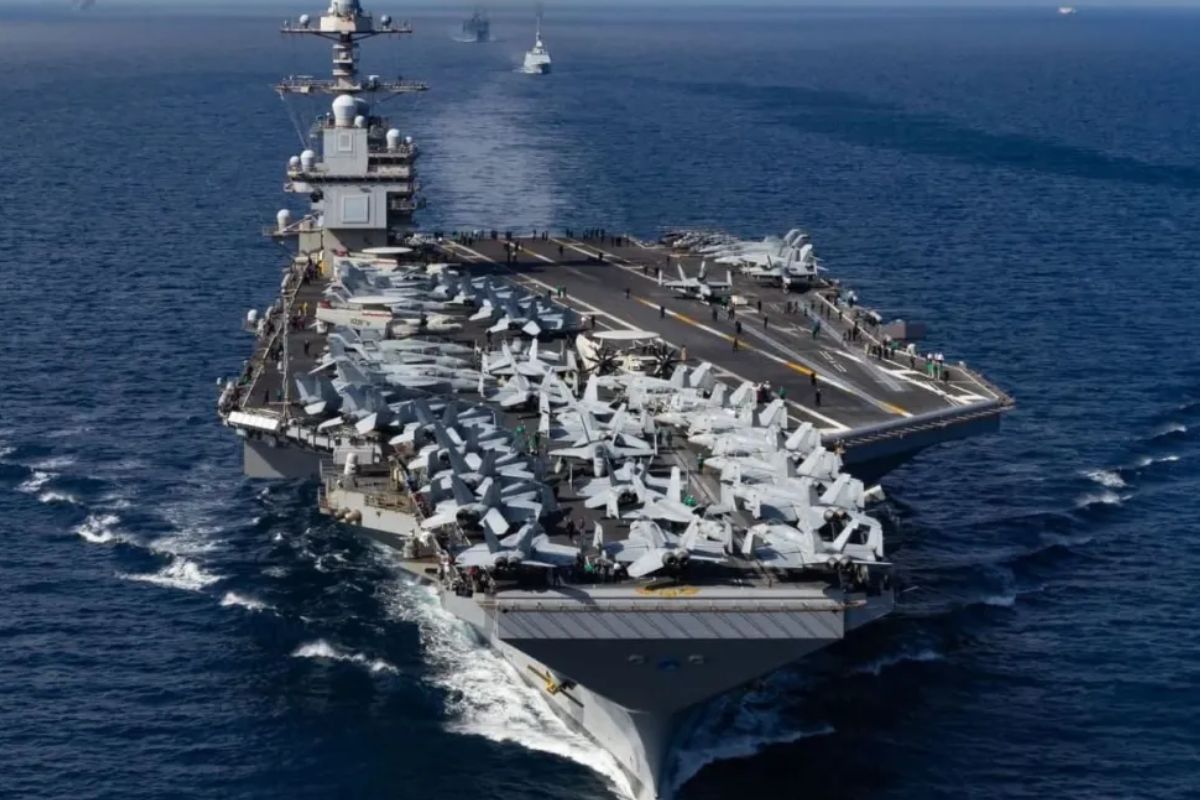
USS Gerald R. Ford, the largest aircraft carrier in the world, returns to sea after a fire in the laundry in the Red Sea; repaired in Crete, it resumes missions of Operation Epic Fury against Iran.
-
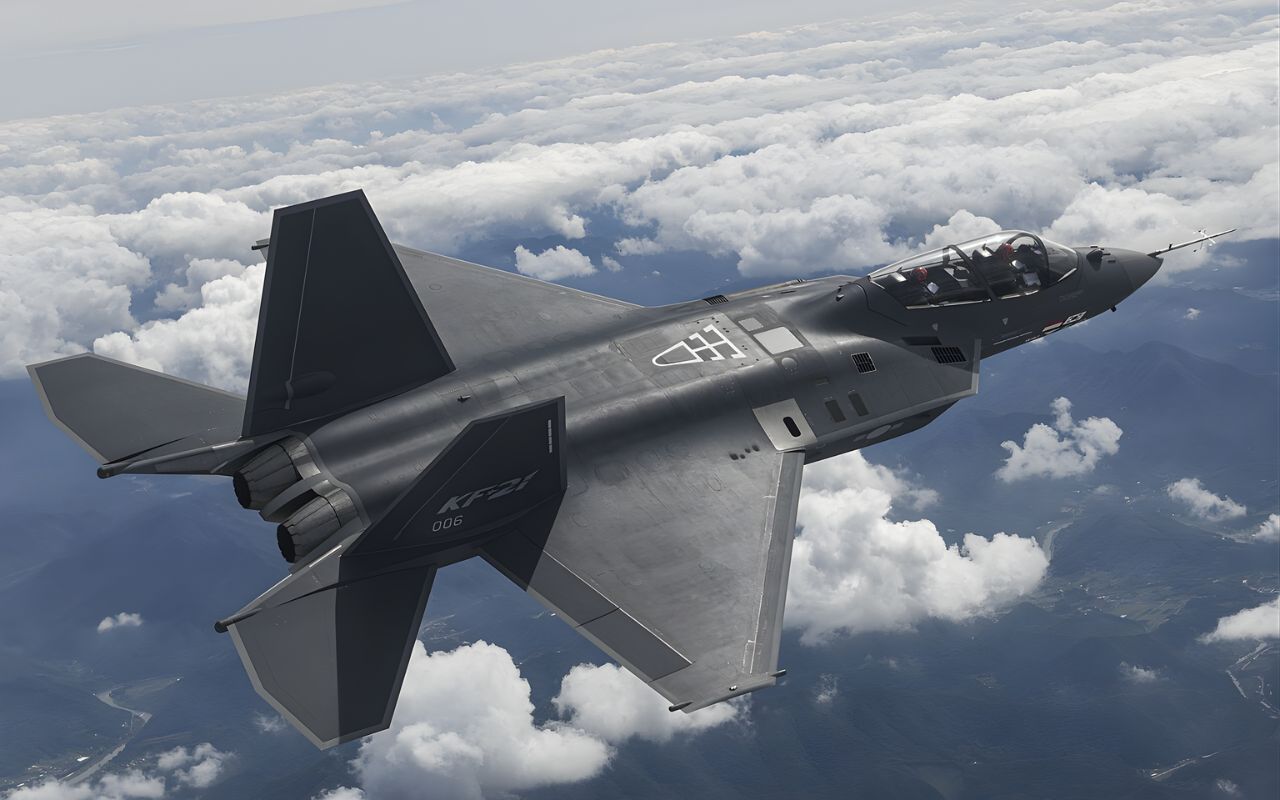
Military power: South Korea’s new KF-21 fighter jet will be a key component in replacing the aging aircraft of the air force, placing the country on the map of air military powers.
-
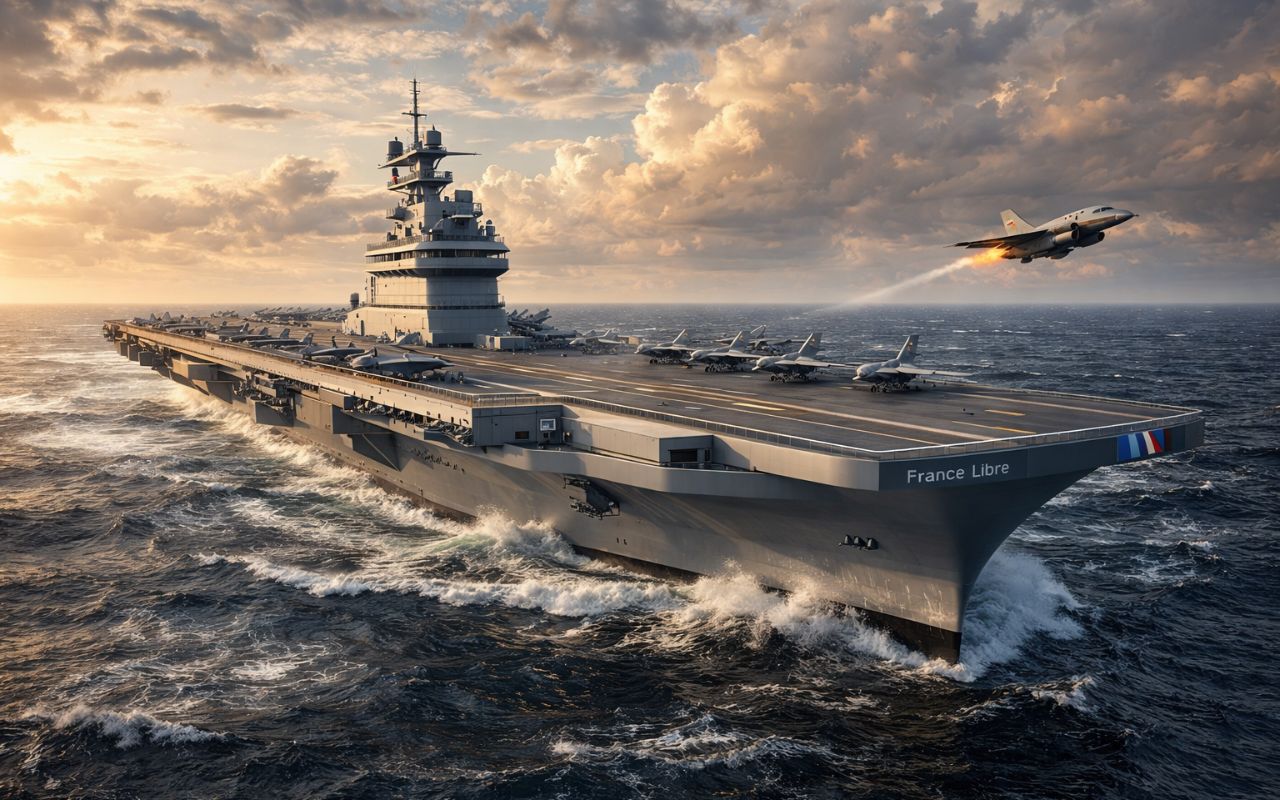
With 310 meters, 80 thousand tons, and capable of operating for 45 years, the new nuclear aircraft carrier France Libre will be the largest in France and will enter service in 2038.
-
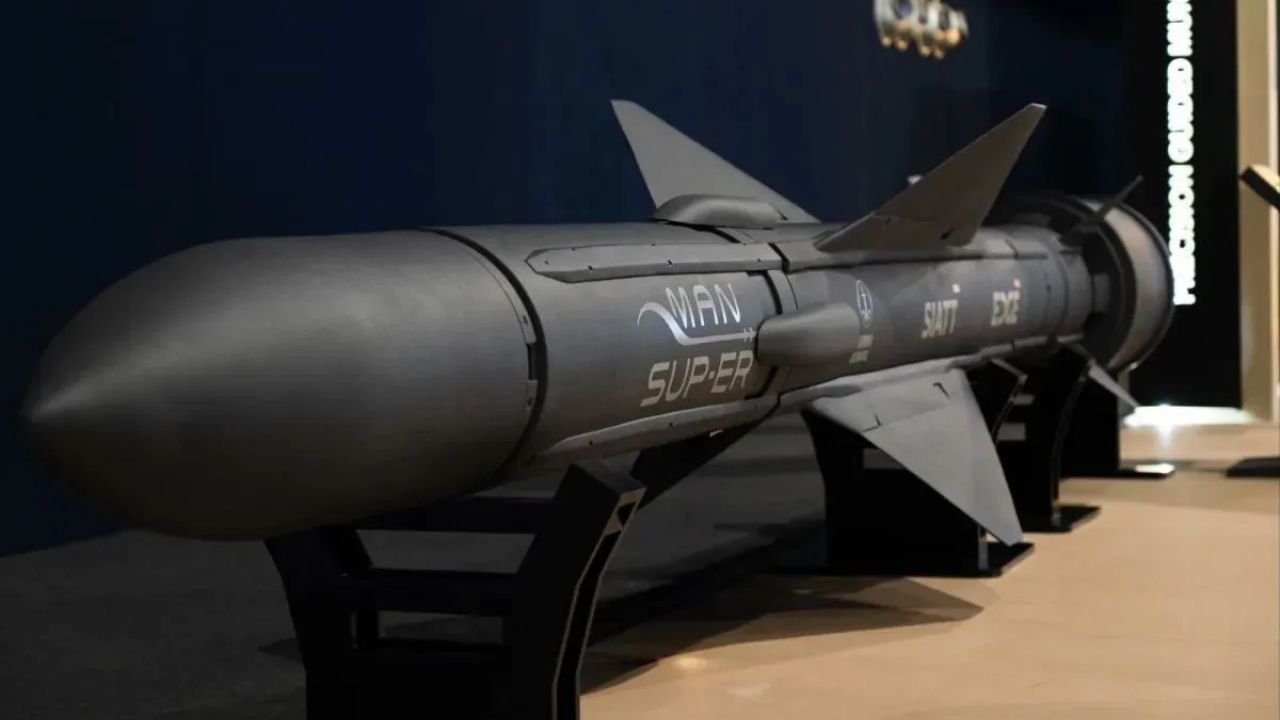
Brazil accelerates the evolution of the MANSUP missile, designing an air-surface version with a range exceeding 200 km, advanced guidance, and precision strike capability against land and naval targets, paving the way for a new generation of national armaments with global potential.

What Satellite Analysis Reveals
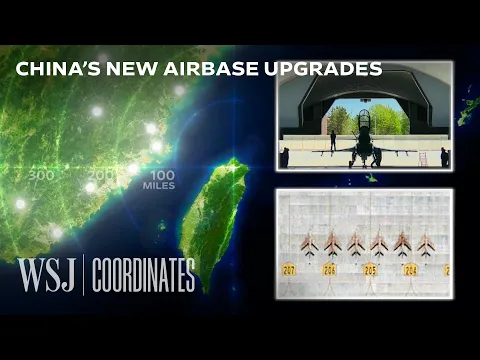
Independent studies based on high-resolution satellite images identify dozens of bases with permanent underground infrastructure.
The visual signatures are recurring: camouflaged tunnel mouths on slopes, runways directly connected to entrances, dispersion areas, and multiple exits. In various facilities, the tunnels exceed 5 km in length, with internal branches functioning as hangars and maintenance areas.
The estimated depth varies depending on the terrain, but terrain analysis and geological cuts indicate sections dozens of meters below the surface, excavated in solid rock — an essential condition to withstand impacts and overpressures.
Actual Capacity: Not Just “A Few Jets”
The point that is often underestimated is the capacity. It is not about hiding one or two aircraft. From the internal design observed, a single medium base can accommodate dozens of fighters, while larger complexes can hold complete squadrons, with space for movement, maintenance, and refueling. This includes modern fighters and, at selected bases, bombers.

Technical reports conservatively estimate 24 to 36 aircraft in medium installations, potentially exceeding this in larger complexes. Operationally, this means preserving enough airpower for immediate counterattacks.
Aircraft Compatible with the Subterranean
Chinese UABs are not relics from the Cold War. Many have been modernized to accommodate current aircraft, with wide tunnels and curve radii compatible with larger jets.
There is evidence of adaptation for stealth fighters J-20, in addition to platforms like J-10/J-16 and H-6 bombers at certain bases. Reinforced doors and internal yards suggest operation with wings open and complete logistics under rock.
Doors, Armoring, and Camouflage
A decisive technical detail is the doors. At various entrances, reinforced gates are observed, set back, with geometry designed to reduce the effects of shrapnel and shock waves.
Camouflage — both visual and thermal — is part of the design: natural shadows, paint compatible with the rock, and positioning that makes automatic identification by sensors difficult.
Operate Even After the Attack
UABs do not depend solely on “not being hit”; they are made to continue operating. Runways can be repaired quickly, alternative entrances allow for dispersal, and the interior offers sufficient refueling, energy, and ventilation for continuous flight cycles.
In scenarios of saturation by missiles, this resilience drastically reduces the effectiveness of the initial attack.
Pentrating munitions (bunker-busters) have limits. Long, branched, and deep tunnels dilute the effectiveness of pinpoint impacts.

Even when one entrance is damaged, other exits can maintain operations. Moreover, hitting reinforced doors requires precise real-time intelligence, something that becomes more difficult when the base itself denies sensors and masks signatures.
Geographical Strategic Distribution
The subterranean bases are not scattered randomly. There are clear concentrations:
- Southeast and Coast, facing the Taiwan Strait;
- South China Sea, a region sensitive to naval disputes;
- Interior, out of immediate range of ship-launched attacks.
This layout indicates a doctrine of survival in high-intensity regional conflict, preserving critical assets where pressure is greatest.
International Comparison: Why Scale Matters
Other countries have already adopted hangars in the mountains of Sweden, Switzerland, and the former Yugoslavia are classic examples. The difference lies in the scale and integration.
China has built a national network, connected to air defense, land logistics, and command, something that goes beyond isolated bases. The result is a systemic capacity to deny the “opening strike”.
Beyond the physical effect, there is the psychological effect. If the adversary cannot confirm the destruction of aircraft on the ground, they need to spend more resources on surveillance, repeat attacks, and accept greater uncertainty. This delays decisions, raises costs, and reduces the impact of the first day of war — often decisive.
Costs, Trade-Offs, and Limits
None of this is cheap. Digging kilometers into rock, installing ventilation systems, energy, fuel, and protection requires massive investment and long-term planning.
There are also limitations: not all bases can accommodate all types of aircraft; intense operations require careful management of thermal emissions and internal flow. Nevertheless, the strategic cost-benefit is clear when compared to the loss of squadrons on the ground.
Why This “Invisible War” Decides Conflicts
In the 21st century, winning is not just about destruction; it’s about denying capabilities. Subterranean air bases turn mountains into operational shields, preserving aircraft, pilots, and command. They may not appear in viral videos, but define who can still fly when the sky becomes dangerous.
In short, Chinese UABs show that air superiority begins before takeoff underground. In an environment of sensors, missiles, and precision, those who protect their assets on the first day buy time, and time decides wars.








-

-

-

-

-

23 pessoas reagiram a isso.