





 Portuguese
  English
  Spanish
  5 min of reading
  0 comments


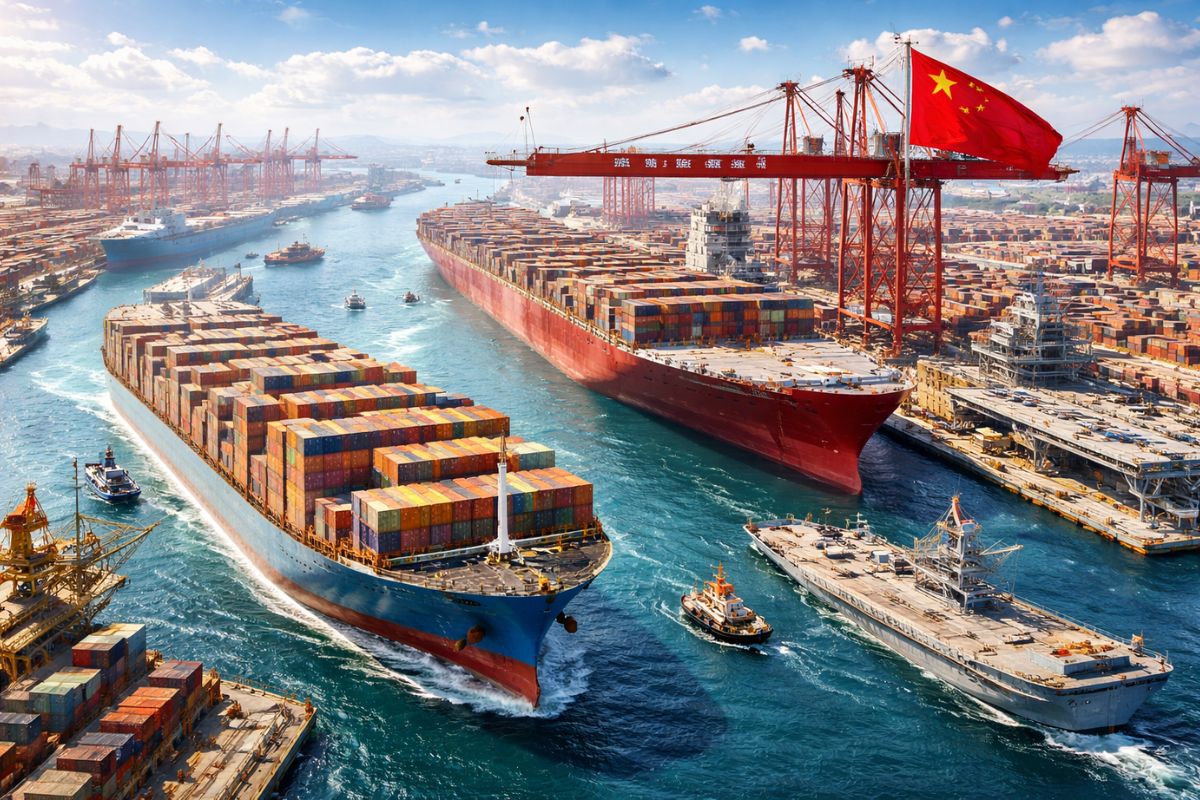
With more than 11 billion tons transported per year by a fleet of 100 thousand vessels, ships have become the backbone of global consumption and industrial power
Without ships, supply collapses within days. The oil that reaches the gas station, parts that become cell phones, and even the wheat for bread depend on a silent chain that crosses oceans non-stop.
Close to 90% of everything traded between countries moves by sea, totaling more than 11 billion tons per year, operated by over 100,000 commercial vessels. And behind this, there is a competition that goes beyond transportation: those who can build the largest ships control one of the centers of gravity of the world economy.
Without ships, global logistics collapses quickly

The basis of international trade is supported by maritime routes and the ability to keep cargo circulating continuously between continents. When you take ships out of the equation, the machinery jams.
-
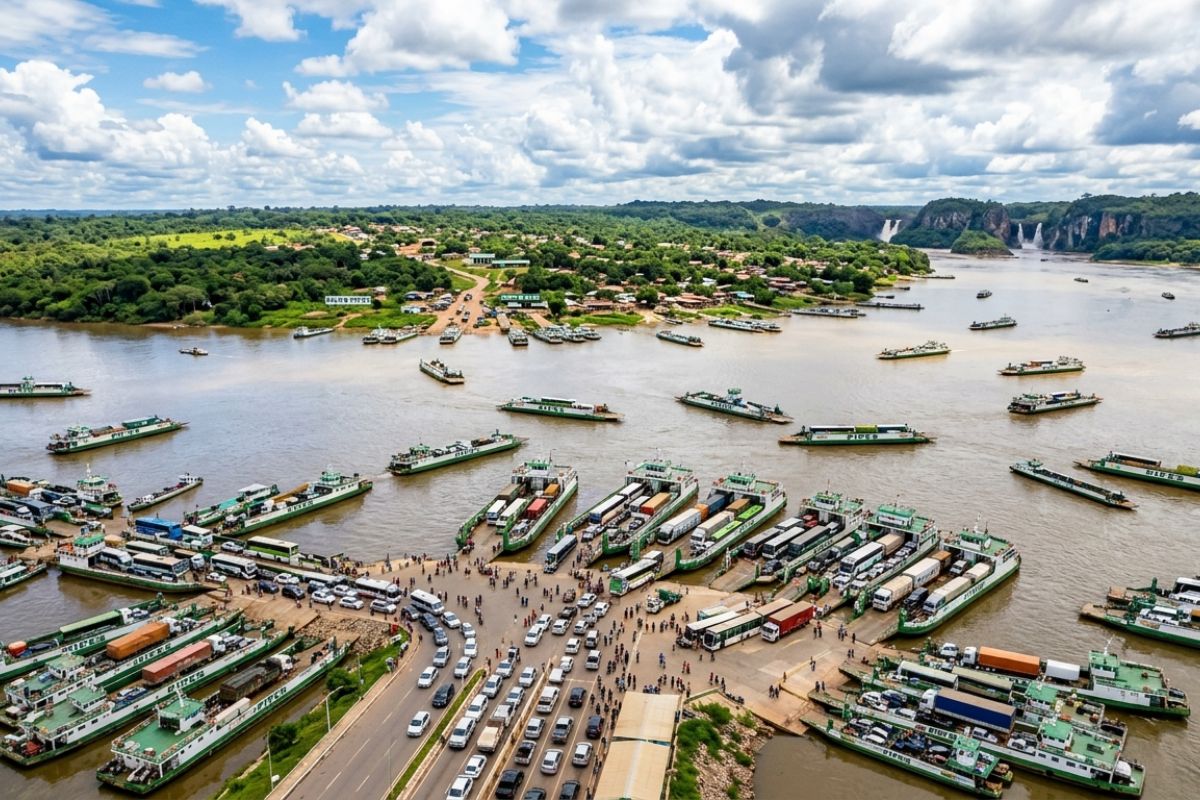
Son of farmers becomes the king of barges in Brazil and creates Grupo Pipes with up to 300 barges in six states, connecting regions without bridges and investing in Pedra Caída tourism.
-
Russia pressures BRICS for joint food reserves after the crisis in Iran closed Hormuz, threatening fertilizers and halving productivity; warning indicates inflation and hunger affecting 673 million people.

-
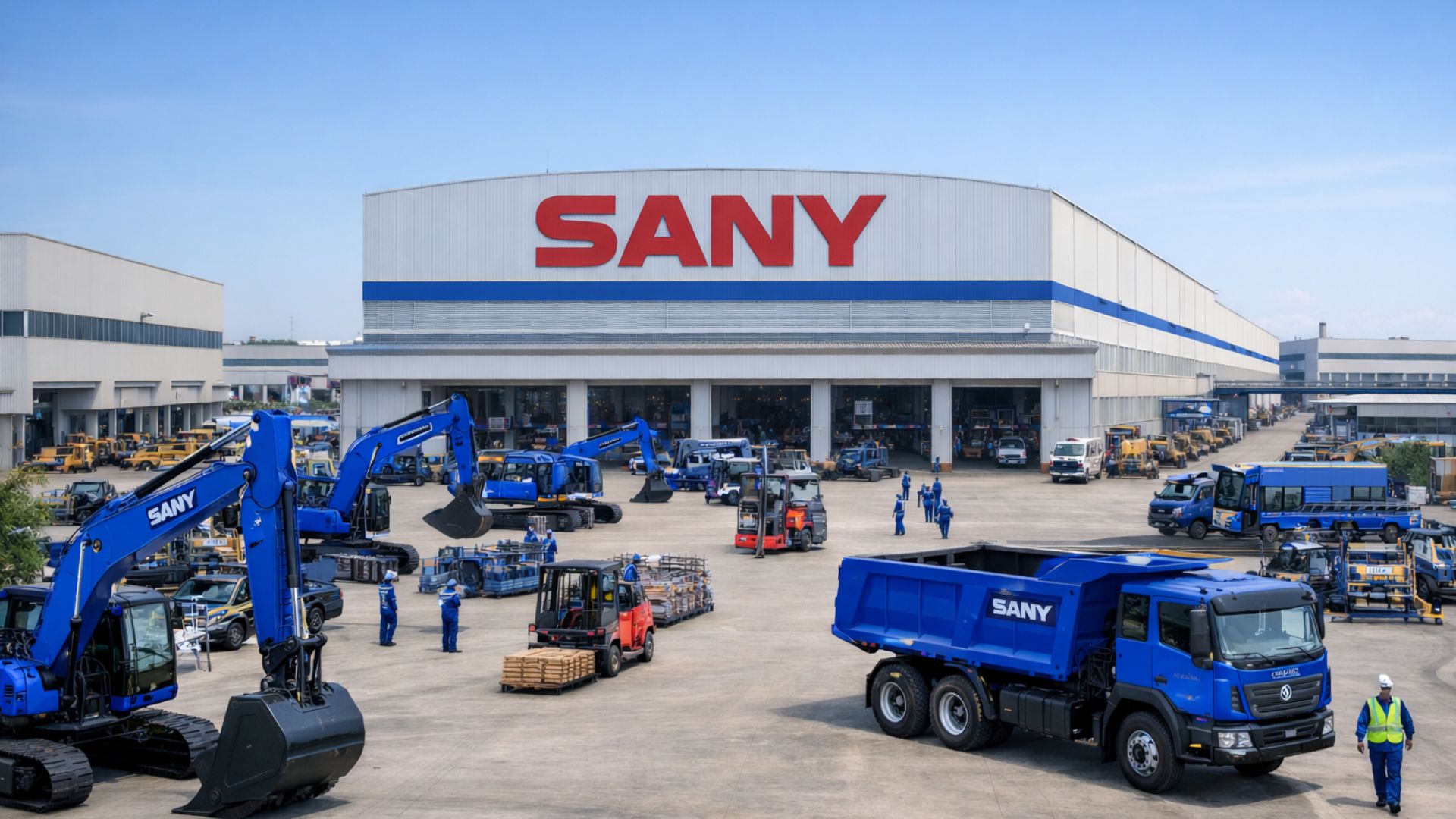
A Brazilian city will gain a mega factory from Sany starting in 2026, betting on national production of heavy machinery, job creation, and a billion-dollar expansion that promises to transform the industrial hub of Campinas.
-
The Central Bank of Brazil rejects freezing credit card interest rates, which exceed 400% per year, while Lula demands relief for family debts and the government promises cheaper credit alternatives soon.

The effect is immediate: shelves begin to empty, factories stop, and cities face a logistical collapse, because global trade, as it exists today, cannot sustain itself without maritime transport on a large scale.
The sea giants that carry the economy
The largest container ships in operation measure nearly 400 m in length. To put it into perspective, the scale is so large that even four football fields side by side still do not reach that size.
When fully loaded, they can exceed 200,000 tons. The bridge is more than 70 m above the waterline, and the containers can be stacked so high that the ship appears to grow almost 20 stories above the surface of the sea.
Each of these ships can carry more than 24,000 containers per trip. If all the containers from a single trip were lined up, the line could exceed 140 km, a portrait of what it means to move the world in a single shipment.
Why building ships is one of the greatest engineering challenges

Building something on this scale does not resemble assembling a conventional industrial product. It requires more than 50,000 tons of steel worked with millimeter precision, engines the size of buildings, and power capable of moving colossal structures in open seas.
Modern ships rely on sophisticated navigation and control systems, capable of guiding a 400 m structure through storms in the middle of the Pacific. They also require cranes capable of lifting steel blocks weighing hundreds of tons and positioning them accurately in a choreographed assembly sequence.
It is not enough to have a shipyard. Huge industrial complexes are needed, supply chains that span dozens of industries, and highly specialized workers accumulating experience for decades. Few countries can sustain this with long-term planning.
How the axis of naval and industrial power changed in the 20th century

At the beginning of the 20th century, building ships was synonymous with naval and industrial power. Britain led, with shipyards in cities like Glasgow and Liverpool supplying vessels for the empire and the world.
After World War II, the order began to change. Japan bet on shipbuilding as a pillar of industrial reconstruction, and by the late 1970s, it already dominated a significant share of the world’s commercial ships.
In the 1980s, South Korea entered the race with state support and a large-scale production model. Giant dry docks, Goliath cranes, and an assembly line logic helped the country surpass Japan in less than two decades.
China enters the field and dominates the shipyards

In the early 2000s, China entered with a state strategy, public capital, and an explicit focus on transforming shipbuilding into a national strategic sector. Modest shipyards turned into industrial complexes the size of cities, and new facilities were designed with future ships in mind.
The result, according to the base, is direct: today China produces more than 50% of the commercial ships ordered in the world, and in a few years this number will rise to over 60%. The manufacturing involves bulk carriers, oil tankers, natural gas carriers, and ultra-large container ships, coming out in increasing volume.
The shipyard as a “factory” and the modular block method
The transition from an almost artisanal process to industrial assembly is clearly illustrated by the example of an island near Shanghai, called Chang Shing, chosen to house one of the largest shipyards in the world, the Jang Nan Shipyard.
Instead of the ship being born “from the hull up,” it is divided into hundreds of modular blocks built simultaneously in different parts of the shipyard. Each block arrives with pipes, cables, stairs, and internal structures already installed.
The Goliath cranes lift sections weighing hundreds of tons like pieces of industrial Lego, and teams check alignments and welds before releasing the next stage. This model allows a single shipyard to maintain multiple giant ships under construction at the same time.
The three advantages that sustain Chinese leadership
The base points to three pillars that combine.
The first is steel. An ultra-large container ship can contain more than 50,000 tons of steel in its structure. China produces more than 1 billion tons of steel per year, which ensures quick and cheap access to this fundamental input.
The second is the integration of the supply chain. Ships need engines, propellers, pumps, generators, cables, valves, sensors, and thousands of components. With domestic capacity for many of these items, shipyards reduce dependence on imports and delays.
The third is the scale of the workforce. Shipbuilding requires naval engineers, precision welders, and specialized technicians, and China has formed a base that is difficult to replicate in the short term.
From trade to warships: the same industrial base

The transcript also connects civil production to military capability. The same infrastructure that manufactures giant container ships produces warships, with geopolitical implications.
The aircraft carrier Fujian, launched in 2022, is cited as an example: more than 316 m long and over 80,000 tons of displacement when loaded. The differentiator mentioned is the use of electromagnetic catapults to launch aircraft, technology associated with next-generation aircraft carriers.
Additionally, Type 055 destroyers appear, measuring about 180 m, with radar systems and missile launch cells. The conclusion of the text is simple: by dominating commercial shipbuilding, China simultaneously strengthens the industrial backbone of a high-level navy.
The future of ships: greater scale, more automation, and the pressure for decarbonization
The text indicates that the future points to even larger and more complex ships, while the decarbonization of maritime transport becomes a central technical and logistical challenge.
The idea is that vessels currently powered by fossil fuels need to be replaced or adapted to operate with ammonia, hydrogen, methanol, or other forms of low-emission propulsion.
The trend of automation also appears: robotics assisting in welding and cutting steel plates, as well as digital modeling systems that simulate components before manufacturing.
The shipyard of the future is likely to resemble less a traditional yard and more a highly automated factory, with humans supervising part of the machines’ work.
In your opinion, what is more decisive for the world not to stop: ensuring routes for ships to keep sailing or rebuilding shipyard capacity outside of China to reduce dependence?







Seja o primeiro a reagir!