





 Portuguese
  English
  Spanish
  4 min of reading
  0 comments


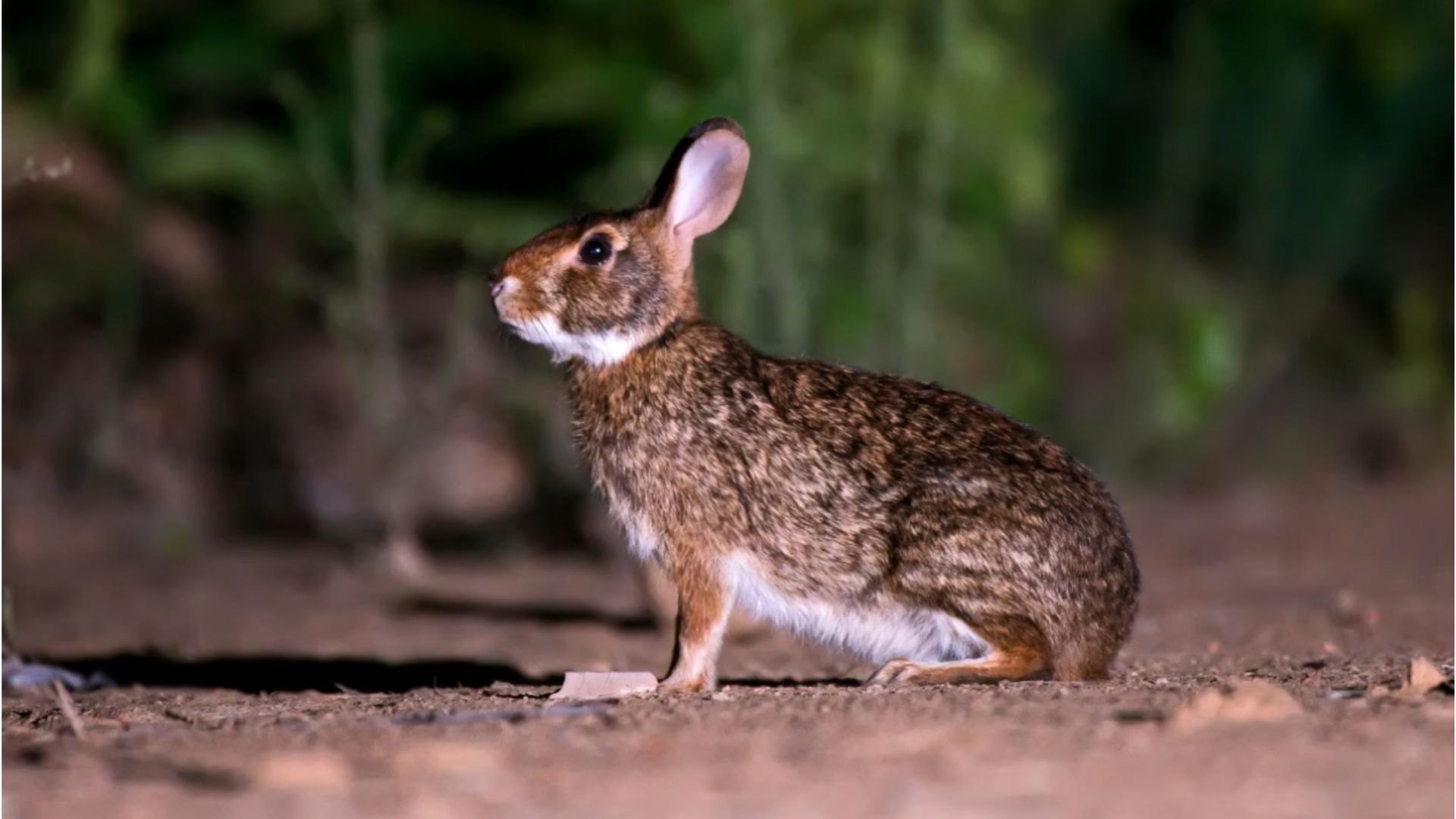
An almost invisible creature that inhabits Brazil and reveals how much we still don’t know about our own biodiversity
Did you know that there is a rabbit native to Brazil that lives very close to us, but almost no one knows about it? This is exactly what happens with the tapiti, a discreet, small animal that is extremely adapted to Brazilian forests. However, despite being present for decades in various biomes, its existence still goes unnoticed by most of the population.
This information was released by “Instituto Últimos Refúgios”, based on reports from nature photographer Leonardo Merçon, who has been following the species for over 20 years on expeditions across Brazil. According to him, the most striking contact occurred recently during an expedition in Santa Teresa when he found a tapiti that had been run over — a moment that dramatically revealed the silent vulnerability of these animals.
Over more than two decades exploring natural environments, the tapiti has always been present. However, its discreet nature makes it rarely seen. This behavior, combined with its efficient camouflage, directly contributes to the species remaining unknown — even though it is literally around us.
-
Explorers investigate one of the most secret locations in the United States.

-
This cave is so enigmatic that the U.S. Government has prohibited anyone from entering it since January 1940.

-
The Argentine province is reconstructing the course of its rivers with 18,000 meters of refurbished channels, using local mining companies that are doing the work for free, and the first real test with heavy rain in March 2026 showed that the water stayed within the banks where it used to flood everything.

-
Train without a destination in RS has turned into scrap, 75% of the tracks have disappeared and 500 wagons are stuck in a 3 km queue, the network has dropped to 900 km and the government promises recovery by 2026.

The tapiti: the Brazilian wild rabbit that lives in the Atlantic Forest and in areas close to humans


The tapiti (Sylvilagus brasiliensis) is a small Brazilian wild rabbit, with brown fur and shorter ears compared to European or pet rabbits. This physical characteristic is, in fact, an adaptation to the natural environment, helping with camouflage and survival.
This animal primarily inhabits the Atlantic Forest but can also be found at forest edges, wet areas, and even in human-modified environments, such as plantations and backyards near native vegetation. In fact, there are frequent records in Espírito Santo, especially on dirt roads and rural areas.
Additionally, the tapiti has predominantly nocturnal and solitary habits. It usually comes out to feed in the early evening or at dawn, consuming grasses, leaves, and other vegetation available on the forest floor. In other words, it is an animal that lives in constant discretion, avoiding direct contact with humans and predators.
For this reason, even though it is present in various regions of Brazil, few people know that it exists. And this raises an important question: how many other species live around us without us even being aware?
Small but essential: the role of the tapiti in the balance of Brazilian forests
Despite its small size and low visibility, the tapiti plays a fundamental role in the functioning of ecosystems. Like other small mammals, it directly contributes to seed dispersal, helping in the regeneration of vegetation and the maintenance of biodiversity.
Moreover, the tapiti is also part of the food chain, serving as prey for various natural predators. Thus, its presence helps maintain ecological balance, sustaining complex relationships within the natural environment.
While large animals tend to attract more attention — such as jaguars or rare birds — it is precisely these small beings, often ignored, that ensure the continuous functioning of forests.
Therefore, ignoring the existence of the tapiti is, in practice, ignoring an important piece of environmental balance.

The silent threat: why the tapiti is disappearing in the Atlantic Forest
Unfortunately, the current scenario is not positive. Especially in the Atlantic Forest — one of the richest and most threatened biomes on the planet — the tapiti faces serious risks. In fact, throughout Leonardo Merçon’s journey, it has been possible to observe the change in the species’ status: from threatened with extinction to “ENDANGERED”.
This data is alarming and reflects a larger problem: the continuous destruction of natural habitats.
Currently, only fragments of the original Atlantic Forest remain. What was once a continuous forest is now divided into small isolated areas. As a result, species like the tapiti become extremely vulnerable.
Among the main threats are:
- Habitat loss
- Forest fragmentation
- Roadkill
- Uncontrolled urbanization
Additionally, the lack of connected areas makes it difficult for the species to survive, as it depends on vegetation cover and quiet environments to reproduce and feed.
Consequently, many of these animals end up disappearing without society even noticing — which makes the problem even more serious.

An urgent alert: protecting what we don’t even know yet may be the biggest challenge in conservation
In light of this scenario, an inevitable reflection arises: how to protect something that most people don’t even know exists?
How many times have we passed by a road, trail, or wooded area without imagining that a Brazilian wild rabbit lives there? This lack of knowledge creates a disconnection between people and nature, making conservation actions more difficult.
Entering a forest without knowing its species is like entering a library without knowing how to read. In other words, one completely loses the value of what is around.
In this sense, the tapiti becomes a powerful symbol. It represents not only Brazilian biodiversity but also the collective ignorance about it.
Therefore, protecting nature begins with a simple yet essential step: recognizing its existence.
And perhaps this is the greatest message left by this small animal.
With information from: Folha Vitoria by Leonardo Merçon







Seja o primeiro a reagir!