





 Portuguese
  English
  Spanish
  4 min of reading
  0 comments


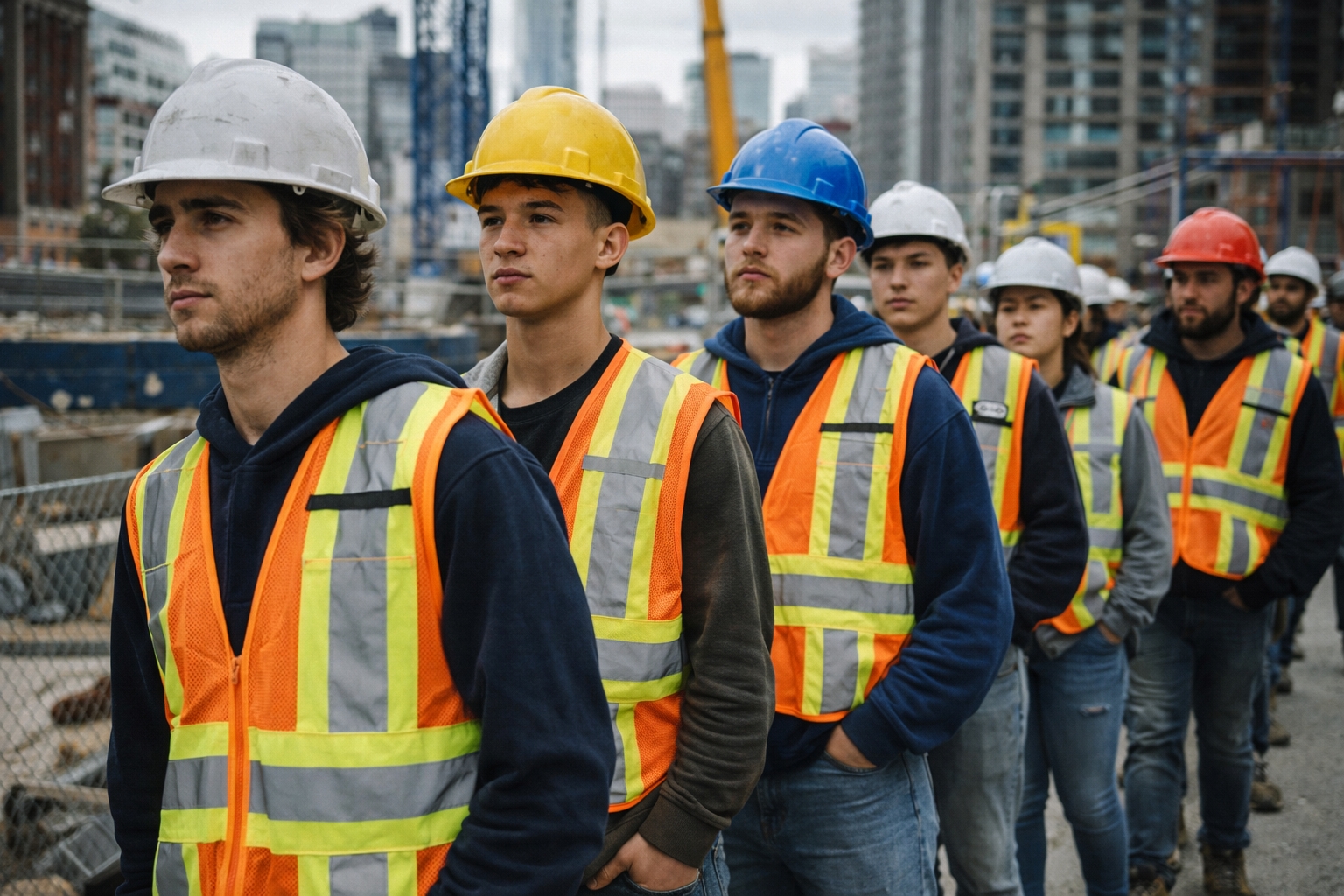
With fewer opportunities in the traditional market and fear of artificial intelligence, American youth line up for jobs in construction and transform the sector into a new highly competitive career path.
Instead of backpacks heading to university, lines during the early morning on the sidewalks. A silent but increasingly visible movement is changing the future of work in the United States. Young people are abandoning college and competing for jobs in construction, attracted by high salaries and a field where artificial intelligence does not yet threaten jobs.
In cities like New York, the scene has become routine. Companies open applications, and within minutes, all positions disappear. In some cases, more than 100 candidates compete for fewer than 20 opportunities, revealing a market in full boil.
New generation exchanges diploma for hard hat
The profile of workers has changed rapidly. Previously, the construction sector was dominated by professionals over 30 years old. Now, young people in their 20s are entering directly after high school, without going to college.
-
The minimum wage for 2027 could reach R$ 1,717, and the value circulating in government circles is beginning to raise curiosity as it suggests possible changes in income, social benefits, and the purchasing power of millions of Brazilians.

-
These 6 professions allow you to retire early with just 15 years of contribution and 55 years of age.

-
The plan of R$ 526.3 billion that could reindustrialize Rio de Janeiro by 2028 includes nearly 2,000 projects mapped by Firjan and creates one of the largest waves of investments ever concentrated in a single Brazilian state.

-
The shot backfired: the United States sanctions intended to curb China ended up creating a record revenue boom for Chinese chip manufacturers, with growth of up to 247% in a single year.

The change reflects a harsh reality. Securing the first job in the traditional market has become more difficult. In New York, the number of entry-level positions fell by 37% between 2022 and 2024, reducing the chances for those trying to start a career in administrative, retail, or technology fields.
In light of this, many young people have begun to see construction as a more concrete alternative. Instead of sending dozens of resumes without response, they seek a direct path to work and income.
Artificial intelligence accelerates course change
The advancement of artificial intelligence weighs directly on this decision. Recent research indicates that most young Americans believe that technology may replace traditional roles in the coming years.
Fields such as programming, customer service, and administrative tasks are already showing signs of reduced hiring of young people. This increases the insecurity of those considering investing years in academic training without a guarantee of return.
In contrast, manual jobs are gaining strength. Roles in construction, maintenance, and installations are seen as more secure. Many young people claim they prefer a stable profession today rather than betting on careers that may disappear with automation.
High salaries transform the sector into a target of dispute
In addition to security, money speaks loudly. Unionized apprenticeship programs offer salaries from the start and benefits such as health insurance.
After training, specialized professionals can achieve earnings close to $100,000 per year, equivalent to about R$500,000. This financial potential helps explain the explosion in demand.
The result is a race for positions. The number of candidates has increased by about 20% in some areas and has even grown by 50% in specific construction sectors in recent years.
Social media boosts the race for jobs
The internet has also accelerated this movement. Profiles on social media have begun to share application dates and opportunities in real-time.
As a result, young people who previously did not even consider working in construction are now entering the competition. Quick information has transformed access to jobs and increased competition nationwide.
College loses ground as the only path
Experts point out that this trend reveals a profound change in mindset. For decades, college was seen as a guarantee of professional success. Today, this promise no longer seems so solid for the new generation.
More and more young people are seeking alternatives that offer quicker financial returns and stability. At the same time, they find in construction a sense of belonging and appreciation for manual labor.
Still, the decision is not always simple. Many face resistance from family, especially because it is a physically demanding activity.
Investments in infrastructure expand opportunities
The scenario is also driven by large investments. In New York alone, billions of dollars are being allocated to infrastructure projects, with plans to create about 30,000 apprenticeship positions by 2030.
Professional training programs are seeing record demand. In some courses, more than 250 people compete for fewer than 20 spots, showing that demand is only growing.
With construction advancing and the need for skilled labor, the sector is expected to continue attracting young people in the coming years.
What lies behind this historical change
The choice of construction is not just financial. It reflects a new perspective on work, security, and the future. Young people are prioritizing stability, immediate income, and protection against automation.
This movement could redefine the labor market in the United States. And if it continues at this pace, construction may cease to be seen as an alternative and consolidate itself as one of the main choices of the new generation.
If you think this trend could reach Brazil, leave your comment and share this post with those who follow changes in the labor market.










Seja o primeiro a reagir!