





 Português
  Inglês
  Espanhol
  4 min de leitura
  0 comentários


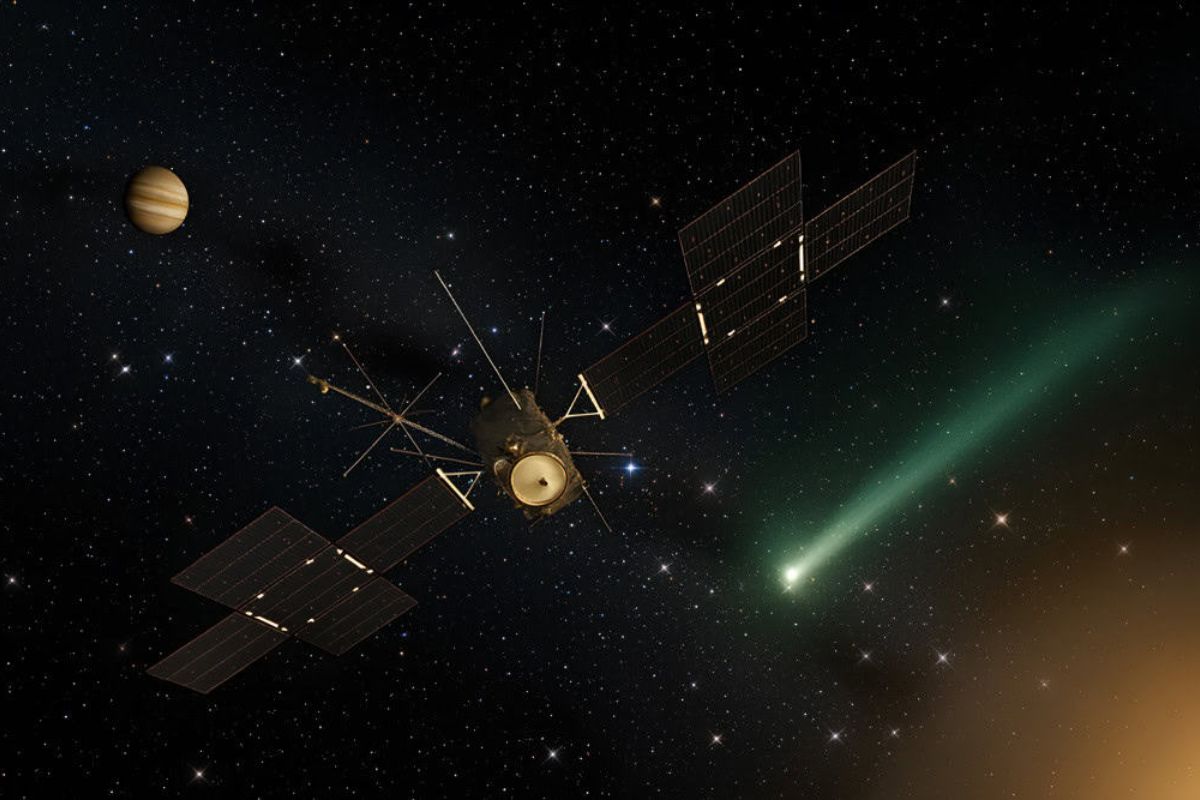
3I/ATLAS Changes Color, Displays Non-Gravitational Acceleration, and May Be the Strangest Interstellar Comet Ever Monitored, According to Photometric Analyses and Recordings from Space Observatories
3I/ATLAS is the third confirmed interstellar visitor to cross the Solar System and, as it approaches perihelion, it has begun to exhibit rapid changes in color and brightness associated with the ejection of gas and dust. Records from solar instruments indicate that the intensity of blue has increased compared to the Sun, along with a magnitude outburst that brought the comet to about 9, a range reachable by small telescopes and good quality binoculars.
In addition to its chromatic aspect, 3I/ATLAS has drawn attention due to its unexplained acceleration beyond gravity, consistent with sublimation jets that act as a continuous thrust. Preliminary estimates suggest a loss of up to one-tenth of its mass in just a few months, with the possibility of forming a plume detectable by spacecraft aimed at the heliosphere and the Jovian environment.
What Makes 3I/ATLAS a Unique Case
3I/ATLAS combines three uncommon signals when observed together: sudden brightness variation, tendency toward blue in instrumental records, and additional acceleration beyond the gravitational field.
-
With an unusual prize, Japan transforms office chairs into a resistance race on the streets, ISU-1 Grand Prix grows, fills stages, and pays 90 kilograms of rice.

-
House in England with a 7.6-meter shark embedded in the roof attracts attention worldwide and becomes a curious attraction in Oxford.

-
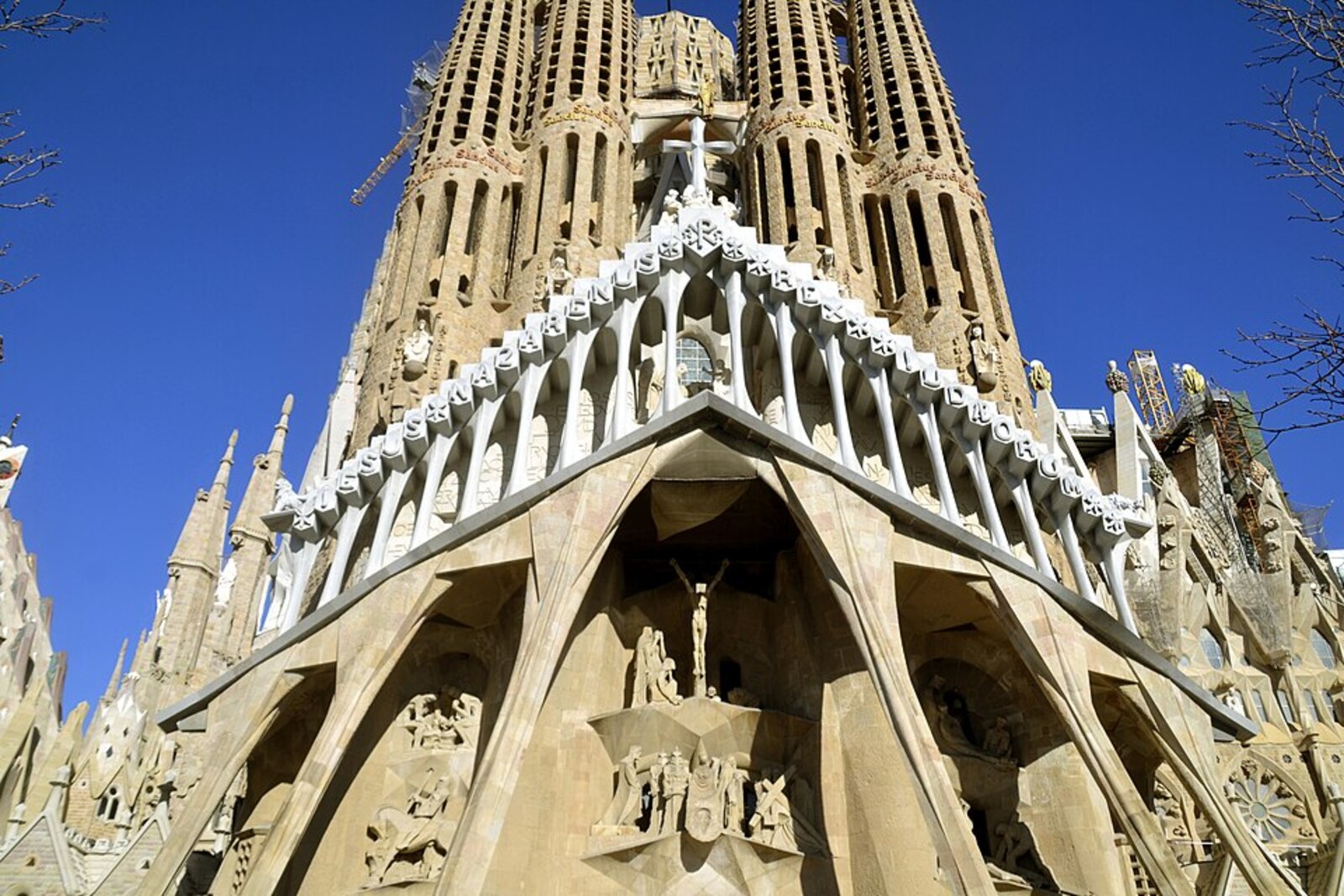
Masterpiece in Spain, under construction since 1882, receives 4.8 million visits in a year and impresses with its gigantism and architecture.
-
Attracting around 250,000 people a year, a lighthouse 200 meters from the sea, on a 60-meter high cliff, on the North Sea coast in Denmark, becomes one of the most impressive examples of how nature can threaten historical buildings.


Each of these phenomena has been observed in comets before, but the simultaneity and intensity observed here constitute a pattern outside the expected range for objects coming from the Oort Cloud, especially for an interstellar body.
In scientific practice, this positions 3I/ATLAS as a natural laboratory to investigate volatile chemistry, jet dynamics, and the evolution of fragile nuclei formed in extrasolar environments.
The operational hypothesis is that asymmetric jets, activated by solar heating, are altering the angular momentum and photocentric trajectory of the comet, generating measurable thrust.
Blue Color and What Photometry Indicates
The increase in the blue component suggests changes in composition and grain size of the dust, along with possible emission lines of molecular fragments produced by sublimation.
This chromatic behavior is compatible with the exposure of fresh material after surface fractures, revealing volatile layers that have not undergone extensive thermal processing.
The interpretation also allows for the possibility that sublimated carbon dioxide before water could have cooled regions of the nucleus, delaying the release of water vapor and causing a short-term imbalance.
The result would be a luminous peak stronger than typical for long-period dynamic comets, with a spectral signature leaning toward blue.
Non-Gravitational Acceleration and Mass Loss
The reported additional acceleration when 3I/ATLAS was about 203 million kilometers from the Sun is consistent with sublimation jets acting as small rockets.
The thrust depends on the gas production rate, the geometry of the jets, and the rotation of the nucleus.
When sustained, this mechanism leads to significant mass loss, estimated to be up to one-tenth of the total over just a few months.
This escape regime could generate a vast plume, with fine particles and ions distributed along the anti-solar direction.
In such scenarios, the pseudo-nucleus may appear displaced, and the tail exhibits filamentary textures that vary with diurnal activity and the active topography of the nucleus.
Visibility and the Role of Probes
With perihelion already passed, the expectation is for a gradual return to visibility from Earth, with brightness conditioned on how much the nucleus has preserved of exposed volatiles during the passage.
Photometric oscillations are not ruled out, given the unpredictable nature of newly heated comets.
Space missions dedicated to the solar environment and the Jovian system may capture signals from the plume and variations in the dust envelope.
Even opportunistic observations, during bright comet campaigns, help to close the balance of mass and energy of 3I/ATLAS post-perihelion.
Why 3I/ATLAS Matters to Science
Interstellar objects like 3I/ATLAS carry chemical and textural signatures from protoplanetary disks foreign to ours.
Each light curve, every color variation, and every acceleration measurement inform models about planetesimal formation, cohesion of porous nuclei, and volatility in low-temperature regimes.
By combining records from solar probes, professional and amateur telescopes, the community obtains a dynamic and multispectral portrait of how primordial materials respond to the Sun’s thermal bath.
This broadens understanding of the diversity of comets and how universal processes shape small bodies in different corners of the galaxy.
What to Watch for in the Coming Weeks
The observational priority involves monitoring the evolution of brightness and the persistence of the blue hue, seeking correlation with episodic jets.
Mapping morphological changes in the coma and tail helps infer rotation and location of active sources.
If the predicted plume is confirmed, measures of polarization and narrow-band photometry could clarify the dominant chemistry.
For ground observers, the strategy is to record short time series in standardized filters, maintaining careful calibration to compare distinct epochs.
For dynamic modeling, orbital refinements with non-gravitational terms will allow for reconstructing the thrust history of the object.
3I/ATLAS solidifies its status as a remarkable case by exhibiting additional acceleration, intense blue color, and rapid brightness variation within a short interval.
Each new measurement adds a piece to the puzzle of how interstellar materials behave while traversing our cosmic backyard.
Would you observe 3I/ATLAS in the post-perihelion phase with your current setup, or would you wait for a brightness confirmation to plan the session?









-

2 pessoas reagiram a isso.