





 Portuguese
  English
  Spanish
  6 min of reading
  0 comments


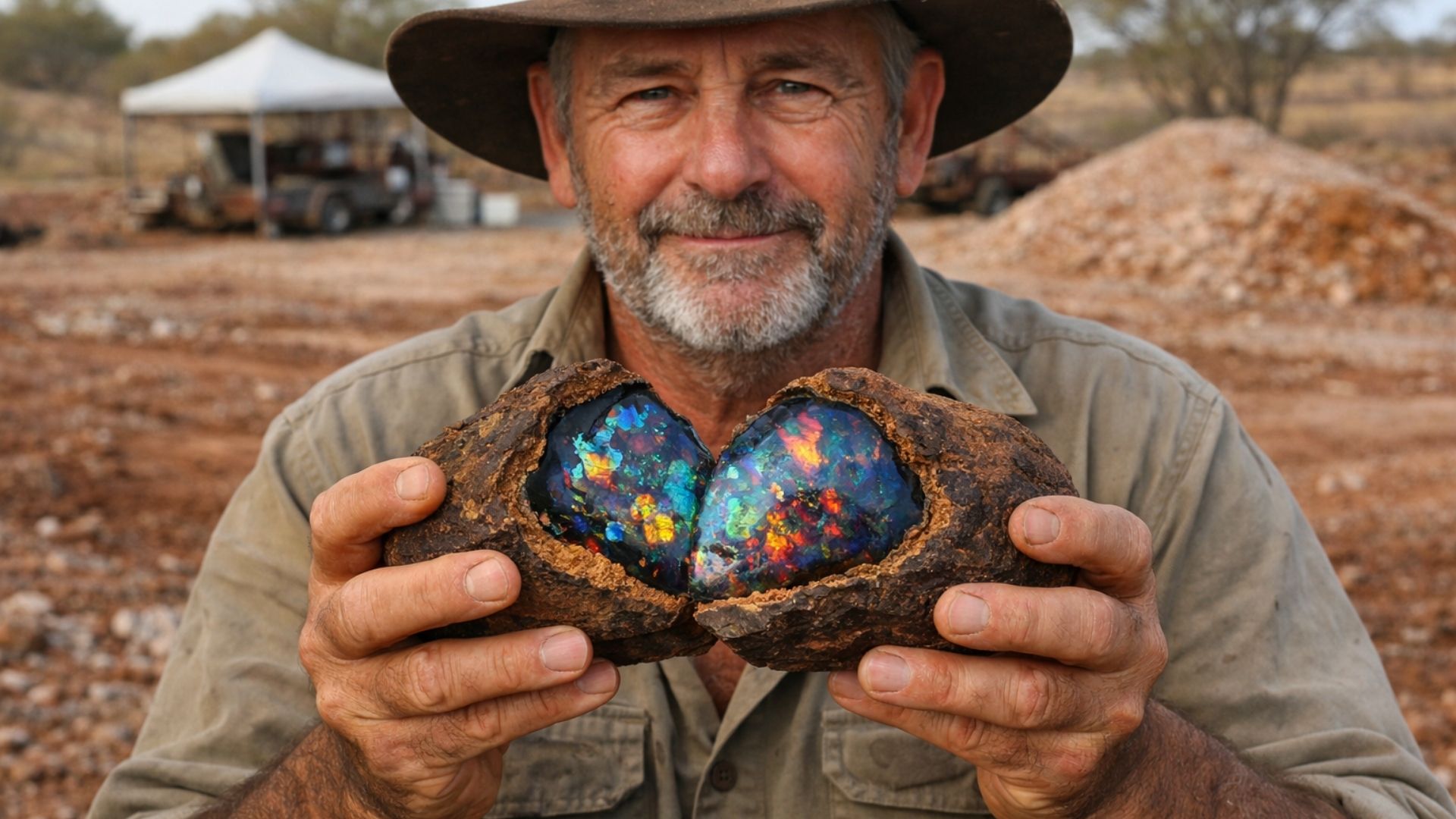
Discovery In Mining Area In Queensland Exposed Rare Opal Inside Ironstone, Weighing Nearly 400 Grams And Size Comparable To An Avocado, After Cutting Heavy Rock By Miner, And The Piece Ended Up Incorporated Into Public Collection In Canberra.
A miner from inland Queensland, Australia, found a rare opal while cutting an unusually heavy rock covered by a layer of ironstone, a type of ferruginous concretion.
The find, made in October 2020 in a mining area near the locality of Yowah, in the southwest of the state, revealed a formation known as “Yowah nut”, which is characterized by hiding a precious opal core inside a hard, dark shell.
The specimen was named “Yowah Moon Opal” and, according to information released by authorities and experts connected to the geoscientific area of the Australian government, weighs nearly 400 grams and has a size comparable to that of an avocado.
-
After China, it’s now the turn of the USA to ‘secure’ a share of Brazil’s natural resources: the country buys critical rare earths for R$ 3 billion and enters the center of the global technology dispute.
-
Rare earths are in everything, from cell phones to bullet trains, and what almost no one realizes is why they have become the target of such a delicate global war.
-
Brazil extracts 26.3 million tons of ore from what was previously treated as waste, transforming residues into wealth, producing over 3 million tons of sand, and demonstrating how national mining is relearning to generate value.

-
A $3.5 billion megaproject in Latin America pumps desalinated seawater at 1,050 liters per second over 194 km to keep a copper supermine in the Andes operational for another 20 years.

The same investigation indicated that the piece could reach up to AU$ 200,000 in the international market, but it was eventually acquired by a public Australian institution to remain in the country and be exhibited to the public.
Piece Incorporated Into Public Collection And Exhibition In Canberra
The story gained attention after confirmation that the specimen became part of a national collection related to geosciences and would be put on display in Canberra, the Australian capital.
The purchase was made possible with support from a federal cultural heritage preservation program, mentioned in official announcements about the incorporation of the item into the collection.
As a result, the case moved from the realm of finds restricted to the collectors’ market and began to be treated as a piece of scientific and cultural relevance, associated with the history of opal mining in the region.
Dave Darby And The Moment The Rock Was Cut

The miner responsible for the discovery was identified in Australian reports as Dave Darby, described as an opal miner working in the Yowah area and belonging to a family connected to local mining.
According to published reports, he noticed that the rock was heavier than usual and decided to cut it.
Upon opening the “shell” of ironstone, he saw a set of intense colors, with shades of blue and green contrasting with the brown tone of the outer layer.
The record of the episode describes his immediate reaction of surprise upon encountering the luster of the opal inside the stone.
What Is “Yowah Nut” And Why The Region Is Known
The specimen is classified as “Yowah nut” because of its rounded shape and typical structure: a core of precious opal surrounded by an outer layer of ironstone.
This type of occurrence is specifically associated with the Yowah region, cited as a unique location for this material.
Mining there is old and dates back to the late 19th century, when opal exploitation began to take hold in inland Queensland.
In the regional context, the search for “nuts” is part of the routine for miners and artisans who work on transforming the pieces into jewelry and objects, but finds with unusual dimensions and quality are described as rare.
“Yowah Moon” And The Mining Site Brandy Gully
The name “Yowah Moon” was given by the discoverer himself in reference to the rounded shape and visual effect of the opal core, compared to the appearance of a full moon in a clear sky of the outback.
Austrian reports also noted that the piece was found at Brandy Gully, a mining site associated with the miner’s family and mentioned as an area of importance in the local history of opal.
Institutional information about the exhibition indicates that this site has been explored since the early 20th century and is still cited as part of the heritage of mining in Yowah.

Potential Value, Official Purchase And Permanence In Australia
The potential value of up to AU$ 200,000 was reported as a possibility in case of sale to the highest bidder, including interested parties from outside Australia.
Still, the specimen was purchased by a public institution for AU$ 100,000, a value disclosed in reports on the acquisition process.
The purchase, according to the public description of the case, was supported by a federal mechanism aimed at keeping relevant items in the country and favoring public access.
The institution that received the specimen was Geoscience Australia, the scientific agency of the Australian government, which indicated the inclusion of the piece in the “Rocks That Shape Australia” collection, presented to the public in Canberra.
Scientific Relevance And Rare Characteristics Of The Specimen
The choice for a sale to a public collection was described as aligned with the miner’s desire to keep the opal in Australian territory and make it accessible.
In communications associated with the receipt of the item, the agency mentioned the role of safeguarding relevant samples so they remain in the country and can be seen by visitors, in addition to stimulating interest in geology and the history of opal itself.
The same line of communication noted that the find was presented as part of an exhibition installed at the headquarters of Geoscience Australia, with access aimed at visitors and educational activities.
Part of the scientific and museological interest in the specimen was publicly explained by the rarity of finding a large, well-formed “Yowah nut” with a shape considered more complete than that observed in many similar specimens.
The “avocado” shape, cited in official and journalistic texts, appears as a striking visual characteristic.
In institutional communication, the piece was also associated with the Cretaceous period, reinforcing the understanding that it is a material formed in very ancient geological times.
Local reports mentioned estimates ranging from tens to over a hundred million years for the formation of this type of occurrence, connecting the material to the timeframe during which dinosaurs lived on Earth, within the mentioned period.
Artisanal Opal Mining And The Routine In The Outback

The presence of the specimen in a public collection also shifts the focus of the news beyond its price.
The announcements about the exhibition highlight that opals are a recognized hallmark of Australian geology and that they are still extracted through artisanal mining, often in small, family-run operations.
In the specific case of Yowah, the work is described as a combination of practical experience, reading the terrain, and persistence, as ironstone concretions can hide opals of varying quality and, often, without clear external signs.
Identity, Context Of Filming And Public Disclosure
The disclosure of the case also recorded biographical aspects related to the miner and his family history in the region, including the continuation of mining activity over decades.
In institutional material, it was noted that the find occurred while he was participating in a filming for a television program, a detail mentioned as part of the context of the moment when the piece was found.
Furthermore, the communication about the exhibition mentioned the indigenous background of the miner, presented as an element of identity and connection to the territory, without altering the central aspect of the case: the discovery of a rare and valuable material amidst a mining routine.
Exhibition “Rocks That Shape Australia” And Path To The Collection
The exhibition in Canberra was publicized as part of a public visitation agenda, with the piece elevated to the “center” of a collection dedicated to rocks and samples that helped shape the country’s history.
By incorporating an item of great visual appeal and high potential value, the institution also broadened the narrative of opal mining, connecting the reality of the outback to the national showcase.
The public disclosure of the acquisition value, government support, and exhibition location contributed to documenting the journey of the piece from the mine to the collection, without relying on private reports or market intermediaries.
With a stone like this in hand, still closed inside ironstone, would you choose to open it yourself to see what’s inside, or would you prefer to seek specialized appraisal before cutting it?






-

-

2 pessoas reagiram a isso.