





 Portuguese
  English
  Spanish
 5 min of reading
  13 comments





Billion-Dollar Mining Project Advances in Tocantins and Attracts Attention for Its Size, the Numbers Released, and Its Potential Impact on a Small Municipality, Located Just Over 90 Kilometers From the Capital Palmas, Amid Environmental Licensing and State Government Negotiations.
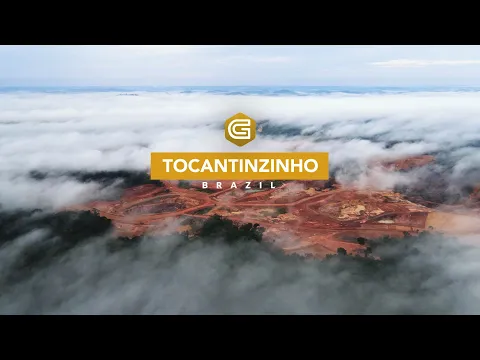
A gold mining project in Monte do Carmo, a municipality in Tocantins with 5,694 residents, is in the licensing phase and forecasts initial investment of US$ 250 million, a figure that has been disclosed as equivalent to about R$ 1.3 billion.
The estimate presented by the state government and company representatives is that the future operation will have the capacity to process 6,000 tons of ore per day and create approximately 2,000 direct and indirect jobs.
The initiative has been taken on by the mining company Hochschild Mining, which acquired the project for US$ 60 million, according to information released by the group itself and the government of Tocantins.
-
Goodbye iron: new technology from Xiaomi promises to revolutionize the way we iron clothes with 500 kPa steam, continuous flow of 120 g/min, heating in 65 seconds, and six smart modes for different fabrics.

-
Rio Pardo, the most mysterious city in Rio Grande do Sul: untouched Pampas castle, the missing treasure of the Devil Boy, bride’s saint, invisible tunnels, and a 200-year curse today.
-
China retires the J-7 fighter after years of military protection and can now transform military items into drones, following more than 60 years of operation of the J-7, derived from the MiG-21, with thousands of units produced and strategic use in the PLAAF and PLANAF.

-
Volunteers are sought to live in the mountains for a month: a study pays people to stay at 2,500 meters, with 24-hour monitoring of sleep, metabolism, and blood pressure.

The expectation is that the implementation and operation, planned for about 12 years, will change the economic dynamics of a small city located in the central region of the state and just over 90 kilometers from Palmas.
Licensing and State Government Negotiations in Tocantins
The project, named Monte do Carmo Project, has been presented as one of the largest recent movements in the mineral sector in the state.
While the licensing process continues, the government of Tocantins claims it is in communication with the company to address infrastructure, regulatory steps, and local impacts.
In a statement about the arrival of the project, Governor Wanderlei Barbosa (Republicans) said that the state administration intends to support the implementation.


“I am very pleased to be able to help start the implementation of this exploration project.
The government of Tocantins is available to help promote wealth and development in Monte do Carmo, and what we want is for this development process to reach all nearby localities,” declared Barbosa.
This statement came during negotiations at the Palácio Araguaia with company representatives, in an effort to expedite the necessary steps before the start of construction and the installation of support structures.
On the other hand, the project’s advancement depends on environmental and administrative authorizations and conditions that often require deadlines and technical analyses.
Acquisition of the Asset and Numbers Released to the Market
The project was acquired for US$ 60 million in a negotiation involving the previous holder of the asset, Cerrado Gold.
This figure has been cited in market announcements and also in institutional disclosures related to the project in Tocantins.
According to information passed to the state government, the expected initial investment is US$ 250 million.
Furthermore, the disclosed extraction and processing capacity is 6,000 tons of ore per day, with an estimated lifespan of 12 years, provided the viability projections are confirmed.
The numbers were presented as part of the planning for the implementation stage.
Nonetheless, the execution pace may vary depending on the progress of the licensing, the completion of supplementary studies, and internal group decisions regarding schedule and budget.
Monte do Carmo and the Impact on a Small Municipality
With 5,694 inhabitants, according to the 2022 Census by IBGE, Monte do Carmo ranks among the municipalities with the smallest population in Tocantins.
The combination of a limited local economic base and a large-scale project often generates expectations regarding job hiring, demand for services, and increased circulation of resources.
The city is located in the central region of the state and is connected to Palmas by highways that allow travel in just over an hour, depending on traffic conditions and the starting point.
This factor is cited by authorities as a logistical advantage, both for mobilizing workers and for hiring suppliers.
Still, in small municipalities, the arrival of such a large enterprise often amplifies infrastructure challenges, such as housing supply, healthcare services, public service capacity, and urban planning.
These issues are typically addressed in studies and licensing conditions, which may include mitigation measures and countermeasures.
Direct and Indirect Jobs at the Center of the Debate
The projection released for the Monte do Carmo Project is the creation of about 2,000 direct and indirect jobs.
Although the estimate is treated as potential, it appears as one of the main arguments used by authorities and representatives of the mineral sector to defend the project’s relevance.
In practice, part of these positions tends to concentrate in specific phases, such as construction and installation of the industrial plant, opening of operational areas, and hiring of outsourced services.
In the operational phase, the profile tends to require different specializations, with technical positions and continued demands for maintenance, safety, and logistics.
Depending on the project’s requirements and hiring policies, there may also be an impact on neighboring municipalities, as nearby cities often become part of the supply chain and service providers.
Therefore, the state government has spoken about development for nearby localities, as the governor noted when commenting on the initiative.
Mining Agency Talks About Changes in the Economic Landscape
The Tocantins State Mining Agency (Ameto) has also argued that the arrival of investment may reorganize the local economy.
The president of the agency, Milton Neres, stated that the public administration seeks to expand control over the productive chain and at the same time stimulate new projects.
“We are working to promote, regulate, and supervise the mining production chain, and Tocantins is showing results that demonstrate its potential.
With Hochschild’s arrival in our state, this is a historic achievement that promises to change the economic landscape of the Monte do Carmo region,” he said through the government’s advisory.
This statement reflects a state strategy to attract mineral investments and increase revenue related to the sector.
However, as is the case with any mining project, the announced economic impact coexists with the need for environmental monitoring, transparency regarding control measures, and public discussion of social effects.
What Has Been Released About the Planned Operation
The parameters released so far indicate an operation planned to last about 12 years, with processing of 6,000 tons of ore daily.
The company describes the Monte do Carmo Project as an asset at an advanced stage of studies and points out that the enterprise has already gone through significant licensing steps, although the process is still underway.
Meanwhile, the state government maintains a discourse of institutional partnership and support for implementation.
The transition between promise and reality, however, depends on objective milestones, such as the issuance of licenses, detailing the timeline, hiring suppliers, and defining how job opportunities will be distributed.
With such significant numbers for a small municipality, the question that remains is how Monte do Carmo will prepare to absorb the effects of mining and ensure that the positive impacts and obligations of the project are closely monitored by the community.








Infelizmente pra região as melhorias são muito poucas. Em detrerimento de tanto recurso valioso que eles extraem. Os aluguéis e alimentação sobem abusurdamente. Bom pra quem tem imoveis pra alugar e mercado. No demais o poder de compra da massa popular formada na sua maioria por pessoas de baixa renda. Fica pequeno. A mão de obra na maioria das vezes vem de fora de empresas terceirizadas. E as cidades continuam sem nenhuma melhoria ou investimentos social e de infraestrutura. Falo isto como moradora de uma dessas cidades afetadas pela extração de ouro por essas empresas bilionárias. E a cidadade caindo aos pedaços.
Os impactos que vai ficar pela eternidade dever ser medido,calculado nas esferas municipais , pois 12 anos passa muito rápido, depois disso o que será da cidade, os investimentos, como ficará?
Si essa riqueza tá no Brasil, pq nós não extraímos ela, temos q dar pra outros países? Os político tão vendendo nosso país,,,