





 Portuguese
  English
  Spanish
  5 min of reading
  0 comments


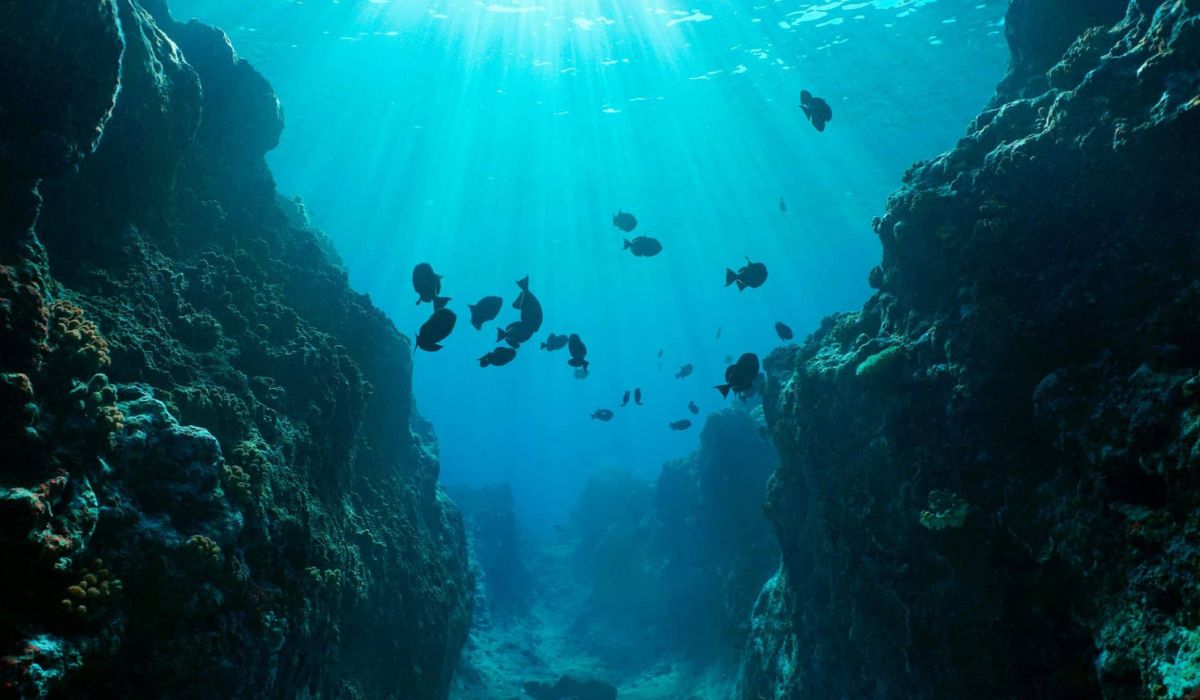
A Scientific Expedition to the Bottom of the Pacific Revealed Hundreds of Unknown Species and Brought New Data on a Little-Studied Ecosystem, at a Time When International Interest in Deep-Sea Mining is Growing in Search of Strategic Metals.
A large-scale scientific expedition in the Pacific Ocean identified 788 species living on the seafloor in the Clarion-Clipperton Zone, a vast area of abyssal plain between Hawaii and Mexico that concentrates deposits of polymetallic nodules of economic interest.
The survey involved 160 days of work at sea and years of laboratory analysis, with the collection of animals at about 4,000 meters depth.
Hundreds of the recorded species had not yet been described by science.
-
Goodbye iron: new technology from Xiaomi promises to revolutionize the way we iron clothes with 500 kPa steam, continuous flow of 120 g/min, heating in 65 seconds, and six smart modes for different fabrics.

-
Rio Pardo, the most mysterious city in Rio Grande do Sul: untouched Pampas castle, the missing treasure of the Devil Boy, bride’s saint, invisible tunnels, and a 200-year curse today.
-
China retires the J-7 fighter after years of military protection and can now transform military items into drones, following more than 60 years of operation of the J-7, derived from the MiG-21, with thousands of units produced and strategic use in the PLAAF and PLANAF.

-
Volunteers are sought to live in the mountains for a month: a study pays people to stay at 2,500 meters, with 24-hour monitoring of sleep, metabolism, and blood pressure.


The central objective of the research was to produce empirical data on the possible impacts of deep-sea mining on this environment.
The results were published in the journal Nature Ecology and Evolution, at a time of increasing global demand for metals such as nickel and cobalt, used in batteries and technologies related to the energy transition.
According to the authors, the lack of consolidated data on biodiversity at the bottom of the ocean made more accurate environmental assessments difficult.
The new information expands the scientific basis available for this debate.
Biodiversity at the Bottom of the Pacific Ocean
The studied area is in a region of permanent darkness, under high pressure and with limited food supply.
In these environments, organic particles slowly descend from the surface, sustaining low-productive food chains.
Data presented in the study indicate that the sediment deposition rate is extremely low, on the order of one thousandth of a millimeter per year, which helps explain why physical changes tend to persist for long periods.
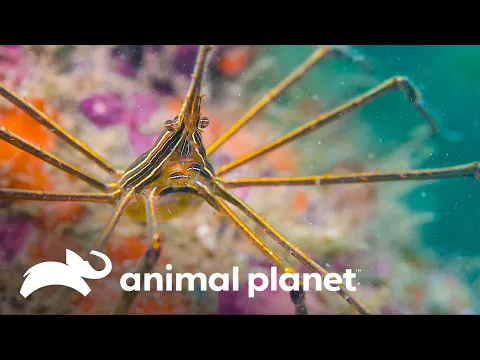

During the expedition, the researchers collected more than 4,300 animals.
The analysis of this material resulted in the identification of 788 species, including polychaetes, crustaceans, and mollusks.
The study also records a solitary coral classified as new to science.
The team highlights that some of these identifications were only possible after detailed laboratory analyses.
Another data point presented concerns population density.
In regions like the North Sea, a sediment sample can contain tens of thousands of individuals.
In the deep Pacific, similar volumes usually gather a comparable number of species, but only about 200 individuals, according to the authors.
This difference indicates less abundant populations, with potentially slower recovery after disturbances.
Use of DNA to Identify Marine Species
As many of the species had not been previously recorded, the researchers resorted intensively to molecular genetics tools.
The analysis of DNA allowed for the differentiation of visually similar organisms that are genetically distinct, which could have been classified as a single species based only on morphology.
According to the study, this distinction is relevant because different species can play specific roles in the ecosystem.
In abyssal environments, where available energy is limited, small variations in community composition can alter local ecological relationships.
For this reason, the authors argue that inventories based solely on visual observation tend to underestimate true biodiversity.
Impacts Observed in Deep-Sea Mining Tests
The work also analyzed areas subjected to tests with experimental equipment for collecting nodules from the seafloor.
In the trails opened by the machines, the researchers recorded a 37% reduction in the number of animals and a 32% drop in species diversity directly in the impacted areas.
According to the authors, the observed impact was localized and measured within the limits of the experiment.
Still, the data indicate significant changes in the structure of communities in these specific areas.

The study emphasizes that, in low-replacement rate environments, the physical removal of substrate can have prolonged effects, although the temporal extent of these effects still depends on further monitoring.
The researchers note that the results do not allow for automatic extrapolations to large-scale operations, but provide initial parameters for assessing environmental risks associated with deep-sea mining.
Deep-Sea Mining and Demand for Strategic Metals
The economic interest in the region is associated with the presence of metals considered strategic for the battery industry.
In the study’s outreach material, biologist Thomas Dahlgren states that these metals are considered scarce and that, until recently, there was little empirical evidence regarding the environmental impacts of their extraction in deep waters.
This data should support discussions at the International Seabed Authority, the body responsible for regulating activities in areas beyond national jurisdictions.
The entity uses scientific studies to define environmental criteria, monitoring requirements, and possible restrictions on exploration.
Still, the authors themselves emphasize that some uncertainties remain.
The Clarion-Clipperton Zone is extensive and exhibits environmental variations that have not been fully sampled.
This limits conclusions about the actual distribution of the identified species.
Environmental Protection Areas Still Little Explored
The region has areas designated for environmental protection, created to remain free from future mining activities.
According to environmental planning documents, these zones would function as ecological reference points and shelter for local biodiversity.
However, the study points out that many of these areas are still little-explored scientifically.
As a result, it is not possible to assert with confidence whether the species recorded in commercially interesting areas are also present in protected zones in similar proportions.
This gap is considered relevant by researchers, as the restricted distribution of species could mean that local impacts have broader consequences.
On the other hand, a wider distribution could reduce this risk.
The study concludes that, at the current stage of knowledge, there is not enough data to definitively answer this question.
As new surveys expand the biological inventory and controlled tests provide data on direct impacts, the discussion about deep-sea mining increasingly relies on empirical evidence.
It remains to be seen whether this set of information will be sufficient to guide regulatory decisions before the expansion of commercial activities at the bottom of the Pacific.






-

-

-

-

-

8 pessoas reagiram a isso.