





 Portuguese
  English
  Spanish
  4 min of reading
  1 comment


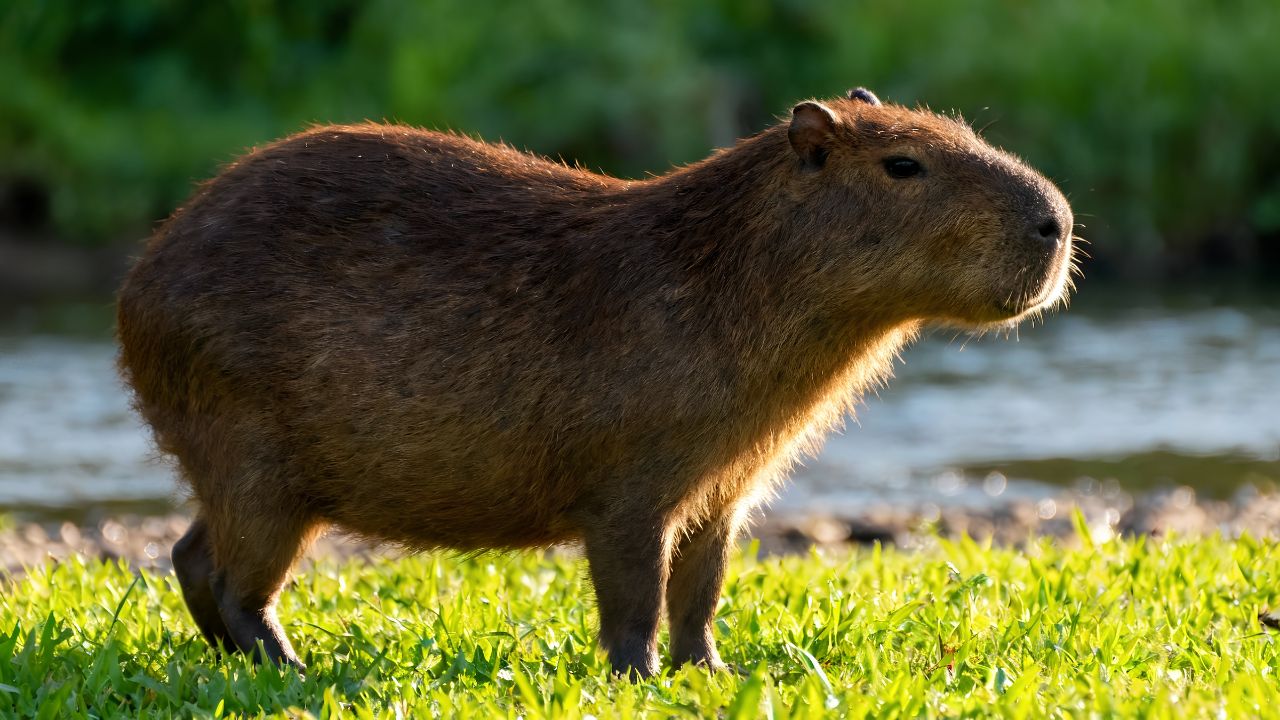


The Capybara (Hydrochoerus hydrochaeris), Largest Rodent in the World, Lives Near Water, Forms Groups and Has Adapted to Cities in South America.
Often seen walking peacefully along the banks of rivers, lakes, and even urban parks, the capybara has ceased to be just a wild animal and has become a constant presence in the daily lives of many South American cities.
The herbivorous mammal, recognized as the largest rodent in the world, occupies both natural and urban environments, lives in organized groups, and depends on water for survival.
This combination of size, social behavior, and adaptation helps explain why the species has spread nearly throughout South America and continues to attract the attention of researchers and residents.
-
A promise made to their father led three men to unearth a forgotten house that had been swallowed by time for over 70 years, in a story of memory, abandonment, and reconstruction that seems straight out of a movie.

-
A strong earthquake in Indonesia affects houses and schools, causes panic, triggers a tsunami alert, and records a rise in sea level of up to 30 centimeters in some areas.

-
The Argentine government celebrates the lowest poverty rate in 7 years, but experts warn that the methodology has changed, real wages have fallen, unemployment has risen, and the number of people on the streets of Buenos Aires has increased by 57% since Milei took office.

-
7.8 magnitude earthquake in Indonesia frightens the population, triggers tsunami alert, and hits an island with over 200,000 inhabitants this Thursday.


Why is the Capybara the Largest Rodent in the World?
The capybara (Hydrochoerus hydrochaeris) is found from Panama to southern Argentina, according to records from the International Union for Conservation of Nature (IUCN).
In Brazil, the animal occurs in almost all biomes, from the floodplains of the Pantanal to areas near large urban centers.
This geographical success is directly linked to the availability of water. Whenever it encounters rivers, lakes, or wetlands, the capybara establishes its territory.
No other living rodent reaches the size of the capybara. An adult can weigh about 55 kilograms, measure over 1 meter in length, and reach up to 62 centimeters in height.
Its appearance resembles that of an enlarged guinea pig. The robust body and coarse fur help the animal cope with hot and humid environments.
A Body Shaped for Water
The capybara’s connection to water is visible in its anatomy. The animal has three toes on the front feet and four on the back feet, which facilitates movement in flooded terrains.
Additionally, its eyes, nostrils, and ears are positioned on top of its head.
This way, the largest rodent in the world can swim almost completely submerged, keeping only the essentials out of the water.
Plant-Based Diet
The capybara is strictly herbivorous. Its diet includes grasses, aquatic plants, and riparian vegetation found along the banks of rivers and lakes.
To a lesser extent, it also consumes fruits, seeds, and flowers.
A common behavior is gnawing on tree bark, which helps wear down its continuously growing incisors.

Group Life and Social Organization of Capybaras
A capybara is rarely seen alone. The species lives in herds made up of a dominant male, several females, young, and subordinate males.
These groups occupy areas that can range from 10 to 200 hectares, divided into specific spaces for resting, feeding, and bathing.
When another group invades the territory, confrontations may occur.
Reproduction and Hierarchy
The capybara’s reproductive system follows a hierarchical logic. A single male usually mates with several females in the group, in a model similar to that of a harem.
Breeding occurs primarily in spring.
Each female can have between three and eight pups, which are born well-developed and quickly join the group.

Upon sensing a threat, the capybara makes sounds similar to barking.
Then, it runs towards the water, where it swims quickly to escape from predators.
This behavior reinforces the importance of aquatic environments as a natural refuge for the largest rodent in the world.
Capybara and Urban Life
With the advancement of cities and the reduction of natural habitats, the capybara has started to occupy parks, reservoirs, and urban green areas.
According to biologist Marcos Vinícius Rodrigues, consulted by National Geographic, the animal has become a “generalist.”
“It has become what we call a generalist animal, learning to socialize with human presence and adapt to cities,” said the specialist, highlighting that this adaptation is a survival strategy.
Conservation Status of the Capybara
According to the IUCN, the capybara is classified as a species of <strongleast concern in terms of extinction risk.
This is due to its wide distribution and presence in protected areas.

Still, accelerated urbanization and hunting continue to be local threats, especially in regions where the animal is exploited for meat and skin.
Even as the largest rodent in the world, the capybara maintains a calm and sociable behavior.
Its ability to adapt has turned the animal into a symbol of South American wildlife.
Understanding its habits is essential to ensure a balanced coexistence between humans and wildlife, especially in a scenario of increasing urban occupation.










They just want to exist and let exist… some humans should take notes