





 Portuguese
  English
  Spanish
 3 min of reading
  0 comments


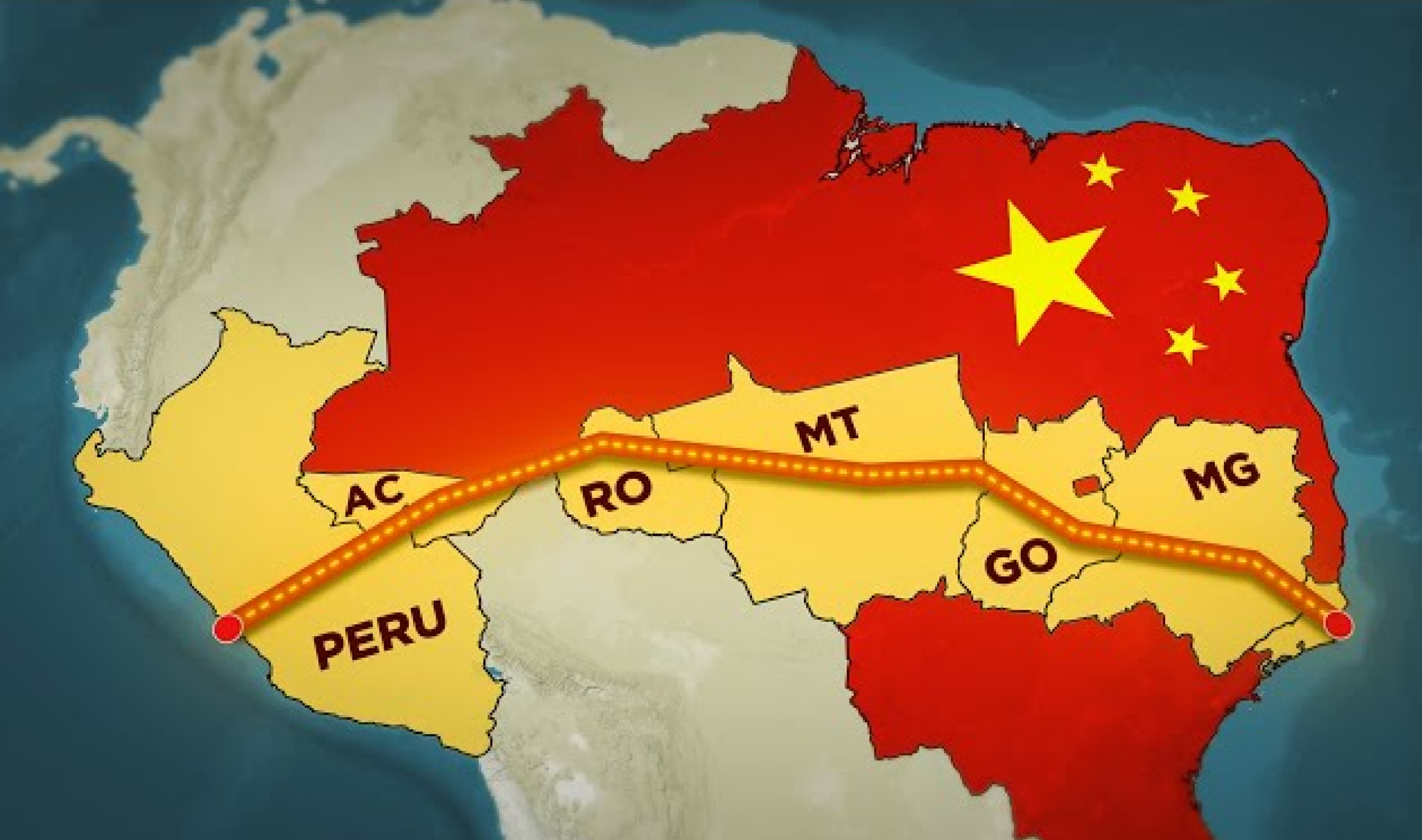
New Chinese Project Aims to Connect Brazil and Peru to the Pacific Ocean, Promising to Revolutionize Commercial Relations Between South America and the Asian Giant
South America, despite its geographical distance, is increasingly close to China, thanks to a series of agreements and bilateral projects. One of the main examples of this proximity is the ambitious project to build a railway that will connect Brazil to Peru, facilitating trade between South American countries and China, which is already one of the region’s main trading partners.
This project, part of an ongoing effort by China to expand its trade routes, is part of a larger strategy called “New Silk Road,” a series of initiatives aimed at creating a vast transportation network connecting Asia, Europe, Africa, and now South America. However, to understand the significance of this new railway, it is necessary to observe China’s growing role on the South American continent.
China as a Strategic Economic Partner
Over the past two decades, China has expanded its economic influence in Latin America. In 2002, trade between China and Latin American countries was around US$ 12.2 billion. By 2010, that number jumped to US$ 180 billion, and today it exceeds US$ 450 billion. South America has been a vital supplier of essential raw materials for the Chinese economy, such as soybeans, iron, copper, and oil.
-
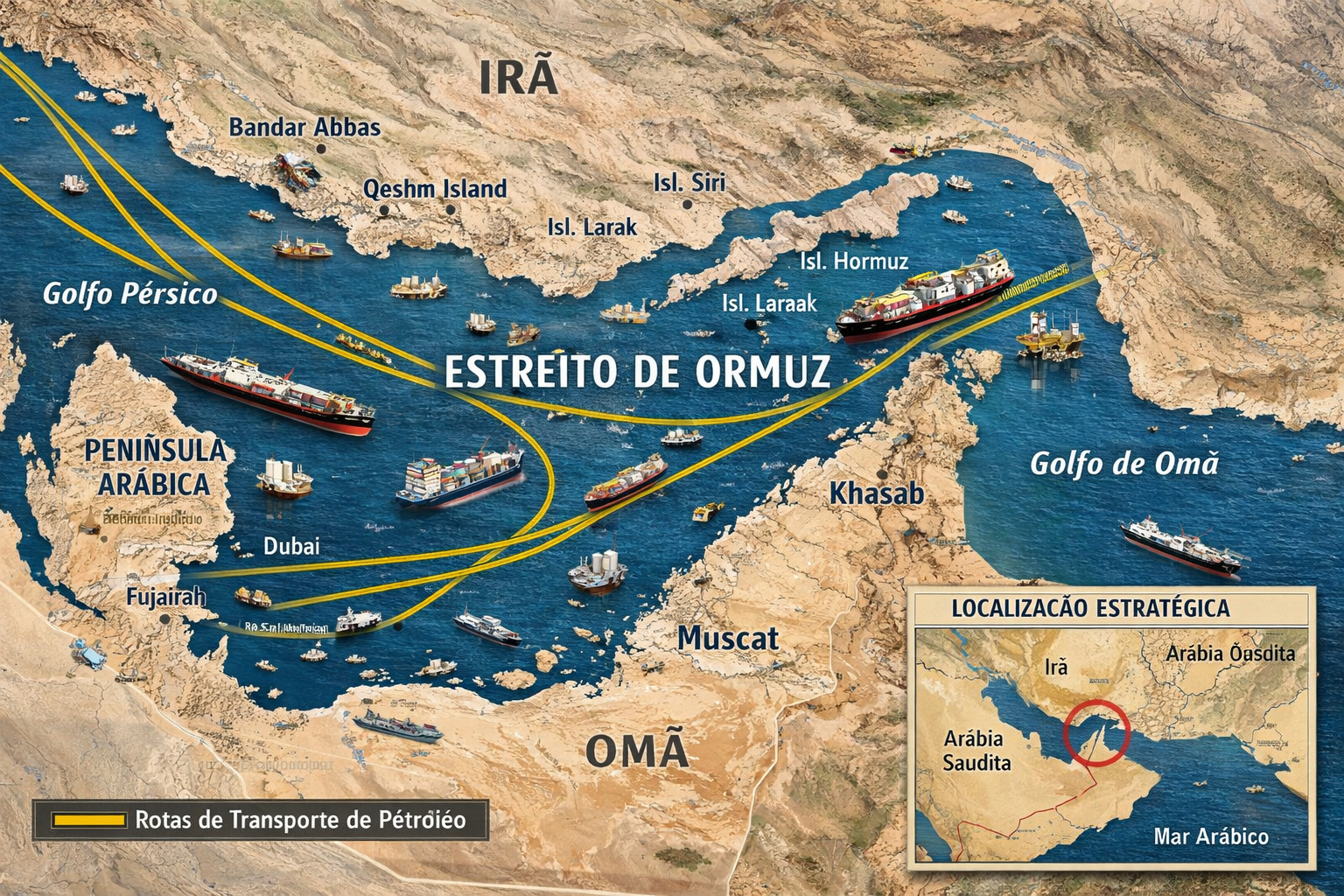
Global summit with over 40 countries pressures Iran for a blockade in the Strait of Hormuz and warns of direct impact on oil, food, and the global economy.
-
Russia has broken the U.S. maritime blockade to send oil to Cuba and is now loading a second ship while Trump says that “Cuba is next” in a possible military action against the island.

-
Spain challenges the USA and closes its airspace for operations against Iran, raising global tension and provoking the threat of a trade rupture.

-
While no other country manufactures tanks in Latin America, Argentina activates the TAM 2C-A2 and raises a curiosity about the technological lag in the region.


Brazil, for example, is one of China’s main partners, especially in agribusiness. More than 35% of Brazilian exports to the Asian country are soybeans, an essential resource to meet the growing Chinese demand for pork. Additionally, Brazilian iron ore supplies China’s giant steel industry, with emphasis on the mines located in Minas Gerais and Pará.
In Peru, China’s main focus is copper, a crucial mineral for the electronics industry and the renewable energy sector. The country is one of the world’s largest producers of the metal, and the proposed railway by China would facilitate the export of this resource to the Asian market.
The Transoceanic Railway: An Alternative to Maritime Routes
The main objective of the railway project is to create a faster and more efficient route between South America’s natural resources and Chinese markets. Currently, most products exported to China travel via maritime routes, which are often lengthy and expensive. The most common route involves crossing the Atlantic Ocean and circling the African continent, covering about 24,000 km, a journey that can take up to 40 days. Another route crosses the Panama Canal but often suffers from congestion, raising transportation costs.
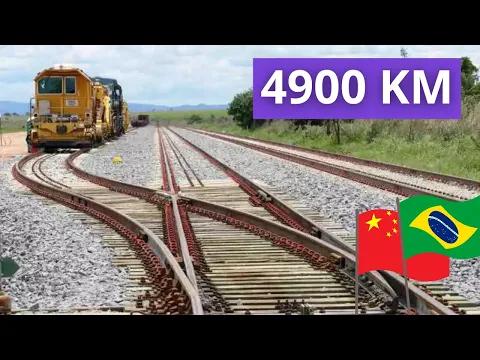

The proposal for the transoceanic railway promises to reduce transportation time to less than two weeks, shortening the distance to about 13,000 km. In addition to increasing efficiency, it would also significantly reduce logistical costs for both sides.
The Challenge of Construction
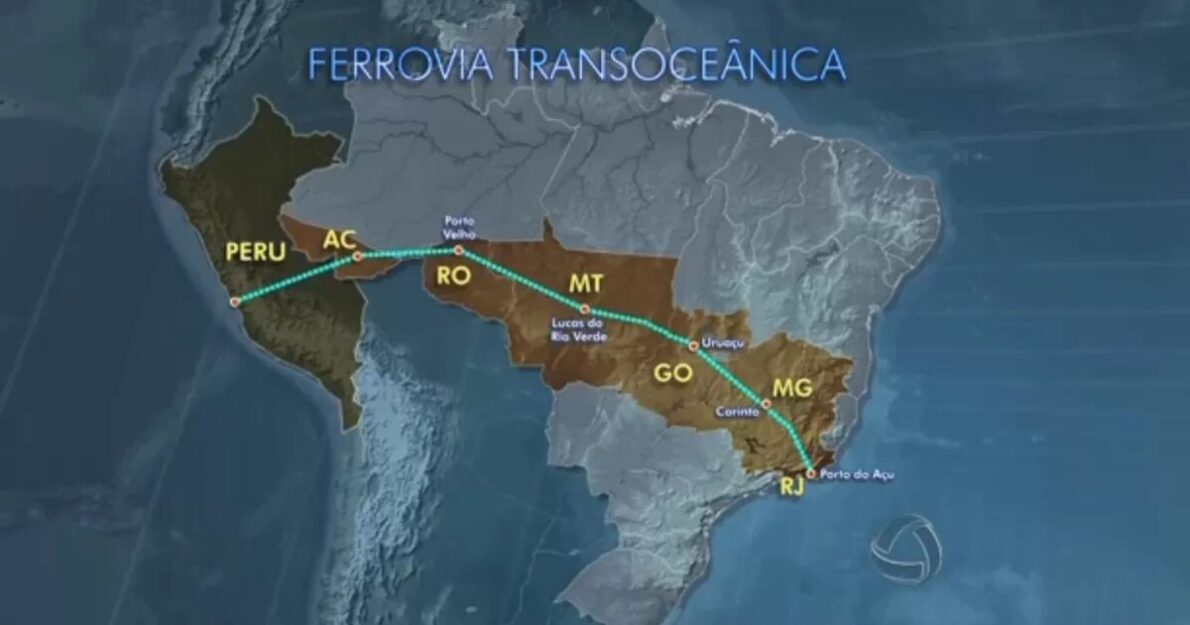
Building this railway, however, will not be an easy task. The project, which envisions connecting the Port of Açu, in the state of Rio de Janeiro, to the port of Ilo, on the Peruvian coast, will need to cross several geographical barriers, including the dense Amazon Rainforest and the Andes Mountains.
One of the main challenges is defining the route. Brazil and Peru have disagreements about the ideal path. While Peru prefers the railway to pass through a region located at 4,000 meters altitude, which would increase the cost by US$ 20 billion, Brazil advocates a lower route, at 2,700 meters, with a total estimated cost of US$ 50 billion. This difference needs to be resolved for the project to move forward.









Seja o primeiro a reagir!