






 Portuguese
  Spanish
  3 min of reading
  0 comments


Opportunities And Controversies Surrounding Cobalt Mining In Brazil, The Crucial Element For Global Energy Transition
Cobalt, often nicknamed “blue gold”, is a vital element for modern technology and the transition to clean energy. Its presence in lithium-ion batteries, essential for smartphones, laptops, and electric vehicles, has driven global demand for this metal. However, as the world seeks sustainable solutions, the cobalt mining process reveals a series of challenges and controversies, especially in Brazil, according to the video from the Elementar channel.
The Importance Of Cobalt In The Technological Era
Since the technological revolution, cobalt has established itself as an essential component in various industries. Used in lithium-ion batteries, it enables efficient energy storage, ensuring the thermal stability needed to prevent overheating, even in extreme conditions. In addition to batteries, cobalt is used in the manufacturing of airbags, diamond tools, paints, and even in steel alloys used in military applications.
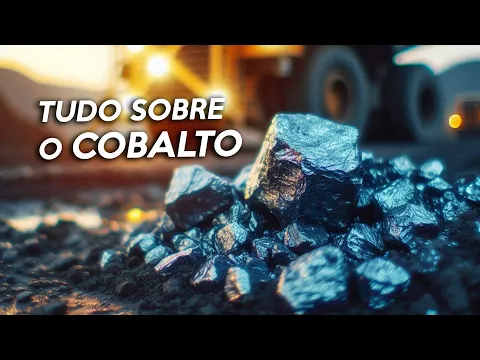

With the increased demand for electric vehicles and the global search for cleaner energies, the need for cobalt is on the rise. It is estimated that global demand for this metal will triple by 2025, driven mainly by the growing popularity of electric vehicles. The European Union, for example, plans to phase out the sale of gasoline and diesel vehicles by 2035, which will require greater production of electric cars, and consequently, more cobalt.
-
Helicopter Drops 180 Tons of Sand and Gravel on Swedish River to Revive Ecosystem Damaged by Decades of Exploitation

-
Brazilian Company Launches Retro Smartphone with 48 MP Camera, T9 Keyboard, and Privacy Features for Social Media-Free Use

-
Self-Taught Chinese Farmer Builds 5-Ton Submarine from Scrap, Launches It in Anhui River
-
Invisible Induction Technology Enables Wireless Power for Blenders, Coffee Makers, and Air Fryers, Reducing Countertop Cables





Cobalt Mining: An Environmental And Social Challenge
Despite its importance, cobalt mining is a controversial process. In the Democratic Republic of the Congo (DRC), where most of the global reserves are concentrated, mining is often associated with serious social and environmental issues. Child labor, hazardous working conditions, and environmental contamination are just some of the challenges faced. It is estimated that 15% to 30% of cobalt from the Congo is extracted from artisanal mines, where workers are exposed to significant risks in exchange for low wages.
Moreover, the pollution resulting from mining contaminates water, soil, and air, further exacerbating the living conditions of local communities. A study conducted by researchers from Belgium and Congo revealed that children living near cobalt mines have cobalt levels in their urine ten times higher than average. This prolonged exposure can cause severe lung diseases, such as metal pulmonary fibrosis, a condition that cannot be adequately treated in areas affected by mining.
Brazil’s Role In The Global Cobalt Market
Although the Congo dominates global cobalt production, Brazil has the potential to become an important player in this market. Recent geological studies have identified large cobalt deposits in several regions of the country, positioning Brazil as a possible alternative source for the metal. U.S. Under Secretary of State, José Fernandez, announced in 2023 that the U.S. government intends to invest in cobalt exploration in Brazil, aiming to diversify its sources of critical minerals.
International companies are already moving to explore this potential. Brazilian Nickel, for example, announced an investment plan of US$ 6 billion for the development of a nickel and cobalt project in Piauí, expecting to produce 800 tons of cobalt per year starting in 2027. The Australian company Jervois Global is also investing in reopening a refinery in São Paulo, aiming to produce 2,000 tons of cobalt annually.




Be the first to react!