





 Portuguese
  English
  Spanish
  4 min of reading
  0 comments


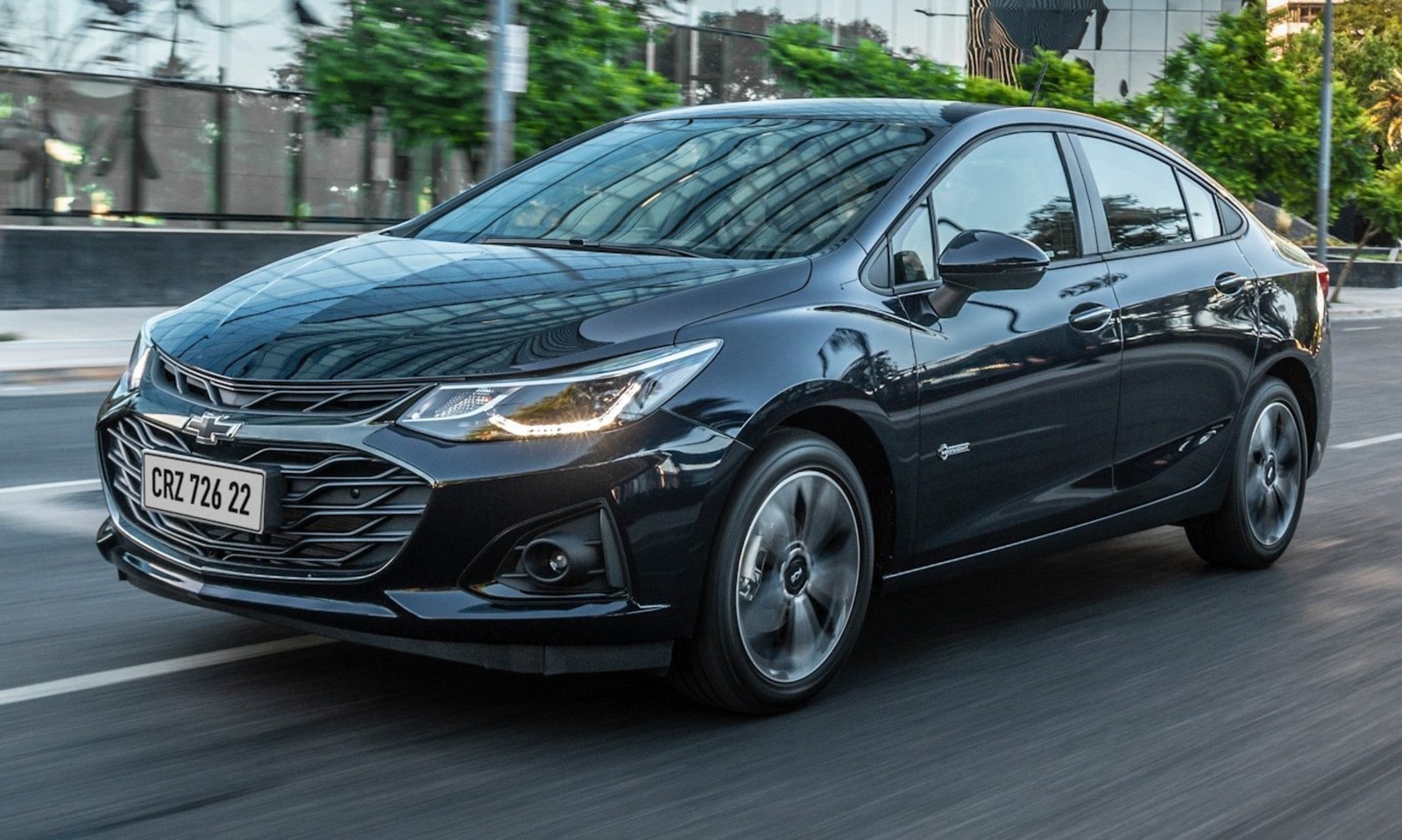
Models Like HR-V Touring, Nivus GTS, and Fastback Abarth Show That Power and Efficiency Can Go Hand in Hand, Redefining the Concept of Efficiency in Modern Cars Sold in Brazil
With the evolution of low-displacement turbo engines, there is no need to invest in cars with large engines to achieve good acceleration. Today, models equipped with 1.0, 1.3, or 1.5 turbo engines offer vigorous performance and balanced consumption, combining power and economy.
This trend has consolidated across various categories, from hatchbacks to SUVs, and has transformed Brazilian drivers’ perceptions of efficiency.
Furthermore, advancements in technology have made turbocharging no longer exclusive to sports cars.
-
The car stored for 38 years: when opening the barn door, what appears is breathtaking and looks like a scene from a movie!

-
Fiat works miracles in the Brazilian market, lowers the price of its 0 km hatch to R$ 69,990, reestablishes the model as the cheapest car in the country, and reignites the battle against Kwid and C3.
-
Chevette with cooking gas: How the gas cylinder ends up being used in cars clandestinely and why this makeshift solution can result in leaks, explosions, damaged engines, and seized vehicles.
-
Fiat launches the new 2027 Toro hybrid with 48V, 176 hp, an electric motor of 15.5 hp, a 0.85 kWh battery, up to 7% fuel savings, 8% fewer emissions, and possible exemption from IPVA.

It is present in versions geared towards urban and family use, without sacrificing driving pleasure. Below are five examples of models that unite power and low consumption, according to Auto+.
Honda HR-V Touring 1.5 Turbo

The HR-V Touring has established itself as Honda’s best-selling model in Brazil. The brand is preparing a facelift, with changes to the front and rear design. Its 1.5 turbo four-cylinder engine, with direct injection, generates 177 hp and 24.5 kgfm of torque, paired with a CVT that simulates seven gears.
The set, inherited from the Civic Touring, ensures efficient performance. The acceleration from 0 to 100 km/h occurs in 8.9 seconds, with a maximum speed of 200 km/h.
In terms of consumption, the HR-V shows balance: with gasoline, it reaches 11.3 km/l in the city and 13 km/l on the highway; with ethanol, it achieves 8 km/l and 9.2 km/l, respectively.
This combination explains the model’s success among compact SUVs and why it remains a favorite among consumers.
Volkswagen Nivus GTS 1.4 TSI

Launched in April, the Nivus GTS debuted as the sportiest version of the lineup. The 1.4 TSI four-cylinder engine delivers 150 hp and 25.5 kgfm of torque.
It is coupled with a six-speed automatic transmission with a torque converter, providing quick and linear responses.
The acceleration from 0 to 100 km/h is achieved in 8.4 seconds, and the maximum speed reaches 206 km/h. Another highlight is the simulated sporty sound inside the cabin, enhancing the driving experience.
With gasoline, the SUV achieves 11.6 km/l in the city and 14.2 km/l on the highway. With ethanol, it delivers 8.1 km/l and 9.9 km/l, according to Inmetro.
Fiat Fastback Abarth 1.3 Turbo

The Fastback Abarth underwent a slight update for the 2026 lineup, with a new grille but retained the mechanical set.
The 1.3 turbo engine, with four cylinders and direct injection, offers up to 185 hp and 27.5 kgfm of torque with ethanol. The six-speed automatic transmission ensures smooth shifts and good performance.
This coupe SUV accelerates from 0 to 100 km/h in 7.6 seconds and reaches 220 km/h. In terms of consumption, it also shows efficiency: with gasoline, it achieves 10.8 km/l in the city and 12.9 km/l on the highway; with ethanol, it is 7.3 km/l and 9.1 km/l.
The balance between power and economy reinforces the sporty appeal of the Abarth division.
Chevrolet Cruze 1.4 Turbo (Out of Line)

Even discontinued in 2023, the Cruze remains an example of balance between performance and efficiency.
The sedan ceased production to make way for the Tracker but is still remembered for its good drivability.
All versions used the 1.4 turbo four-cylinder engine with direct injection, generating 150 hp and 24.5 kgfm of torque, always with a six-speed automatic transmission.
The acceleration from 0 to 100 km/h was achieved in 9 seconds, and the maximum speed reached 214 km/h.
Fuel consumption was also competitive: with gasoline, 10.5 km/l in the city and 13.9 km/l on the highway; with ethanol, 7.1 km/l and 9.7 km/l.
Even out of the market, the Cruze remains sought after in the used segment, precisely because of the efficiency of its set.
Citroën C4 Cactus Shine Pack 1.6 THP (Out of Line)

Another model that is missed is the Citroën C4 Cactus Shine Pack with the 1.6 THP engine. Discontinued in 2024, the SUV lost its place in the brand’s strategy, which is now focused on entry-level vehicles.
Despite this, it was an interesting option among the more powerful compact cars.
The 1.6 turbo four-cylinder engine with direct injection offered up to 173 hp and 24.5 kgfm of torque. The six-speed automatic transmission ensured agility in accelerations and comfort in daily use.
It could go from 0 to 100 km/h in 7.7 seconds and reached a maximum speed of 212 km/h. Fuel consumption with gasoline was 9.7 km/l in the city and 13.4 km/l on the highway. With ethanol, it reached 8.2 km/l and 9.5 km/l.
Real Efficiency and New Standards
All consumption data is from Inmetro, which conducts standardized measurements in a laboratory. Therefore, it is possible that results may vary a bit in practice, as factors such as weather, traffic, and driving mode significantly influence performance.
Even so, the survey shows that low-displacement turbo engines have consolidated themselves as a modern and efficient solution.
They combine driving pleasure with environmental responsibility, as they manage to reduce emissions while also delivering good fuel averages.
Additionally, this trend reinforces the new industry standard, which aims to offer increasingly compact, agile, and economical cars, without sacrificing power.
The turbo, once synonymous with sportiness, is now synonymous with efficiency.
With information from Auto+.







-

-

-

-

-

-

49 pessoas reagiram a isso.