





 Portuguese
  English
  Spanish
  5 min of reading
  1 comment


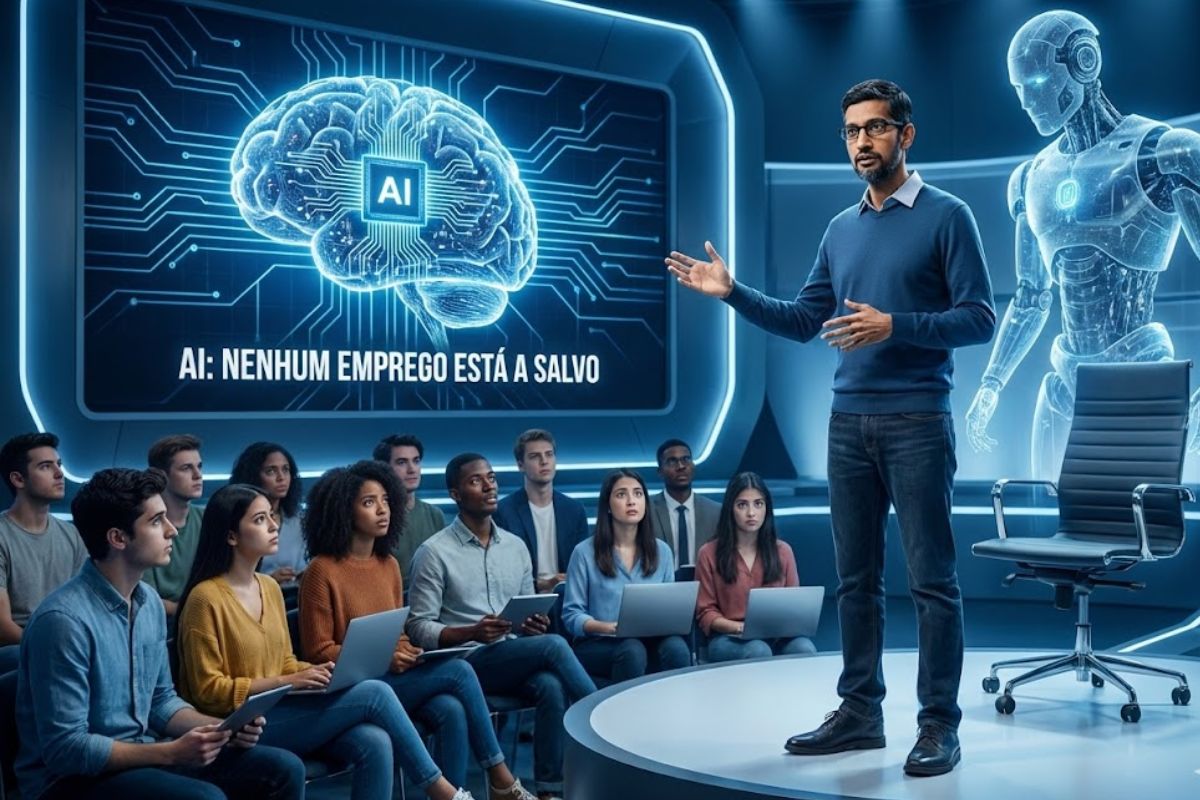


In An Interview With The BBC On December 4, 2025, Sundar Pichai Stated That Artificial Intelligence Will Reach Everyone From CEOs To Interns, He Argued That Young People Should Master Technology Instead Of Running From It And Warned Of Deep Social Changes Already Visible In The Global Job Market Today.
In a recent interview with the BBC, released on December 18, 2025, Google CEO Sundar Pichai got straight to the point when discussing artificial intelligence: no job is completely safe. In his view, the new technological wave will impact all professions, from entry-level tasks to executive positions, and those who do not adapt run the risk of being overwhelmed by rapid and profound social changes.
Pichai emphasized that AI is, in his view, the most profound technology ever developed by humanity. It brings the potential for extraordinary productivity gains and new opportunities, but it also carries an inevitable side effect: it will transform roles and eliminate jobs, requiring workers, companies, and governments to anticipate changes to avoid disorganized social impacts.
No Position Is Immune, Not Even CEO
Contrary to the idea that only basic jobs would be affected, Pichai insisted that there is no role immune to artificial intelligence.
-
Mysterious object on Mars divides NASA and Harvard after Curiosity image reignites suspicions about what was really found on the planet.

-
Giant structures 14 meters beneath Egypt are revealed by satellites and expose a millennia-old secret buried in Buto.

-
Children have been making clay pieces for 15,000 years in Southwest Asia, and fingerprints preserved on 142 ornaments helped archaeologists prove this.

-
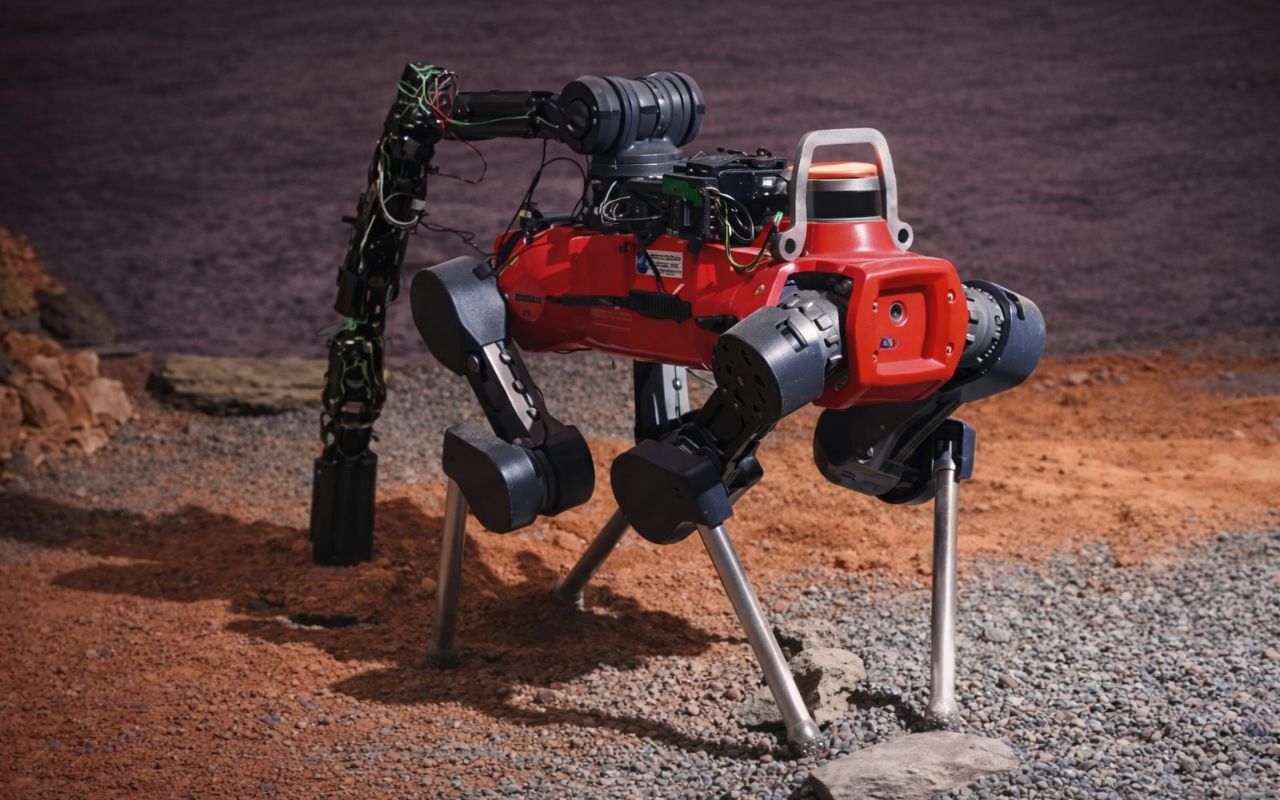
New semi-autonomous legged robot technology challenges the limitations of space exploration by operating almost without human intervention on the Moon.

He himself used his own position as an example, stating that the job of CEO could, at some point, be one of the easiest to automate by advanced AI systems.
For the executive, this means that no sector is protected. Highly skilled professions, such as doctors, teachers, managers, and specialists in various fields, will continue to exist, but in a different way.
According to him, those who learn to work alongside technology will thrive, incorporating artificial intelligence tools into their daily routines and enhancing their reach and efficiency.
In this scenario, Pichai argues that the discussion should shift from “whether AI will replace jobs” to “how people will learn to use AI to remain relevant.” The key, according to him, lies much more in rapid adaptation than in trying to halt change.
Gemini 3 Shows The Pace Of The Technology Race
Sundar Pichai’s warning comes at a time when Google itself is accelerating its strategy in artificial intelligence. Last month, in November 2025, the company launched Gemini 3, its latest model, presented as an evolution from Gemini 2.5, released about eight months earlier.
The new system was met with enthusiasm from investors and analysts, who even classified it as their “favorite model” available today.
For Pichai, the performance of Gemini 3 is a practical example of how artificial intelligence is advancing at high speed, creating space for increasingly sophisticated applications in customer service, data analysis, content creation, programming, and a range of other activities that previously relied solely on human professionals.
At the same time that it showcases these advancements, the CEO knows that each new technological leap ignites the question that worries workers worldwide: who will still have jobs when these tools become standard in companies.
The Job Market Is Already Feeling The Effects Of Artificial Intelligence
The risks cited by Pichai are no longer just theory. According to data from the Federal Reserve, the number of job openings in the United States has dropped by about 32% since the arrival of ChatGPT in the market, as companies began using artificial intelligence to gain efficiency and cut costs.
The impact is especially strong among the younger generation. In large public technology companies, the participation of Generation Z employees has been halved in the last two years.
Careers that were once seen as synonymous with the future, such as computer programming, are now facing low hiring levels.
Meanwhile, humanoid robots are being designed to take on physical jobs, expanding the reach of automation beyond offices.
This set of signs reinforces Pichai’s view that the job market is already undergoing rapid transformation driven by artificial intelligence, and that the current phase is just the beginning of a deeper structural change.
Young People Should Not Run From Technology, They Should Master It
In light of this scenario, many young people wonder whether it is worth investing in expensive degrees or if it would be safer to pursue careers considered “AI-proof.” Pichai was categorical in his response: there is no university course or profession that can guarantee total protection against artificial intelligence.
In his view, the choice of career should continue to be guided by each person’s genuine interest. The decisive point, however, will be how each professional incorporates artificial intelligence into what they do.
Pichai advocates that parents guide their children to embrace technology rather than flee from it, learning early to use AI tools in the classroom, personal projects, and eventually in the job market.
For the CEO, this applies to both technical areas and traditional professions such as medicine, education, law, or communication.
Those who learn to combine human knowledge with the intelligent use of AI are likely to find more space and better opportunities, even in a competitive and constantly changing environment.
Adapting To Social Changes Will Be As Important As Learning New Tools
The executive also drew attention to the collective side of this transformation. He states that as artificial intelligence spreads across all sectors, it will be inevitable to deal with deep social changes, which go far beyond the workplace.
This includes, for example, discussions about reskilling, access to up-to-date education, and protection for more vulnerable groups, who may be the first to lose jobs to technology.
Pichai argues that governments, businesses, and society need to discuss now what the support networks and transition pathways will be to minimize inequalities created or exacerbated by automation.
Even so, the CEO’s tone is not purely pessimistic. He reaffirms that artificial intelligence can also generate new industries, open markets, and create jobs that do not even exist yet, as long as people are prepared to learn continuously and use the tools to their advantage.
And you, do you believe that artificial intelligence will create more opportunities or destroy more jobs in your area of expertise?









Aliás, já está tomando muitas funções operacionais que pertenciam aos homens.
Num futuro bem próximo a onda de desemprego será bastante alta, em 90% dos seguimentos. Até na medicina a parte cirúrgica irá sofrer uma grande baixa de profissionais.