





 Portuguese
  English
  Spanish
  3 min of reading
  0 comments


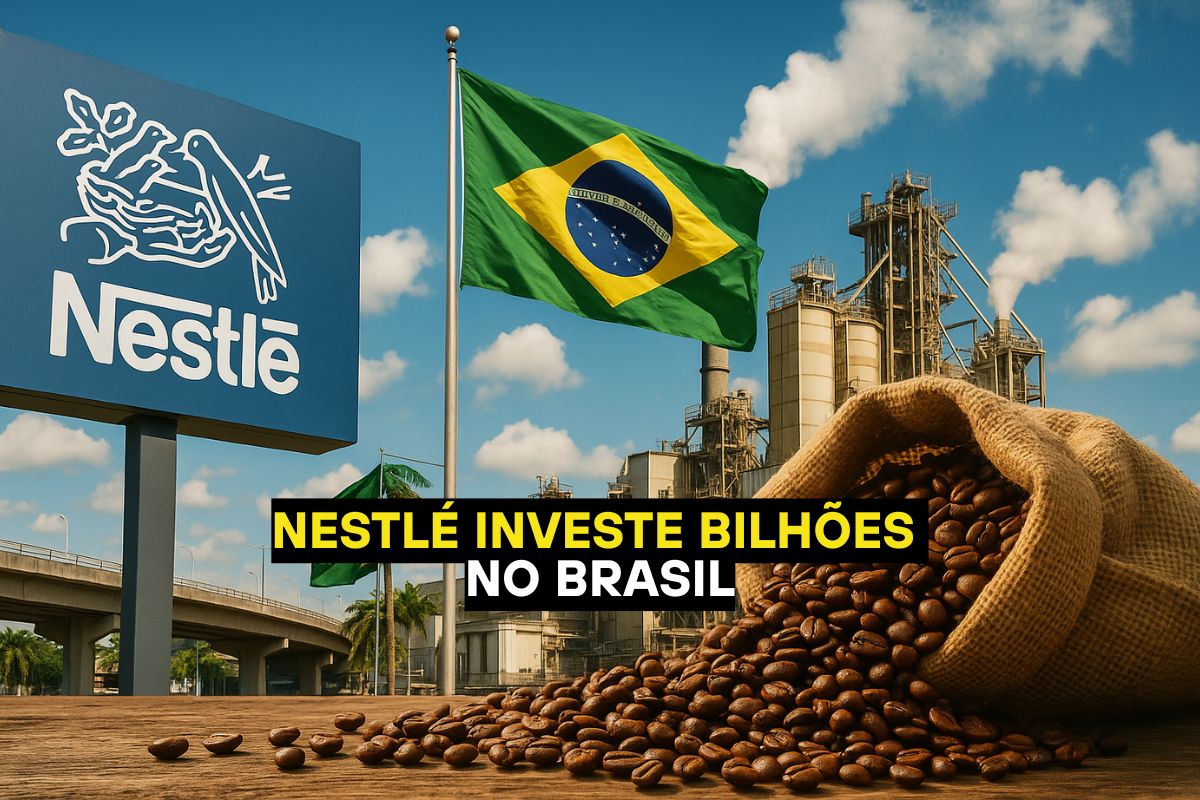
Swiss Giant Modernizes Factories, Expands Production Capacity, and Reinforces Sustainability to Consolidate Leadership in the Brazilian and Global Market.
Nestlé announced a historic plan: R$ 7 billion in investments in Brazil by 2028, with priority given to the coffee supply chain, according to Times Brasil. The investment will be directed towards the modernization of industrial plants, technological innovation, and strengthening sustainability initiatives, consolidating the country as a key piece of the multinational’s global strategy.
The move shows the company’s confidence in the Brazilian economy and the strength of the domestic market. Brazil is not only the largest producer of green coffee in the world but also the second largest consumer, averaging four cups per person per day. This scenario makes the country a strategic ground for Nestlé’s expansion, which has been operating in the national territory for over a century.
The Focus on Coffee as a Growth Engine
Within the R$ 7 billion package, R$ 1.5 billion will be directly allocated to coffee. In Montes Claros (MG), the Nescafé Dolce Gusto capsule factory will receive R$ 450 million to expand its production capacity by more than 40%, in addition to including new lines of instant coffee. In Araras (SP), another R$ 1 billion will fund the modernization of the instant coffee unit, which currently exports to over 65 countries.
-
“No one will make us change the Pix,” says Lula after the US report.

-
Lula responds directly to Trump and says that Pix is from Brazil and will not change under pressure from anyone, after a report from the United States pointed out the Brazilian payment system as an American trade barrier.

-
Amazon has just announced a new fee on all deliveries, and your online purchases will become more expensive starting April 17, including for those buying from the United States here in Brazil.

-
He sold his share for R$ 4 thousand, saw the company become a giant worth R$ 19 trillion, and missed the opportunity of a lifetime.


According to Marco Guimarães, vice president of the technical area at Nestlé Brazil, the expansion also brings a strong technological component. Artificial intelligence and machine learning systems will be applied to monitor production processes in real-time, ensuring even greater efficiency and quality.
Innovation and Sustainability at the Heart of the Strategy
The investment is not limited to factories. Nestlé emphasized that the transformation must encompass the entire supply chain, from the farm to the cup. Programs such as the Nescafé Plan, which encourages regenerative agricultural practices, will play a key role in improving productivity and reducing environmental impact.
According to the company, the goal is to ensure that Brazilian coffee is competitive not only in volume but also in sustainability and quality. This includes direct support to producers, modernization of agricultural processes, and encouragement to use low environmental impact technologies.
Betting on Brazil Even in a Challenging Scenario
The decision to invest heavily in Brazil comes at a time of global economic instability. Still, Nestlé emphasizes that it works with a long-term vision. The company already has 18 factories in the country, and the new plan expands this history of trust.
“Investment decisions are not always made in calm moments. Often, it is precisely in turbulent times that opportunities arise to consolidate strategic presence,” Guimarães highlighted in an interview with Times Brasil.
Expected Impact on the Market
In addition to strengthening Nestlé’s position in the coffee sector, the investment also covers areas such as chocolates, dairy, infant nutrition, and pet food. The expected result is job creation, increased tax revenue, and greater Brazilian prominence in the international agribusiness and food industry landscape.
The priority on coffee, however, is symbolic. It connects the multinational to the most iconic product of Brazilian agriculture while reinforcing the country’s role as a supplier of excellence in quality and innovation.
And what do you think about this historic investment by Nestlé in Brazil? Does the focus on coffee strengthen the sector or should it be more balanced with other areas of the food industry? Share your opinion in the comments — we want to hear your views on this movement.








Seja o primeiro a reagir!