





 Portuguese
  English
  Spanish
 4 min of reading
  5 comments


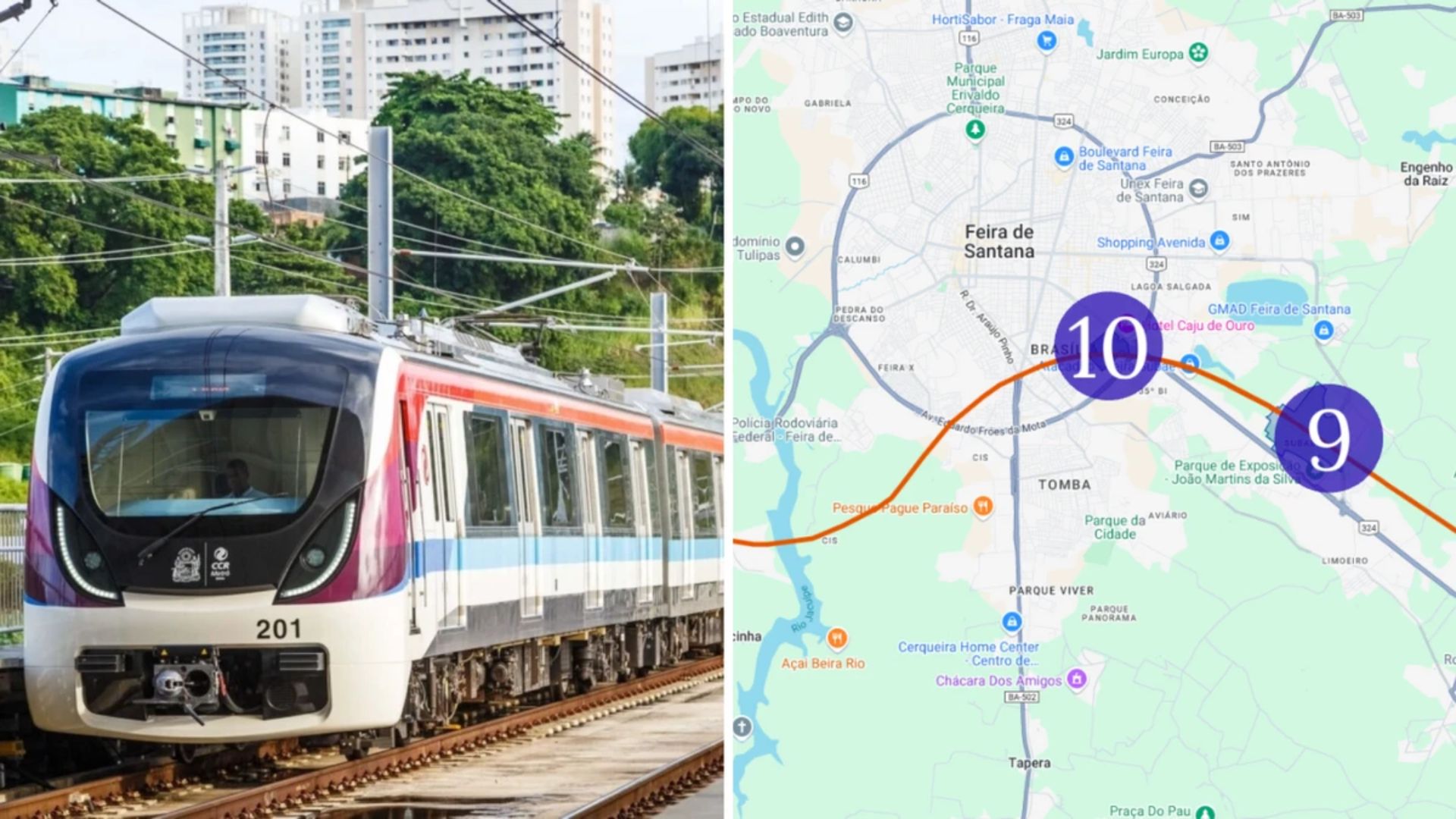


Railway Project Between Salvador and Feira de Santana Predicts High-Speed Trips, Integration with Buses, Fare Similar to Road Transport, and Billion-Dollar Investment, with Works Scheduled for 2029, After Regulatory and Environmental Approvals.
The Salvador–Feira de Santana Railway project predicts a travel time of 35 minutes, 10 stations (eight for passengers and two for cargo), and a length of 98 km.
The proposal is private, led by the company TIC Bahia, and still depends on ANTT authorization before proceeding to analysis by the Ministry of Transport.
The initial estimate is to begin works in 2029, after regulatory and environmental processing.
-
“No one will make us change the Pix,” says Lula after the US report.

-
Lula responds directly to Trump and says that Pix is from Brazil and will not change under pressure from anyone, after a report from the United States pointed out the Brazilian payment system as an American trade barrier.

-
Amazon has just announced a new fee on all deliveries, and your online purchases will become more expensive starting April 17, including for those buying from the United States here in Brazil.

-
He sold his share for R$ 4 thousand, saw the company become a giant worth R$ 19 trillion, and missed the opportunity of a lifetime.


ANTT Analysis and Official Evaluation
ANTT evaluates the merits of the documentation presented, including legal regularity, integrity, and the technical and financial capacity of the proponent, as well as adherence to sector regulations.
After this stage, the dossier must be forwarded to the Ministry of Transport for consideration as public policy. There is no final decision at this time.
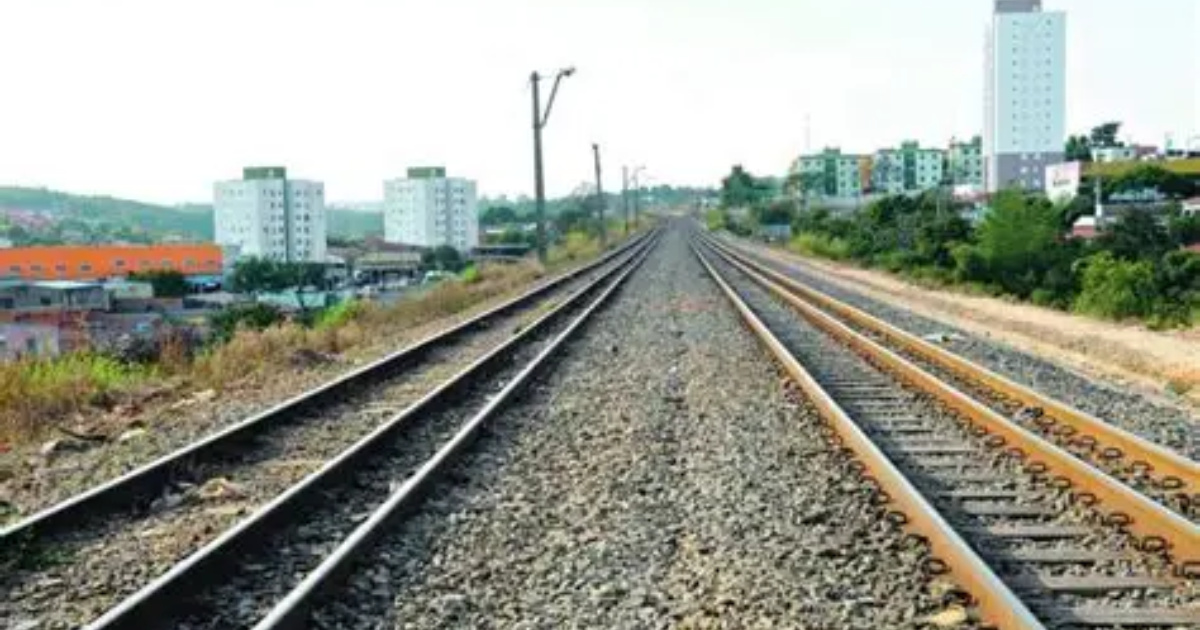
Route, Stations, and Metropolitan Integration
The route connects Salvador to Feira with platforms for passenger boarding and cargo yards.
The planned stops, in this order, are Águas Claras (with integration to the VLT and the new bus station), Simões Filho, Candeias, São Sebastião do Passé, Santo Amaro, and Conceição do Jacuípe.
In Feira de Santana, Railway Yard/CIS, Noide Cerqueira, and Rodoferroviária Contorno complete the route.
The design includes interfaces with intercity and metropolitan buses, enhancing regional connectivity.
Demand and Operational Performance
According to TIC Bahia, the railway was sized for 85,000 passengers per day, equivalent to 23 million per year.
The passenger trains can reach 160 km/h, while cargo operations will need to coexist in specific lanes and schedules, with interoperability with other networks.
The proposal foresees logistical coordination with FIOL and FCA, paving the way for shipping via Aratu, Salvador, and Estaleiro Enseada.
Fare Equal to That of the Bus
The company claims that the fare will follow the intercity transport rates, projected between R$ 35 and R$ 50 per Salvador–Feira segment.
In a recent survey, bus tickets start at R$ 38.95 (standard) and R$ 55.79 (executive). This amount serves as a reference for the train’s fare design.
Billion-Dollar Investment and International Participation
The estimated private investment is R$ 6.8 billion, with an expected annual revenue of over R$ 1.5 billion.
According to TIC Bahia, four business groups — from Switzerland, France, China, and Brazil — are participating in the negotiations under confidentiality clauses.
“The level of demand and investment […] has been a surprise,” said engineer Danilo Silva. He highlighted that the interested parties are divided among logistics, systems, and rolling stock.
Sustainability and Clean Energy
Regarding environmental impacts, the company mentions the installation of solar panels for energy generation and the commitment to create an environmental reserve between Candeias and São Sebastião do Passé.
The expectation is that the protected area will serve for compensations and host a park geared towards research and ecological tourism.
According to the engineer, “the idea is to restore important forest […] and deliver a lasting environmental legacy under the responsibility of the railway itself.”
Licensing and Next Steps
The project falls under the railway legal framework (Law 14.273/2021) and, in addition to federal authorization, will need to obtain municipal environmental licenses along the route.
It will also be necessary to prove legal and budgetary feasibility. TIC Bahia anticipates, in case of approval, signing the contract still in 2025 and beginning works in 2029.
Impact on Passengers
If implemented as described, the railway shortens a trip currently longer than one hour to 35 minutes.
The system will have physical and fare integration with metropolitan buses. The Águas Claras terminal in Salvador is expected to function as a connection hub, gathering the bus station, VLT, and access to the train.
Freight Transport and Logistical Competitiveness
In addition to transporting people, the mixed operation allows addressing flows of general cargo connected to ports and industrial districts.
Integration with FIOL and FCA is expected to increase the productivity of the Bahia logistics chain.
This feature is pointed out as a factor for the economic balance of the enterprise.
Decisive Steps in the Timeline
The timeline depends on a sequence of decisions.
First, the ANTT authorization. Then, the approval from the Ministry of Transport. Finally, the licensing and contracting phase.
Meanwhile, parameters for demand, fare, and route continue to be discussed with public agencies and local stakeholders.
Considering the technical design, the promise of a fare aligned with that of buses, and the timeline conditioned to approvals, what do you consider the most crucial point for the project to move forward: regulatory authorization, fare definition, or demand verification?







A autorização regulatória.
Excelente iniciativa! A malha ferroviaria principalmente se for à energia eletrica, contribui com o desafogamento de áreas urbanas e rural, proporcionando economia, menor tempo em deslocamento, menos poluição, incentivo ao turismo e cultura às pessoas de menor renda, mais segurança em rodovias pela diminuição do fluxo de veiculos automotores. Brasil rumo aos países desenvolvidos!
A conta não bate entre velocidade (160km/h), tempo (35 minutos) e distância (98 km). Investimento bilionário e tarifa de ônibus.