





 Portuguese
  English
  Spanish
  3 min of reading
  0 comments


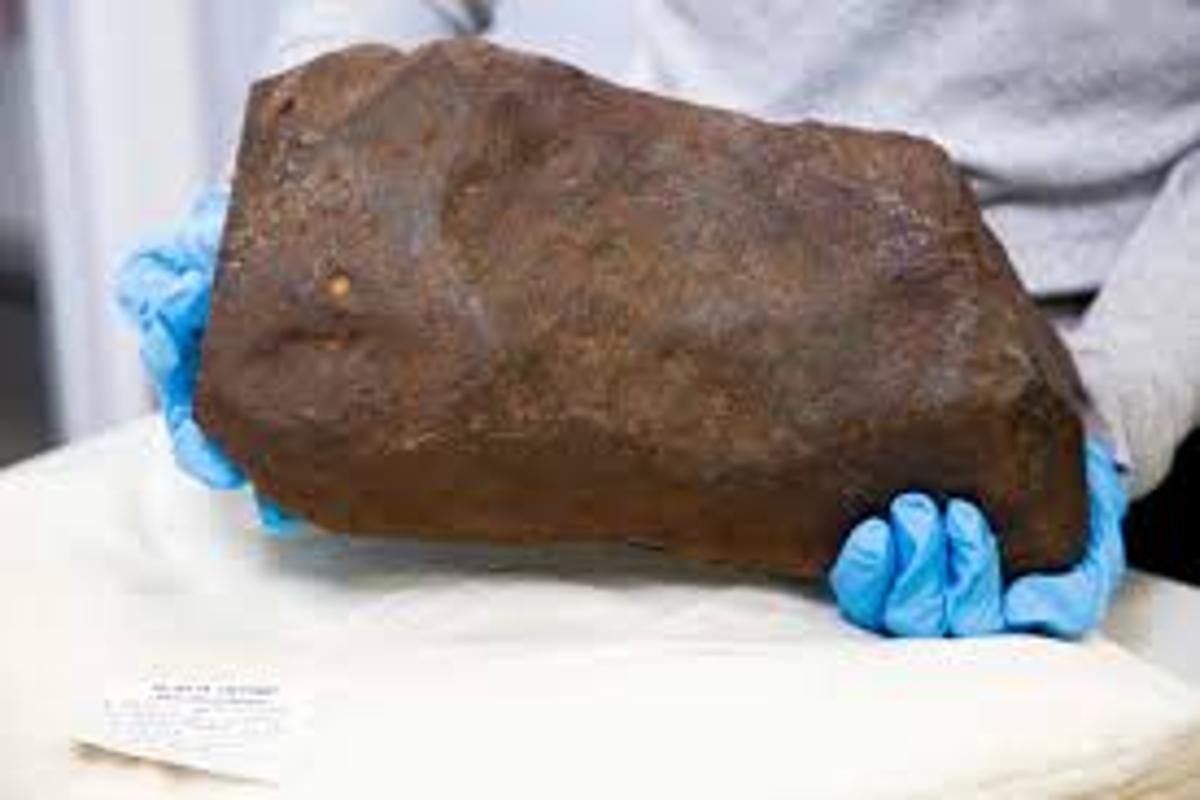
Scientific Discovery That Emerged From a Search for Gold Reveals an Extremely Valuable Space Rock
A man found an unusual rock and believed it might contain gold, although he later discovered it was something much more valuable. While searching for precious metals, he came across a formation that, despite being tough, concealed a completely different origin. Thus, one of the most important scientific discoveries recorded on Australian soil began.
The Beginning of the Discovery in the Maryborough Regional Park
In 2015, David Hole, an amateur explorer, was locating metals in the Maryborough Regional Park in Australia when he found an extremely unusual reddish rock. Soon, he imagined it might contain gold and, therefore, decided to take it home. After that, he attempted to open it with common tools, but was unsuccessful. He realized that the rock was practically impenetrable.
Moreover, the unusual resistance indicated it could be something rare. However, it wasn’t until 2018 that he decided to seek specialized help, taking the material to the Victoria Museum, where scientific analysis began.
-
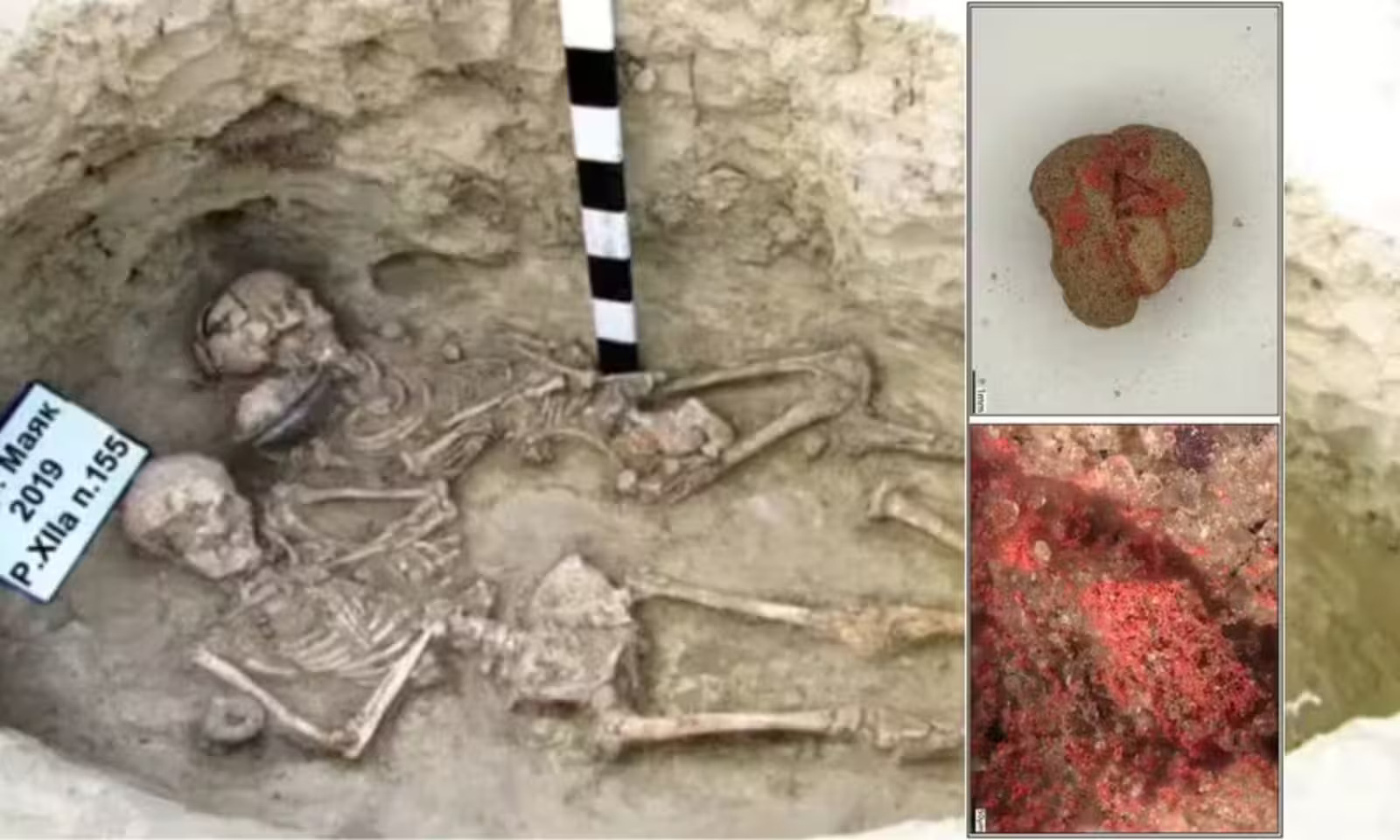
Super toxic red mineral found in the double burial of two women aged 1,900 years near the banks of the Dnieper River in Ukraine.
-
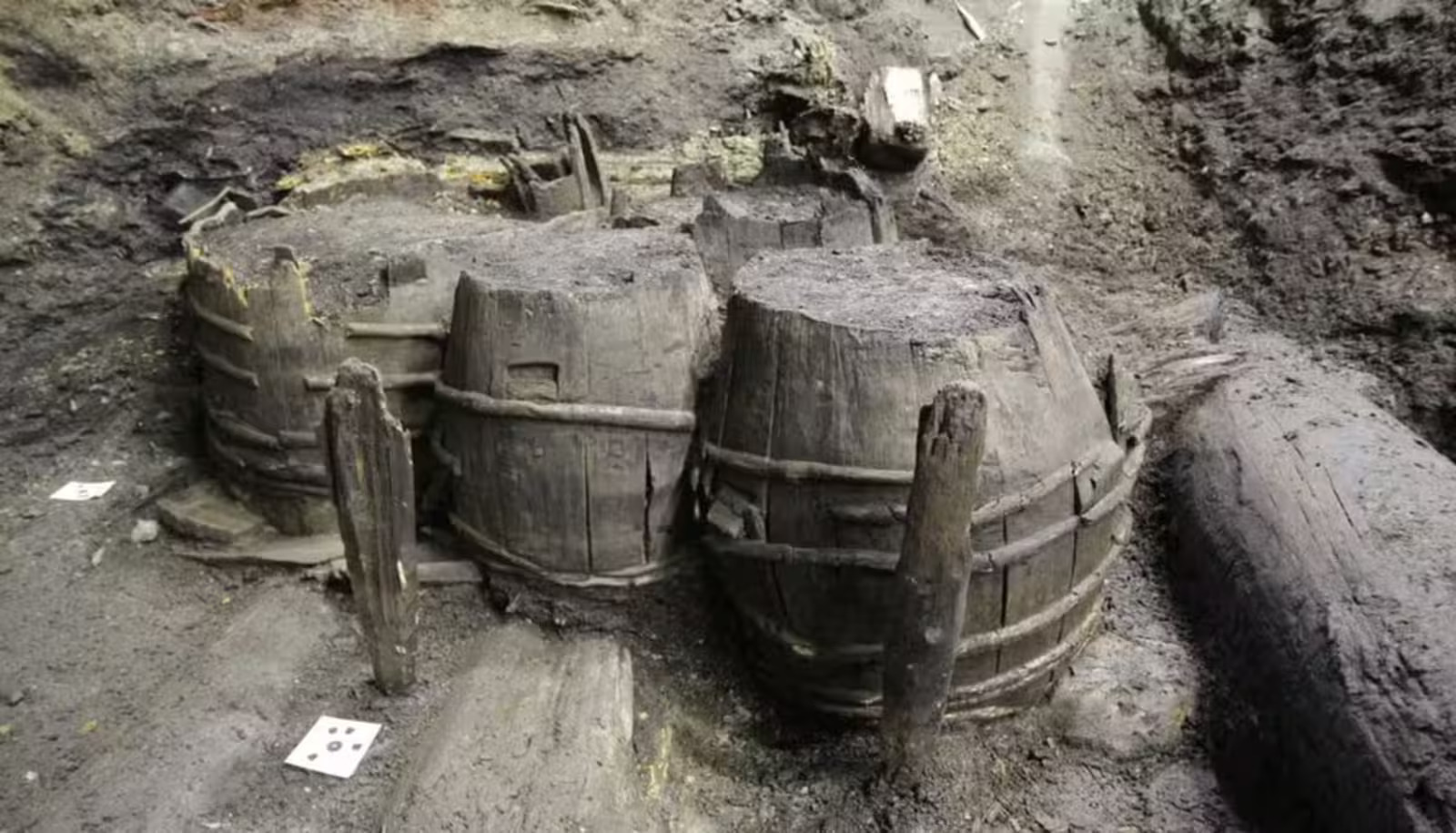
No one expected this under a common street: archaeologists find 3 intact oak barrels, buried about 400 years ago, with traces of lime and pieces related to 17th-century construction.
-
After decades of failed attempts, Brazil is once again looking to space with an orbital rocket measuring 12 meters, weighing 12 tons, costing R$ 189 million, and scheduled for launch in 2026, in a new race to finally achieve autonomous access to orbit.

-
The Earth will plunge into a few minutes of darkness in broad daylight in August 2026, when a total solar eclipse transforms the sky into one of the most impressive astronomical phenomena in recent years.


The Confirmation of the Meteorite by Specialists
As soon as they received the material, geologists Bill Birch and Dermot Henry realized it was not an ordinary stone. Immediately, they suspected it was a meteorite, as few similar objects arrive at the museum. In fact, they noted that most items brought to the site have no significant scientific value.
During the analysis, the rock was measured and presented 38.5 cm x 14.5 cm x 14.5 cm, reinforcing its exceptional character. Additionally, a small cut allowed confirmation that it was an ordinary H5 chondrite, highly rich in iron. Consequently, the specialists concluded that its origin is likely from the asteroid belt between Mars and Jupiter.
On the other hand, radiocarbon dating indicated that the meteorite had been on Earth for a period between 100 and 1,000 years, although it may have entered the atmosphere between 1889 and 1951, according to estimates presented by the researchers.
The Scientific Value Superior to Gold
According to the Victoria Museum, finding gold in Australian soil is more common than locating a meteorite with these characteristics. Therefore, the institution stated that the discovery is extremely rare. Moreover, they highlighted that this is only the 17th meteorite found in the State of Victoria. Thus, the object gained immense relevance.
Furthermore, specialists explained that meteorites bring essential information about the formation of elements in the universe. In this way, they function as natural records that connect the past and present of the Solar System. Therefore, these materials offer scientists the opportunity to investigate chemical and structural properties that are impossible to observe through space missions alone.
The Scientific Impact of the Discovery
While its exact origin remains uncertain, the meteorite allows for a better understanding of the trajectory of celestial bodies that strike our planet. Thus, the discovery reinforces the importance of museums and technical analyses, as many items ignored by the public reveal extraordinary scientific value.
As a result, the Maryborough Meteorite has become a fundamental piece for the scientific communityca. Finally, it highlights that everyday searches can uncover objects that transform our understanding of the Earth’s spatial past, making us reflect on how many other discoveries may be hidden in plain sight.






-

-

-

-

-

-

14 pessoas reagiram a isso.