





 Portuguese
  English
  Spanish
  5 min of reading
  0 comments


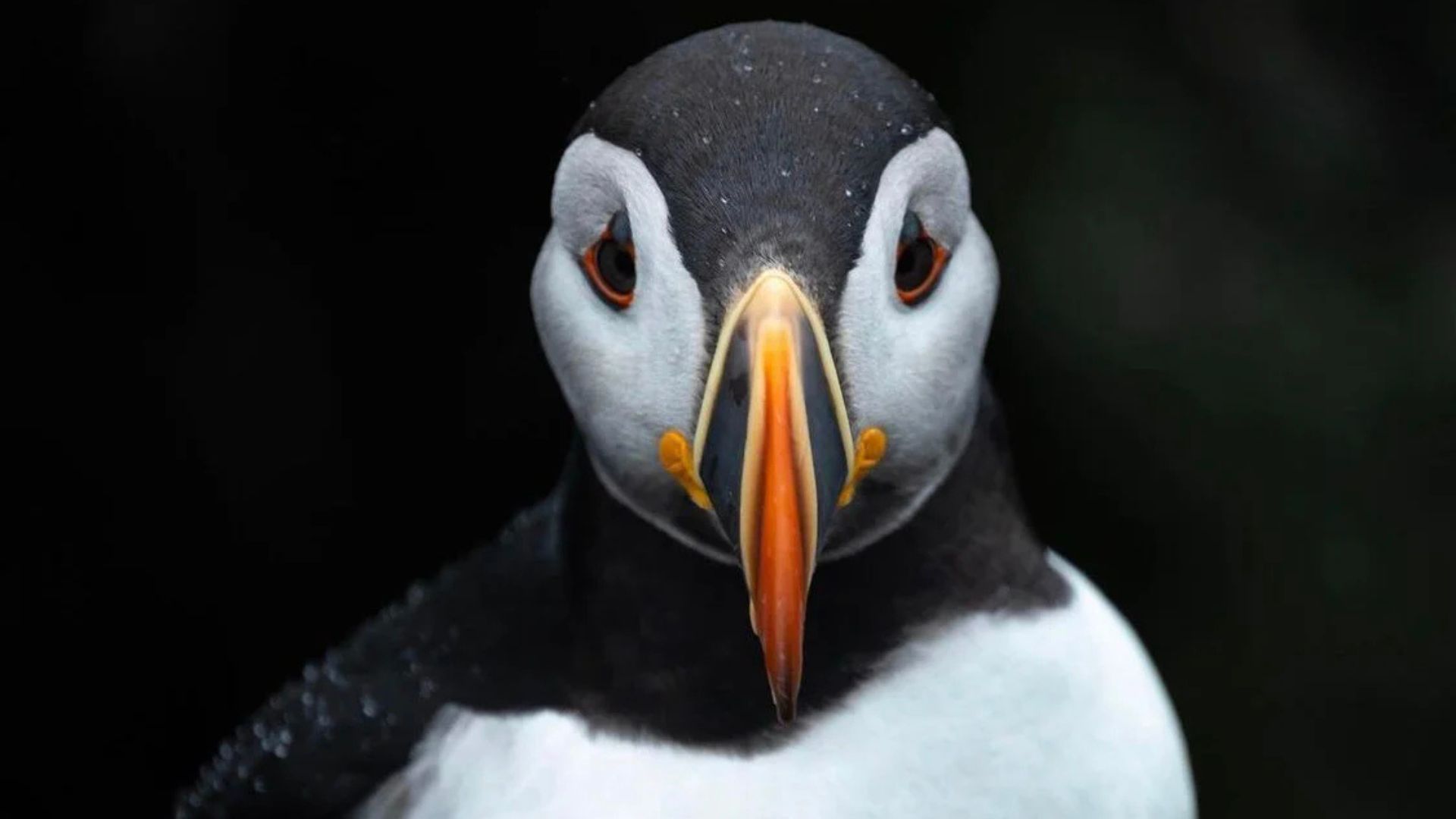
Long-Term Strategy Combined Pup Translocation, Visual Signals, and Animal Behavior Knowledge to Return a Colony That Had Disappeared Decades Ago to an Island in the North Atlantic, Showing How Discreet Interventions Can Reactivate Natural Processes Interrupted by Human Action.
A conservation team managed to get the Atlantic puffin to breed again on an island off the coast of Maine, United States, after decades without nesting records.
The initiative involved planned transfer of chicks, the use of life-size wooden decoys, and ongoing monitoring over several years, designed from the outset as a long-term intervention.
Years after the work began, researchers confirmed the return of nesting, with pairs establishing burrows and raising chicks without direct human support, something that had not occurred for generations along that stretch of coast.
-
Goodbye iron: new technology from Xiaomi promises to revolutionize the way we iron clothes with 500 kPa steam, continuous flow of 120 g/min, heating in 65 seconds, and six smart modes for different fabrics.

-
Rio Pardo, the most mysterious city in Rio Grande do Sul: untouched Pampas castle, the missing treasure of the Devil Boy, bride’s saint, invisible tunnels, and a 200-year curse today.

-
China retires the J-7 fighter after years of military protection and can now transform military items into drones, following more than 60 years of operation of the J-7, derived from the MiG-21, with thousands of units produced and strategic use in the PLAAF and PLANAF.

-
Volunteers are sought to live in the mountains for a month: a study pays people to stay at 2,500 meters, with 24-hour monitoring of sleep, metabolism, and blood pressure.


Maine Island Lost the Species After Historic Human Pressure
Located off the coast of Maine, Eastern Egg Rock is a small rocky island that, in the past, housed significant colonies of seabirds.
By the end of the 19th century, however, the puffin disappeared from the area amid intense exploitation, which included hunting and systematic egg collection on North Atlantic islands.
Even remaining within the species’ natural habitat, the island ceased to function as a breeding site after the collapse of the original colony.

This history helps explain why recolonization did not occur spontaneously in the following decades.
Being a colonial bird, the puffin tends to choose breeding sites where there are already clear signs of its own species.
Faced with a silent scene, with no visible activity, flying adults may ignore physically suitable areas, moving on in search of socially more attractive environments.
Pup Translocation Explored Site Fidelity
Based on this behavior, the team began to translocate chicks from a colony in Canada to Eastern Egg Rock.
Over several years, 954 chicks were transported to the island, in an action associated with the Project Puffin aimed at rebuilding historical colonies.
The strategy was based on a well-documented principle in seabirds.
Young individuals tend to return, when adults, to the place where they spent a critical phase of development, creating a lasting bond with that point of origin.
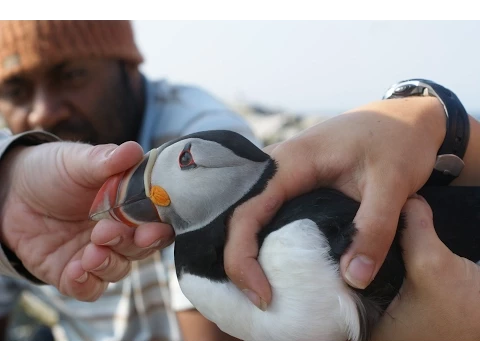
Instead of rearing the birds in captivity, the project aimed to conduct only that initial period in the new environment.

The chicks were housed in artificial burrows, fed until it was time to go to sea, and in many cases, banded to allow future identification.
Species Life Cycle Required Long-Term Planning
Although the transfer was successful, the results could not materialize quickly.
The puffin takes years to reach reproductive maturity and spends long periods in marine environments before attempting to nest.
For this reason, researchers knew that the return of the colony would depend on patience and continuous monitoring.
Only after several cycles at sea would the transferred individuals be ready to return and attempt to breed on the island.
Wood Decoys Activated Social Attraction Mechanism
When the first adults began to fly over Eastern Egg Rock, a new challenge arose.
Despite the physically suitable conditions, the absence of an active colony still made the location uninviting for landing and nesting.
To overcome this barrier, researchers installed life-size wooden decoys positioned to simulate puffins resting on the rocks.
This resource is part of the so-called social attraction, a technique that exploits the species’ dependence on visual and collective signals in habitat selection.
The decoys do not provide food nor replace the natural environment.
They primarily function as a signal of safety and stability, capable of reducing the hesitation of birds assessing the location from a distance.
As time passed, real individuals began to reinforce the initially artificial stimulus.
First Nests Marked Turnaround After Eight Years

The return occurred gradually and within the expected timeframe for a species with a long lifecycle.
The first adult puffin was recorded on the island in June 1977, a few years after the translocation began.
Nesting, however, took more time.
The first confirmed pairs breeding in Eastern Egg Rock appeared in 1981, eight years after the project began.
From that point on, the colony began to sustain itself biologically.
With occupied burrows and chicks being raised, each new individual also became a social stimulus for others.
Habitat Conditions Were Crucial for Success
The success of the initiative cannot be explained only by the transfer of chicks and the use of decoys.
Eastern Egg Rock offers characteristics compatible with the species’ breeding mode.
The puffin digs burrows in the ground and uses natural cavities, which requires areas with suitable soil, some protection against terrestrial predators, and low human disturbance during the breeding period.
In addition, environmental factors beyond the team’s direct control influenced the results over the years.
Survival at sea and reproductive success vary according to food availability and oceanographic conditions.
Researchers associated fluctuations in the number of nesting pairs with changes in sea surface temperature.
Project Became a Reference in Colony Restoration
Over time, the experience at Eastern Egg Rock has been cited as an international reference in the restoration of seabird colonies.
The initiative demonstrated that understanding animal behavior can be as important as recovering the physical habitat.
Instead of waiting for spontaneous recolonization, the team broke a cycle of absence.
Without a group, there were no visible signals.
Without signals, new individuals did not settle.
By intervening in this mechanism, the project shortened a process that could have taken much longer or not occurred at all.
If simple social signals and long-term planning were enough to reactivate a disappeared colony, to what extent could other threatened species also benefit from similar strategies based on understanding how they choose where to live and breed?








-

-

-

-

-

15 pessoas reagiram a isso.