





 Portuguese
  English
  Spanish
  5 min of reading
  2 comments


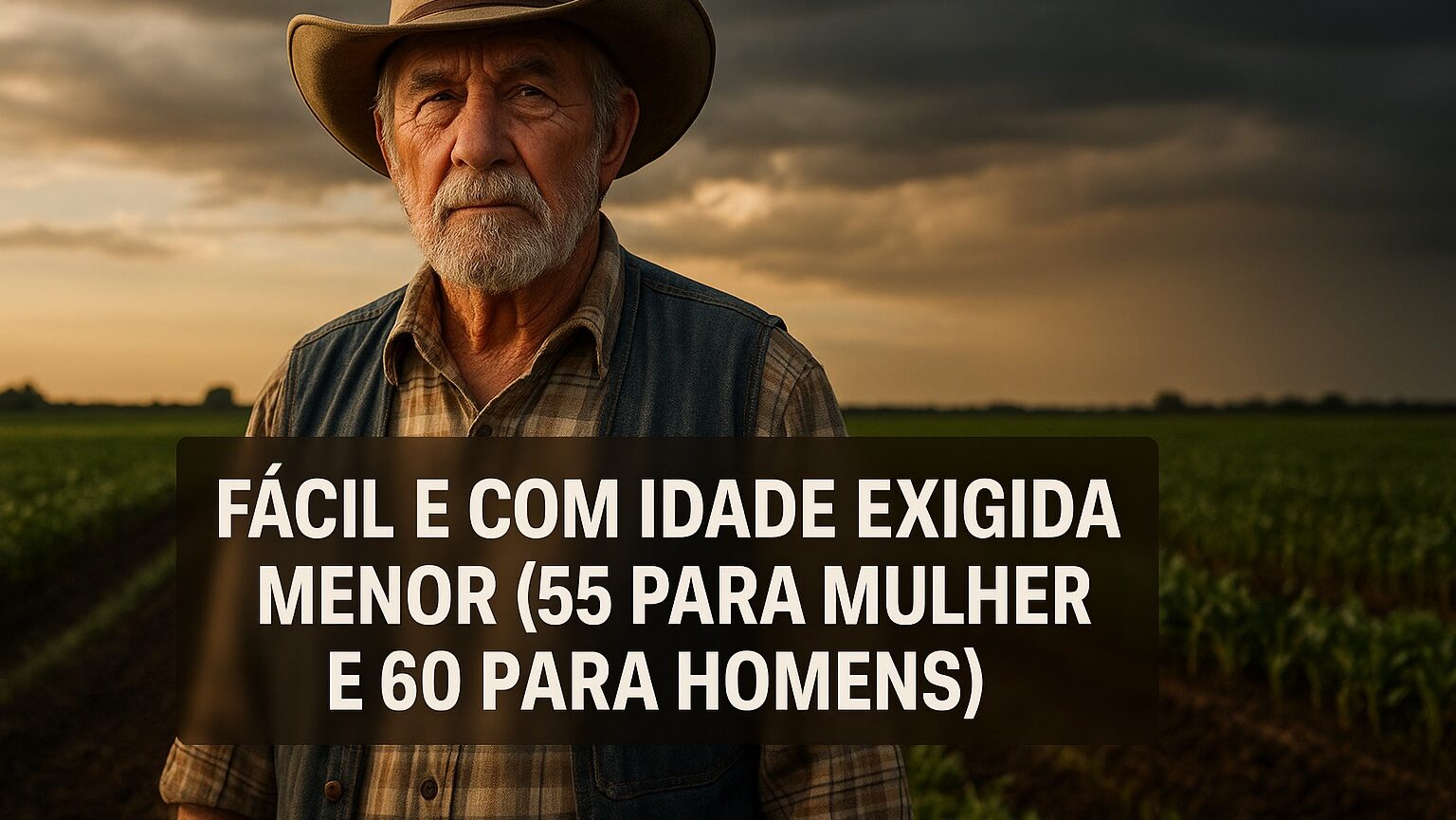


Rural Retirement Maintains Requirements in 2025, But New Rules Facilitate Verification and Association of Special Insured, Ensuring Greater Access to Benefits
The rural retirement remains one of the most important benefits of the Brazilian social security system. Aimed at workers in the field, artisanal fishermen, extractivists, and small producers, it guarantees income for those who can no longer maintain manual labor.
The benefit maintains criteria similar to those of recent years, but brought some updates in 2025 that affect the way of verification and the association of special insured persons.
What Is Rural Retirement?
Rural retirement is a social security benefit aimed at workers who have engaged in activities in the field or in occupations related to the primary sector.
-
The institute that trained the greatest aerospace engineers in Brazil has just opened its first campus outside São Paulo after 75 years: ITA Ceará will have R$ 445 million, new courses in energy and systems, and classes are expected to start in 2027.

-
Luciano Hang, owner of Havan, goes to Juiz de Fora after the tragedy in February, brings R$ 1 million, hands out R$ 2,000 cards, and donates up to R$ 15,000 to victims in the region.

-
The Brazilian passport allows legal residence in dozens of countries without the need for a prior visa, and most Brazilians are unaware that they can apply for residency directly upon arriving in nations in South America, Africa, and even Europe.

-
Petrobras sends a message to Brazilian truck drivers after fuel collapse and reveals plan to have 100% domestic diesel.


It includes rural employees, artisanal fishermen, garimpeiros, rural producers, and plant extractivists.
The main objective is to provide a source of income for those who have lost the physical ability to continue working in activities that require intense effort.
Therefore, it is an essential guarantee of subsistence for thousands of families spread across the country.
Who Is Entitled to the Benefit?
According to social security regulations, three main categories can access rural retirement. First, the rural employee with a formal contract.
Second, the temporary worker, hired through unions or associations. Third, the day laborer, or casual worker, who has been classified as an individual contributor by the INSS, but is often recognized as a special insured by the courts.
The group of special insured persons stands out because they do not need to prove monetary contributions, but rather the exercise of rural activity.
This verification can occur individually or in the context of family economy. Included in this category are small producers, artisanal fishermen, and extractivists.
The concept of family economy is one of the points that generates the most doubts. Legislation defines that it occurs when the work of family members is essential for their own survival and for the socioeconomic development of the household, under conditions of collaboration and mutual dependence.
In this case, the use of permanent employees is not permitted.
What Are the Requirements in 2025?
The conditions for rural retirement remain the same this year. It is necessary to have at least 15 years of rural activity, equivalent to 180 months of waiting period. Additionally, the minimum age required is 55 years for women and 60 years for men.
The worker needs to prove the exercise of the activity, even if intermittently, during this 15-year period.
This includes time immediately prior to the benefit request or when the minimum age is reached. Previous periods can also be utilized to meet the requirement.
Another important point is that if any family member exercises urban activity, the case must be analyzed individually.
The performance of this work does not automatically eliminate the special insured status of the rest of the group.
How to Prove Rural Activity?
Verification is one of the most complex stages of the process. For rural employees, the simplest way is to present the work card with records of the functions performed.
Documents such as the National Social Security Profile may also serve as evidence of the rural nature of the employment relationship.
Special insured persons use self-declaration, a document filled out and signed by the worker themselves.
Today, there is an electronic version of this form. The INSS cross-references the data supplied with government databases and any documents attached to the process.
It is not mandatory to present documents for all 15 required years. Legislation and jurisprudence allow for documents to prove only part of the time.
It is important that there is consistency between the self-declaration, official records, and other documents.
Among the accepted documents are rural producer notes, lease contracts, partnerships or loans, school records, marriage or birth certificates, medical documents, and even religious records.
In the case of indigenous individuals, the certificate issued by Funai is essential to attest to their condition as rural workers.
Documents may be in the name of third parties in the family. Furthermore, recent rulings allow women to use records in their husband’s name, or vice versa, as long as the spouse is a special insured or rural employee.
Witness Testimony
Another way to strengthen verification is through witness testimony. The worker can indicate two to six witnesses who can confirm their activity in the field.
This procedure, called Administrative Justification at the INSS, is important in cases where documentation does not cover the entire necessary period.
With self-declaration, the use of witnesses has decreased, but it is still provided for in the legislation. Lawyers generally recommend requesting this step, as it demonstrates good faith and the intention to clarify any doubts within the process.
What Changed in 2025?
The basic rules of rural retirement have not changed, but important adjustments were made in 2024 that came into effect this year.
Law 15.072/2024 amended Law 8.213/91, allowing special insured persons to join any type of cooperative linked to rural activity, except for worker cooperatives.
Another relevant point was the ruling on Theme 327 by the National Uniformity Team in November 2024.
The decision recognized that documents in the name of the spouse, when this individual is registered as a rural employee, can serve as initial material proof for granting the benefit to the special insured person.
These changes brought greater clarity to the processes and facilitated the lives of many workers. In summary, the criteria remain the same, but the legislation and jurisprudence have begun to accept new forms of verification and association.
Caution in the Process
Rural retirement requires attention when gathering documents and filling out the self-declaration. Caution is critical as failures in verification can delay analysis or even result in denial. Therefore, it is advisable to organize documents in advance and, if possible, seek legal support.
The benefit is essential for thousands of families who depend on the field. Ensuring the correct documentation of the administrative process is the safest way to achieve income and secure dignity at the end of working life.
With information from Previdenciarista.








Sou pescadora até 2021 era amassada com.meuaridompescador . Em.2017 peguei meu tálamo.separado mas não paguei o INSS pois ele pagava e me.negaram sou especial desde 2008
Eu quero é preciso