





 Portuguese
  English
  Spanish
  5 min of reading
  0 comments


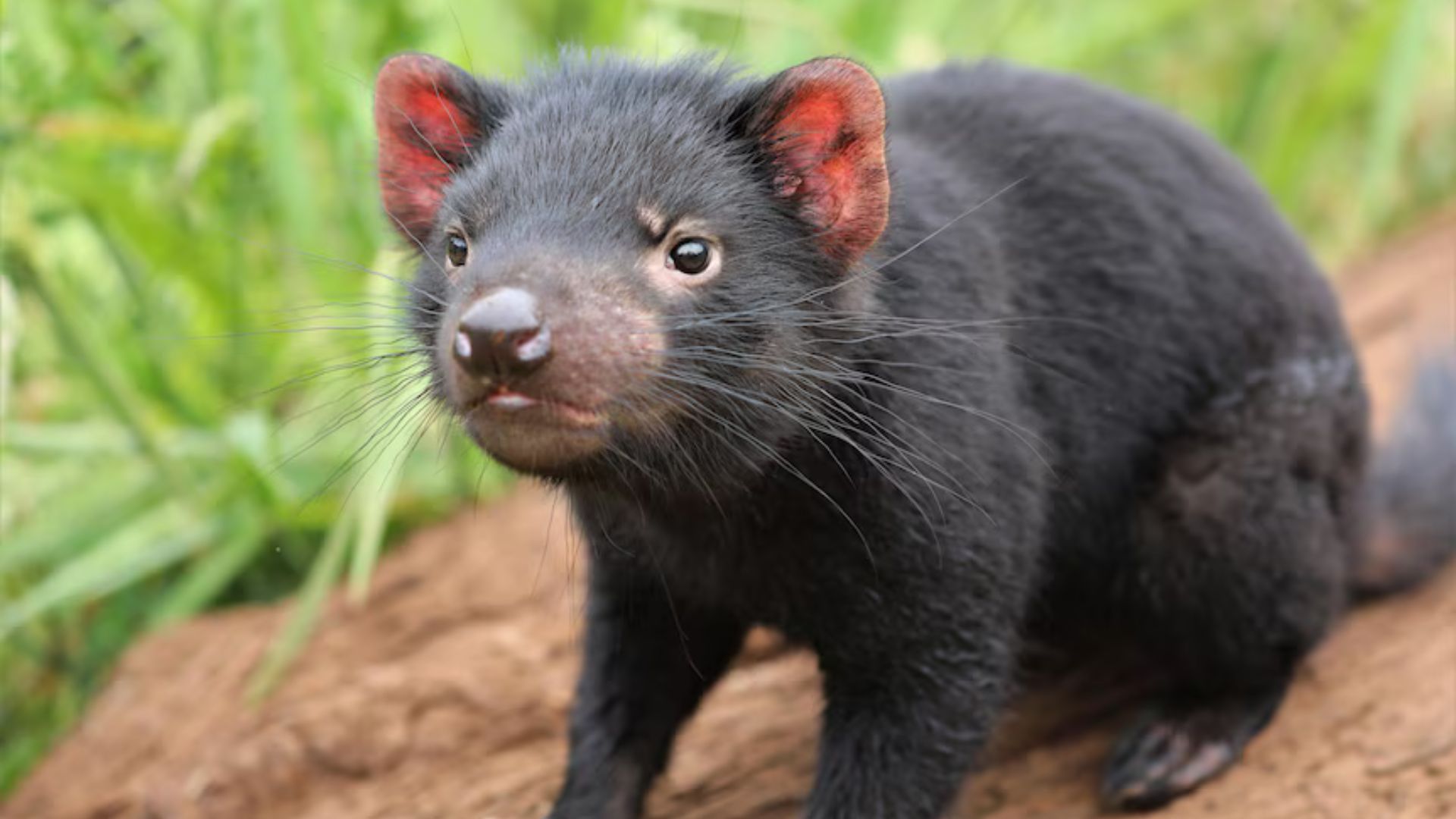
Historical Return of a Native Predator Reveals Measurable Effect on Invasive Species, After Three Millennia of Absence on the Australian Continent, with Reproduction Recorded in Protected Environment and Scientific Data Linking Its Decline to the Advance of Feral Cats.
The Tasmanian devil, the largest existing carnivorous marsupial, has returned to live on the Australian continent for the first time in about 3,000 years, in a reintroduction project in northern New South Wales.
Two years after the first releases, pups began to be recorded in a protected area under semi-wild conditions, a milestone used by conservationists to measure reproductive viability outside Tasmania.
At the same time, a frequently cited research finding in the debate about this return reinforces the potential ecological role of the species.
-
Goodbye iron: new technology from Xiaomi promises to revolutionize the way we iron clothes with 500 kPa steam, continuous flow of 120 g/min, heating in 65 seconds, and six smart modes for different fabrics.

-
Rio Pardo, the most mysterious city in Rio Grande do Sul: untouched Pampas castle, the missing treasure of the Devil Boy, bride’s saint, invisible tunnels, and a 200-year curse today.
-
China retires the J-7 fighter after years of military protection and can now transform military items into drones, following more than 60 years of operation of the J-7, derived from the MiG-21, with thousands of units produced and strategic use in the PLAAF and PLANAF.

-
Volunteers are sought to live in the mountains for a month: a study pays people to stay at 2,500 meters, with 24-hour monitoring of sleep, metabolism, and blood pressure.


In areas where Tasmanian devils entered a significant decline, the abundance of feral cats was estimated to be about 58% higher than in areas where the devils remained healthy and numerous.
Devil Comeback Project and the Barrington Tops Sanctuary
The reintroduction occurs within the context of the Devil Comeback campaign, an initiative presented as a partnership between the organization Aussie Ark and entities associated with rewilding efforts in the country.
Public communications from the project describe that the return to the continent took place within a wildlife sanctuary of approximately 400 hectares, in the Barrington Tops region.

The management was designed to reduce initial risks and allow direct monitoring of the reintroduced group.
First Releases and Official Numbers
The international announcement of the return took place in October 2020.
In the project’s communication, the first release mentioned 11 individuals.
Subsequently, it was reported that 26 Tasmanian devils would occupy the sanctuary over the same reintroduction cycle, following a phase of assisted release.
The same description states that the area was structured to limit common threats in initial releases, such as contact with pests and vehicle traffic.
The site was also presented as a base for a “safe” population, distant from the disease affecting the wild core in Tasmania.
Reproduction Recorded in Semi-Wild Environment
The first signs of reproduction were reported the following year.
In May 2021, the Australian public broadcaster ABC reported that pups had been born in the sanctuary in Barrington Tops just a few months after the release of adults at the end of 2020.
The report described the location as a fenced area designed to protect the animals from threats such as cats and foxes.
Experts also drew attention to the intermediate nature of the experiment.
Although it allows the animals to live and reproduce in conditions close to natural, the model does not equate to an open recolonization, in landscapes without fences.
Second Consecutive Year of Pups

In June 2022, ABC returned to the theme by reporting the second consecutive year of reproductive success in the sanctuary.
The confirmation of new pups reinforced the understanding that the repetition of the event would help sustain the strategy of forming a continental population capable of maintaining itself over time within that model of protection.
The report described the program as part of an effort to build numbers outside Tasmania.
The disease was cited as a central factor justifying the creation of separate nuclei.
Why the Tasmanian Devil Disappeared from the Continent
The absence of the Tasmanian devil on the continent is one of the elements that makes this story a symbolic milestone.
Reports place the disappearance of the animal from the continent around 3,000 years, with paleontological references indicating the end of the fossil record about 3,200 years ago.
The same sources point out that the cause is not presented as a single consensus factor.
There are recurring mentions of environmental changes and alterations in the dynamics of predators and competitors over that period.
The Disease That Changed the Course of the Species

The immediate driver of the project, however, is contemporary and has a defined name: Devil Facial Tumour Disease (DFTD).
It is a transmissible and often fatal form of cancer that spreads among Tasmanian devils.
The disease has been associated with sharp population declines in Tasmania.
Materials from the Devil Comeback describe that building a “safe” population involved years of breeding and selection of individuals before beginning reintroduction to the continent.
The program reports hundreds of animals born over time and plans for additional releases.
The Figure of 58% and the Effect on Feral Cats
It is at this point that the number of 58% enters the public debate.
The result appears in both journalistic coverage and scientific literature.
A study published in the journal Ecology Letters analyzed the disease-induced decline in Tasmanian devil populations as a “natural experiment.”
The researchers tested whether the reduction of the native predator would be linked to the increase of an invasive mesopredator, the feral cat.
In the scientific abstract, the authors note that the abundance of cats was about 58% higher where the devils had declined.
This increase was associated with a negative impact on a smaller native prey.
Limits of the Data and the Context of the Sanctuary
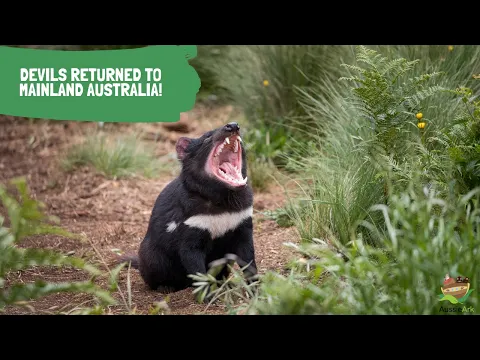
The data does not measure what happens today within the Barrington Tops sanctuary.
The logic of the site is to reduce exposure to introduced predators during the establishment phase of the population.
Still, the figure has come to serve as a objective summary of the ecological role lost with the decline of the Tasmanian devil.
Researchers and managers highlight that native predators can influence the presence or abundance of invasive species.
The loss of these predators can open space for increases in invaders with cascading effects on smaller species.
Ecological Function Beyond Predation
The communication of the Devil Comeback also attributes to the Tasmanian devil a role that goes beyond predation.
As a scavenger, the animal consumes carcasses and reduces organic material available in the environment.
This behavior is described as a service linked to the cleaning of remains and the sanitary dynamics of the landscape.
This type of function depends on the context and scale at which the species is present.
Therefore, the reintroduction began in an area with intensive control and monitoring.
An Open Question Remains
The sequence of events focuses attention on a question that remains at the center of scientific and environmental debate.
To what extent can restoring a native predator alter, in practice and with measurable data, the pressure of an invader as widespread as the feral cat in Australian ecosystems?









-

-

-

4 pessoas reagiram a isso.