





 Portuguese
  English
  Spanish
  4 min of reading
  10 comments


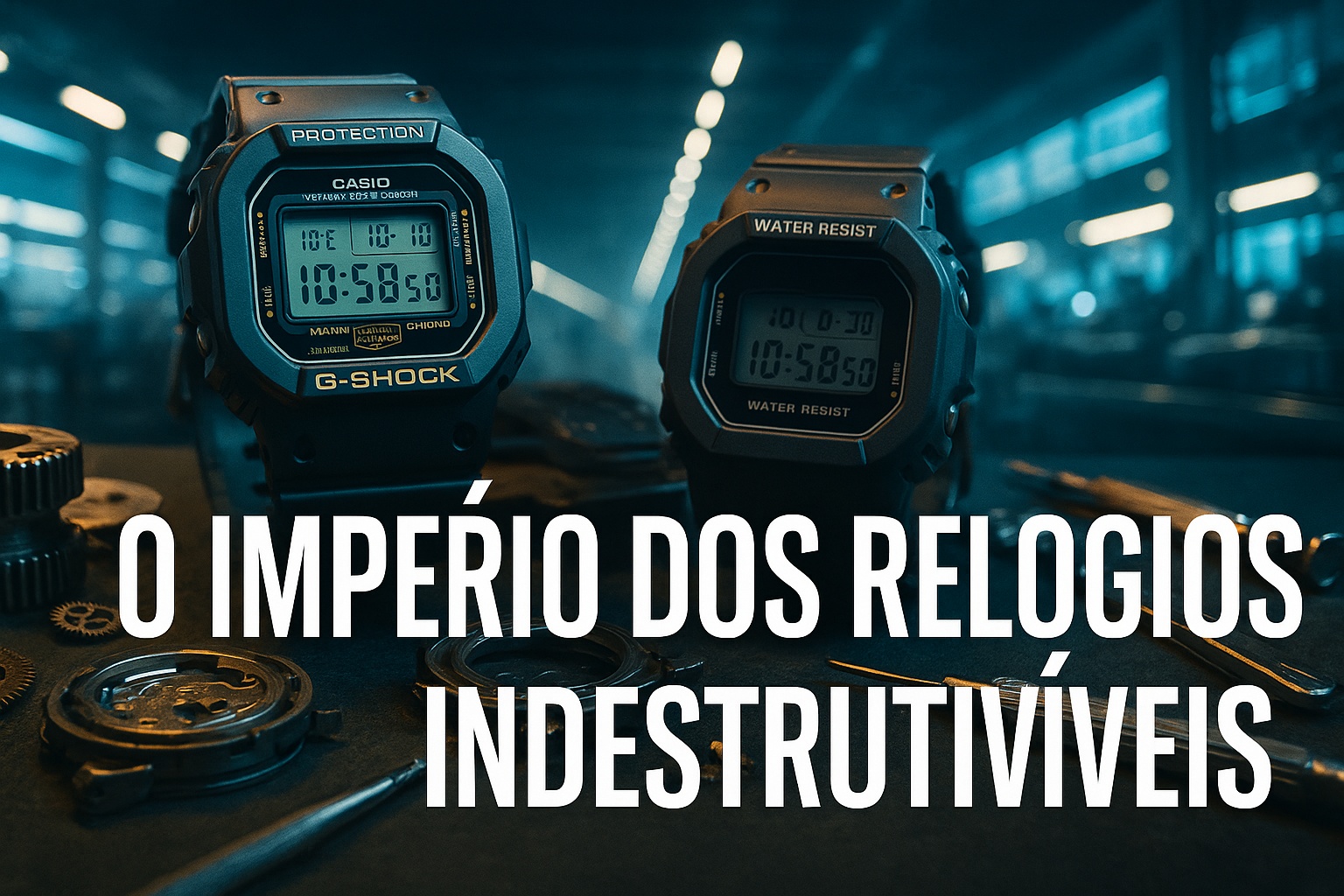


The History of Tadao Kashio, Founder of Casio, Shows How Cheap, Precise, and Indestructible Watches Transformed the Brand into a Global Technology Empire.
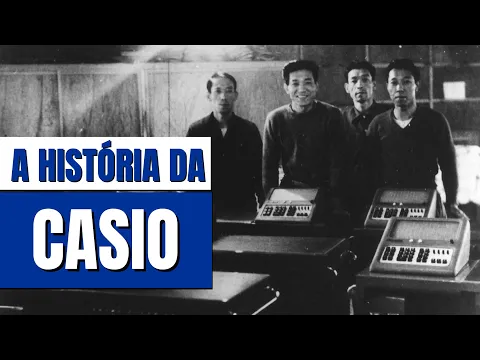
To understand why Casio became one of the world’s most popular and resilient brands, we need to go back to post-World War II devastated Japan. In 1946, Tadao Kashio, son of a humble family, started a small business in Tokyo making cigarette pipes, simple artifacts that helped save tobacco, which was then scarce. The country was trying to rebuild, and Tadao already demonstrated the philosophy that would guide his entire journey: to create simple, cheap, and useful solutions for millions of ordinary people.
The turning point came a few years later when his brothers joined the company and began developing compact calculators. In 1957, Casio launched the Casio 14-A, one of the world’s first fully electric calculators. It marked the company’s official entry into the technology sector and anticipated Tadao Kashio’s obsession with accessible precision engineering.
While Japanese, Swiss, and American competitors invested in expensive, heavy machines confined to the corporate environment, Tadao understood the obvious that no one else saw: the future lay in mass production, not elitism. This logic would guide every next step of the company.
-
Super toxic red mineral found in the double burial of two women aged 1,900 years near the banks of the Dnieper River in Ukraine.

-
No one expected this under a common street: archaeologists find 3 intact oak barrels, buried about 400 years ago, with traces of lime and pieces related to 17th-century construction.
-
After decades of failed attempts, Brazil is once again looking to space with an orbital rocket measuring 12 meters, weighing 12 tons, costing R$ 189 million, and scheduled for launch in 2026, in a new race to finally achieve autonomous access to orbit.
-
The Earth will plunge into a few minutes of darkness in broad daylight in August 2026, when a total solar eclipse transforms the sky into one of the most impressive astronomical phenomena in recent years.

Practical, Cheap, and Indestructible Watches: How Casio Faced Luxury and Won
In 1974, Casio officially entered the watch market by launching the Casiotron, the world’s first digital model with a fully automatic calendar function.
But the big impact was yet to come. In the 1980s, when the watch industry was dominated by Swiss prestige and brands betting on luxury, exclusivity, and artisan tradition, Casio went in the opposite direction: extremely cheap, ultra-resistant watches, packed with technology, and built to last.

It was in this context that the G-Shock was born, conceived by Kikuo Ibe, a Casio engineer who had an almost impossible goal: to create a watch that would never break.
More than 200 prototypes failed. The tests included throwing watches out of the building’s window and dropping them from heights greater than 10 meters.
When the DW-5000C was ready, in 1983, it was unlike anything else on the planet: reinforced case, internal cavity with floating core, impact resistance, vibration, drops, mud, immersion in water, and thermal shocks.
The Watch Was Practically Unbreakable, as Promised by the Campaign.
The bet seemed risky, but it was explosive. Police officers, workers, divers, soldiers, firefighters, and rescue professionals began adopting the G-Shock as a work tool because it was cheap and could withstand situations that would destroy any ordinary watch.
Forty years later, the G-Shock has surpassed 100 million units sold, some models withstand pressures of 200 meters, and military versions endure tests equivalent to wartime conditions.
Tadao Kashio created something that the industry never understood: a watch that was not jewelry – it was a tool.
How the Founder of Casio Won the Global Competition by Betting on the Popular
Tadao Kashio’s philosophy was simple yet brilliant: “If it is useful, durable, and affordable, it wins.”
This is how Casio expanded its presence not only with watches but in all areas of personal technology:
- scientific and financial calculators
- musical keyboards
- synthesizers
- digital cameras
- electronic instruments
- corporate systems
- sports, military and outdoor watches
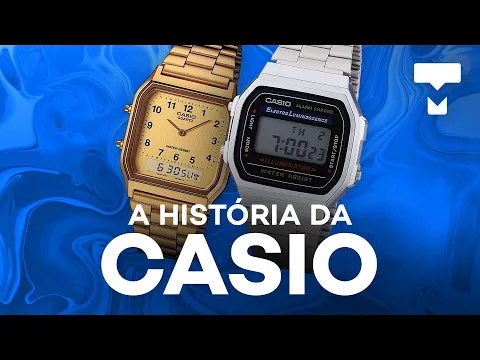
The numbers show the size of this impact:
- Casio has sold over 1 billion calculators worldwide.
- The F-91W line, launched in 1991, sells about 3 million units per year to this day.
- The Casio Privia digital pianos are global references in the entry and intermediate segments.
- The G-Shock is considered the most resistant watch ever produced on an industrial scale.
While competitors fought for space in the luxury market, Tadao Kashio built a commercial fortress based on everyday use, robust engineering, and technological simplicity that rarely fails.
It was the opposite of the superfluous. It was the essential.
Why Tadao Kashio’s Strategy Still Works Almost Half a Century Later
The world has changed, smartwatches have emerged, and luxury brands have created digital collections, but none of that has stopped Casio from continuing to grow because its initial philosophy remains intact.
Today, the ordinary consumer realizes something that Tadao Kashio already knew in the 1950s:
- smartwatch batteries last one day
- screens break easily
- prices are high
- maintenance is costly
- durability is limited
Meanwhile, a Casio F-91W works for 7 years on a single battery.
A G-Shock survives falls, impacts, water, and pressures that would crush other devices.
And the price is still a fraction of the alternatives.
Tadao Kashio’s strategy won because it does not depend on fashion or trends: it depends on real needs. A watch for work, for heavy activities, for outdoor use, for military missions, for emergencies. Objects made to last.
Luxury fades.
Utility remains.
And Casio is pure utility.
Tadao Kashio’s Legacy to the Industry and to the World
When Tadao Kashio died in 1993, he left behind much more than a profitable company.
He left a culture.
The culture that technology should serve people, not create barriers. That price doesn’t have to be an obstacle. And that true innovation is not cosmetic, it is functional.
That is why millions of people around the world, like workers, students, divers, soldiers, teachers, truck drivers, athletes — still use Casio daily.
The brand has become part of everyday life. And that may be its greatest victory.







Thank You Lord Your Wishing,,,
Eu tenho vários casios dos anos 80 e 90 e mais os dos anos 2000 pra cá.
Sou fã da marca casio.
Meu primeiro casio nos anos 80 foi um relógio calculadora que até hoje tenho junto dos 200 relógios casio.
Casio, o meu primeiro relógio. Paixão pra toda vida