





 Portuguese
  English
  Spanish
 5 min of reading
  1 comment


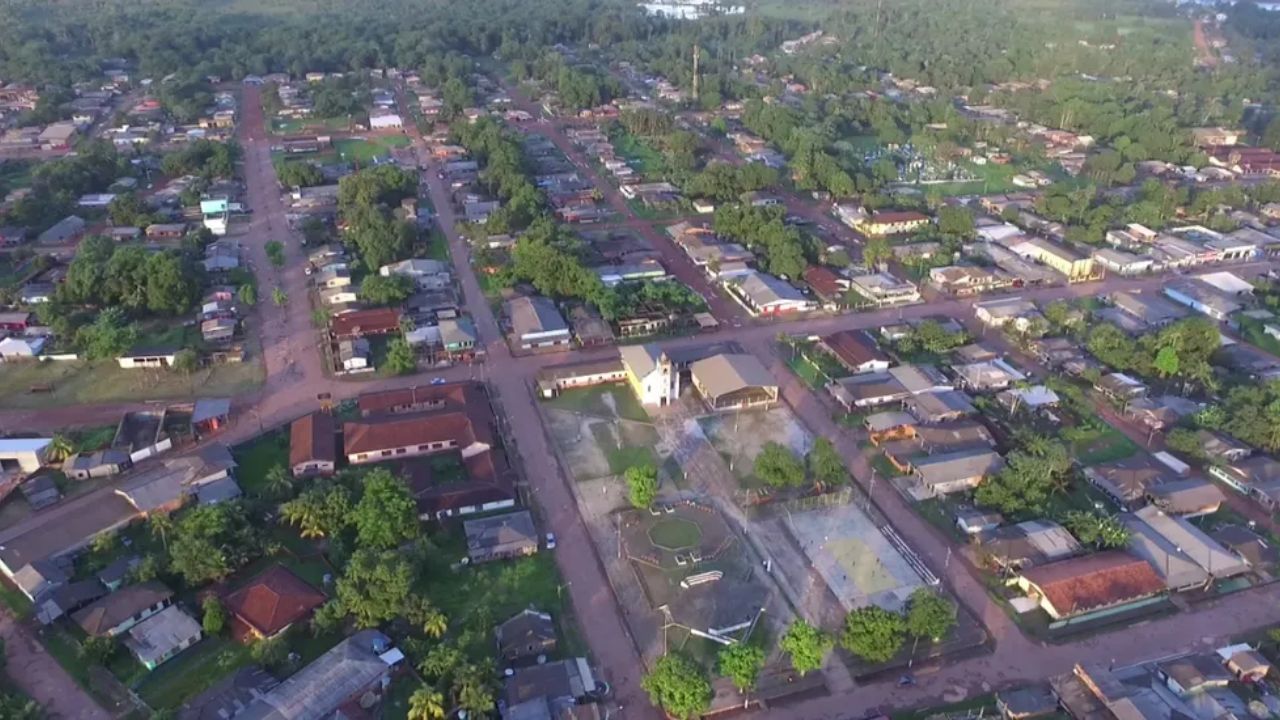


With More Than 4,000 mm of Annual Rain, Asian Forest Humidity, and a 2,000-Year-Old Observatory, the Amapá Municipality Redefines What We Know About the Climate and History of the Amazon, Being the Rainiest City in Brazil.
In the far north of Amapá, a municipality stands out not just for one, but for multiple records. Calçoene, a small city bathed by the Atlantic, holds the official title of the rainiest city in Brazil, a fact confirmed by an in-depth study from Embrapa (Brazilian Agricultural Research Company). The research, which analyzed data from more than 400 weather stations, revealed that precipitation in the region exceeds 4,000 millimeters annually, a volume that is nearly three times higher than that of metropolises like São Paulo.
But the water that falls from the sky in abundance is merely the backdrop for an even more fascinating story, recorded in stone for millennia. The region is home to the Solstice Archaeological Park, a megalithic complex of 2,000 years known as the “Amazonian Stonehenge”. Far from being a coincidence, the extreme climate and the ancestral monument are intrinsically linked: the celestial observatory was the tool that a sophisticated society developed to predict the onset of the overwhelming rainy season, proving that the need for adaptation drove science in pre-Columbian Amazonia.
The Annual Deluge: How Calçoene Became the Epicenter of Rain in Brazil
The confirmation of Calçoene as the rainfall pole of the country came from a rigorous analysis led by Embrapa. The study debunked the old consensus that the Serra do Mar in São Paulo was the wettest area. The research was based on historical series of over 30 years, the scientific standard for defining climate, granting high reliability to the discovery. According to the data, the average rainfall in Calçoene exceeds 4,000 mm, but atypical years can push this figure to impressive levels, such as the almost 7,000 mm recorded in the year 2000.
-
(Video): Italian pilot lands plane on moving train at 120 km/h and achieves unprecedented feat in aviation, even with a narrow runway and without direct visual contact.
-
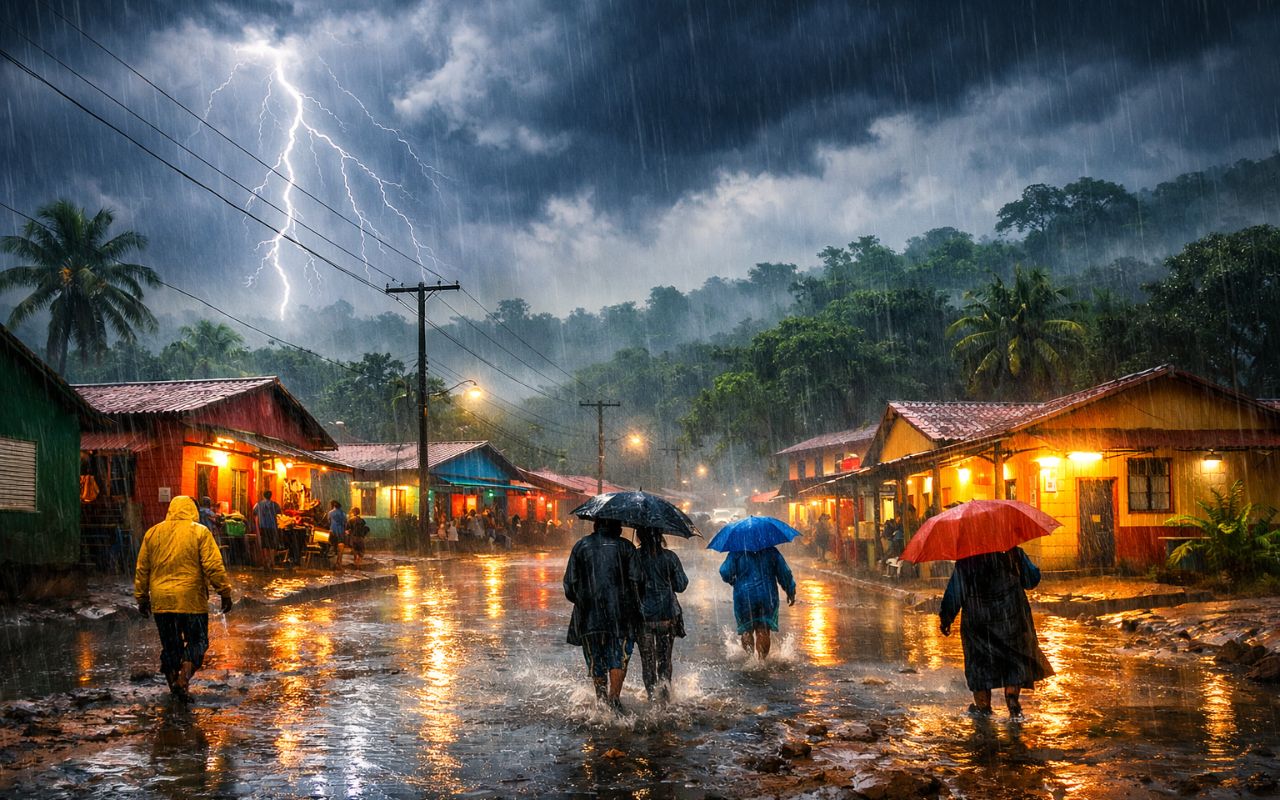
It seems to have come out of a science fiction movie: A Brazilian city where it rains almost every day, recording over 4,000 mm per year, driven by climatic factors — a direct result of its strategic location in the Amazon.
-
The water crisis that could change everything this year has already begun; it’s not just about the climate, it affects technology, raises product prices, and can halt entire companies without warning.

-
A Japanese mason transforms raw granite into small cups and handcrafted utensils, collects giant stones, cuts with precision, and impresses with detailed manufacturing and finishing.

This torrential rain has a powerful meteorological explanation. Calçoene’s location, near the Equator, places it under the direct influence of the Intertropical Convergence Zone (ITCZ), a belt of clouds and storms that circles the planet. Add to this the intense evapotranspiration of the Amazon Rainforest, which releases a massive volume of moisture into the atmosphere. The result is a severe “Amazonian Winter” from January to June, with more than 25 rainy days per month and a relative humidity that hovers around 90%, conditions that rival those of tropical forests in Southeast Asia.
The Stonehenge of the Amazon: A 2,000-Year-Old Stone Calendar
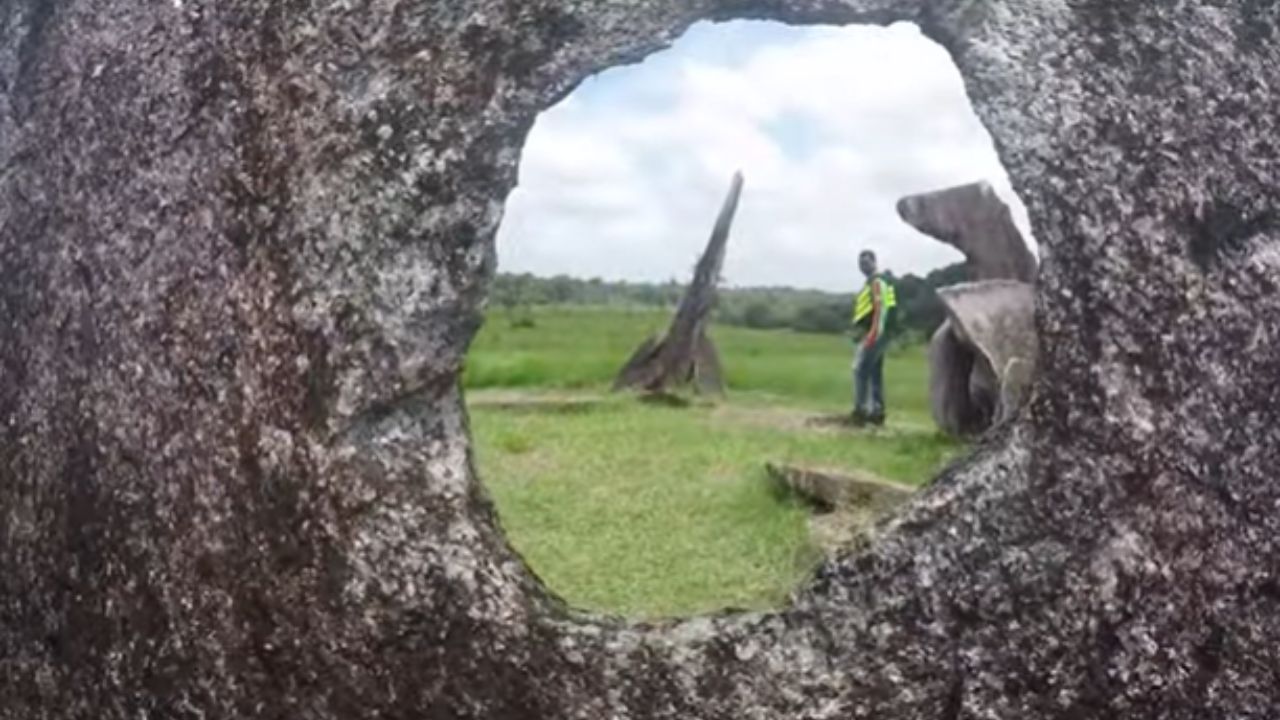
On top of a hill in the rural area of Calçoene stands one of the most mysterious monuments in Brazil. The Solstice Archaeological Park consists of a circle of 127 granite monoliths, some reaching up to 4 meters tall, precisely planted in the ground. The structure, about 30 meters in diameter, has been the subject of research conducted by the Institute of Scientific and Technological Research of Amapá (IEPA) and Iphan (Institute of National Historical and Artistic Heritage), which work to unveil its secrets.
Although known to scientists since the 19th century, the site gained worldwide notoriety only after being “rediscovered” by locals in the early 2000s, like Lailson da Silva, who found the stones while clearing a plot of land. Archaeological excavations revealed much more than a circle of rocks: elaborate ceramic funerary urns were found, indicating that the site was also a sacred cemetery. These artifacts, with styles similar to the famous Marajoara ceramics, are crucial clues about the identity of its builders.
The Science Behind the Monoliths: Astronomy for Survival
The main function of the monument, according to scientific consensus, was that of a sophisticated astronomical observatory. The arrangement of the stones is not random; they are aligned with the Sun’s trajectory during the winter solstice (which occurs in December in the Northern Hemisphere). On a specific day of the year, one of the 3-meter tall monoliths aligns perfectly with the Sun at noon, to the point of casting no shadow. This level of precision demonstrates an advanced understanding of celestial mechanics.
This stone calendar had a vital purpose: survival. The December solstice accurately marks the beginning of the violent rainy season in the region. By predicting this event, the local society could prepare, defining the right moment for planting and harvesting. Mastering this knowledge likely conferred enormous political and religious power to the elite controlling the observatory, allowing them to organize communal life and position themselves as intermediaries between heaven and earth. The construction, which required great collective effort, suggests a complex and hierarchical society.
Who Were the Builders? The People Who Challenged the Forest


Radiocarbon dating indicates that the “Amazonian Stonehenge” is between 1,000 and 2,000 years old. The identity of its builders remains an active research field, but the evidence, mainly from the analysis of ceramics, points to a local origin. This contradicts old theories that complex peoples had migrated from other regions, such as the Andes or the Caribbean. The culture that erected the monument was authentically Amazonian, possibly ancestral to the current Palikur Indigenous people who still inhabit the region.
The existence of Calçoene is a material proof that rewrites the history of the Amazon. The monument challenges the old view of a “pristine” and sparsely inhabited forest, and refutes theories of environmental determinism that claimed the Amazonian soil could not support complex societies. On the contrary, the people of Calçoene were not victims of the extreme environment; they observed it, understood it, and developed technology and science to thrive, leaving a legacy of ingenuity that endures through time.
The history of Calçoene demonstrates an incredible capacity for human adaptation. What impresses you more: the extreme volume of rain or the ingenuity of a people who built an astronomical observatory 2,000 years ago? Do you believe Brazil makes good use of its historical and tourism potential in places like this? Leave your opinion in the comments!




Fantástico! Genialidade e compreensão da natureza.É preciso valorizar essa descoberta.