





 Portuguese
  English
  Spanish
  3 min of reading
  0 comments


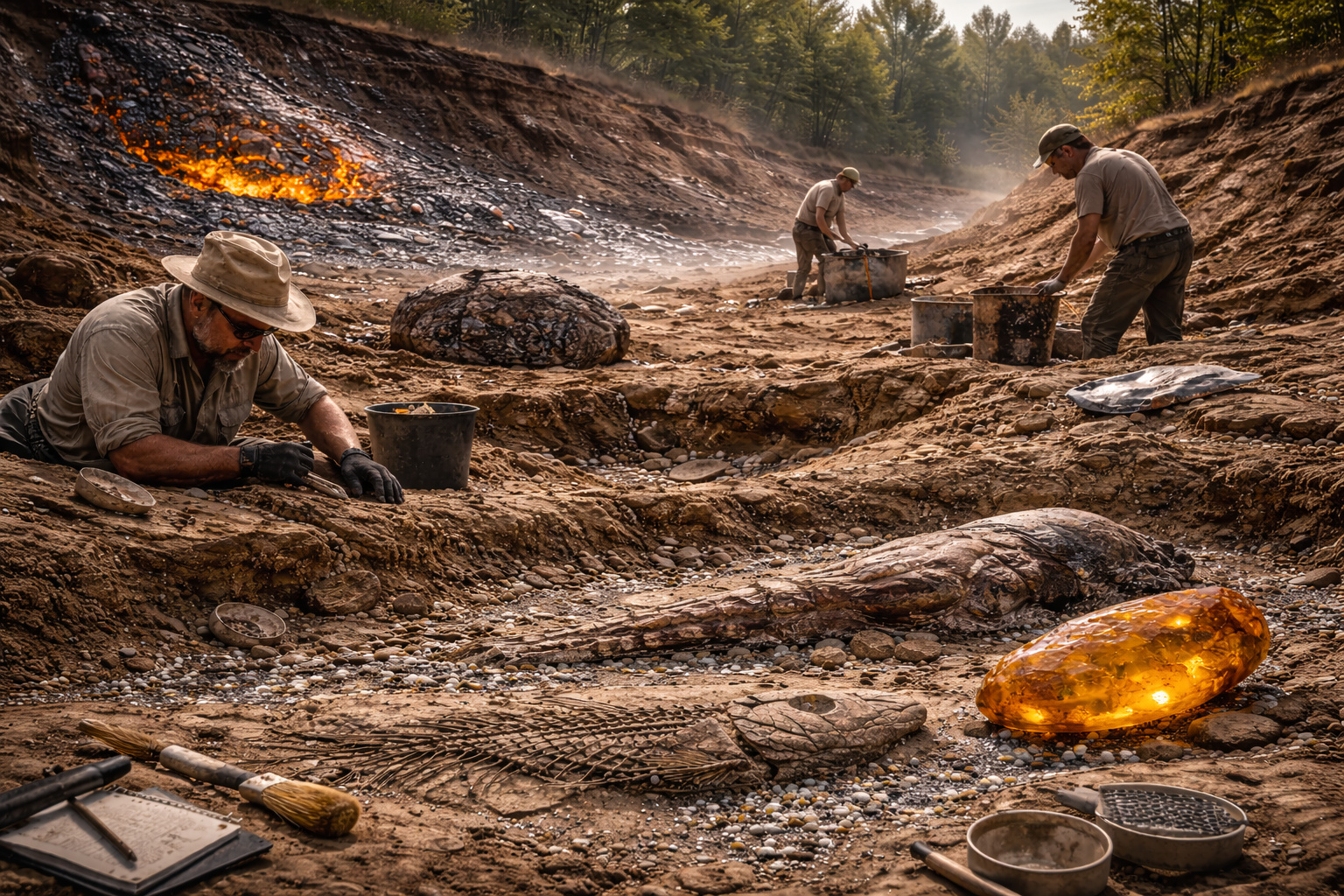
Preserved Remains in the Hell Creek Formation Help Scientists Reconstruct the Day an Asteroid Changed the History of Life on Earth
Researchers identified possible remnants of the asteroid responsible for the extinction of the dinosaurs at a fossil site located in the Hell Creek Formation in North Dakota, United States. The findings reinforce scientific evidence of the impact that occurred about 66 million years ago, at the end of the Cretaceous period.
The site contains exceptional records directly linked to the impact. The area preserves fossils of animals that died during the event, which allows for a detailed reconstruction of the scene. Among the findings, scientists identified fish that ingested debris, a turtle pierced by a rock, and a leg possibly belonging to a dinosaur.

Discovery Highlighted in a Scientific Documentary
The public learned about the discovery in 2022 through the documentary Dinosaur Apocalypse, aired by PBS. The production featured naturalist David Attenborough and paleontologist Robert DePalma, a researcher who has studied the region’s geology for years.
-
Xiaomi TV Stick HD 2 is announced with Google TV and dual-band Wi-Fi, offering 38% superior performance, HDR10+, Dolby Atmos, a quad-core chip, Mali-G31 GPU, 1 GB RAM, and support for 1080p at 60 Hz.

-
Brazil joins the select group of countries by producing a supersonic fighter that reaches 2,400 km/h with advanced electronic warfare technology, US$ 4 billion in investments, 36 units planned, 350 trained engineers, and unprecedented national production by 2032.

-
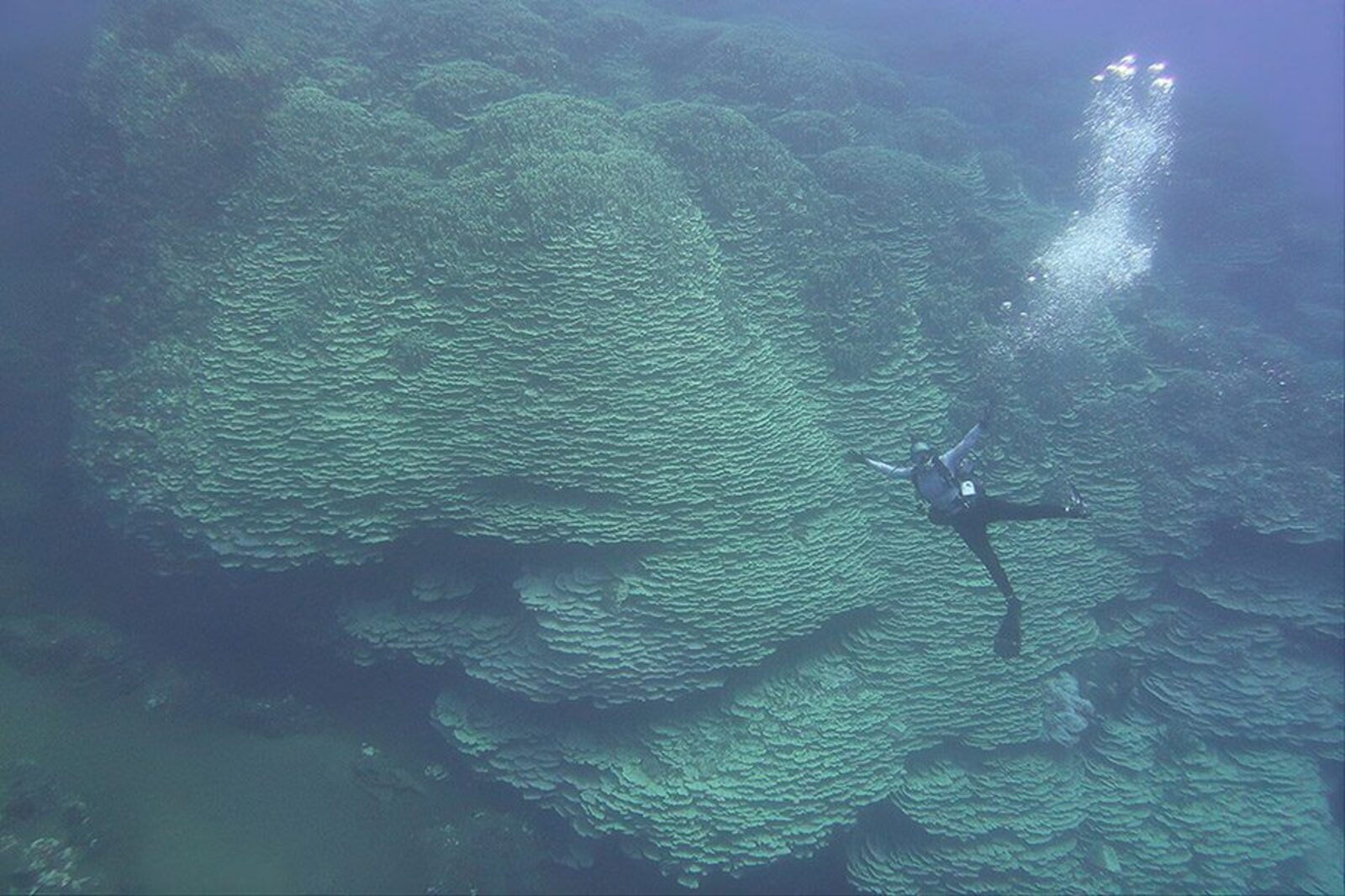
At the bottom of the sea, scientists have found a true underwater cathedral measuring 62 meters at the base, 31 meters at the top, and 1,347 square meters of giant coral in the Maug Islands, estimated to be 2,050 years old.
-
Surrounded by the sea, the airport will have a system to prevent airplanes from falling into the water; technology will be installed in Ilhéus (BA), with an investment of R$ 70 million.


Impact Altered the Environment on a Large Scale
According to information released by CNN, DePalma states that the impact of the asteroid did not only cause mass extinction. The event also triggered profound environmental changes, influencing the formation of progressively drier regions in parts of the United States.
Sediments Indicate Rapid Burial of Organisms
The fossil site houses thousands of extremely well-preserved fish fossils. Analyses indicate that a large mass of water displaced sediments and buried the animals abruptly after the asteroid struck the ocean. This displacement reached continental areas on a large scale.
Preservation Reinforces Catastrophic Event Scenario
The sediments quickly covered the organisms and prevented decomposition, preserving delicate structures. This pattern reinforces the hypothesis of a rapid, synchronous, and geographically extensive catastrophic event.
Spherules in Amber Record Impact Particles
In addition to the fossils, researchers identified microscopic spherules, formed from vaporized material during the impact. Tree resin captured these particles and, over time, turned into amber, preserving the fragments with a high level of integrity.
Set of Evidence Expands Scientific Understanding
According to DePalma, these spherules remained frozen in time, protected from water and degradation processes. The researcher emphasizes that the continuous accumulation of evidence, gathered over years of study, enhances scientific understanding of the immediate effects of the impact.
This set of records offers rare geological data about one of the most decisive episodes in the planet’s history. In light of this, a central question arises: how many more remains are still buried, capable of revealing new details about the event that led to the disappearance of the dinosaurs?








-

Uma pessoa reagiu a isso.