





 Portuguese
  English
  Spanish
  4 min of reading
  0 comments


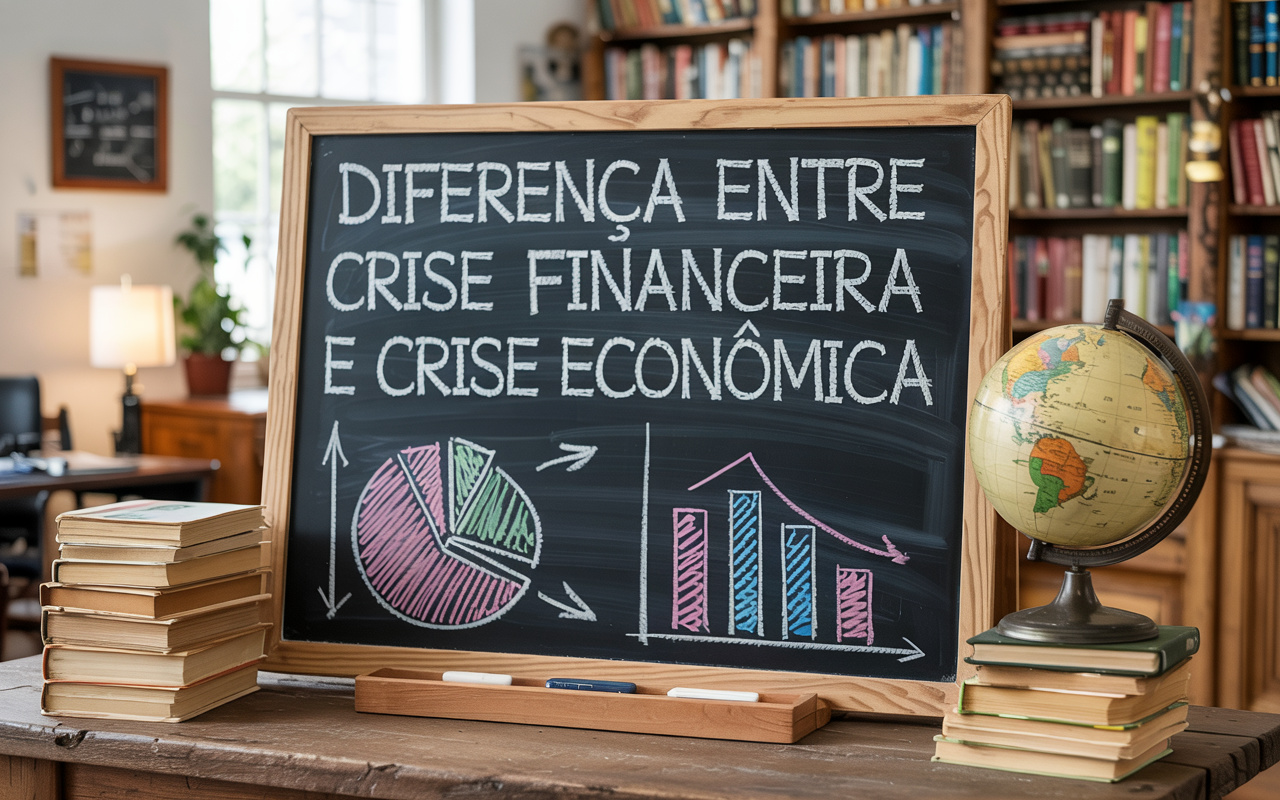
Understand The Difference Between Financial Crisis And Economic Crisis, Their Causes, Impacts And How To Identify When A Country Is In Each Situation.
The term “crisis” can have different meanings when we talk about financial crisis or economic crisis. Although they are related and often occur simultaneously, each has its own causes, characteristics, and impacts. Understanding the differences and knowing how to identify crises is essential to comprehend the moment a country is going through and to anticipate possible developments.
Financial Crisis: When The Credit And Investment System Collapses
A financial crisis occurs when there is a break or collapse in the functioning of the financial system — banks, stock exchanges, capital markets, and credit. It is typically marked by loss of investor confidence, liquidity shortage (lack of money circulating among banks and companies), steep declines in asset prices, and difficulties in accessing financing.


This type of crisis can arise from factors such as:
-
“No one will make us change the Pix,” says Lula after the US report.

-
Lula responds directly to Trump and says that Pix is from Brazil and will not change under pressure from anyone, after a report from the United States pointed out the Brazilian payment system as an American trade barrier.

-
Amazon has just announced a new fee on all deliveries, and your online purchases will become more expensive starting April 17, including for those buying from the United States here in Brazil.

-
He sold his share for R$ 4 thousand, saw the company become a giant worth R$ 19 trillion, and missed the opportunity of a lifetime.

- Failure or insolvency of large financial institutions;
- Speculative bubbles bursting, such as in the real estate or stock market;
- Excessive indebtedness of companies and governments;
- Lack of regulation or severe failures in market oversight.
A notable example was the 2008 financial crisis, triggered by the collapse of the real estate market in the U.S. and the bankruptcy of Lehman Brothers, with ripple effects on global credit.
How To Identify A Financial Crisis:
- Sharp decline in stock markets in a short time;
- Sudden increase in interbank interest rates;
- Banks restricting credit or drastically increasing requirements;
- Rapid devaluation of financial assets, such as stocks and bonds;
- Mass withdrawals of deposits or investment funds.
Economic Crisis: When Productive Activity And Consumption Enter Recession
The economic crisis is broader and affects the production of goods and services, employment, income, and consumption. In it, the country faces a contraction in economic activity, with consecutive declines in GDP (Gross Domestic Product), rising unemployment, and reduced purchasing power of the population.
Its causes may be linked to external shocks (such as international crises, wars, and pandemics) or internal factors (such as poor fiscal management, high inflation, political instability, and lack of investment).
A recent example is the economic crisis caused by the COVID-19 pandemic in 2020, which paralyzed production chains, drastically reduced demand, and increased unemployment in various countries.
How To Identify An Economic Crisis:
- Decline in GDP for two consecutive quarters (technical recession);
- High unemployment and increased informal work;
- Declining consumption and industrial production;
- High inflation or prolonged deflation;
- Significant drop in private and public investment.
Differences Between Financial Crisis And Economic Crisis
- Scope: The financial crisis directly affects the financial system, while the economic crisis impacts the real economy — production, employment, and consumption.
- Speed Of Impact: Financial crises tend to develop quickly, sometimes in a matter of days; economic crises can take months to consolidate.
- Origin: The financial crisis usually originates from issues in capital markets, credit, or banks; the economic crisis can arise from more diverse factors, such as supply shocks, misguided economic policies, or natural disasters.
- Chain Reaction: A financial crisis can lead to an economic crisis (lack of credit for businesses and consumers), and a prolonged economic crisis can create financial problems (defaults, bankruptcies, and banking instability).
How To Identify Which Crisis The Country Is In
Monitor Financial Indicators — Abrupt currency devaluation, sharp stock market declines, lack of credit, and banking instability indicate a financial crisis.
Monitor Economic Indicators — GDP contraction, high unemployment, and declines in production and consumption are clear signs of an economic crisis.
Observe The Origin Of The Problem — If it started in the banking system or capital markets, it tends to be financial; if it originates in production, trade, or the labor market, it tends to be economic.
Analyze The Interconnection — Often, crises feed off each other, and a country may be going through both at the same time, as happened in 1929 and 2008.
The financial crisis is more confined to the credit and investment system but can paralyze the economy; on the other hand, the economic crisis is broader and directly impacts the daily lives of the population, affecting employment and income. Knowing how to identify crises is crucial for governments, businesses, and citizens to make safer decisions in times of instability.










-

-

6 pessoas reagiram a isso.