





 Portuguese
  English
  Spanish
  4 min of reading
  15 comments


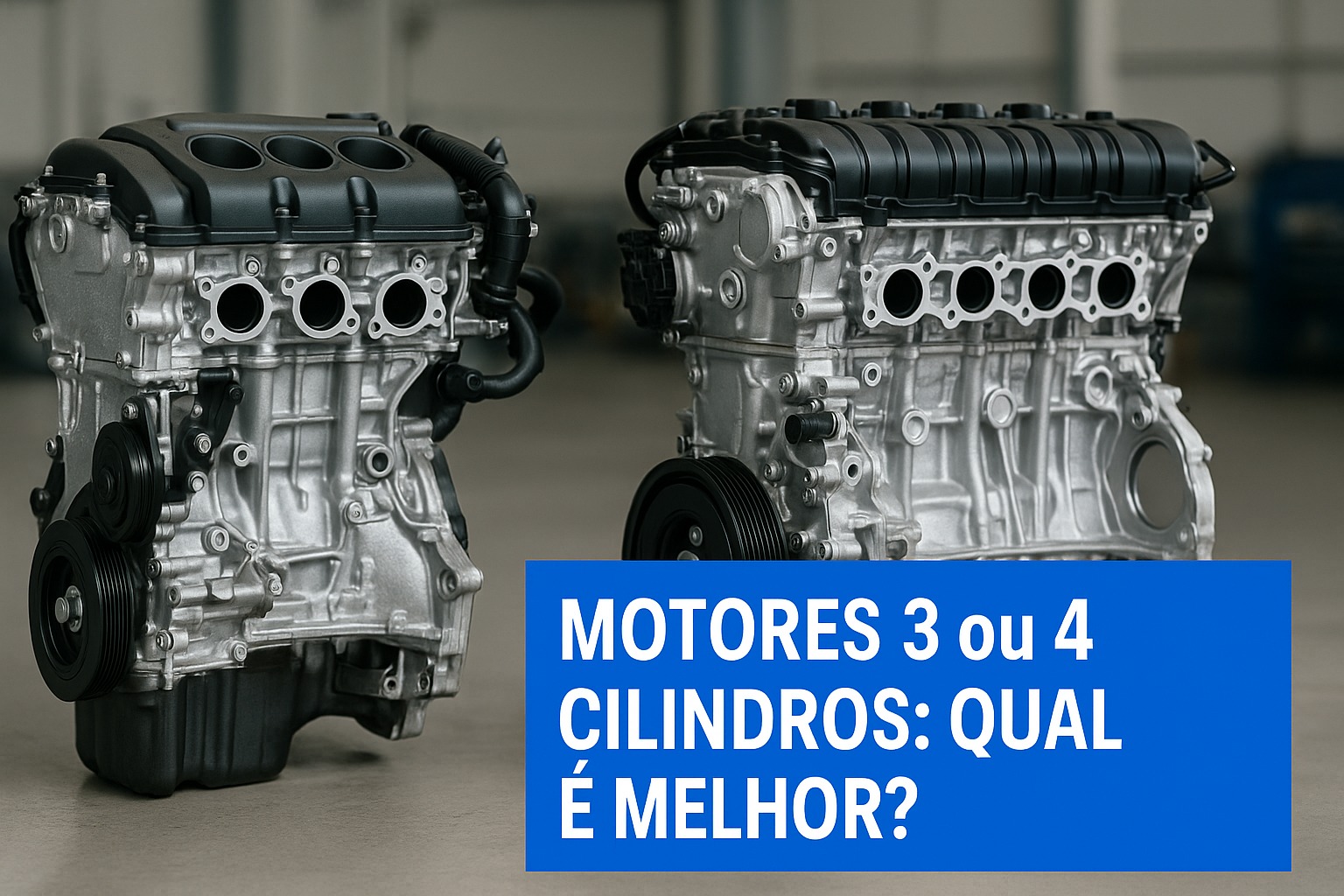


With Less Weight, Less Friction, and Reduced Consumption, Three-Cylinder Engines Have Become Standard in Popular Cars, Offering Efficient Performance and High Torque, Despite Challenges Such as Vibration and Increased Noise
Three-cylinder engines have gained ground among popular and low-displacement cars because they combine efficiency, economy, and lightness. This mechanical configuration has largely replaced the old four-cylinder engines, which now appear only in a few exceptions. The main reason is simple: fewer components mean less friction and better utilization of energy generated from fuel combustion.
The Logic Behind Three Cylinders
The efficiency of three-cylinder engines lies in the balance between size and performance. With one less cylinder, the friction between valves, connecting rods, and crankshaft decreases, resulting in less effort from the engine and greater fuel efficiency.
This combination also improves torque and power, even in small engines, such as those with 1.0 and 1.3 liters.
-
The car stored for 38 years: when opening the barn door, what appears is breathtaking and looks like a scene from a movie!

-
Fiat works miracles in the Brazilian market, lowers the price of its 0 km hatch to R$ 69,990, reestablishes the model as the cheapest car in the country, and reignites the battle against Kwid and C3.

-
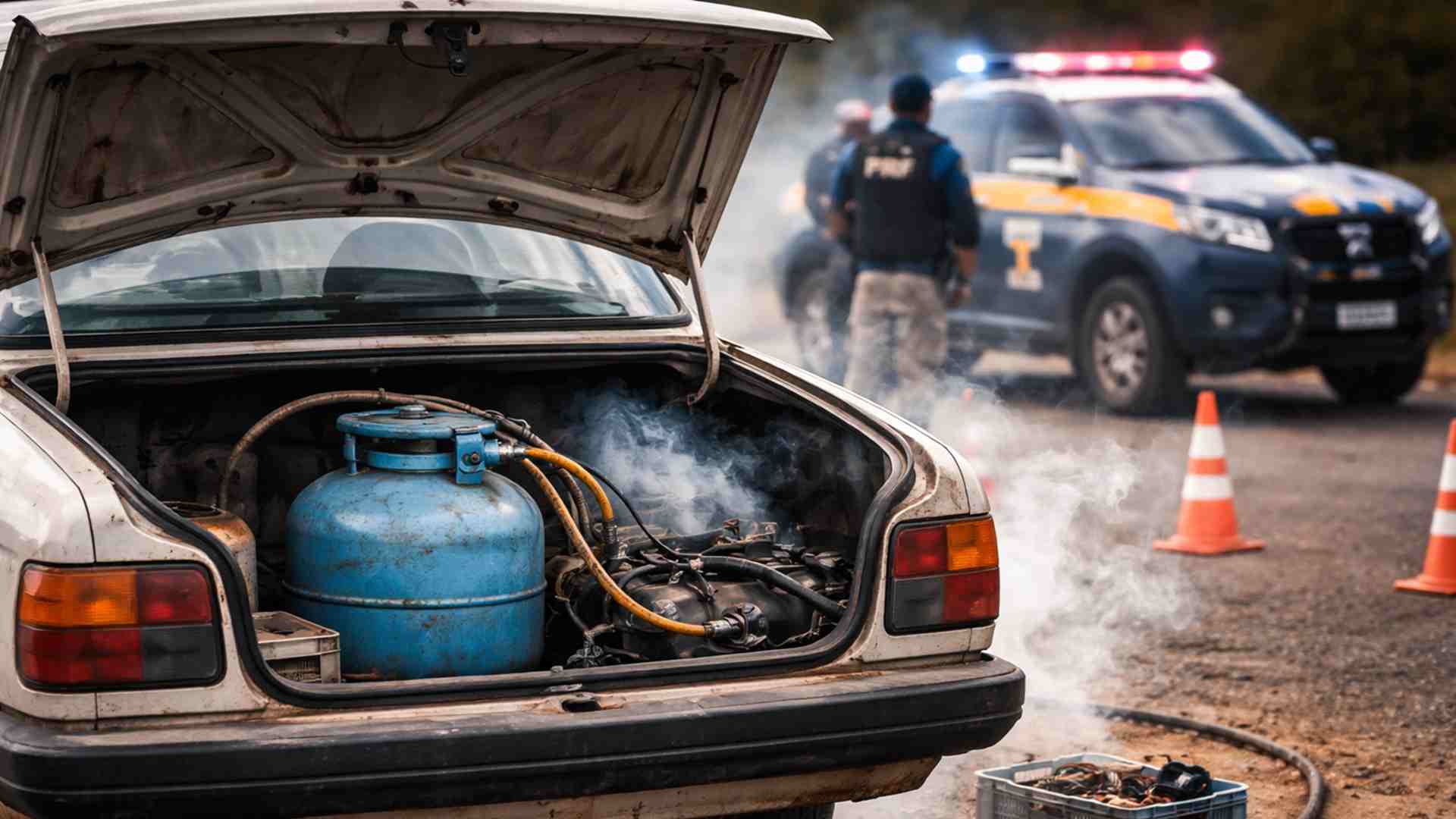
Chevette with cooking gas: How the gas cylinder ends up being used in cars clandestinely and why this makeshift solution can result in leaks, explosions, damaged engines, and seized vehicles.
-
Fiat launches the new 2027 Toro hybrid with 48V, 176 hp, an electric motor of 15.5 hp, a 0.85 kWh battery, up to 7% fuel savings, 8% fewer emissions, and possible exemption from IPVA.


When this technology arrived in compact cars, the impact was immediate. Performance increased, production costs fell, and energy efficiency rose.
A practical example helps visualize this: in a 1.0 engine with 1000 cm³, each cylinder in a three-cylinder engine occupies about 333 cm³, ensuring a more balanced distribution of power and reducing mechanical losses.
Additionally, the reduction of internal components frees up space in the engine bay, improves cooling, and reduces heat generated during operation.
The assembly becomes lighter, and the car responds better during accelerations and pickups.
Why the Engine Is Lighter
Weight is one of the significant advantages of this configuration. Without the fourth piston, its connecting rod, springs, valves, and pin, the engine loses considerable mass.
In 1.0 engines, savings can reach up to 30 kg compared to four-cylinder versions. This difference, although it seems small, has a direct effect on the power-to-weight ratio and drivability.
A lighter car requires less effort from the engine to move. Therefore, consumption tends to decrease, and responses become quicker.
This feature especially helps in urban vehicles, which face heavy traffic and require agility at low revs.
Less Friction, More Efficiency
The absence of one cylinder reduces internal friction and improves energy utilization. Studies indicate that efficiency gains can reach 20% compared to four-cylinder engines.
Less friction means less heat and, consequently, less wear on the parts. The system operates under milder conditions, increasing durability and reducing the need for frequent maintenance.
This advantage adds to fuel savings, one of the factors most valued by consumers.
Economy and Lower Emissions
Energy efficiency is not just a matter of cost, but also of sustainability. As the engine requires less energy to move the car, fuel consumption decreases, and emissions of harmful gases lower.
Furthermore, manufacturers have taken advantage of the simplified design of three-cylinder engines to improve combustion chambers and piston heads.
This has led to less energy loss during gas exchange — air intake and exhaust — resulting in a cleaner, quieter engine with better thermal performance.
Enhanced Power and Torque
Another advantage lies in the delivery of power and torque. The combination of less weight, optimized combustion, and improved airflow allows these engines to generate more energy per liter of fuel.
A good example is the comparison between Fiat’s Fire and Firefly engines. The traditional 1.0 Fire engine, used in models like the Mobi, delivers 75 hp and 9.89 kgfm of torque.
By contrast, the modern three-cylinder Firefly reaches 77 hp and 10.9 kgfm, demonstrating how engineering has managed to extract more power without increasing consumption.
The 1.3 version of the Firefly, although it maintains four cylinders, follows the same logic of volumetric efficiency and optimized performance.
Vibration: The Main Challenge
However, not everything is perfect. Three-cylinder engines exhibit some noticeable disadvantages, primarily vibrations.
Since the number of cylinders is odd, achieving balance between internal forces is more difficult.
During tests, it is noticeable that the vibration spreads through the front of the vehicle. This occurs because there are no pairs of pistons moving in sync, resulting in natural imbalance.
To mitigate this issue, automakers add counterweights and special mounts. Even so, the adjustment is not always sufficient to eliminate tremors completely, especially in simpler and lighter cars.
The Louder Noise of Engines
Another perceived characteristic is the noise. The engine operates in a more intense regime, which increases sound vibration and causes a rougher sound.
This noise is more evident in the cabin, especially in compact vehicles with limited acoustic insulation.
The sound of a three-cylinder engine is different from that of a four-cylinder, and it is not always pleasing. In some cases, the noise resembles that of older engines or motorcycles, especially at high revs.
This behavior is a direct result of internal configuration and the quest for efficiency. With redesigned combustion chambers and lighter pistons, the effort to maintain optimal performance is greater, and noise becomes a natural consequence.
Technology in Service of Efficiency
Despite these limitations, three-cylinder engines represent an important evolution. Automotive engineering has managed to combine lightness, performance, and economy in one package without compromising durability.
Therefore, this configuration dominates the market for small engines and will equip vehicles from different brands and segments.
The result is a balance between cost and efficiency that pleases both manufacturers and consumers.
In summary, three-cylinder engines demonstrate how the automotive industry has reinvented the performance of compact vehicles, reducing weight and consumption without sacrificing power.
Even with slight vibrations and additional noises, technological advancements have compensated for every detail, consolidating this type of engine as a symbol of a new generation of efficiency on wheels.
With information from Canaltech.








Tenho virtus 1.0, 3 cilindros, turbo cim 155.000 km e na análise técnica do meu mecânico (15 de Volkswagen), agora cim oficina própria, o veículo em termos de motorização está perfeito. E enqto engenheiro mecânico, tenho certa condição de análise também! Qto à vibração perfeitamente normal, conforme foi explicado nos comentários, e no caso da VW ocorre somente enqto o motor esta “frio”, depois em regime permanente nao é perceptível! Em resumo, aaas vantagens sobressaem sobre os demais pontos que possam ser considerados negativos!
Pior que ainda tem gente que usa GNV em motores 3 cilindros, sou adepto ao GNV, mas motores 3 cilindros são estrangulados ao máximo pra atender os requisitos e critérios de emissões de poluentes, daí, vendem como algo que traz benefícios, mas enfim..
Será que esses motores de 3 cil venderiam nos EUA??