





 Portuguese
  English
  Spanish
  3 min of reading
  0 comments


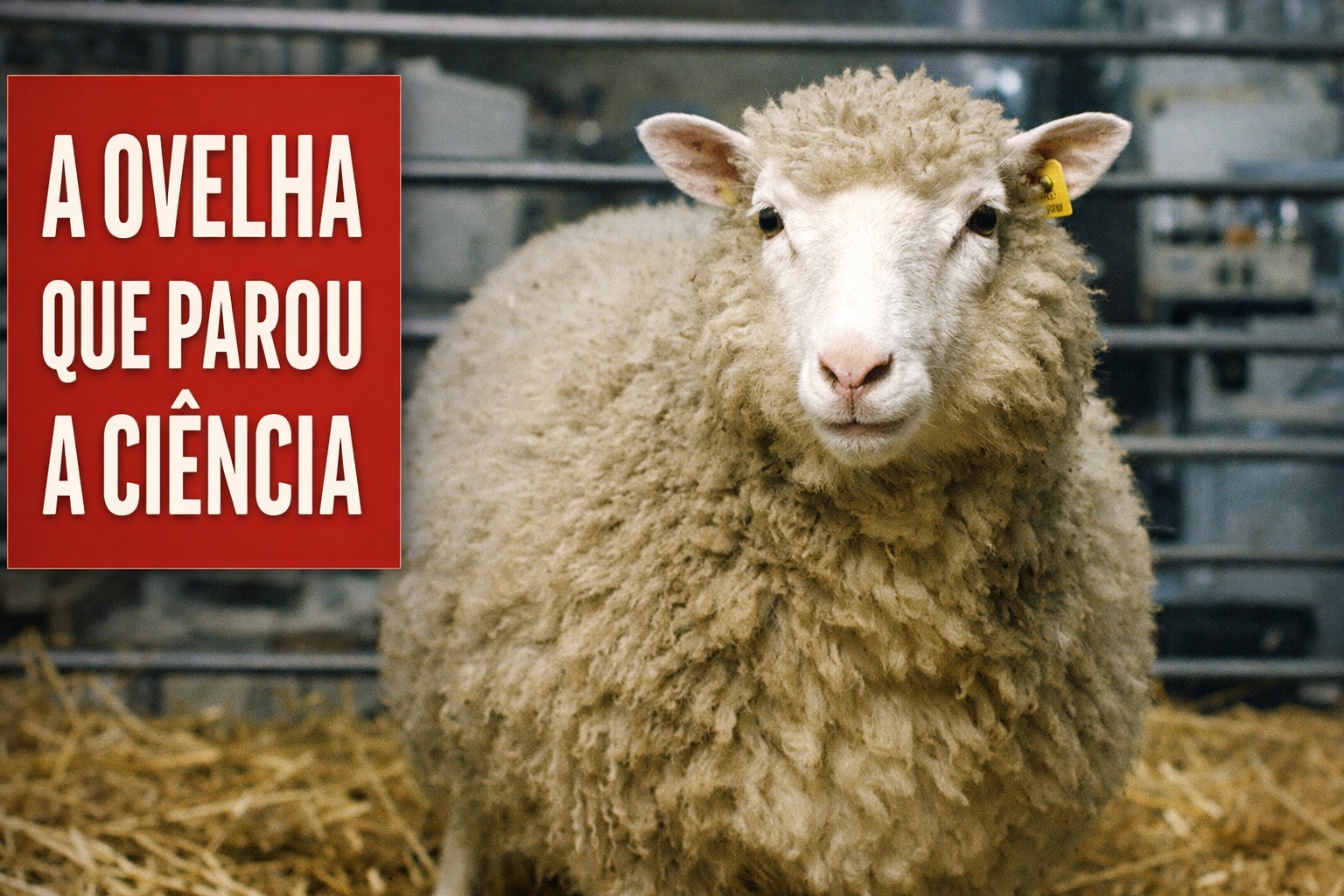
Scientific Announcement of 1997 About the Cloning of Sheep Dolly, After 276 Failures at the Roslin Institute, Redefined Modern Biology, Provoked Global Media Reaction, and Consolidated Lasting Global Scientific Ethical Debates
In February 1997, the announcement of the cloning of sheep Dolly revealed that mammals could be cloned from adult cells, after 276 failures, changing scientific paradigms, provoking global ethical debates, and marking one of the most emblematic episodes in modern biology.
The Immediate Impact of an Unprecedented Scientific Announcement
Those following the news in 1997 remember the impact caused by the birth of sheep Dolly, which dominated the media and reignited discussions about scientific limits, technological possibilities, and the ethical implications of cloning.
The question of human cloning began to circulate strongly, although Dolly’s case itself showed that the scientific challenge was much greater than it appeared.
-
Brazil joins the select group of countries by producing a supersonic fighter that reaches 2,400 km/h with advanced electronic warfare technology, US$ 4 billion in investments, 36 units planned, 350 trained engineers, and unprecedented national production by 2032.

-
At the bottom of the sea, scientists have found a true underwater cathedral measuring 62 meters at the base, 31 meters at the top, and 1,347 square meters of giant coral in the Maug Islands, estimated to be 2,050 years old.

-
Surrounded by the sea, the airport will have a system to prevent airplanes from falling into the water; technology will be installed in Ilhéus (BA), with an investment of R$ 70 million.

-
With a cost per shot close to zero, the DragonFire laser could change naval warfare in 2027 and provide British ships with nearly unlimited defense against drones.



The Novel Technique Applied by the Roslin Institute Team
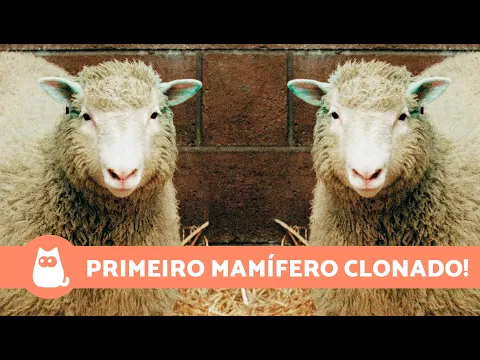
Dolly was the first cloned mammal through nuclear transfer, a technique that involves inserting the nucleus of a donor cell into a previously enucleated egg.
Prior to this, similar experiments had worked only with amphibians, as the embryonic development of mammals involves much more complex and delicate biological processes.
Previous attempts at cloning used embryonic cells, considered easier to reprogram as they did not have defined cellular functions yet.
The major breakthrough was proving that adult cells, even already differentiated, could be reprogrammed to return to a functional embryonic state.
The Work Led by Ian Wilmut at the Roslin Institute
The Scottish team developed a strategy to “reset” the adult cell nucleus, allowing it to command the complete development of a new organism.
The nucleus used came from the mammary gland of an adult sheep and was inserted into a nucleus-free egg, giving rise to the embryo.
The program began in 1995 and required approximately 1 year of work, accumulating 276 failed attempts before success was achieved on the 277th attempt.
The resulting embryo was implanted in a third sheep, which acted as a surrogate until Dolly’s birth.
The announcement occurred in February 1997 in the journal Nature, causing a strong reaction in the scientific community and society at large, according to the publication itself.
In March, Dolly was introduced to the press, generating intense ethical debates and concern about potential future developments in cloning.
Cultural Influence and Its Repercussions on Brazilian Television
The experience inspired author Gloria Perez in creating the soap opera O Clone, aired by Rede Globo in 2001.
According to the author, cloning raised deep identity conflicts, especially for individuals created as genetic copies of other people.

Scientific Advances and Persistent Criticisms of Cloning
After Dolly, the technique was applied to cows, goats, pigs, cats, rabbits, horses, and monkeys, always accompanied by severe criticism.
Critics point to high costs, long timelines, high failure rates, animal suffering, and lack of genetic diversity as central problems of the method.
For science, clones allow the study of cellular reprogramming and the analysis of specific genes, as they share exactly the same DNA as the donor.
The technique is also considered promising for the preservation of endangered species and research in xenotransplantation, especially with pigs.
The Scientific Legacy Left by Therapeutic Cloning
The greatest contribution of Dolly was to boost therapeutic cloning, which uses nuclear transfer to generate stem cells genetically compatible with the donor.
These cells can regenerate tissues and treat diseases such as Parkinson’s, diabetes, and spinal cord injuries, reducing rejection risks in transplants.
The Final Years of Dolly and Her Historical Legacy
Dolly had a healthy offspring, Bonnie, proving that clones could reproduce normally, contrary to the initial fears of the scientists involved.
At six years old, in 2003, Dolly was euthanized due to progressive lung disease and arthritis, within the expected lifespan for her breed.
Currently, her body is embalmed and on permanent display at the National Museum of Scotland in Edinburgh, as a symbol of a historic turning point in modern biology.
With information from Revista Galileu.








-

-

2 pessoas reagiram a isso.