





 Português
  Inglês
  Espanhol
  3 min de leitura
  0 comentários


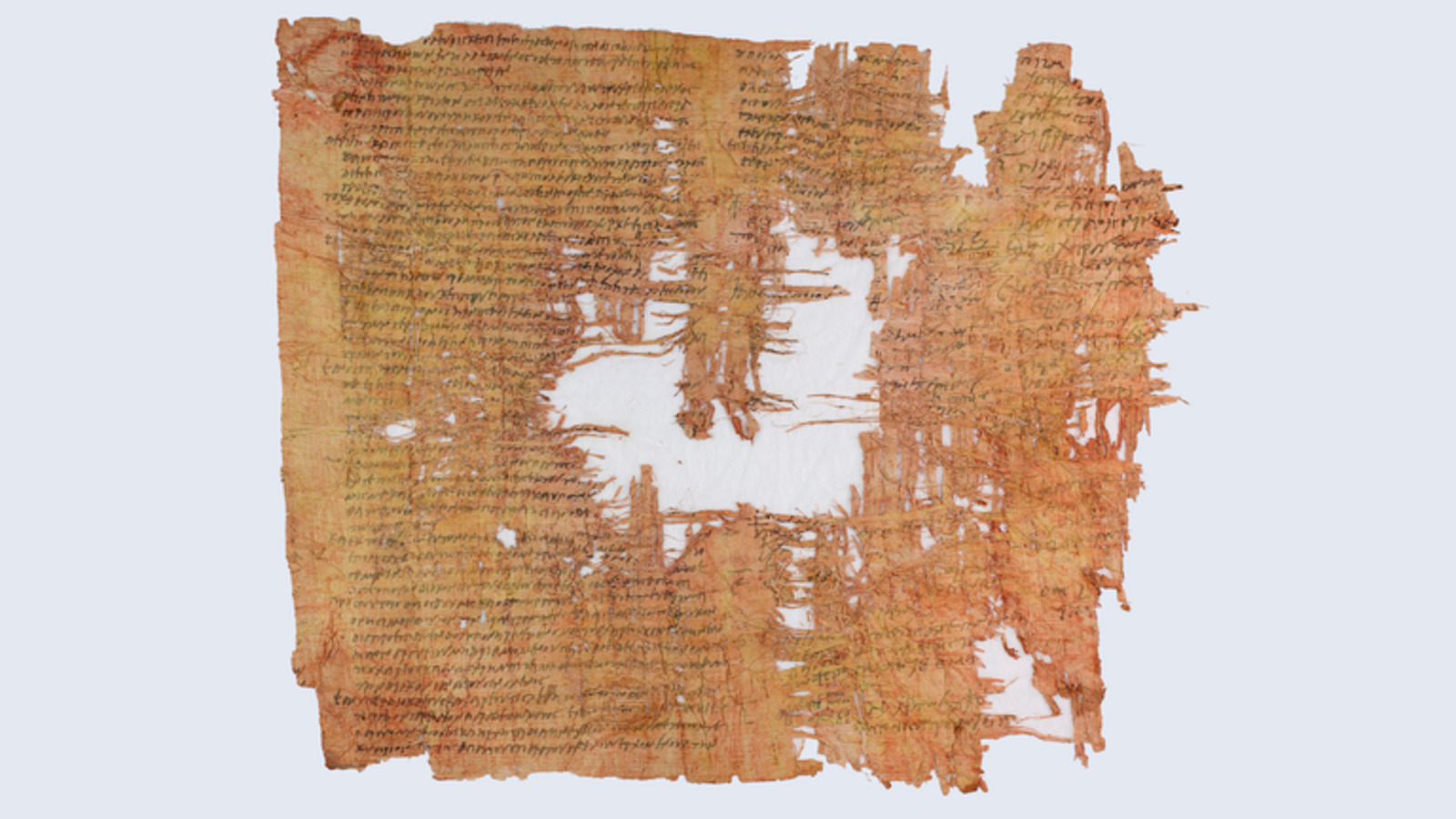
Study reveals that a Greek papyrus preserved the hearing of a crime that occurred 1,900 years ago, detailing tax fraud, document forgery, and the action of Roman justice in Judea
Last year, a study was completed on a Greek papyrus that records the judicial hearing of a crime that occurred 1,900 years ago in the Roman provinces of Judea and Arabia, a relevant case for exposing fraud, imperial taxation, and legal practices of the period.
Rediscovery of the papyrus
The document was found in 1950 in one of the caves of Nahal Hever, in the Judean Desert.
At the time, however, the text was misclassified as Nabatean and went unnoticed for decades.
-
New technology transforms the human body into a “machine”: centaur robot reduces effort when carrying up to 20 kg, improves balance during walking and impresses in practical tests in China.

-
A traffic police robot has started operating at a school, technology from Omoda & Jaecoo expands the use of artificial intelligence in smart cities.

-
44 minutes on the cosmic scale: mysterious object in the Milky Way emits simultaneous radio and X-ray signals and raises an intriguing question about what is really happening in deep space.

-
Omoda & Jaecoo and AiMOGA Robotics advance in industrial artificial intelligence with a strategic debut in Thailand and a focus on advanced automation.


The situation changed in 2014, when Professor Hannah Cotton Paltiel of the Hebrew University rediscovered the material.
After that, the text was named the Cotton Papyrus and began to be studied more closely.
What the document records
With more than 133 lines, the papyrus is the longest text in Greek ever found in the Judean Desert.
The study was conducted by Hannah Cotton Paltiel and colleagues from the University of Vienna, the Austrian Academy of Sciences, and the Hebrew University.
According to the researchers, the document preserves notes from the prosecutors of a trial presided over by Roman officials.
The case dealt with the forgery of documents related to the sale and manumission of enslaved people to evade imperial taxation, controlled by the emperor.
The hearing and the defendants
In addition to the preparatory notes, the papyrus contains a quick outline of the transcription of the judicial hearing.
The recorded language is straightforward and shows one prosecutor guiding another on the strength of the evidence and strategies to respond to objections.
For scientists, this part is the most extraordinary of the papyrus, as it reveals the preparatory stage of a trial in the Roman Empire.
Apart from the trial of Jesus, this is the best-documented court case in Judea, according to scholars.
The main defendants were Gadalias and Saulos, accused of corruption, forgery, tax evasion, and participation in fraudulent sales and manumissions.
The Roman context
Gadalias was the son of a notary and likely a Roman citizen, with a history of violence, extortion, forgery, and incitement to rebellion.
Saulos is said to have acted as a collaborator, organizing false sales without paying the required Roman taxes.
The trial took place between the Jewish Diaspora Revolt, from 115 to 117 AD, and the Bar Kokhba Revolt.
The papyrus also mentions the visit of Emperor Hadrian between 129 and 130 AD, as well as citing Tineius Rufus, governor of Judea at the beginning of the second revolt.
Historical importance
The text suggests a connection between the defendants and rebellious activities during Hadrian’s visit, although it is impossible to know if there was actual involvement.
Still, the papyrus is considered important for showing that Roman institutions widely documented in Egypt also regulated private transactions in remote regions throughout the empire.
With information from Canal Tech.






Seja o primeiro a reagir!