





 Portuguese
  English
  Spanish
  5 min of reading
  0 comments


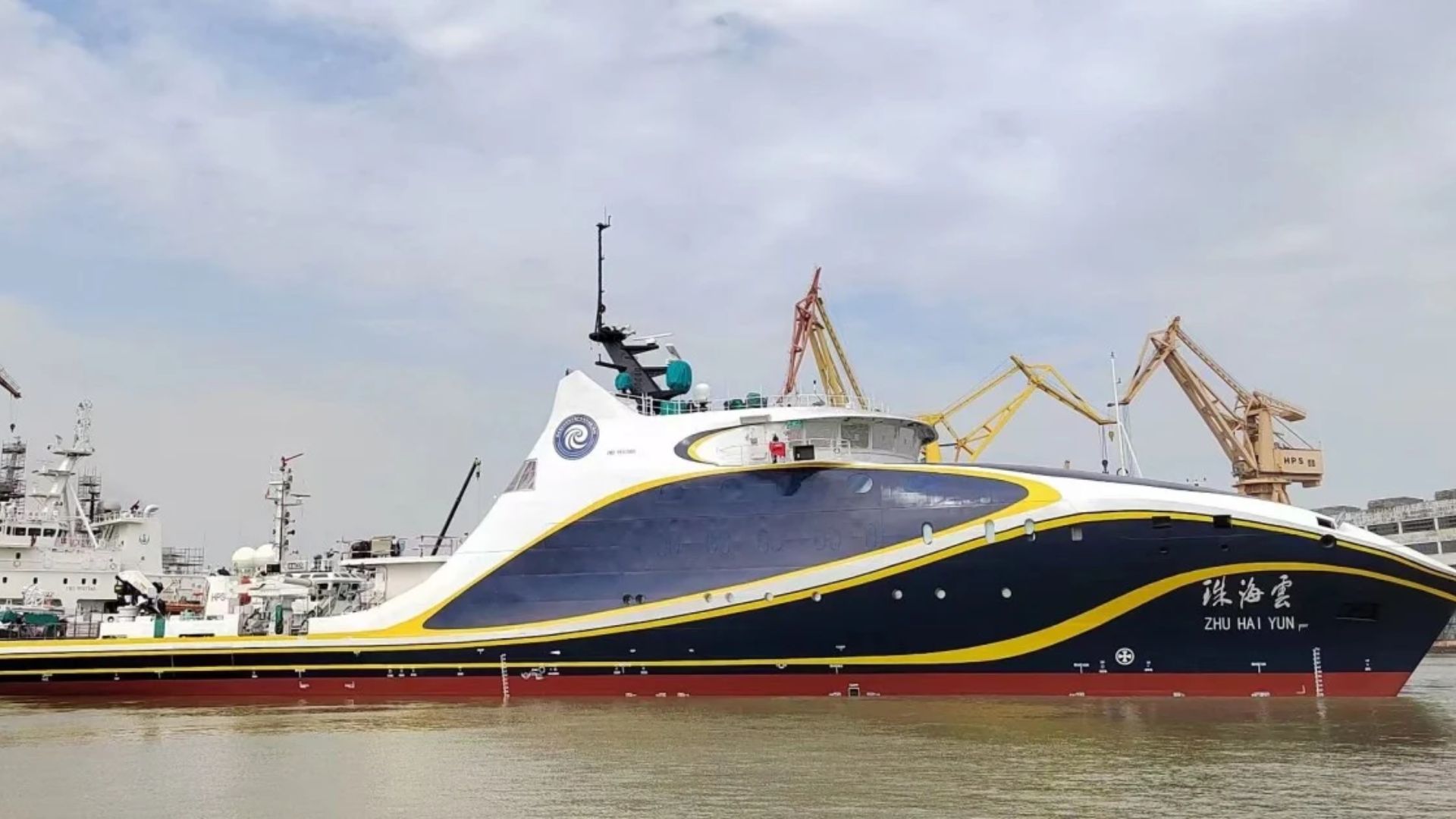
Chinese Maritime Platform Capable Of Operating Dozens Of Drones In The Air, On The Surface, And Underwater Draws International Attention After Sailing Around Taiwan, Showing How Research Vessels Can Expand Ocean Surveillance, Data Collection, And Strategic Presence Without Using The Traditional Appearance Of A Military Ship.
The Zhu Hai Yun, presented by China as a research vessel, has drawn international attention after sailing around Taiwan at the end of 2023.
The route, unusual for a Chinese vessel of this profile, led analysts to associate the trip not only with ocean observation but also with environmental data collection and testing presence in one of the most sensitive areas of the Indo-Pacific.
Beijing does not describe the Zhu Hai Yun as a military platform.
-
With an unusual prize, Japan transforms office chairs into a resistance race on the streets, the ISU-1 Grand Prix grows, fills events, and pays 90 kilograms of rice.

-
With a façade that resembles a giant zipper, the building in Milan creates a sense of strangeness, featuring lighting that transforms engineering and attracts the attention of residents and tourists.

-
The Brazilian city has 319 crooked buildings built on sandy soil without proper deep foundations, houses the largest beach garden in the world, with over 5 km, and is still considered the birthplace of surfing — meet Santos, in São Paulo.

-
New Zealand builds a shimmering building that vibrates, featuring a 62-seat cinema, moving sculptures, and an environment where sound, light, and energy are felt in the body.


When the ship was delivered for operation in Guangdong in January 2023, the state agency Xinhua stated that the vessel had completed sea trials and returned to its home port, highlighting functions of autonomous navigation and remote control aimed at marine scientific research.
Still, what distinguishes the project from a conventional research vessel is not just the autonomy but the scale of the onboard system.
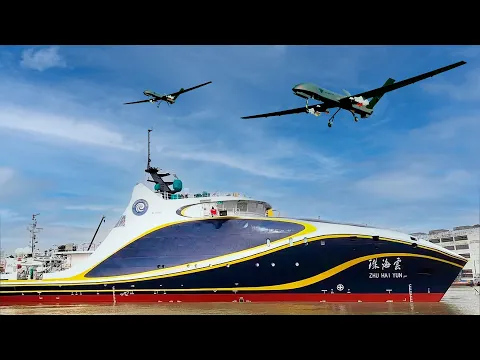
In a study published in February 2024, the Center for Strategic and International Studies, CSIS, described the Zhu Hai Yun as a kind of “mothership,” designed to operate more than 50 unmanned vehicles in the air, on the surface, and underwater.
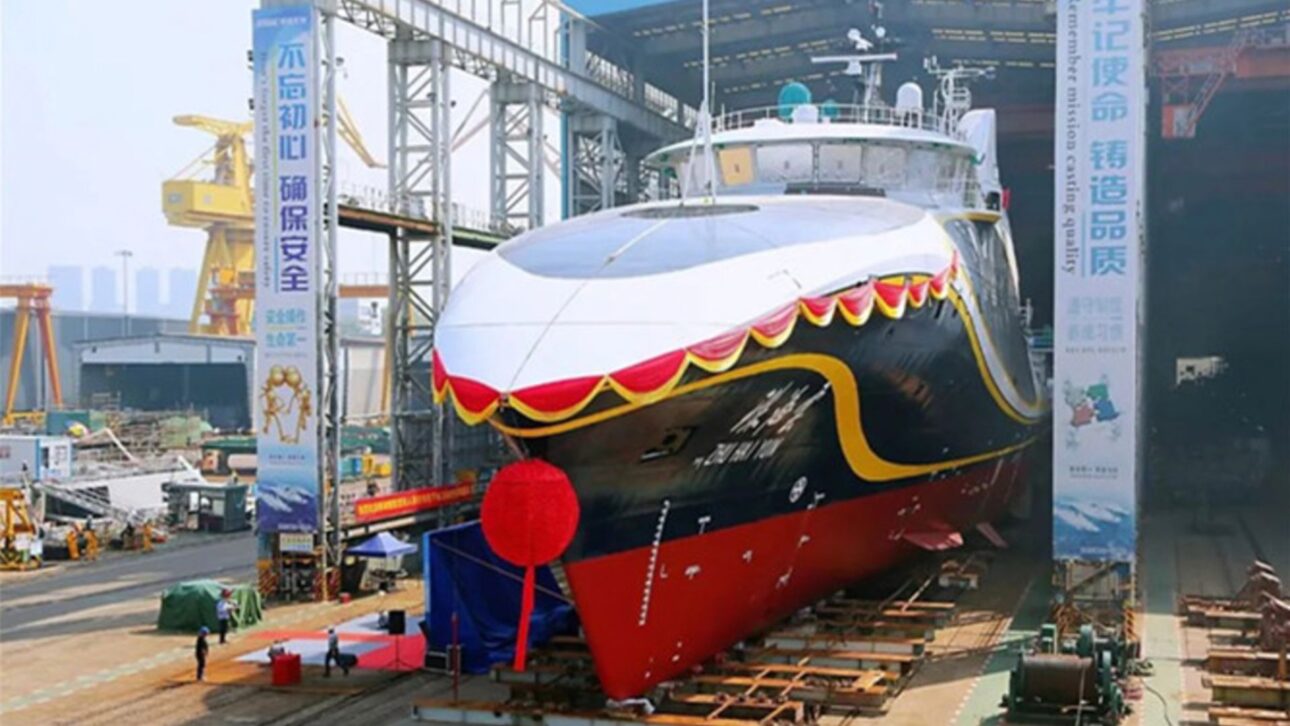
According to the same analysis, these platforms can operate in coordination to monitor a three-dimensional area of up to 160 kilometers in length, reaching 4,000 meters above and 1,500 meters below the sea surface.
In practice, this expands the reach of hydrographic surveys, environmental observation, and maritime reconnaissance far beyond what a traditional research vessel can do with just the sensors installed on board.
Research Vessel With Drone Operations At Sea
Instead of relying exclusively on fixed equipment, the vessel can launch and recover platforms distributed across different layers of the maritime environment.
This way, data collection is no longer concentrated on the main hull and occurs at various points simultaneously, with aerial drones, surface vehicles, and underwater gliders enhancing coverage, persistence, and technical detail.
This arrangement helps explain why the passage near Taiwan gained political and strategic weight.
CSIS noted that the vessel circled the island on a rare trajectory for Chinese research vessels, coming close to the limit of the Taiwanese contiguous zone, a maritime strip that extends up to 24 nautical miles from the coast.
For analysts, the route stood out from a routine scientific mission.
The interpretation does not stem only from the route.
By navigating near the Taiwanese maritime surroundings, especially in less usual segments for Chinese research vessels, the Zhu Hai Yun could collect data on underwater topography, depth, currents, navigation conditions, and acoustic signatures.
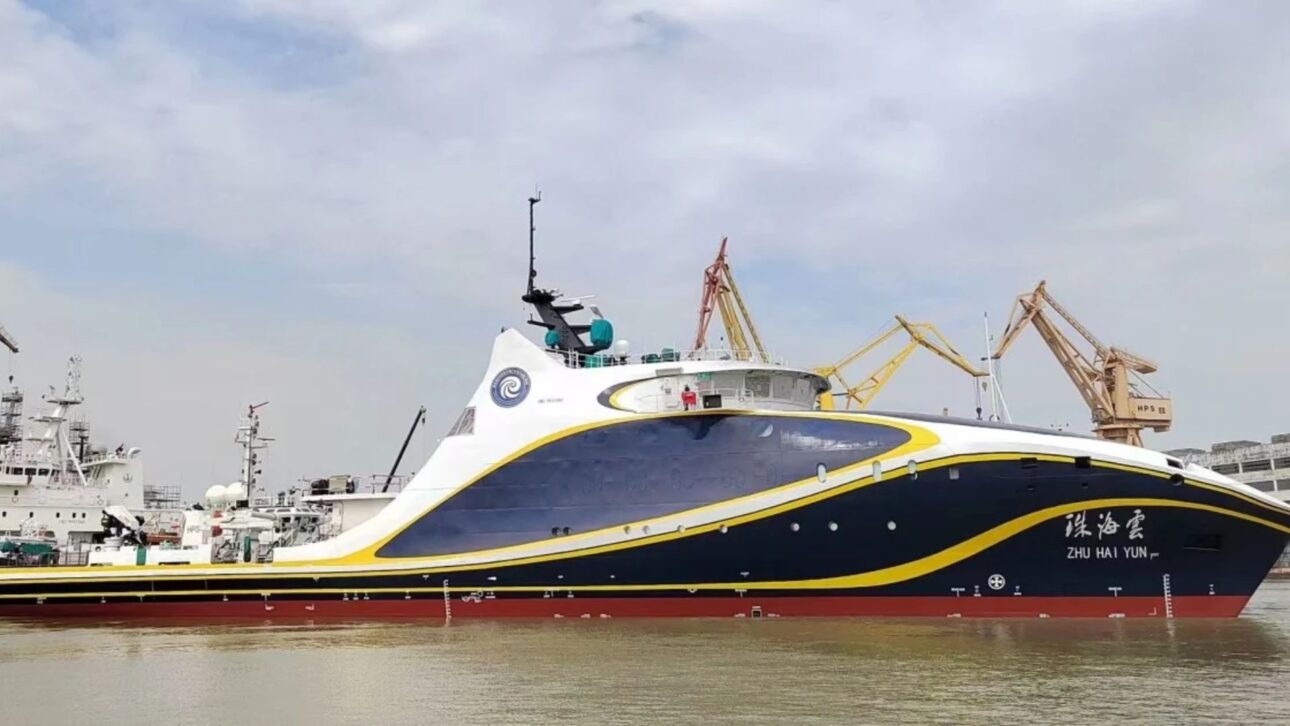
This type of information is relevant to oceanography, but it can also be significant for naval surveillance and operational planning in disputed areas.
Ocean Data And Strategic Value For Naval Operations
The CSIS study highlights that surface vehicles and underwater gliders associated with the vessel can use instruments such as side-scan sonar.
In civilian applications, this technology serves for research and mapping.
In strategic contexts, it can also aid in locating mines and detecting submerged targets, including submarines.
Therefore, the debate surrounding the Zhu Hai Yun is not limited to the question of its formal classification.
In official terms, it is a scientific vessel.
However, the onboard technological ensemble demonstrates how a platform presented as civilian can simultaneously support ocean observation, tests of autonomous systems, and gathering sensitive information in disputed waters.
This overlap between research and strategic utility is also evident in the institutional connections of the project.
Records indicate that the Zhu Hai Yun was built by the 704th Research Institute, linked to the state-owned China State Shipbuilding Corporation.
The main operation is associated with the Southern Marine Science and Engineering Guangdong Laboratory, a laboratory managed with participation from Sun Yat-sen University.
The study center also noted that updates about the vessel appeared on the website of the State Administration of Science, Technology and Industry for National Defence, SASTIND, in the section for “military science and technology.”
This detail does not change the official designation of the vessel but reinforces the interpretation that the project encompasses attributes of dual use, with scientific applications and potential strategic utilization.
Growing Presence Of Chinese Research Vessels

The case of the Zhu Hai Yun also attracts attention when placed alongside a broader movement.
Reports and analyses published in 2024 pointed to an increase in activity of Chinese research vessels near Taiwan, particularly off the eastern coast of the island, a region less frequented for this type of operation and close to relevant military installations.
Later, the vessel reappeared in another area closely monitored by regional governments.
In July 2025, the Philippine Information Agency reported that the Philippine Coast Guard was monitoring the Zhu Hai Yun and the Xiang Yang Hong 10 within the country’s exclusive economic zone.
According to the agency, the movements indicated marine research activities without authorization near Balagtas Reef and the coast of Palawan.
In the same communication, the Philippine authority described the Zhu Hai Yun as the world’s first intelligent unmanned drone mothership, designed for oceanographic research but with potential for dual use.
The vessel’s presence in this context reinforced the perception that it represents not only an isolated technological showcase but rather a platform embedded in a more frequent Chinese maritime presence in contested areas.
Civil Appearance And Strategic Impact At Sea
Part of the international interest surrounding the Zhu Hai Yun lies precisely in the image it projects.
Unlike a destroyer or a frigate, a research vessel conveys, at first glance, a less aggressive public message.
At the same time, the combination of automation, remote control, advanced sensors, and simultaneous operation of dozens of unmanned systems significantly expands the reach of any maritime mission.
This contrast helps explain why the vessel has become a reference in discussions about the so-called gray zone at sea.
The Zhu Hai Yun demonstrates how a platform with a scientific façade can enhance surveillance, map the maritime environment, and sustain political pressure without immediately resorting to the classical appearance of a warship.
In tense scenarios, the onboard technology becomes as important as the flag or formal category of the hull.








-

-

-

-

-

12 pessoas reagiram a isso.