





 Portuguese
  English
  Spanish
 4 min of reading
  0 comments


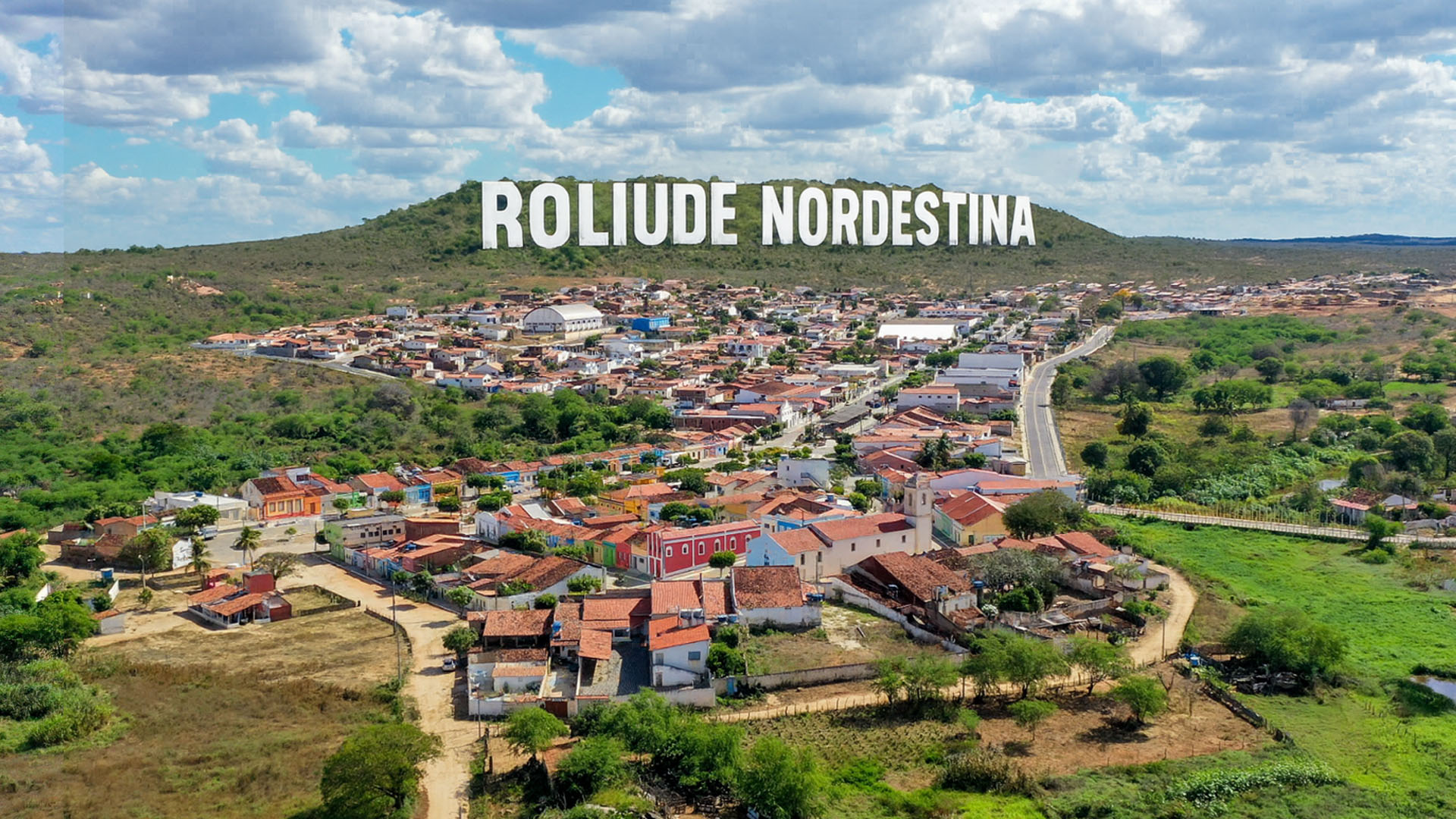
The Municipality of Cariri Paraibano Is Often Cited as the Driest in the Country and, Despite Water Scarcity, Has Established a Itinerary for Filming Locations for National Movies and Series.
Cabaceiras, in the Cariri Paraibano, appears in academic studies with an annual average rainfall of around 338 mm over 90 years of observations, a level that supports the reputation of the “driest city in Brazil.”
In technical records from the State, there is mention of a minimum annual record of 278 mm. These numbers help explain the arid landscape that, over time, became a trademark and attracted Brazilian audiovisual.
The drought coexists with a cultural and economic phenomenon, the “Northeastern Hollywood”. The nickname gained traction when the city began to receive productions such as O Auto da Compadecida and “Cinema, Aspirinas e Urubus.” In 2025, a report recorded more than 50 productions made in the region over the last decades, reinforcing Cabaceiras as a reference for filming locations in the country.
-
The village where two rivers run side by side without mixing in Santarém and Alter do Chão reveals some of the most beautiful freshwater beaches on the planet.

-
Brazil’s nuclear submarine with a speed 5 times greater than normal advances after nearly 50 years and R$ 40 billion spent.

-
A Brazilian island charges R$ 0.50 to receive visitors and prohibits any new residents.
-
Why was the Great Wall of China built? The truth that many are unaware of!


With just over 5,300 inhabitants according to the 2022 Census, Cabaceiras transformed its climatic disadvantage into a tourist and creative economy asset. The city hall maintains the official sign “Northeastern Hollywood” and a cinema memorial for visitors.
Where Does It Rain Less in Brazil? See the Data, Context, and Why Cabaceiras Stands Out


Cabaceiras is in the area defined as semi-arid. By existing criteria, municipalities with average annual precipitation less than 800 mm, aridity index less than 0.50, and daily water deficit greater than 60% are included in this classification. It is a zone of extremely high drought risk and great variability in rainfall.
In the specific case of Cabaceiras, a climatological survey with a historical series from 1926 to 2015 indicates an average of 338.3 mm/year and water deficiency in all months. This scenario corroborates the fame of being the “driest” and helps to understand the caatinga vegetation and the frequently clear sky.
State technical records also cite the minimum annual value of 278 mm observed in the municipality, noted as the lowest annual rainfall recorded in Brazil. This data illustrates the severity of extremes and the challenges of water storage.
From Drought to Filming Set, How “Northeastern Hollywood” Was Born
The strong light, the almost permanent blue sky, and the reliefs of Lajedo de Pai Mateus created an unmistakable visual. This aesthetic of the arid sertão began to interest directors and producers in the 1990s.
The city hall incorporated the cultural phenomenon into tourism with the Northeastern Hollywood sign and a cinema memorial. The objective is to preserve, study, and promote local cinema, as well as regulate visitor flow.
In 2025, the press highlighted that Cabaceiras accumulates more than 50 works filmed, from feature films to series and ads. O Auto da Compadecida continues to serve as a calling card, but the list includes titles like Cinema, Aspirinas e Urubus and Romance.
Creative Economy, Events, and Tourism in the Paraiban Semi-Arid
The audiovisual showcase fuels film tourism itineraries with visits to locations, trails, and local museums. The circuit includes the memorial, the replica of scenarios, and natural areas in the surroundings.
The city also hosts flagship events, such as the traditional Festa do Bode Rei, which boosts lodging, gastronomy, and commerce. From June 6 to 8, 2025, the event once again gathered an audience and received support from the state government.
With 5,335 residents and a modest economy, these flows help to diversify income and provide national visibility, as long as they are accompanied by water infrastructure planning and natural heritage management.
Climate Change, Water Management, and Perspectives for Cabaceiras
Recent studies analyze trends in precipitation extremes in Cabaceiras over 90 years, reinforcing the need for climate monitoring and local solutions for coexistence with the semi-arid.
The official delimitation of the semi-arid guides public policies for storage, reuse, and desalination, as well as water security programs that prioritize more vulnerable municipalities. Reliable data are key for decision-making.
The paleoenvironmental research from UFPB suggests that the region was much wetter in the past, reminding us that climate changes over geological time. For the present, the focus is on strengthening local resilience without losing the potential of audiovisual tourism.
Do you think that the fame of “Northeastern Hollywood” helps or hinders the discussion about water security in Cabaceiras? Should film tourism finance more water infrastructure and conservation of the caatinga? Leave your opinion in the comments.








-

-

-

-

-

-

29 pessoas reagiram a isso.