





 Portuguese
  English
  Spanish
  4 min of reading
  0 comments


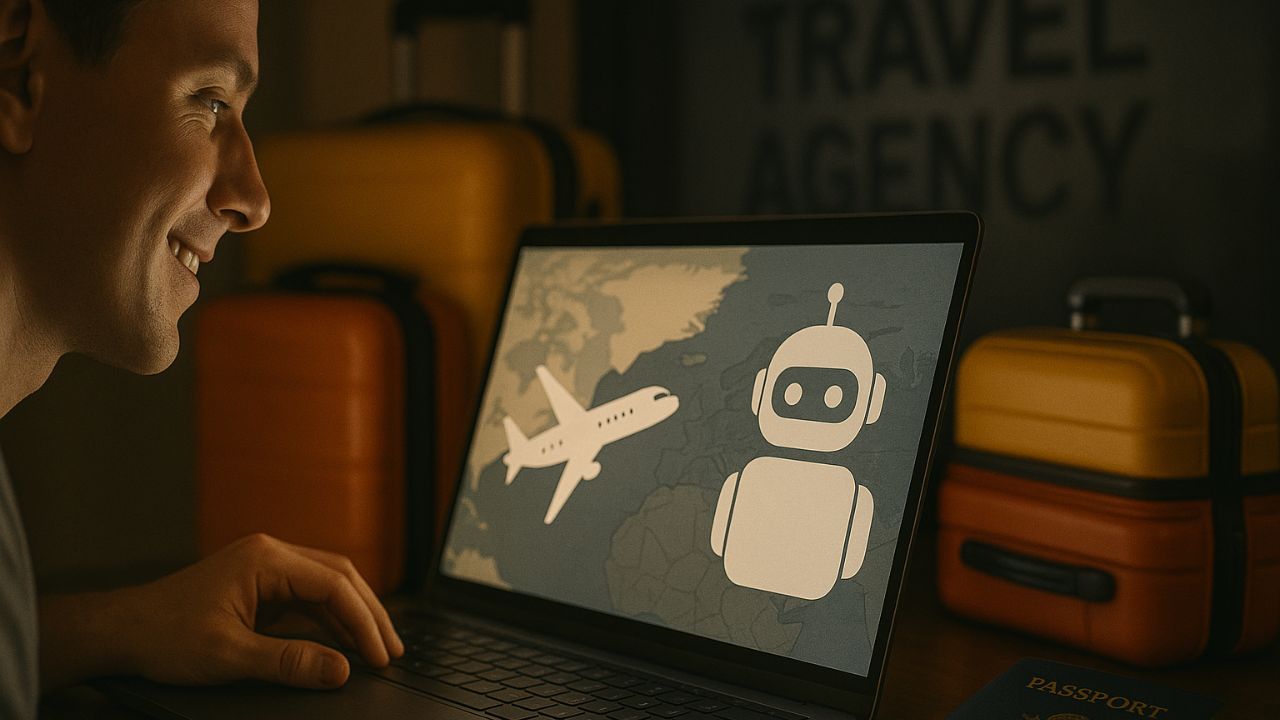
Artificial Intelligence Tools Promise Affordable And Personalized Packages In Seconds. However, Traditional Travel Agencies Warn About Lack Of Support And Potential “Snares” In Planning Your Trips.
Artificial intelligence (AI) is revolutionizing travel planning, offering customized itineraries and savings. Platforms create itineraries in an instant, promising to lower package costs. However, traditional agencies warn: the apparent ease may hide pitfalls, such as inaccurate information and lack of support in unforeseen circumstances. Understanding both sides of this coin is crucial for the modern traveler.
The Revolution Of AI In Planning Your Trips
The tourism sector is undergoing a profound transformation driven by Artificial Intelligence. AI has ceased to be a niche technology. It has become a fundamental component throughout the traveler’s journey. This ranges from initial inspiration to experiences at the destination. The advent of generative AI, capable of creating sophisticated content, has accelerated this integration. Planning tools have become more accessible and intuitive for organizing trips.
Customized And More Affordable Itineraries
One of the major promises of AI is advanced customization of itineraries. Algorithms analyze preferences, budgets, and time to suggest destinations and create tailored itineraries. Tools like TripIt and Sygic Travel build detailed itineraries, saving hours of manual research. Platforms like askLAYLA learn from interactions to provide tailored suggestions.
-
The village where two rivers run side by side without mixing in Santarém and Alter do Chão reveals some of the most beautiful freshwater beaches on the planet.

-
Brazil’s nuclear submarine with a speed 5 times greater than normal advances after nearly 50 years and R$ 40 billion spent.

-
A Brazilian island charges R$ 0.50 to receive visitors and prohibits any new residents.

-
Why was the Great Wall of China built? The truth that many are unaware of!


In addition to personalization, AI optimizes travel logistics and costs. Apps like Hopper, Skyscanner, Kayak, and Booking.com use AI to monitor prices. They suggest the best time to buy tickets and book hotels. Paytrack, for instance, analyzes the airline ticket market, potentially generating significant savings. These gains in efficiency, convenience, and savings are appealing to travelers. In Brazil, 66% of travelers intend to use AI to organize their upcoming trips, according to a study by Booking.com.
“Snares” Of AI: The Warnings Of Traditional Travel Agencies
Despite the enthusiasm, traditional travel agencies and experts point out risks. The reliability of information is a challenge. AI models can generate “hallucinations,” meaning incorrect answers. A report by journalist Nathalia Molina recommends always verifying the information provided by bots. A British study cited by Sainsbury’s Bank revealed that one in three AI users found incorrect information.
Another concern is authenticity. A survey by Icelandair showed that 78% of consumers worry about fake reviews generated by AI. Dependence on AI may lead to a loss of traveler autonomy. Critic Élvio Camacho warns of “personalized predictability.” AI may steer travelers towards what is “trending,” minimizing the discovery of “hidden gems,” as noted by Tour Plan International. This may result in “simulated authenticity,” with travel experiences formatted for global consumption.
Lack Of Support? The Challenge Of Customer Service In The Era Of AI
AI, no matter how advanced, does not replicate human emotional intelligence. It may not comprehend the nuances of a special trip or specific dietary needs. This lack of empathy is a limitation. In complex or crisis situations, the human touch is irreplaceable. Volt Travclan emphasizes that cancellations and complex unforeseen events require the management of human agents.
Sainsbury’s Bank research showed that one-third of travelers, even using AI, would prefer human support. The support policies of AI travel itinerary platforms can also be a “snare.” In the case of Kayak’s “Hacker Fares,” for example, the traveler deals with rules from different airlines. This can fragment responsibility in case of issues. Expedia disclaims responsibility for losses due to the use of AI-generated content.
Balancing Technology And Human Experience
The future of travel with AI seems to be heading towards even greater integration. However, travelers need to develop “algorithmic literacy,” as Élvio Camacho suggests. It is essential to understand how platforms use data and generate recommendations. This allows travelers to maintain control over their own choices.
Traditional travel agencies are also evolving. They are focusing on specialized knowledge, curation, and personalized support. The hybrid model, combining the efficiency of AI with human empathy and expertise, emerges as the most likely path. AI can free agents from routine tasks. Thus, they can dedicate themselves to customer relationships and resolving complex issues. The balance between technological innovation and the appreciation of human experience will define the success of future travels.







Seja o primeiro a reagir!