





 Portuguese
  English
  Spanish
  7 min of reading
  0 comments


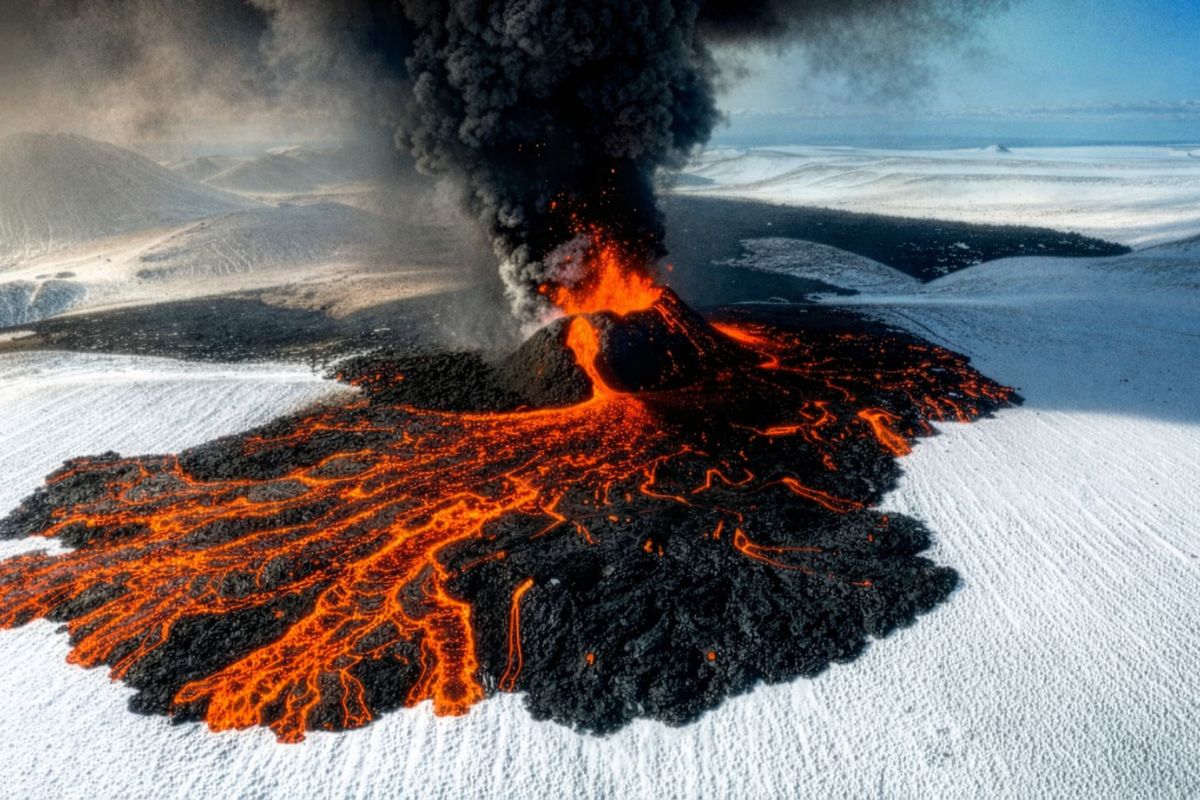
In Iceland, The Reykjanes Peninsula Reopened Fissures After Centuries of Silence, Reigniting An Eruptive Cycle That May Last 200 To 400 Years. With GPS, InSAR And Flow Models, Authorities Evacuate Areas, Erect Barriers And Try To Protect Roads, Geothermal Plants And Cities Like Grindavík, Under Constant Risk.
Iceland Is Facing A Rare And Discomforting Return: A Lava Cycle That May Last Centuries, And Not Just Weeks Of Eruptions. What Once Seemed Like A One-Time Event Has Turned Into A Pattern With A Beginning, Middle And Continuity, Because The Region Is Acting Like A “Factory” Of Fissures, Magma, And Ground Displacement.
In Practice, This Puts The Country In A Dual Race: To Understand What Is Rising From Below The Ground And, At The Same Time, Decide What Can Be Saved And What Will Need To Be Sacrificed When The Lava Chooses The Shortest Path.
Why Iceland “Enters Eruption Mode” For So Long

Iceland Is Not Just A Country With Volcanoes; It Is Literally Sitting On An Active Tectonic Boundary. The Territory Is Located On The Mid-Atlantic Ridge, Where The North American And Eurasian Plates Move Apart At An Approximate Rate Of 2 Centimeters Per Year.
-
These are the drivers who may stop paying tolls on highways in a project that promises to reduce costs for those who live from transportation in Brazil.
-
(Video): Italian pilot lands plane on moving train at 120 km/h and achieves unprecedented feat in aviation, even with a narrow runway and without direct visual contact.
-
It seems to have come out of a science fiction movie: A Brazilian city where it rains almost every day, recording over 4,000 mm per year, driven by climatic factors — a direct result of its strategic location in the Amazon.
-
The water crisis that could change everything this year has already begun; it’s not just about the climate, it affects technology, raises product prices, and can halt entire companies without warning.

It May Seem Little, But Accumulated Over Time, This Stretches And Fractures The Crust, Creating Natural Corridors For The Magma To Occupy.
The Icelandic Differentiator Is That, In Addition To This Diverging Boundary, There Is A Hot Spot Beneath The Region. This Thermal “Reinforcement” Acts As Extra Pressure On The System: It Increases The Temperature Of The Mantle, Facilitates The Formation Of Magma And Helps Keep The Crust Thicker Than The Oceanic Standard.
The Result Is A Habitable Island Sitting On A Geological Mechanism That Doesn’t Rest, With Very Young Landscapes (In Terms Of Rock And Ground Formation) And A Variety Of Eruption Styles And Fissures That Are Rarely Found Together In One Place.
This Explains The Paradox That Both Frightens And Attracts At The Same Time: Iceland Reaps Direct Benefits From This Subterranean Energy, Such As Geothermal Heating In Most Homes, But It Also Becomes Vulnerable When The System “Wakes Up” In Sequence.
And When It Awakens, It May Not Be A Short Phase: The Expected Duration In This Type Of Cycle Ranges From Hundreds Of Years, With More Intense Periods And Others Of Apparent Calm, Without Truly Ending The Process.
Reykjanes: The Return After Eight Centuries And The Price Of Proximity To Cities
The Reykjanes Peninsula Has A Decisive Detail: There, The Plate Boundary Does Not Manifest As A Single Isolated “Cone” Volcano.
The Separation Zone Itself Becomes The Volcano, With Fissures, Subsurface Dikes And The Opening Of Fissures Over Kilometers. This Changes The Risk: It Is Not Just “One Volcano” That Can Erupt, But An Entire Region That Can Crack, Displace, And Open New Exit Points.
The Area’s History Also Weighs Heavily. Records Of Ancient Eruptions In The Region Describe Prolonged Episodes Between 1210 And 1240, Associated With Repeated Fissure Eruptions.
For Modern Iceland, These Records Serve As An Uncomfortable Warning: What Seems “New” Has Happened Before, Only Now, The Southwest Has More People, More Infrastructure, And A Greater Dependence On Systems That Did Not Exist In The Middle Ages.
And It Is In The Southwest That The Largest Part Of The Population Lives: The Region Closest To Reykjavík Concentrates The Country’s Daily Life. In Other Words, When Reykjanes Returns To The Game, It Is Not Threatening A Remote And Empty Area.
It Is Pressuring A Corridor Of Roads, Energy, And Logistics, Where A Magmatic Intrusion Can Turn Into A Fissure, And A Fissure Can Turn Into Lava, With Little Warning.
Seismic Swarms And Magma: How Iceland Tries To “See” What Is Below The Surface
The Recent Alert Was Not Triggered By A Single Isolated Earthquake, But By Seismic Swarms, When Thousands Of Events Accumulate In A Short Time. This Type Of Pattern Typically Appears When The Magma Forces Its Way Through Fissures, Fracturing Rocks, Raising Pressure, And Often Preparing The Way To The Surface.
In The Developed Timeline, The Area Near Fagradalsfjall Became Agitated At The End Of 2019, And Over Time, The Events Multiplied.
When The Ground Finally Gives Way And A Fissure Opens, The Eruption Is Not A “Total Surprise”: It Is The End Of A Process That Has Been Tracked By Indirect Signals. The Problem Is That Tracking Does Not Mean Controlling.
This Is Where Modern Tools Come In. Measurements By GPS And Interferometric Radar Satellite (InSAR) Help Detect Ground Deformation, Showing Where The Ground Swells When The Magma Accumulates And Where It Recovers. Geophysicists Can Estimate Involved Volumes, Depths, And Likely Shapes Of Reservoirs And Intrusions. Iceland Has Gained Something Valuable: Time To Plan. However, This Time Is Always Limited, Because The System Can Migrate And Open The Fissure Where No One Wanted It To.
Grindavík, Evacuations And The Brutal Limit Of Engineering
When Activity Migrates And Approaches Urban Areas, The Risk Changes Nature. The Evacuation Of Grindavík, A City Of About 3,700 People, Illustrates The Harshest Point: There Is No Barrier Capable Of Protecting A City If The Fissure Opens Beneath The Streets.
When The Magmatic Intrusion Is Under The Urban Fabric, The Danger Is Not Just The Lava Advancing Across The Ground. It Is The Ground Itself Opening, Breaking Infrastructure And Compromising Homes.
Even So, Iceland Has Not Remained Passive. The Institutional Response Includes Emergency Planning And Groups Dedicated To Protecting People And Critical Infrastructure.
This Involves Everything From Rapid Decision-Making To Scenario Modeling To Understand Where The Lava Tends To Flow, Which Valley Functions As A Natural Corridor And Where A Barrier Can Delay The Advance For Hours Or Days, Which In Crisis Management Can Mean Saving A Plant, A Road, Or A Supply Point.
The Psychological And Logistical Weight Is Also Real. Evacuating Is Not Just Removing People; It Is Redefining What Is “Home” When The Threat Becomes Recurring. And, As The Cycle May Last Centuries, The Discussion Shifts From “When Will It Return To Normal” To “How To Coexist With The Abnormal”.
How To Divert Lava Flows In Iceland Without “Beating” Nature
The Most Realistic Strategy Is Not To “Stop The Lava,” But To Delay, Channel, And Guide. Lava Obeys Gravity, Terrain, And Volume, So The Goal Is To Buy Time And Push The Flow Away From Critical Points.
To This End, Iceland Started With Field Solutions Using Available Material: Soil, Gravel, Waste From Previous Eruptions, In Operations That Require Proximity And Risk, Because Teams Work At A Rapid Pace.
Modeling Becomes Central. Engineers With Experience In Flooding And Hydrodynamics Can Apply Principles Similar To Those Of Water Flows: Predict Likely Paths, Test How An Obstacle Changes The Trajectory, And Identify Where An Angular Barrier Can Redirect The Flow, Instead Of Simply “Facing Off” Against It.
The Shape Matters As Much As The Height, Because Certain Types Of Lava Accumulate And Thicken When They Encounter Resistance, While Others Flow More Easily.
Over Time, Projects Become More Ambitious: Barriers Several Kilometers Long, With Heights That Can Reach Dozens Of Meters, Built With Compacted And Reinforced Material, And Designed Based On Models To Direct The Lava Away From Cities, Roads And, Above All, Strategic Installations, Such As Geothermal Generation Areas.
And Even When They Work, These Defenses Are Not A “Victory.” They Are Triage: Deciding What Is A Priority When Resources (Time, Material, Access) Are Finite.
What This Cycle Means For Work, Energy And Routine In Iceland
Iceland Has Built Part Of Its Modern Identity On Top Of Geology: The Hot Water That Heats Houses, The Tourist Areas Linked To Volcanic Landscapes, The Infrastructure That Utilizes Subterranean Heat.
However, The Same Machinery That Provides Energy Advantages Creates Vulnerabilities: Roads Need To Be Redesigned, Posts May Need To Be Relocated, Pipelines Need Additional Protection, And Areas Previously “Safe” Now Require Contingency Plans.
The Most Delicate Aspect Is That The Cycle, Apparently, Does Not Resolve With A Single Project. It Requires A Model Of Continuous Management, As If Civil Protection And Engineering Were “On Duty” Indefinitely. With Each New Seismic Swarm, The Question Returns: Where Will The Fissure Open? Which Valley Will The Lava Descend? Can Gaps Be Closed In A Few Hours? Can We Hold Long Enough To Evacuate People And Preserve The Essentials?
And In The Background, There Is The Silent Tension: A Modern Country Trying To Coexist With A Prolonged Geological Crisis. It Is Not Just A Story Of Destruction, But Of Forced Adaptation, Where Technology Helps Anticipate But Does Not Guarantee Comfort, And Where “Normality” Becomes A Permanent Negotiation.
What Remains Standing When The Cycle Is Centuries Long
The Narrative Of Iceland Now Is Not Just “Eruptions In Series.” It Is The Shift In Temporal Scale: From An Event That Fits In The Calendar To A Process That Spans Generations. This Creates A Rare Type Of Public Debate: Which Infrastructure Should Be Strengthened First, Where It Pays To Insist, When Retreat Is The Most Rational Decision, And How To Maintain Daily Life Functioning With Evacuations, Barriers, And Recurring Risk.
At The Same Time, Iceland Also Becomes An Involuntary Laboratory For The World: What Happens When A Modern Nation Tries To Respond To A Prolonged Episode Of Volcanism With Science, Planning, And Land Engineering, Without The Illusion Of “Controlling” The Earth. If The Cycle Really Extends For Hundreds Of Years, The Final Question Shifts From Whether Iceland Will Have Eruptions. The Question Becomes How Iceland Will Continue To Exist With Them.
In Your Place, What Would Seem More Acceptable: Living With Periodic Evacuations And Giant Works To Divert Lava, Or Moving Away From High-Risk Areas Even If It Alters Work, Cost Of Living, And Community? And If You Were A Public Manager In Iceland, Which Infrastructure Would You Put At The Top Of The List To Protect First: Energy, Roads, Housing, Or Tourism?




-

-

-

3 pessoas reagiram a isso.