





 Portuguese
  English
  Spanish
  4 min of reading
  0 comments


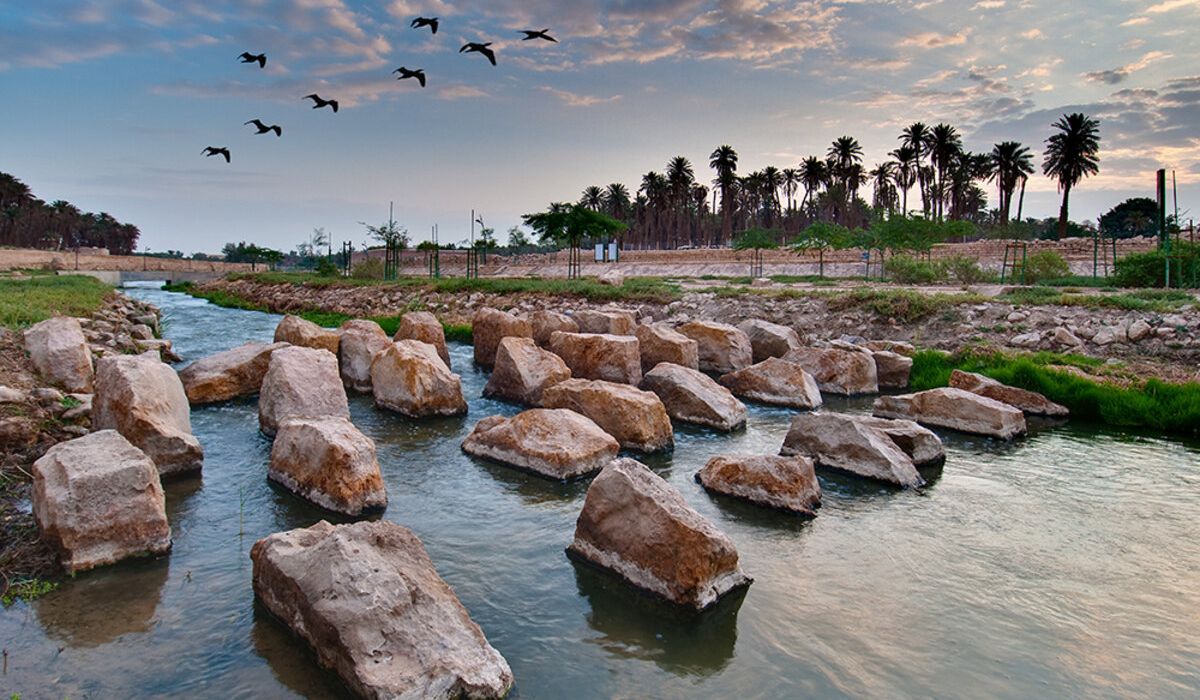
Between the Urban Grid of Riyadh and the Wadi Hanifah Corridor, a Park with an Artificial Lake and Paved Paths Concentrates Part of an Official Environmental Rehabilitation Program, with Technical Data on Extension, Water, and Planting Registered in Institutional Documents.
In the Wadi Hanifah valley, in the Riyadh region, there is a concentration of artificial lake, paved paths, and resting areas in a section associated with an environmental rehabilitation program conducted by local authorities.
Institutional records describe the park as part of a broader plan for the recovery of the wadi, a natural corridor that runs through the Saudi capital and has undergone interventions aimed at water management, restoration of degraded areas, and public use.
According to a case study published by the World Health Organization (WHO), the Wadi Hanifah extends over more than 100 kilometers on the western side of Riyadh.
-
These are the drivers who may stop paying tolls on highways in a project that promises to reduce costs for those who live from transportation in Brazil.

-
(Video): Italian pilot lands plane on moving train at 120 km/h and achieves unprecedented feat in aviation, even with a narrow runway and without direct visual contact.

-
It seems to have come out of a science fiction movie: A Brazilian city where it rains almost every day, recording over 4,000 mm per year, driven by climatic factors — a direct result of its strategic location in the Amazon.

-
The water crisis that could change everything this year has already begun; it’s not just about the climate, it affects technology, raises product prices, and can halt entire companies without warning.


The same material attributes the rehabilitation program to the then Arriyadh Development Authority and indicates that the project was initiated in 2001, with long-term phases and actions.
The Royal Commission for Riyadh City states that the rehabilitation extended from the Al-Alb Dam in Al-Diriyah in the north to Al-Ha’ir in the south, along approximately 80 km.
According to the institution, the proposal included recovering the valley’s function as natural drainage, reducing the impacts of uses considered degrading, and opening up the space for circulation with infrastructure.
Stone Dam Park and the Lake of 10 Thousand m²
In the institutional description of Stone Dam Park, the park features a lake with approximately 10,000 m² and a depth of about 2 meters.
The same record states that the area surrounding the dam has been paved for pedestrians, extending 2.8 km, in addition to designated areas around the water.
This configuration, as described by the responsible authorities, allows for walking paths and staying along the lake’s edge.
Furthermore, according to the Royal Commission, the valley’s planning considers different water sources, including perpetual flows related to groundwater lowering networks, seasonal floodwaters, and treated water from treatment stations.
Environmental Rehabilitation in Wadi Hanifah
The Royal Commission reports that over time, the Wadi Hanifah has undergone changes in topography and natural formations, with erosion and soil degradation, as well as use as a dumping area.
The set of measures described includes regulatory changes, removal of activities deemed incompatible, reorganization of infrastructure, and increased signage to guide visitors.


One of the program’s focuses, according to official texts, was the implementation of a natural process-based water treatment system, without the use of chemical products.
The institution describes that sunlight and oxygen support microorganisms and algae, in a chain that can sustain other forms of life, such as fish and birds, depending on local conditions.
Tree Planting and Desert Species Recorded in the Project
The original text mentions 30 thousand trees.
A methodological document related to the performance evaluation of the project records 28,021 trees planted, with diverse species and varieties, in addition to shrubs and grasses on a large scale.
The same material cites species adapted to arid environments, including different acacias and Tamarix aphylla, in addition to mentioning Date Palm (Phoenix dactylifera).
The document also records observations of fauna in the area, mentioning species of birds, fish, and other groups.
However, the text itself notes methodological limitations, such as the anecdotal nature of some records and the presence of non-native species in some observations.
Overall, the material describes that the vegetation was planned in “cells” of planting, distributed according to microconditions of moisture and soil along the wadi corridor.
Trails and Infrastructure Along the Valley
In institutional materials about the Wadi Hanifah, rehabilitation is described as a set of public use areas distributed throughout the valley, with mobility and circulation interventions.
The Royal Commission states that the program included 47 km of pedestrian trails in areas considered more scenic, in addition to 7.4 km of paved paths, and parking lots along the valley, with a total reported capacity of 2,000 cars.

On the other hand, some very specific information associated with Stone Dam Park does not appear to be confirmed in the consulted official records.
Among these are the statement that the journey from downtown Riyadh takes “20 to 30 minutes”, the parking data with 200 spaces in the park, and the mention of “4.5 km trails” within Stone Dam Park.
What is explicitly stated for this park, in the located materials, is the paved path of 2.8 km around the lake.
What the Documents Say About the Contrast Between the City and the Valley
The difference perceived by visitors between the urban area and the valley is often associated, in institutional reports, with the transition between an area of greater built density and a corridor with water and vegetation maintained by ongoing works and management.
In the case study of the WHO, the program of the Wadi Hanifah is described as an initiative that combines environmental and recreational objectives, emphasizing accessibility and quality of public space.
In this reading, the Wadi Hanifah is presented as a requalified valley, with interventions that integrate drainage, replanting, and infrastructure for public use.






-

-

-

-

-

-

21 pessoas reagiram a isso.