





 Portuguese
  English
  Spanish
  6 min of reading
  0 comments


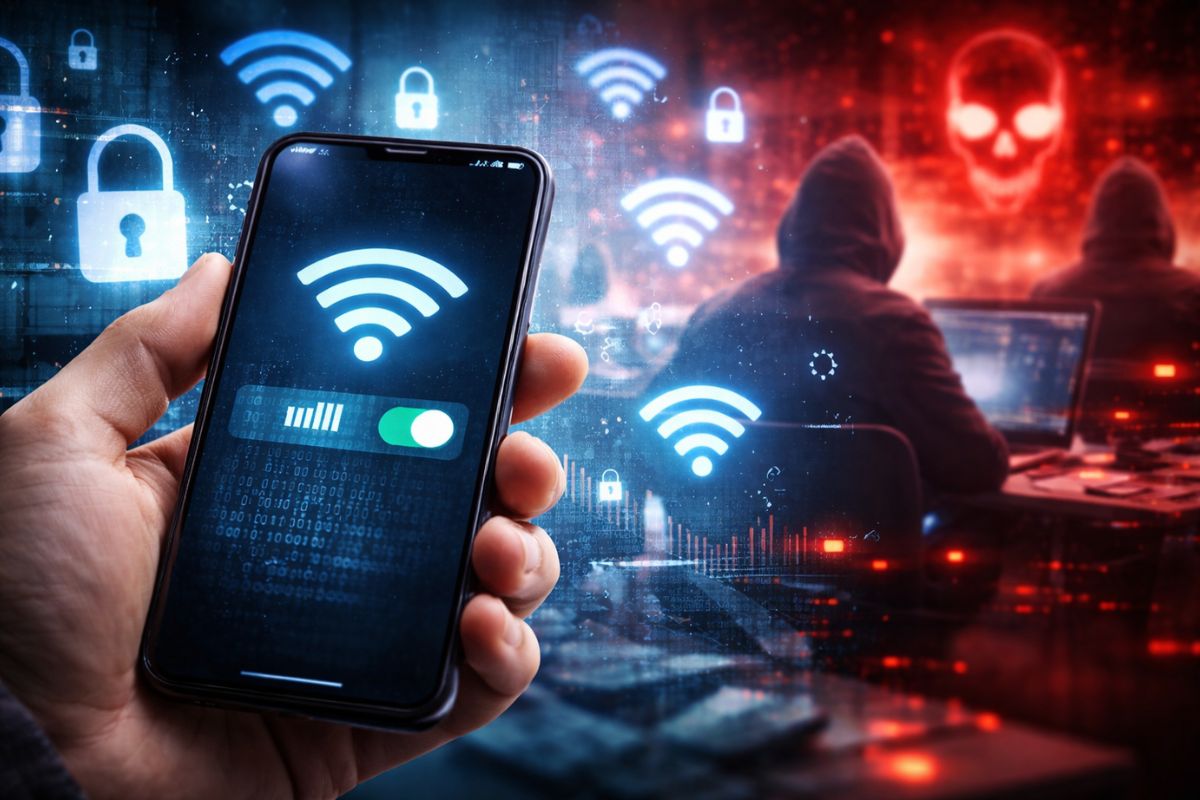
According to CERT-FR, keeping Wi-Fi on without necessity increases the smartphone’s attack surface, facilitates interception, fraudulent networks, man-in-the-middle attacks, and even zero-click actions, which is why French authorities recommend turning off the connection whenever it is not actually used daily by the user when outside the home as well.
The Wi-Fi has come to the center of an official alert issued by cybersecurity authorities in France due to a banalized habit in daily cell phone use: keeping the connection activated at all times, even when it is not being used. The guidance is simple, but the reason is serious: the longer the resource remains available, the greater the exposure of the device to invisible approaches.
The warning was published by the French Computer Emergency Response Team, CERT-FR, an organization linked to the French government responsible for monitoring cyber threats. In the report Mobile Phones – Threat Landscape since 2015, the team describes how smartphones have become valuable targets due to their concentration of personal and professional data, along with functioning as an entry point for different types of digital exploitation.
Why Wi-Fi Has Come to Be Treated as a Real Risk
The crux of the problem, according to the document, lies not in an isolated flaw, but in the sum of wireless resources that enlarge the so-called attack surface of the device.
-
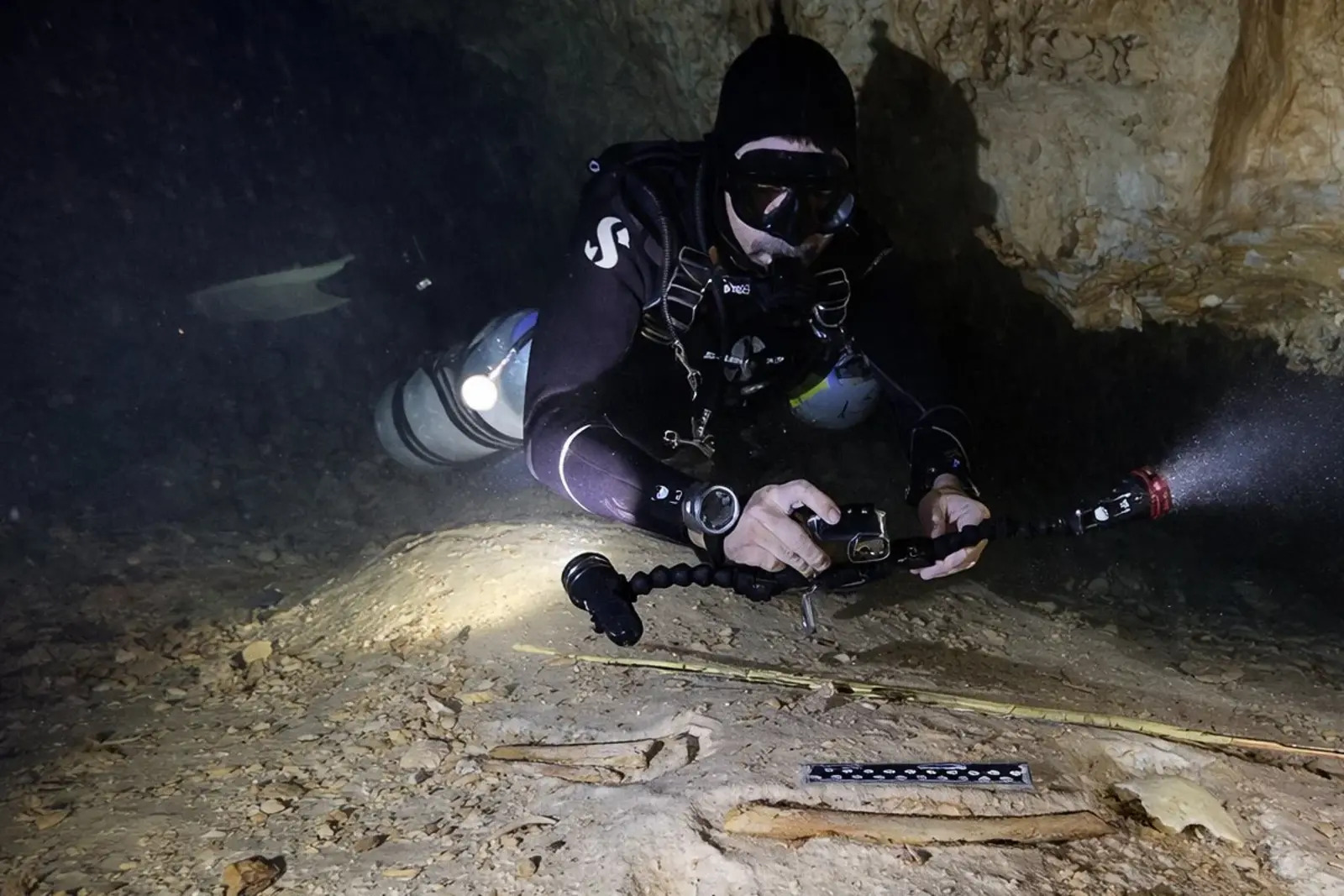
Ancient remains found 200 meters in a cenote chamber are retrieved from the sea and reveal a human skeleton in a shelter or ritual space from 8,000 to 10,000 years ago.
-
Archaeologists are retrieving monumental blocks weighing up to 80 tons from the depths of the Mediterranean Sea, from the legendary Lighthouse of Alexandria, one of the Seven Wonders of the Ancient World, and now scientists want to digitally reconstruct its lost splendor.

-
A geologist teaching students to map the bottom of the Baltic Sea identified something unusual on sonar in 2021: a line of stones meandering for almost 1 kilometer at a depth of 21 meters, revealing the largest megastructure of the Stone Age ever found in Europe, about 11,000 years old, built by hunters when the Baltic Sea did not yet exist.

-
Mongol ship sunk 745 years ago emerges in excavations with sword, arrows, and relics from the 1281 invasion of Japan, destroyed by the first “kamikaze” in history.


Wi-Fi, 4G, 5G, Bluetooth, and NFC increase the points of contact of the smartphone with the external environment, and each additional point can become an opportunity for exploitation by virtual criminals.
In the case of Wi-Fi, the risk grows because the connection relies on radio signals and constant interaction with nearby networks. This opens the door for data interception, use of fake networks, and manipulation of communication between the phone and the internet.
The device still appears normal to the user, but, under certain circumstances, it may already be in contact with a malicious structure.
The French alert is rooted precisely in this logic. A modern cell phone stores messages, accounts, credentials, histories, work files, and other sensitive elements.
When this volume of information is concentrated on a single device, any connection breach gains strategic value for those looking to spy, steal, or install malicious software.
That’s why turning off the Wi-Fi when it is not in use becomes more than just a battery-saving measure or an organizational habit.
According to CERT-FR, this measure reduces unnecessary exposure and makes it harder for the device to keep seeking, recognizing, or attempting to connect to networks in contexts that the user is not even paying attention to.
How Fake Networks and Invisible Attacks Come into Play
Among the risks cited by French authorities is the interception of data transmitted over the network. In such a scenario, information exchanged between the phone and the internet can be captured during the transit, especially when the connection occurs in a vulnerable environment.
The danger lies not only in what is stolen but also in what can be altered along the way.
Another type of threat mentioned is the man-in-the-middle attack, where the attacker places themselves between the device and the network to observe, capture, or modify the content being exchanged. For the smartphone user, browsing may seem normal.
However, for the criminal, that data exchange becomes an opportunity to collect passwords, credentials, and other sensitive information.
The report also highlights the creation of fake Wi-Fi networks.
This type of trap seeks to convince the user that they are facing a legitimate connection when, in fact, the phone is communicating with a setup designed to steal data or pave the way for malware installation.
It’s a scam that relies less on brute force and more on the automatic trust of the user in front of an apparently ordinary network.
Perhaps the most unsettling point of the document is the mention of attacks known as zero-click. In this type of compromise, the device can be hit without the victim clicking, authorizing, or executing any noticeable action.
The French alert does not treat this risk as a fantastical scenario but as part of the set of threats that already surround modern smartphones.
What the Report Recommends to Reduce Exposure
The main guidance from CERT-FR is to turn off the Wi-Fi whenever it is not being used.
The recommendation seems basic precisely because the most effective defense does not always depend on advanced technical knowledge.
In many cases, it hinges on reducing the unnecessary presence of the device in risky environments.
The report also recommends disabling automatic connection to open networks.
This measure cuts one of the most dangerous behaviors in everyday use, as it prevents the smartphone from trying to connect on its own to available networks without the owner assessing the context.
When the connection becomes automatic, the decision shifts from the user to the machine in a potentially hostile environment.
Another important recommendation is to avoid public networks whenever possible. When this cannot be avoided, using a VPN serves as an additional layer of protection.
The document further emphasizes the need to install apps only from official stores and to keep the phone’s system updated, as security patches are a crucial part of defending against exploitable flaws.
These measures gain weight because the smartphone has ceased to be just a phone. It is a digital wallet, banking channel, personal archive, work tool, and authentication point for multiple services.
Small oversights with the Wi-Fi can thus open much larger doors than the user imagines at the moment they simply leave the house with the connection active.
What This Alert Says About Daily Cell Phone Use
The warning from France does not propose panic nor suggest that all wireless connections are automatically unsafe. What it does is remind us that convenience and exposure go hand in hand.
The more functions the device accumulates and the more data it centralizes, the greater the impact of a silent breach becomes.
In practice, this changes the way daily use needs to be viewed. Keeping the Wi-Fi on all the time may seem irrelevant in a hurried routine, but the report shows that this behavior expands the contact window between the device and invisible threats.
Digital security, in this scenario, begins with small and repeated decisions, not just sophisticated solutions.
The most relevant point of the official alert may just be this: the risk does not depend only on grand cinematic attacks or rare espionage operations.
It also arises from common habits maintained for comfort, automation, or distraction. And it is within this seemingly banal zone that many vulnerabilities become viable.
By treating Wi-Fi as a vector of exposure when used unnecessarily, CERT-FR redirects attention to the basics. Turning off a connection, reviewing an automatic setting, and avoiding open networks may seem like small gestures, but they are exactly these gestures that reduce the maneuvering space of fake networks, interceptions, and silent attacks.
The French alert shows that security on the cell phone does not only depend on antivirus, strong passwords, or reliable apps.
It also depends on knowing when not to be available for an unnecessary connection.
In your routine, do you usually leave the Wi-Fi on all the time, or do you disable the function when you leave a trusted network?








-

-

2 pessoas reagiram a isso.