





 Portuguese
  English
  Spanish
  4 min of reading
  0 comments


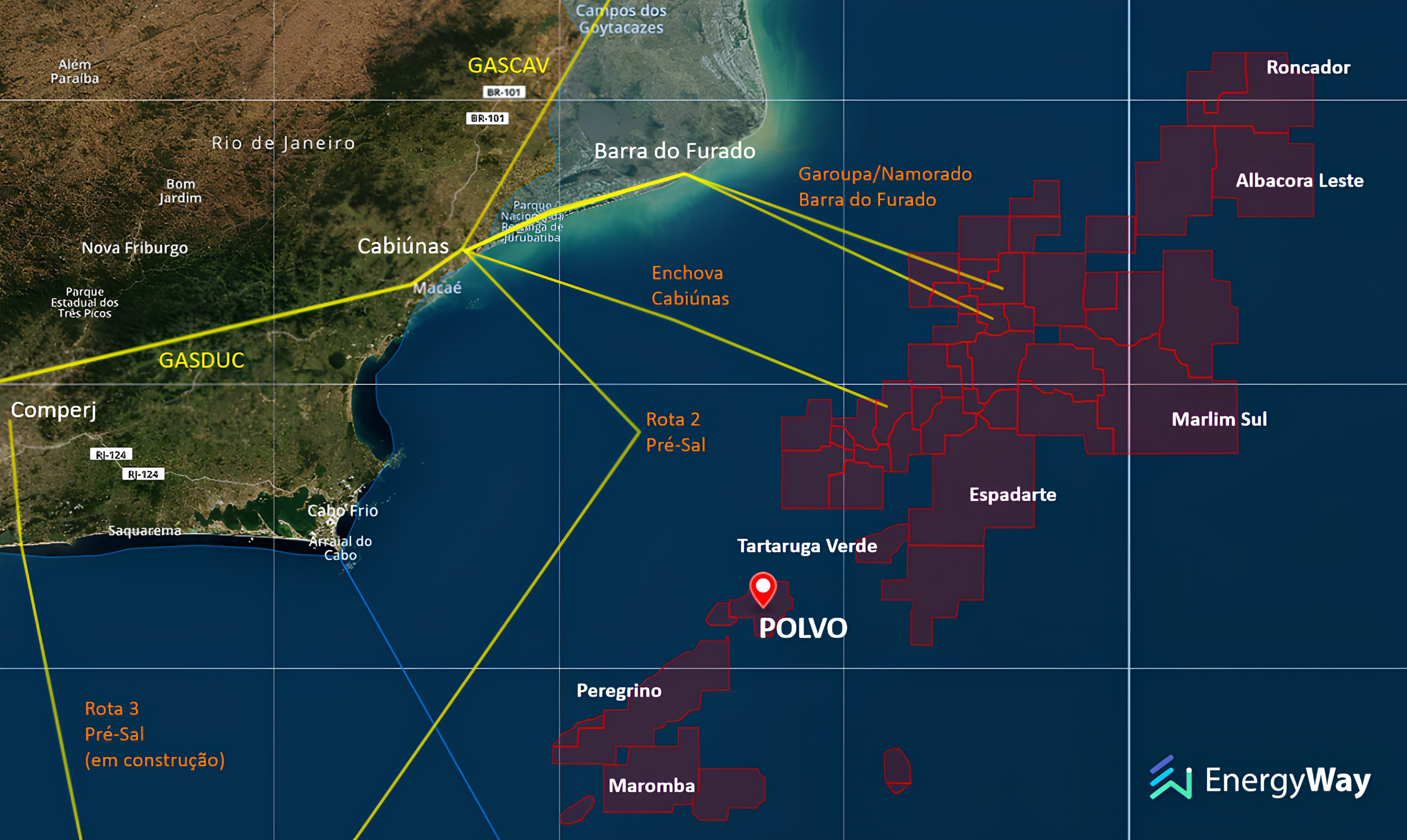
After Growing with Tie-Back, PRIO’s Polvo Field Faced Setbacks in 2024 with Stopped Wells and Reveals the Challenges of National Offshore.
For years, the Polvo field, located in the Campos Basin, was considered a mature and unpromising asset for Petrobras’s long-term plans. Sold to PRIO in 2015, the field underwent a true renaissance with the use of tie-back technology and strategic reconfiguration. Production even grew by over 20% in certain cycles, consolidating the project as one of the biggest recovery cases in the Brazilian oil and gas industry.
However, 2024 marked a temporary inflection point in this success trajectory. The operation suffered occasional production drops due to well failures and difficulties with environmental licensing, revealing the vulnerabilities that still challenge the offshore sector in Brazil.
The Turning Point: From Marginal Field to Key Piece – Polvo Field


The Polvo field, located in shallow waters of the Campos Basin, was fully acquired by PetroRio (now PRIO) in 2015. The private oil company’s decision was strategic: to invest in assets deemed “disposable” by Petrobras and apply lean management focused on efficiency and repurposing infrastructure.
-
The rise in oil prices could ensure an extra revenue of R$ 100 billion for the Federal Government, indicates a recent economic study.

-
Naturgy begins an investment of R$ 1.6 million to expand the gas network in Niterói and benefit thousands of new residences and businesses.

-
A major turn in the Justice system suspends tax increases and directly impacts oil and gas companies in Brazil by affecting costs, contracts, and financial planning, leaving uncertain what could happen to the sector if these costs had increased.

-
Brava Energia begins drilling in Papa-Terra and Atlanta and could change the game by reducing costs in oil while increasing production and strengthening competitiveness in the offshore market.


The real game-changer came in 2021 with the implementation of the tie-back between the Polvo and Tubarão Martelo fields. This interconnection allowed for unified production, drastically reducing logistical and operational costs. As a result, the cluster’s production increased by around 20%, becoming one of the most efficient operations in the national offshore.
In addition to the direct gain in barrels per day, the integration of systems brought environmental benefits and reduced the need for new platforms, enhancing the field’s profitability.
2024: Production Decline and the Invisible Problems of the Sector
Despite the technical and economic success of previous years, 2024 brought a dose of reality to the operation. According to data from PRIO itself, April’s production was 71.7 thousand boe/d, below the company’s potential — a decline directly influenced by problems in the Polvo + Tubarão Martelo cluster.
Three wells had to be shut down due to failures in submersible pumps and delays in the environmental licensing process for recompletion of the systems. Additionally, the original FPSO of the Polvo field, which had already been decommissioned in 2021, was sold in 2024, marking the definitive end of an era.
This scenario exposed a recurring reality of the oil and gas industry in Brazil: the bureaucracy and slowness of regulatory processes, especially regarding environmental licensing for offshore well interventions.
A Pause, Not a Setback
It is important to emphasize that the setback in 2024 does not represent a collapse in the project — but rather a temporary adjustment. The company has already indicated that it is working to resume operations of the stopped wells, and new investments should be directed towards restoring the production curve in the second half of the year.
PetroRio still has a diversified portfolio of assets such as Albacora Leste, Frade, and Wahoo, which reduces its dependence on Polvo. However, the episode serves as a warning about the operational risks that even mature and stabilized fields can present.
Lessons for the Oil and Gas Sector in Brazil
The story of the Polvo field, from its sale by Petrobras to the current scenario, is a mirror of the transformations that the Brazilian oil market has been facing:
- Divestment by Petrobras: fields previously considered marginal have proven to have potential under new management.
- Operational Efficiency: private companies have managed to double production through smart use of infrastructure.
- Regulatory Challenges: the slowness of environmental processes and dependence on critical equipment remain real obstacles.
For Brazil to consolidate its position as a relevant player in the global oil and gas market, it will be necessary to modernize rules, facilitate investments, and ensure greater predictability in operational procedures.
What Comes Next for Polvo
Even with the challenges faced in 2024, the expectation is that the Polvo + Tubarão Martelo cluster will recover stability in the upcoming quarters. PRIO has a history of quick reactions to operational events and has already proven that it knows how to extract value from fields considered complex.
Furthermore, there is the prospect of new wells being drilled, focusing on bypassed oil regions, which could significantly increase the final recovery of the reservoir.
The market remains attentive. After all, the performance of the Polvo field is more than just a number of barrels per day — it represents the private sector’s capacity to transform forgotten assets into sustainable, efficient, and profitable operations.









-

-

-

-

-

20 pessoas reagiram a isso.