Portuguese
 Spanish


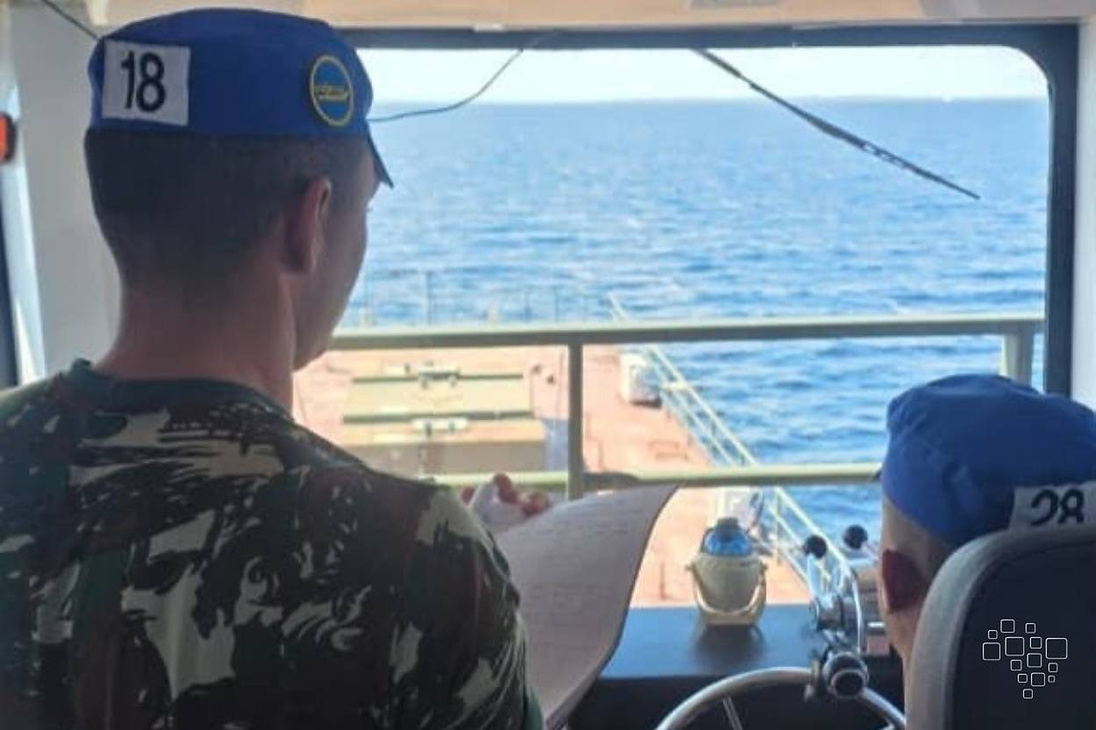
Four months of training in Manaus prepared 28 sergeants and one military police officer to command vessels, transport supplies and operate on Amazonian rivers.
The Brazilian Army completed training for 29 riverboat operators in the Amazon after four months at the Amazon Military Command Vessel Center (CECMA) in Manaus. The Army announced the news on October 7, 2026, and the portal Defesa em Foco reported on it on October 10.
The class included 28 Army sergeants and one military police officer from Amazonas state. During the course, participants learned to operate vessels of different sizes, perform maneuvers and use equipment for transporting supplies.
-
India plans five shipbuilding megacomplexes and negotiates a $4 billion shipyard with South Korean giant HD Hyundai

-
Brazilian shipbuilding industry projects exceeding 80,000 jobs with Transpetro ship orders but faces labor and credit shortages
-
Collision Between Ships in India Entangles Anchor Chains, Causing Bulk Carrier with Nearly 86,000 Tons of Coal to Take On Water
-
Support Vessel Pulls Up to 105 Tons, Recovers 21 Structures at 770 Meters, and Completes Offshore Decommissioning 19 Days Ahead of Schedule in Brazil


In addition to navigation, the course covered engine maintenance, survival techniques and exercises with Guardian 25 tactical boats. The goal was to prepare personnel for missions in a region where rivers serve as important transportation routes.
Four-month course prepared military personnel to operate different types of vessels
The River Navigation Course took place at CECMA, a military organization specializing in transportation along the rivers of the Western Amazon.
The training was divided into four stages, with progressively more advanced vessel-handling and operating activities.
In the first stage, participants received instruction on small boats. They then moved on to medium-sized vessels, expanding their knowledge of navigation, maneuvering and safety.
The third stage involved the use of tactical boats employed in Army operations.
Finally, students trained with river logistics modules, structures used to move cargo and materials.
This combination enables personnel to become familiar with different navigation conditions and understand the demands of each mission.
The course also covered maintenance procedures and the operation of outboard motors, which are important for travel in areas far from urban centers.
Training included Guardian 25 tactical boats and onboard firing exercises
Among the hands-on activities, participants conducted maneuvers with Guardian 25 tactical boats used in river operations.
The training also included firing exercises aboard boats with .50-caliber and MAG machine guns, as well as procedures for approaching and operating the boats.
The instruction is part of military preparation for operating in environments where river travel may require additional security measures.
The training was not limited to tactical activities. Students also learned survival techniques and procedures related to transporting personnel and supplies.
The course therefore brought together skills needed for both navigation and logistics support.
Completing the training qualifies the participants. However, it does not mean the Army has acquired new boats or automatically expanded its fleet.
Amazon rivers are critical to supplying troops
In the Amazon, river transport is strategically important for moving people, food, fuel, equipment and other supplies.
Many communities are far from major highways. In some areas, rivers are the main way to move cargo and reach isolated communities.
Logistics corridors used in operations include the Negro, Solimões and Madeira rivers, which connect different parts of the Western Amazon.
Training riverboat operators helps ensure qualified personnel are available to work on these routes.
River transport also requires planning during dry seasons. In 2026, for example, a R$70 million investment in a floating port facility aimed to keep cargo moving in Amazonas state during the drought.
Although the initiative is a private-sector project, it shows how changes in river levels can affect regional logistics.
For the Army, these conditions require attention to routes, boat types and the availability of supplies.
CECMA transports supplies and supports military units
The Amazon Military Command Boat Center is subordinate to the 12th Military Region and performs river logistics functions.
Its responsibilities include transporting supplies, equipment and personnel to military organizations based in the Western Amazon.
The unit also conducts training to prepare military personnel to operate boats in different conditions.
The center has offered its River Navigation Course since 1977, providing specialized training for decades.
Depending on the circumstances of each class, the course may also include members of other branches of the Armed Forces, Brazil’s Auxiliary Forces and partner countries.
The class that graduated in September 2026 included a military police officer from Amazonas state, demonstrating the participation of another public security agency in the training.
However, the Army has not disclosed which units will receive the 29 graduates after they complete the course.
River infrastructure also serves communities in inland Amazonas
The importance of navigation extends beyond military activities. In several municipalities across the Amazon, boats transport residents, goods and essential supplies.
For this reason, investments in terminals and boarding facilities also help improve regional connectivity.
In Amazonas state, a R$54.8 million projectcalls for the construction of 50 floating terminals to serve riverside communities.
The facilities could support passenger and freight transport, as well as improve access to services in remote communities.
Although the project is not directly connected to the Army course, both highlight the importance of river transport to the region.
They also show that logistics in the Amazon depends on both infrastructure and professionals trained to operate vessels.
Low and high river levels require operational planning
One of the main challenges of navigation in the Amazon is the seasonal fluctuation in water levels.
During high-water periods, certain routes may present conditions different from those found during the dry season.
During the dry season, reduced water depth can make it harder for vessels to pass and require route changes.
For this reason, riverboat operators need to understand river conditions and assess travel conditions before each mission.
The choice of vessel must also take into account the type of cargo, distances and the needs of the unit being served.
These factors make river navigation an activity that requires technical knowledge, experience and planning.
The training offered by CECMA aims to develop these skills, but operational results also depend on the availability of vessels and support resources.
Professional training also matters for civilian logistics
Although CECMA’s course is geared toward military service, river transport also requires professionals with specialized skills for civilian operations.
Port operations, inland navigation, freight distribution and passenger transport all depend on skilled workers.
The sector also requires expertise in safety, route planning, maintenance and cargo handling.
In higher education, São Paulo state’s Fatec technology colleges have listed six free courses related to logistics and transportation, including programs connected to river navigation.
These degree programs, however, have different goals and requirements from the military training provided by the Army.
The comparison shows that professional qualifications matter across different segments of the transportation chain.
New riverboat operators may support missions in the Amazon
With the course completed, the 29 participants now have specialized training to serve in command and operation roles aboard military vessels.
Their future assignments will depend on decisions by the institutions responsible and on operational needs.
In addition to transporting materials, the Army’s river facilities can support missions to maintain a territorial presence and other activities within the force’s responsibilities.
The announcement of the graduation, however, provides no figures on increased transport capacity, lower costs or expanded routes.
The confirmed outcome, therefore, is the completion of the training and the participants’ qualifications.
Even so, the training represents an important step in keeping teams prepared in a region marked by long distances and difficult access.
By bringing together four months of training, hands-on activities and river logistics instruction, CECMA strengthened the preparation of professionals who may work in transportation and support for military organizations in the Amazon.
Should Brazil increase investment in training riverboat operators and building river infrastructure to improve transportation in the Amazon?
Sources: Defesa em Foco, October 10, 2026; information released by the Brazilian Army on October 7, 2026.