





 Portuguese
  English
  Spanish
  5 min of reading
  0 comments



The BIS, Central Bank of Central Banks, Controls Interest Rates, Currencies, and the Future of Digital Money in Secrecy, Without Serving Customers or Granting Credit.
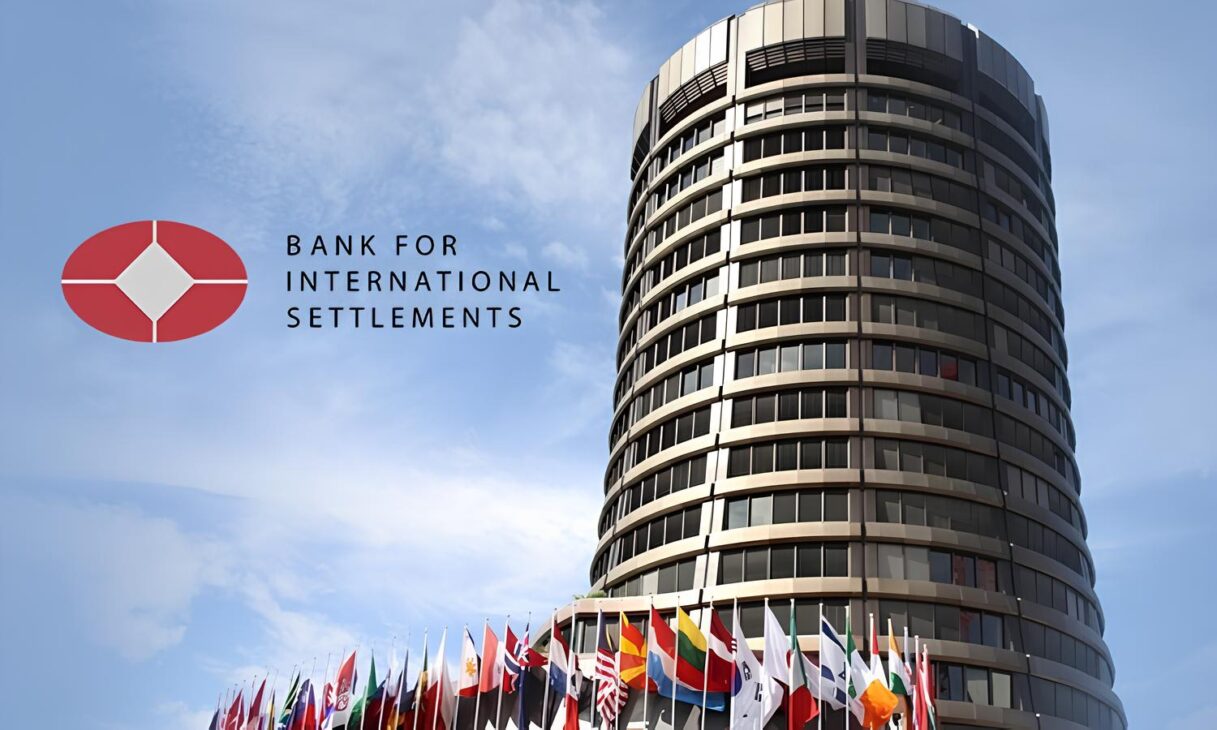
Few people have heard of the Bank for International Settlements (BIS). Based in Basel, Switzerland, it is known as the central bank of central banks because its function is not to serve regular depositors, grant credit, or open accounts. Instead, it acts as a nervous center of the global financial system, coordinating monetary policies and setting rules that directly affect the lives of billions of people.
Founded in 1930, the BIS was created to manage reparations from World War I and has gradually evolved into an institution that now connects 63 national central banks, including the Central Bank of Brazil, the U.S. Federal Reserve, and the European Central Bank.
The Invisible Power of the BIS Over Interest Rates, Inflation, and Currencies
The BIS does not issue currency, but it decisively influences who does. It serves as a forum for discussion among central bank governors, establishing global guidelines on interest rates, inflation control, financial stability, and banking regulation.
-
Inflation in March reaches 0.88% according to IBGE and pressures the Brazilian economy, impacting family budgets and requiring more strategic decisions to maintain financial control.

-
In Paraná, distributor Pacto connects 100% of the load in Coronel Vivida to batteries: a BES of 10 MW and 20 MWh costs just over R$ 30 million and lowers the local tariff now.

-
With a dependence of up to 80% on gas imported from the United States, Mexico is responding with a robust energy strategy, betting on shale gas, creating a scientific committee, and preparing to expand natural gas production to reduce vulnerability and strengthen its energy security in the coming years.

-
The United States proposes to Brazil a critical minerals agreement with a minimum price to combat Chinese dumping and priority for investment, but the Planalto is blocking the signing out of fear of upsetting China and due to electoral calculations in a year of competition.



It is at the BIS that agreements like the Basel Accord arise, a set of rules defining how much capital banks need to maintain in reserve to avoid crises. These standards affect everything from the credit you receive at the bank to the interest charged on your credit card.
In other words, even without having customers, the BIS indirectly shapes the conditions of your bank account, your home financing, and even the price of food at the supermarket, since monetary policies influence inflation and exchange rates.
The BIS and Its ‘Secret’ Role in the Global Financial System
Called by many the most powerful institution no one knows, the BIS operates mostly behind the scenes. Its meetings are not public, its leaders do not need to report to parliaments, and its reports directly influence governments and corporations.
Its headquarters in Basel was designed as a neutral space, with privileges of extraterritoriality similar to those of the UN: within the BIS, Swiss law does not fully apply. This gives the institution a level of secrecy and diplomatic immunity that makes it even more enigmatic.
While most citizens discuss commercial banks or even national central banks, few know that there is an entity above them all, capable of influencing the system as a whole.
BIS and Central Banks: How the Financial Power Network Works
The BIS connects 63 central banks that together represent over 95% of global GDP. This includes not only Western powers but also emerging economies like Brazil, China, and India.

In practice, the BIS functions as an exclusive club, where the governors of central banks regularly meet to align policies and exchange sensitive information about global risks.
It is in this forum that consensus emerges on topics such as:
- Inflation Control;
- Defense Against Global Financial Crises;
- Regulation of International Banks;
- Plans for the Future of Digital Currencies.
Unlike commercial banks, which compete with each other, the BIS works to maintain the collective stability of the system — but always from the perspective of financial institutions, not the average citizen.
The Role of the BIS in the Creation of Central Bank Digital Currencies (CBDCs)
One of the most sensitive points today is the BIS’s involvement in the development of digital currencies issued by central banks, known as CBDCs.
Through the Innovation Hub, the BIS’s research arm, the institution is already coordinating digital currency projects in countries like China, Sweden, and Brazil (with Drex, the digital real). The goal is to create official digital payment systems that can replace physical cash.
For critics, this may signify a new era of financial control, where every transaction becomes traceable. For supporters, it represents greater security and efficiency, with cost reduction and financial inclusion.
In any case, the BIS is at the center of this process and can determine what the money of the future will look like.
Criticism and Controversies Surrounding the Central Bank of Central Banks
Although recognized as a key player in financial stability, the BIS faces criticism:
- Lack of Transparency: its meetings are closed and its decisions rarely undergo public scrutiny.
- Concentrated Power: few leaders control debates that impact billions of people.
- Diplomatic Immunity: like other international institutions, the BIS enjoys legal privileges that place it above national laws.
- Indirect Political Influence: by recommending interest adjustments or austerity policies, the BIS can affect entire economies without being elected by anyone.
This set of factors leads some to call the BIS the “most powerful bank in the world that nobody knows”.
BIS, Financial Crises, and the Basel Accord
The BIS was central to the creation of Basel Accords I, II, and III, which emerged after global financial crises. These rules establish capitalization standards that banks must follow, reducing the risk of cascading bankruptcies.
However, critics argue that these measures also favored the concentration of power in large international banks, making it harder for smaller institutions to compete.
Thus, the BIS is seen simultaneously as the guardian of global stability and as a symbol of a financial system that operates far from popular control.
The BIS has signaled that the era of physical cash is coming to an end. Recent reports emphasize the importance of central bank digital currencies and modernization of payment systems.
This may mean that in a few decades, most transactions will be conducted on official digital platforms, controlled not by commercial banks but by central banks in coordination with the BIS.
For many analysts, this transition will give the BIS even greater power, consolidating its role as the invisible architect of the global economy.
The Silent Power of the BIS
The Bank for International Settlements, the famous BIS, is one of the best-kept secrets in the financial world. It does not serve individuals, does not grant credit, nor open accounts. But from its headquarters in Basel, Switzerland, it sets the rules that govern interest rates, inflation, currencies, and even the future of digital money.
Whether you are a businessman, worker, or student, its decisions already affect your wallet, even if you have never heard of it.
The BIS is proof that in the financial world, real power is not always where we imagine — and that the fate of global money can be defined in meetings that take place away from the spotlight, in silence, but with a devastating impact.










-

Uma pessoa reagiu a isso.