





 Portuguese
  English
  Spanish
  3 min of reading
  0 comments



Researchers Show That Babassu Biodiesel Emits Less Pollutants Than Soy and Can Generate Income for Communities in the North and Northeast, Offering Renewable and Local Energy.
The researchers from Unioeste and UFPR discovered that babassu biodiesel emits less pollutants than soy and performs similarly in generator engines, providing a more sustainable and efficient option for energy generation.
The study, led by Benhurt Gongora, Reinaldo Bariccatti, Samuel de Souza, Doglas Bassegio, and Rodrigo Sequine, tested the fuel under real-world usage conditions, with common diesel engines typically used for generating electricity in small rural properties.
The goal is to reduce the emissions of nitrogen oxides (NOx) and carbon monoxide (CO), minimizing environmental impacts while offering a low-cost alternative for traditional communities.
-
Mysterious object on Mars divides NASA and Harvard after Curiosity image reignites suspicions about what was really found on the planet.

-
Giant structures 14 meters beneath Egypt are revealed by satellites and expose a millennia-old secret buried in Buto.

-
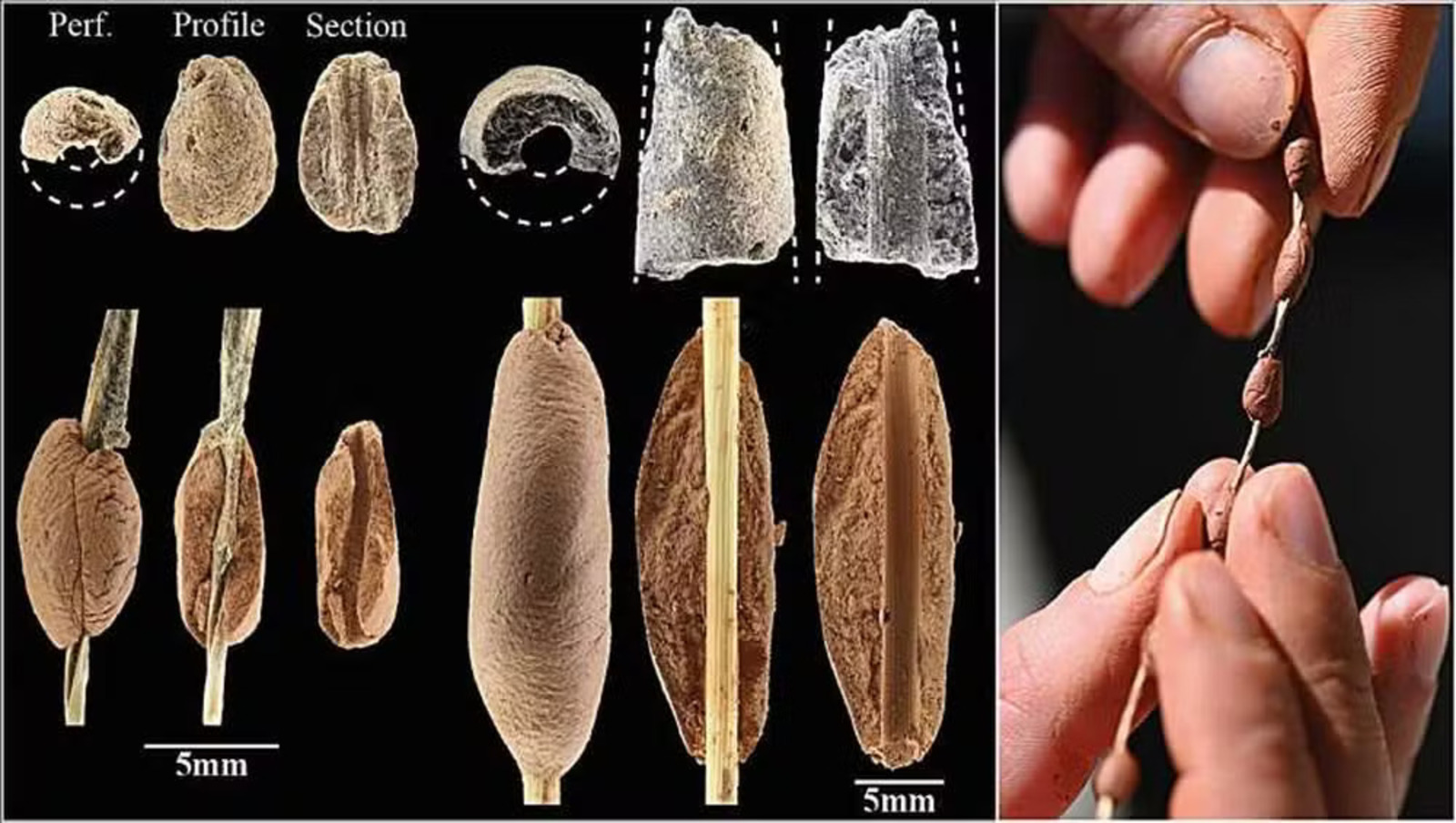
Children have been making clay pieces for 15,000 years in Southwest Asia, and fingerprints preserved on 142 ornaments helped archaeologists prove this.
-
New semi-autonomous legged robot technology challenges the limitations of space exploration by operating almost without human intervention on the Moon.


Tests Show Energy Efficiency and Lower Emission of Pollutants
During the experiments, the engines were subjected to different loads, from 500 W to 2,500 W, simulating real operational conditions.
The researchers measured fuel consumption and pollutant emissions, finding that babassu biodiesel maintains energy efficiency comparable to soy but with a lower environmental impact.
The fuel was produced from the seeds of the palm tree, using a chemical reaction with alcohol and caustic soda, a simple method that can be replicated by communities without sophisticated industrial equipment.
Benefits for Communities in the North and Northeast
Babassu is abundant in the North and Northeast regions, where extracting the seeds is already a traditional activity.
The production of babassu biodiesel offers local renewable energy, reducing the need to transport fuels from other regions.
Additionally, the activity can generate extra income for families already working with the palm tree, utilizing seeds that are not consumed in food.
“There is no need to use difficult-to-operate equipment, just some devices for agitation and heating with laboratory glassware,” explains Benhurt Gongora, one of the study’s authors.
Environmental Advantages and Efficiency Per Hectare
In addition to the social benefit, babassu biodiesel contributes to environmental preservation.
The palm tree has a high oil yield per hectare, with up to 66% oil in the seeds, compared to 18% in soy, reducing the need for large agricultural areas.
Partially replacing soy biodiesel with babassu biodiesel diminishes the pressure on land and reduces pollutant emissions, being a strategic alternative for diversifying the Brazilian energy matrix and reducing dependence on imported diesel.
Prospects for the Energy Sector
The study suggests that babassu biodiesel can be gradually incorporated into the national biofuel production, ensuring clean and sustainable energy while strengthening the local economy.
Traditional communities can produce the fuel autonomously, contributing to regional development, income generation, and environmental preservation.
This finding represents an important step for Brazil to diversify its energy matrix and invest in sustainable solutions that combine efficiency with socio-environmental responsibility.
Source: Agência Bori







-

Uma pessoa reagiu a isso.