





 Portuguese
  English
  Spanish
  3 min of reading
  0 comments


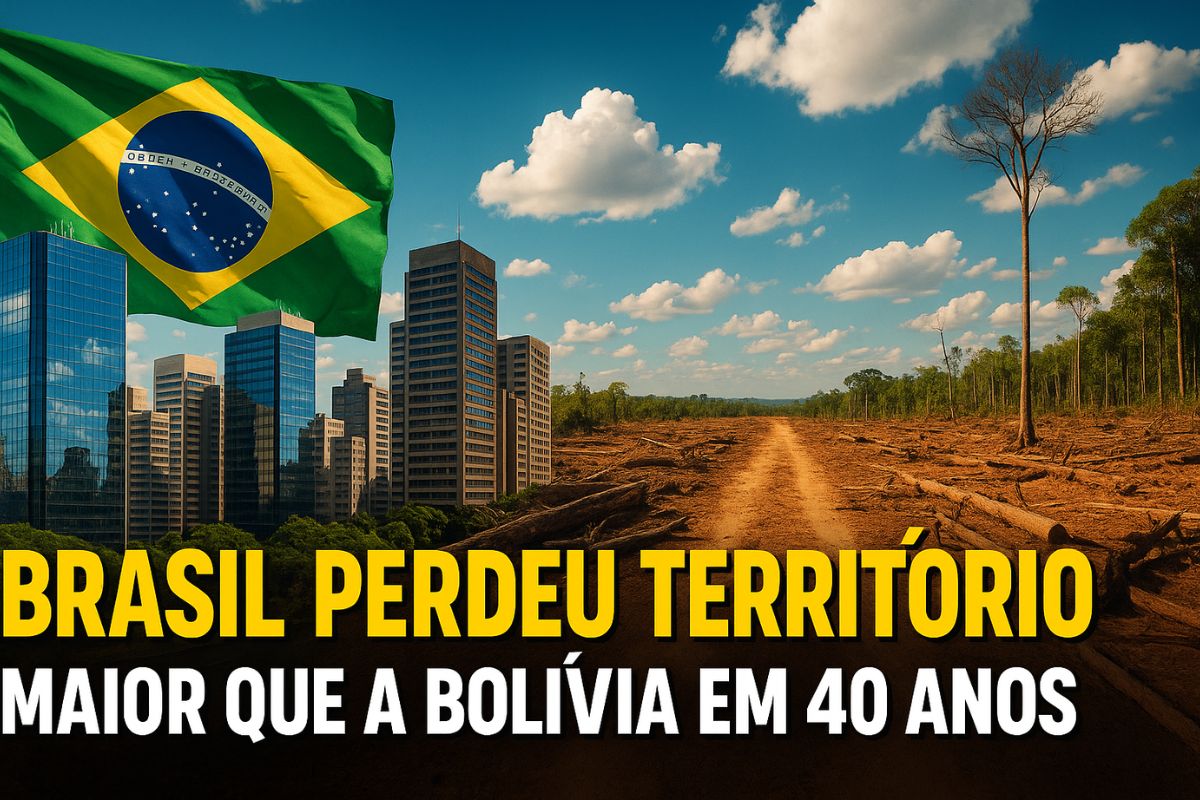
Brazil Lost Territory Greater Than Bolivia of Natural Areas in 40 Years. MapBiomas Study Reveals That the Country Lost 111.7 Million Hectares Between 1985 and 2024, Equivalent to 13% of National Territory
According to data from MapBiomas, Brazil lost territory greater than Bolivia in natural areas over the past four decades. Between 1985 and 2024, there were 111.7 million hectares less, representing 13% of the country’s size. This reduction was mainly driven by the expansion of agriculture, which came to dominate most of the area of 59% of Brazilian municipalities.
The survey shows that the loss was accompanied by profound transformations in land use. The conversion of native vegetation to pastures and croplands was more intense in the 1990s and 2000s, consolidating regions such as the deforestation arc in the Amazon and Matopiba in the Cerrado.
How Brazil Lost Natural Territory
At the beginning of the historical series, in 1985, 80% of the country was covered by natural areas. Ten years later, this figure had already fallen to 76%, with the replacement of 36.5 million hectares by human-use areas, mainly pastures and urbanized zones. The peak of deforestation occurred between 1995 and 2004, when 44.8 million hectares were converted for agriculture, of which 21.1 million were in the Amazon alone.
-
The rise in oil prices in the Middle East is already affecting Brazilian sugar: mills in the Central-South are seeing their margins shrink just as ethanol gains strength.
-
Rain gains strength in April, potentially exceeding 150 mm, placing the North, Northeast, and the coasts of the South and Southeast at the center of the heaviest forecast of the week.
-
A fish that survives out of water, crawls on land until it finds another river, and whose female lays 80,000 eggs at once is infesting rivers and lakes in Brazil, and no one can stop this invasion.
-
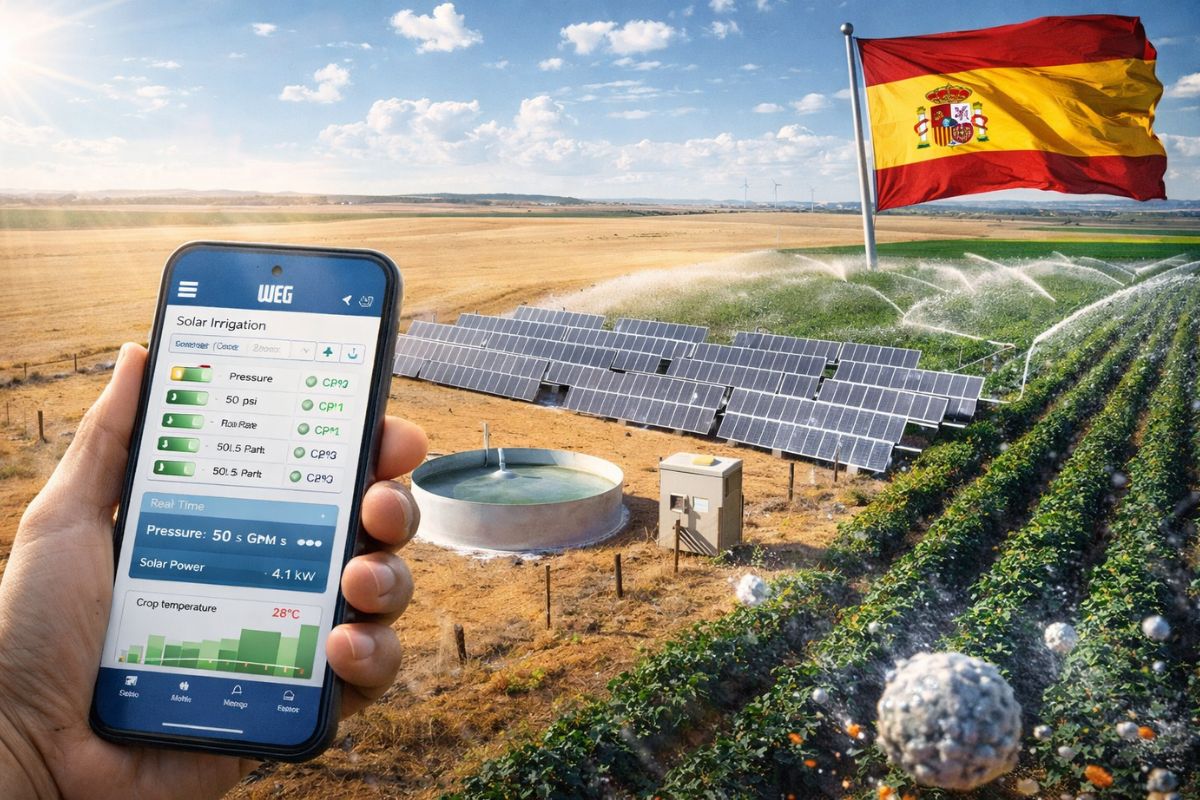
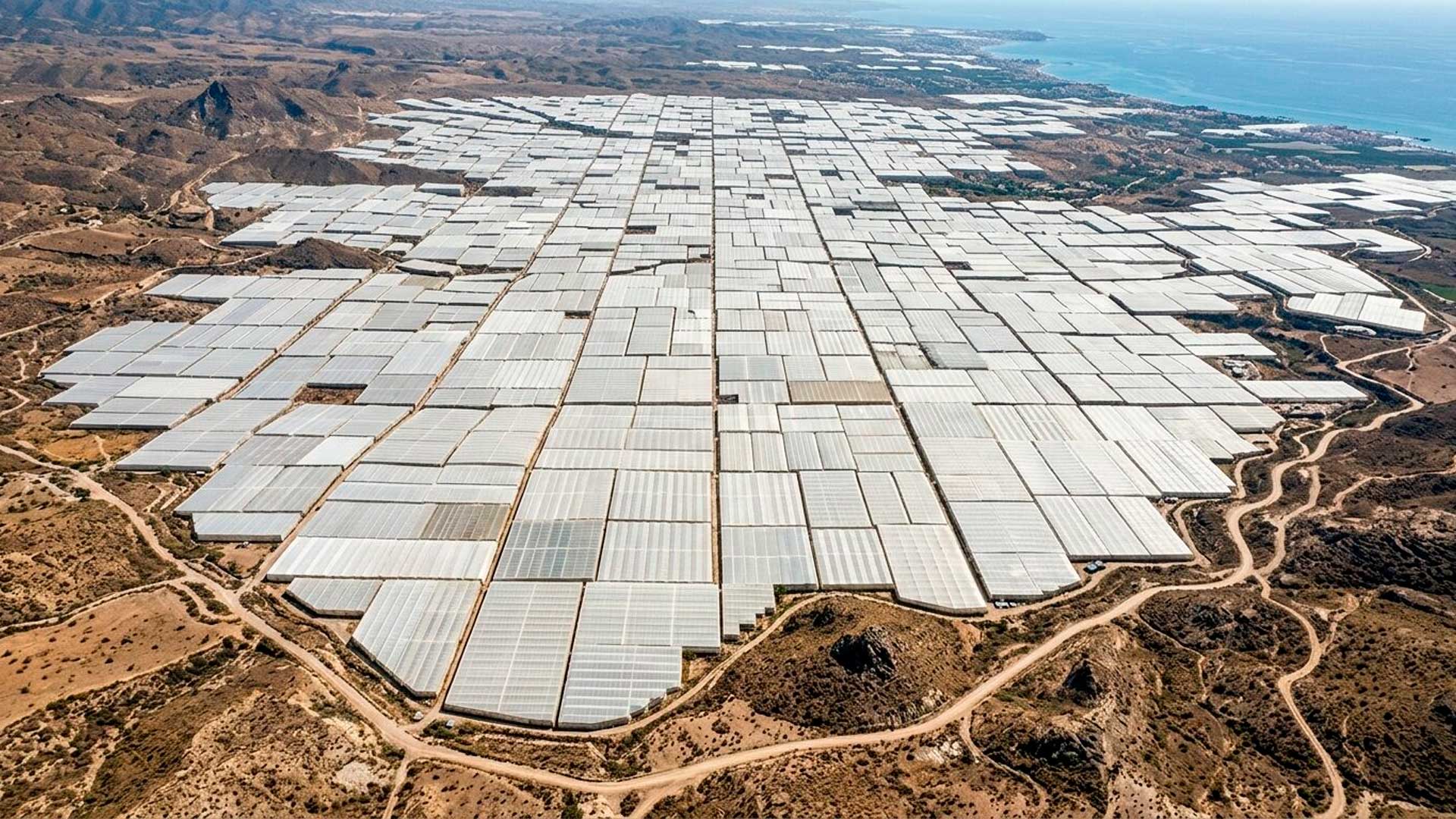
WEG took its technology to Spain to create a solar irrigation system that operates independently without needing an electrical grid, and now farmers control everything remotely via their mobile phones.
From 2005 onward, there was a slowdown in the pace of loss, but the most recent decade (2015–2024) brought new pressure factors, such as the advance of mining and the suppression of fields in the Pampa. The emergence of the new agricultural frontier known as Amacro (Amazonas, Acre, and Rondônia) also raised environmental concerns.
Impacts by Biome
The numbers show that all Brazilian biomes suffered significant losses. In the Amazon, the reduction was 52.1 million hectares. In the Cerrado, it was 40.5 million — nearly one-third of the native vegetation. The Caatinga lost 9.2 million, the Atlantic Forest shrank by 4.4 million, the Pantanal lost 1.7 million, and the Pampa had the largest proportional loss: 30% of its native vegetation.
In addition to deforestation, the flooding cycles in the Pantanal are becoming increasingly shorter, and the Amazon has faced severe droughts, with eight of the ten driest years of the series recorded since 2015. Overall, Brazil reaches 2024 with 65% of native vegetation cover and 32% of areas dedicated to agriculture.
Advance of Agriculture and Land Use
Pasture was the use that grew the most over the period, with an increase of 62.7 million hectares (+68%). Agriculture also made significant progress, adding 44 million hectares (+236%). In 1985, only 420 municipalities had agricultural predominance; by 2024, there are already 1,037.
Silviculture — the cultivation of planted forests — also grew 472%, occupying 7.4 million hectares, with a greater presence in the Atlantic Forest and the Cerrado. A large part of the conversion of areas to pasture and agriculture occurred over forest and savanna formations.
Challenges and Opportunities
For Marcos Rosa, technical coordinator of MapBiomas, the country needs to avoid setbacks in environmental laws and control wildfires exacerbated by climate change. At the same time, he points out opportunities in improving pasture management, which can increase productivity and preserve soil.
The current trend shows that, although the pace of deforestation has slowed in some biomes, new expansion fronts continue to pressure fragile ecosystems. The balance between agricultural production and environmental conservation will be the biggest challenge of the coming decades.
And you? Do you believe that Brazil will be able to reverse this loss and preserve what remains of the natural areas? Or will agricultural expansion continue to prevail? Leave your opinion in the comments.





Seja o primeiro a reagir!