





 Portuguese
  English
  Spanish
  5 min of reading
  0 comments


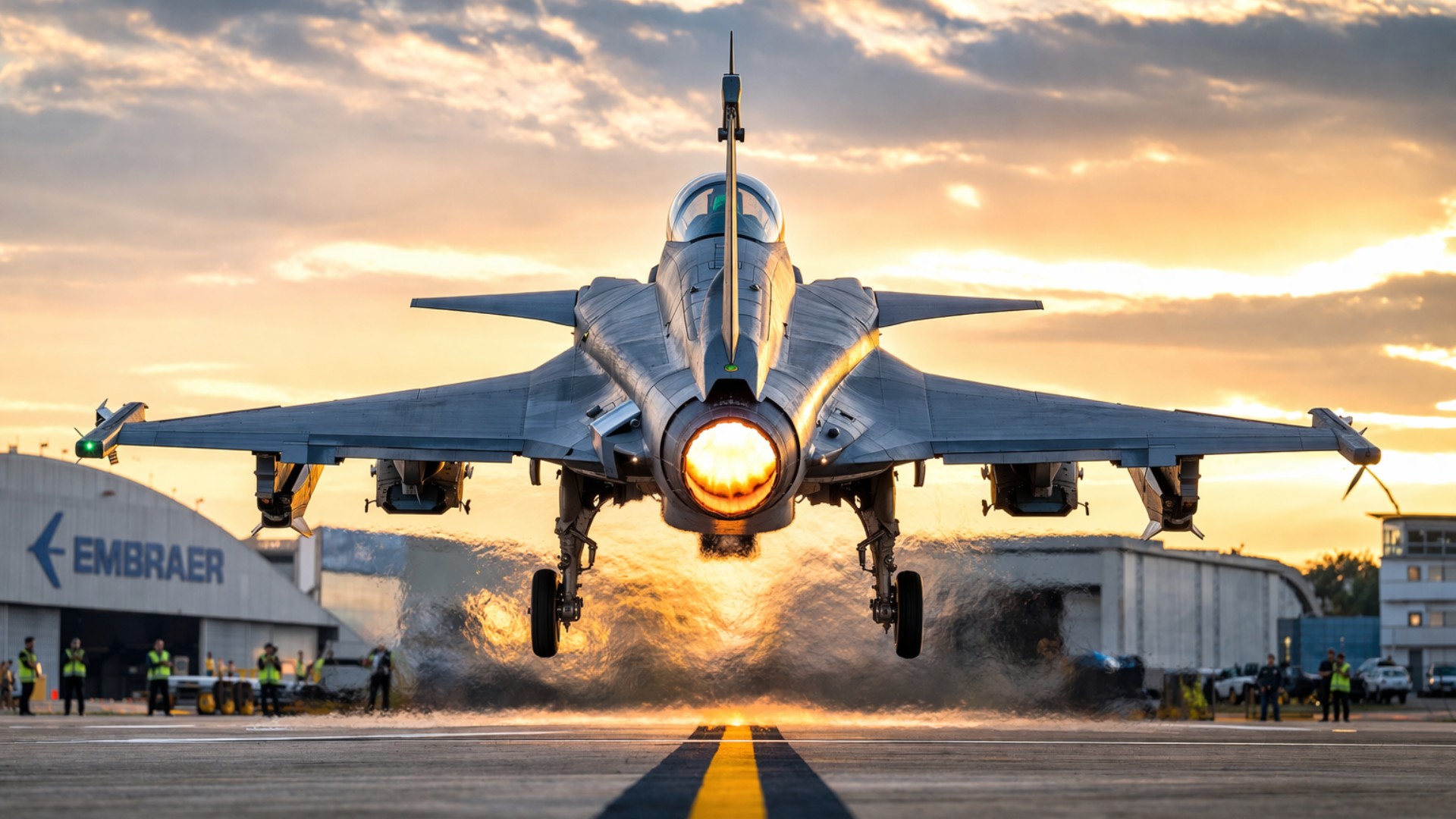
Industrial and military milestone places Brazil among producers of supersonic fighters with advanced technology, after international knowledge transfer, billion-dollar investment, and start of national production of the Gripen, expanding the strategic capacity of air defense and boosting the high-complexity aerospace industry in the country.
On March 25, 2026, Brazil presented the first F-39E Gripen produced on national territory, during a ceremony at the Embraer complex in Gavião Peixoto, São Paulo interior, consolidating a significant advance in the defense industry and the technological capacity of the country.
With this move, the country joins a select group of nations capable of developing and producing high-complexity combat aircraft, reinforcing its strategic position in Latin America and expanding its autonomy in large-scale military projects.
At the same time, the program ceased to represent merely the assembly of aircraft and began to reflect a leap in Brazil’s industrial capacity in sensitive areas such as systems integration, technological development, and production of advanced components.
-
At the bottom of the sea, scientists have found a true underwater cathedral measuring 62 meters at the base, 31 meters at the top, and 1,347 square meters of giant coral in the Maug Islands, estimated to be 2,050 years old.

-
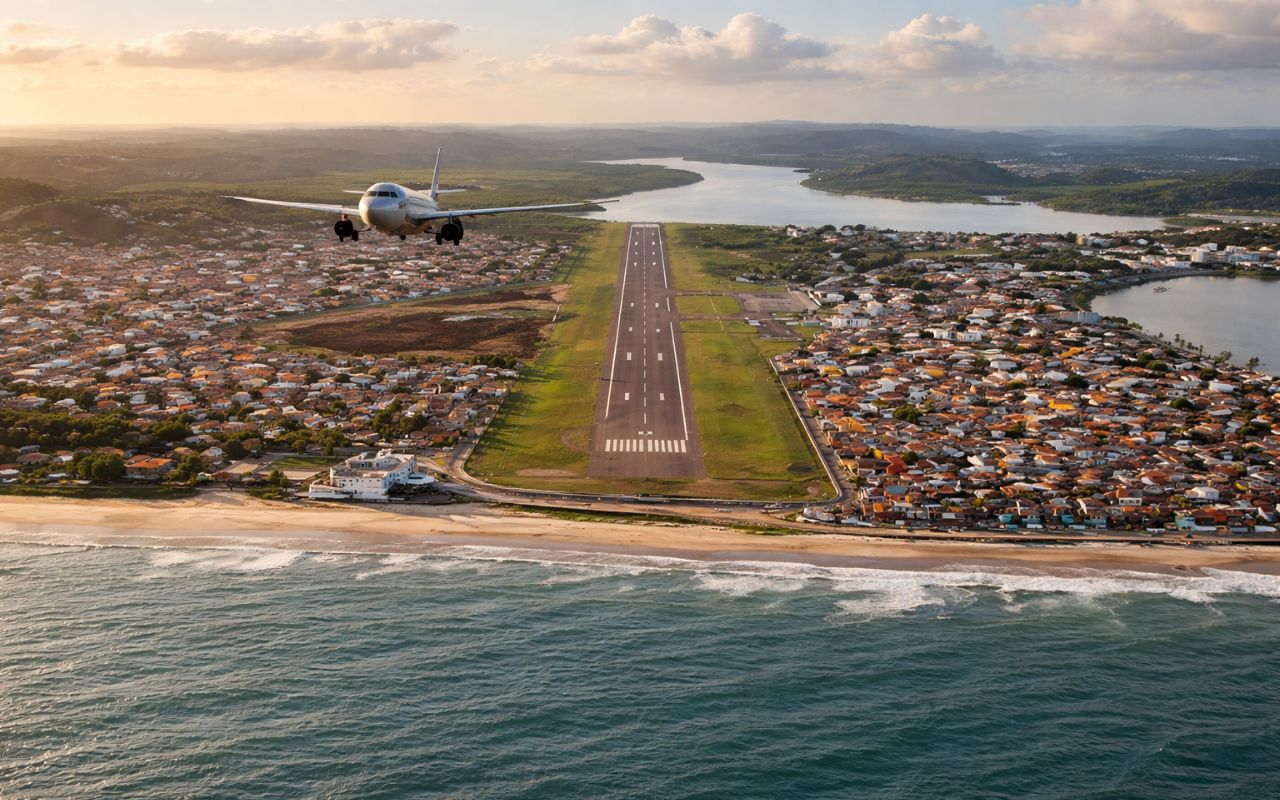
Surrounded by the sea, the airport will have a system to prevent airplanes from falling into the water; technology will be installed in Ilhéus (BA), with an investment of R$ 70 million.
-
With a cost per shot close to zero, the DragonFire laser could change naval warfare in 2027 and provide British ships with nearly unlimited defense against drones.

-
A British startup creates tires that generate electricity in electric vehicles when passing over potholes, speed bumps, and cracks.


Located in the interior of São Paulo, the structure brings together production, development, and testing stages, connecting national and international suppliers, in addition to incorporating aero structures produced at Saab’s facility in São Bernardo do Campo, expanding the local production chain.
Gripen Production in Brazil and Technology Transfer
Established in 2014, the contract between the Brazilian government and Saab provides for the development and production of 36 aircraft, including 28 units of the Gripen E model and another 8 units of the Gripen F model, designed for operations with two crew members.
In addition to the acquisition, the agreement included technology transfer for the national industry and was established at 39.3 billion Swedish crowns, an amount that, at the time, corresponded to between US$ 4.05 billion and US$ 5.4 billion, depending on the exchange rate considered.
Unlike traditional purchases, the project was structured to ensure the absorption of technical knowledge in areas such as engineering, testing, and systems integration, reducing external dependencies and strengthening the Brazilian Defense Industrial Base.
In this context, more than 350 Brazilian engineers and technicians were trained in Sweden, gaining practical experience in critical stages of aircraft development and contributing to the formation of a highly specialized workforce in the country.
After this process, some of these professionals began to work directly in development centers and on the national production line, helping to consolidate local competencies in a sector historically dominated by a few countries.
Capabilities of the Gripen Fighter and Embedded Technology
Inserted in the modernization process of the Brazilian Air Force, the F-39E Gripen was designed to carry out air defense, reconnaissance, and attack missions, gathering characteristics compatible with contemporary combat scenarios.
Capable of reaching Mach 2, equivalent to about 2,400 km/h, the fighter also has in-flight refueling capability and integrates systems developed to operate in complex environments, with high demands for rapid response and operational precision.
Among the main differentiators, the network-centric architecture combined with sensor fusion stands out, a feature that allows the pilot to access and share information in real-time, enhancing situational awareness during operations.
In the field of electronic warfare, considered strategic, the Gripen incorporates systems capable of interfering with enemy radars, as well as identifying threats and issuing alerts about incoming missiles, increasing the aircraft’s survivability.
Anápolis Base and Replacement of F-5 Fighters
Already incorporated into operational routine, the fighter began operations from the Anápolis Air Base in Goiás, where it integrates the Air Defense Alert system responsible for protecting the airspace of the Federal District.
Since February 2026, after the completion of certifications at the end of 2025, the aircraft has been directly participating in readiness activities, enhancing the Brazilian air defense response capacity in critical situations.
In this scenario, the introduction of the Gripen occurs alongside the gradual replacement of the old F-5 fighters, which have been in operation for decades and are now beginning to be retired as the new program advances.
With the incorporation of the new platform, the FAB seeks to raise the technological standard of the fleet, combining greater connectivity, more advanced sensors, and expanded operational capability for different types of missions.
Before the definitive incorporation of the presented unit, functional tests and flight trials are still necessary, an essential step to validate the aircraft’s performance within the required parameters for full operation.
Number of Aircraft Delivered and Schedule
So far, the reported numbers show slight variations depending on the source, reflecting differences in the way delivered aircraft and units still in the testing phase are accounted for.
On one hand, Saab reports that 11 aircraft have already been delivered, while Embraer indicates that the presented unit will still be officially incorporated after the completion of the final operational validation stages.
Despite this difference, the schedule remains intact, with local production ongoing and deliveries expected until 2032, as established in the original contract signed between the parties involved.
Industrial Impact and Export Potential
Beyond military use, the Gripen program has gained relevance as a vector for industrial development, contributing to job creation and strengthening technological competencies in different segments of the economy.
By involving areas such as aerospace engineering, software, and systems integration, the project increases the level of complexity of national production and positions Brazilian companies in higher value-added global supply chains.
In this context, the structure installed in Gavião Peixoto was planned not only to meet internal demand but also to enable production aimed at future international clients.
With this configuration, Brazil is seen as a potential hub for exporting high-tech military aircraft, expanding its presence in the global market and reinforcing its industrial capacity in the defense sector.
Thus, the first Gripen produced in the country symbolizes a structural change in the national aerospace industry, combining technological advancement, strengthening of defense, and more competitive insertion in the international scenario.








Seja o primeiro a reagir!