Portuguese
 Spanish


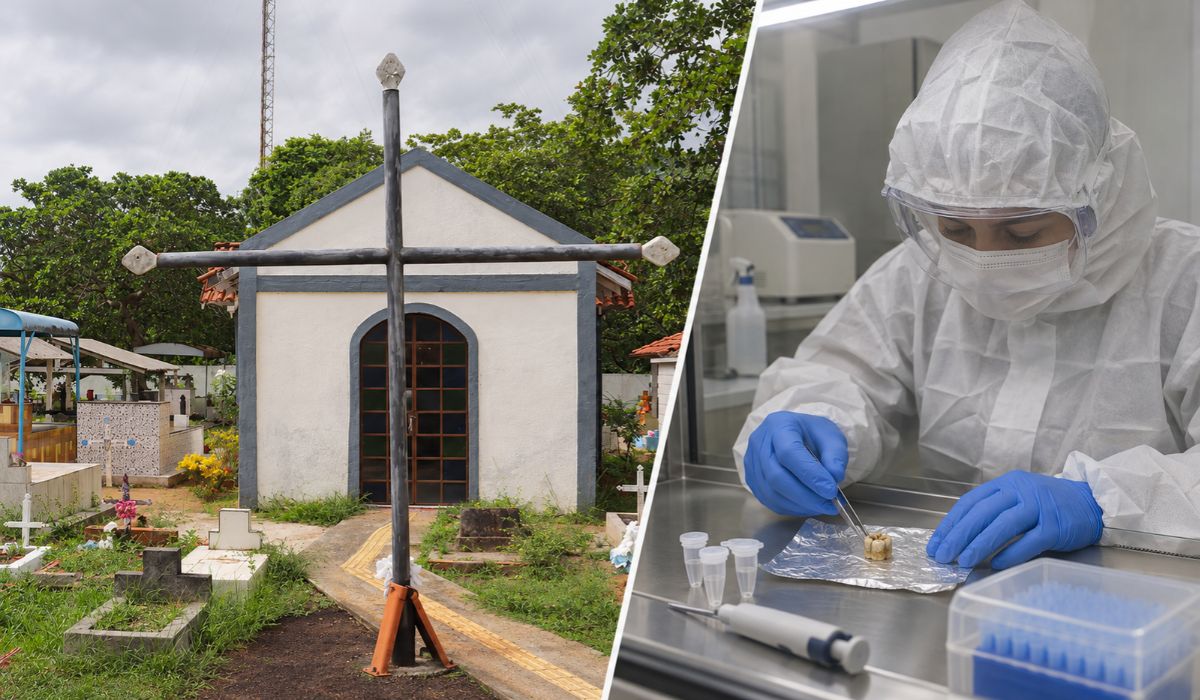

Researchers at the University of São Paulo are combining genetic sequencing and chemical analyses of teeth to investigate the origins of former residents of Mazagão Velho, an Amazonian settlement founded after a Portuguese colony in Africa was relocated.
Small bone and tooth fragments kept for nearly two decades in a mausoleum in the Brazilian state of Amapá could help shed light on a story that began across the Atlantic Ocean more than 250 years ago.
The material is being studied at the new Archaeogenetics Laboratory at the Museum of Archaeology and Ethnology of the University of São Paulo (MAE-USP), Brazil’s first laboratory devoted exclusively to the study of ancient DNA.
The launch of the lab’s work was reported by Jornal da USP on November 16, 2026.
-
Brazilian sisters lead research on an unprecedented mission to Antarctica’s highest point, 4,892 meters high, testing technologies in extreme conditions

-
Brazilian scientists will track up to 6,000 people for 10 years to find ways to slow human aging
-
Dead star races at more than 5 million km/h and may have overtaken the debris from the explosion that created it
-
With about R$10 million, scientists will use lasers and artificial intelligence to detect invisible contaminants in a São Paulo state city’s wastewater


For their pilot project, researchers are working with samples from 63 people found in Mazagão Velho, a former colonial village whose history involves Portuguese settlers, enslaved Africans and Indigenous populations.
The investigation aims to find out who was buried near an old church and how those people may be connected to the population living in the region today.
The history of a city relocated from Africa to the Amazon
Long before it became the focus of genetic research, Mazagão was the setting for an unusual episode in Portugal’s colonial expansion.
In the 18th century, Portugal maintained a fortress on the coast of what is now Morocco, in the area where the city of El Jadida stands today.
Facing difficulties maintaining the territory, the Portuguese Crown decided to evacuate the fortress in 1769 and move its residents to the Amazon.
The journey involved about 2,000 people, including Portuguese settlers and enslaved Africans. They traveled through Lisbon and Belém before arriving in Amapá.
Founded in 1770, Nova Mazagão also served Portugal’s interests in occupying and defending the Amazon region.
The National Institute of Historic and Artistic Heritage (Iphan) records that the population transfer took place from 1771 to 1775.
More than two centuries later, material remains from that period give scientists an opportunity to investigate aspects of the settlement that were not adequately documented.
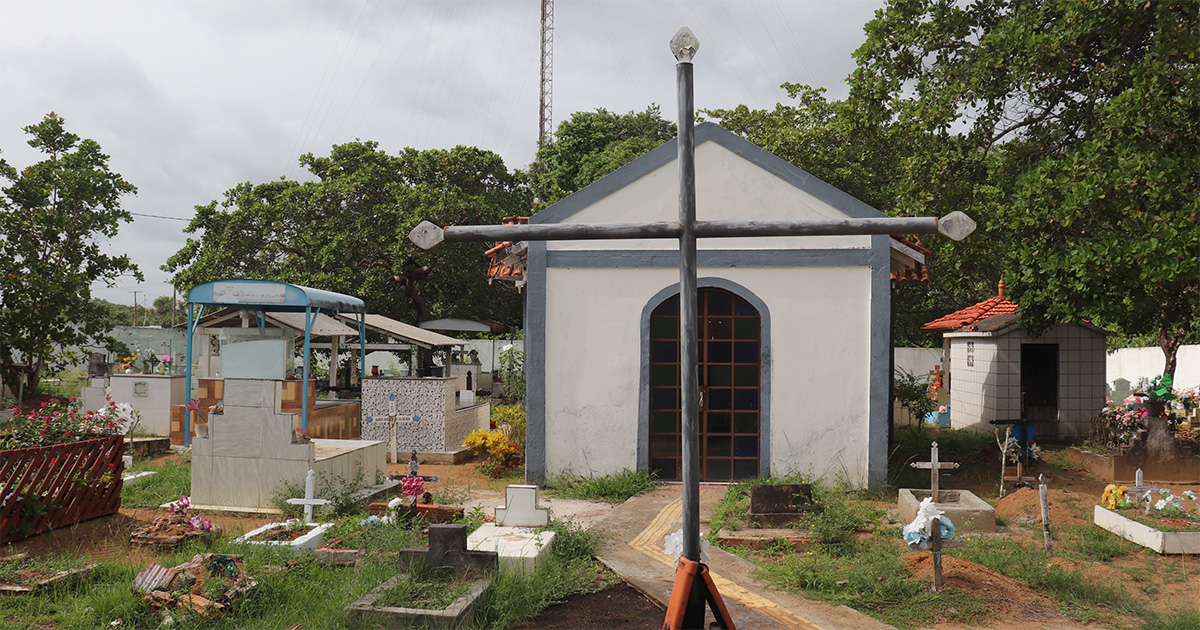
Historic cemetery holds clues to the former residents
From 2004 to 2006, excavations led by the Federal University of Pernambuco (UFPE) uncovered burials in the ruins of an old church in Mazagão Velho.
The church was about 13 meters wide and 40 meters long.
In colonial society, churches served more than religious purposes. Their interiors and surrounding grounds were also used for burials, a practice that predated the spread of public cemeteries in Brazil.
The location of graves could reflect social and religious distinctions.
That is why identifying the people buried there matters for more than simply establishing their geographic origins.
While reviewing the archaeological material, researchers found objects suggesting that burials continued in later periods, beyond the 18th century.
Another clue caught the team’s attention: intentionally modified teeth, which researchers associate with cultural practices among different populations in sub-Saharan Africa.
The discovery raises the possibility that the cemetery held a more diverse population than the one traditionally portrayed in accounts of the village’s founding.
Confirming this hypothesis, however, depends on scientific analyses.
How ancient DNA and teeth can reveal a person’s origins
To investigate Mazagão Velho’s past, researchers will combine two techniques that can provide different information about the same individual.
The first involves recovering and sequencing DNA preserved in human remains.
Even when fragmented by the passage of time, genetic material can provide information about ancestry and possible family relationships among people buried in the same place.
The second technique uses a chemical element called strontium.
Found in rocks, soil, water and food, strontium is incorporated into the body as teeth form.
The ratios of its isotopes, preserved in tooth enamel, can be compared with the geological characteristics of different regions.
It is a kind of chemical record of childhood.
By bringing together genetic and isotopic information, scientists will be able to investigate whether certain individuals grew up in the Amazon or migrated from regions with different geological characteristics.
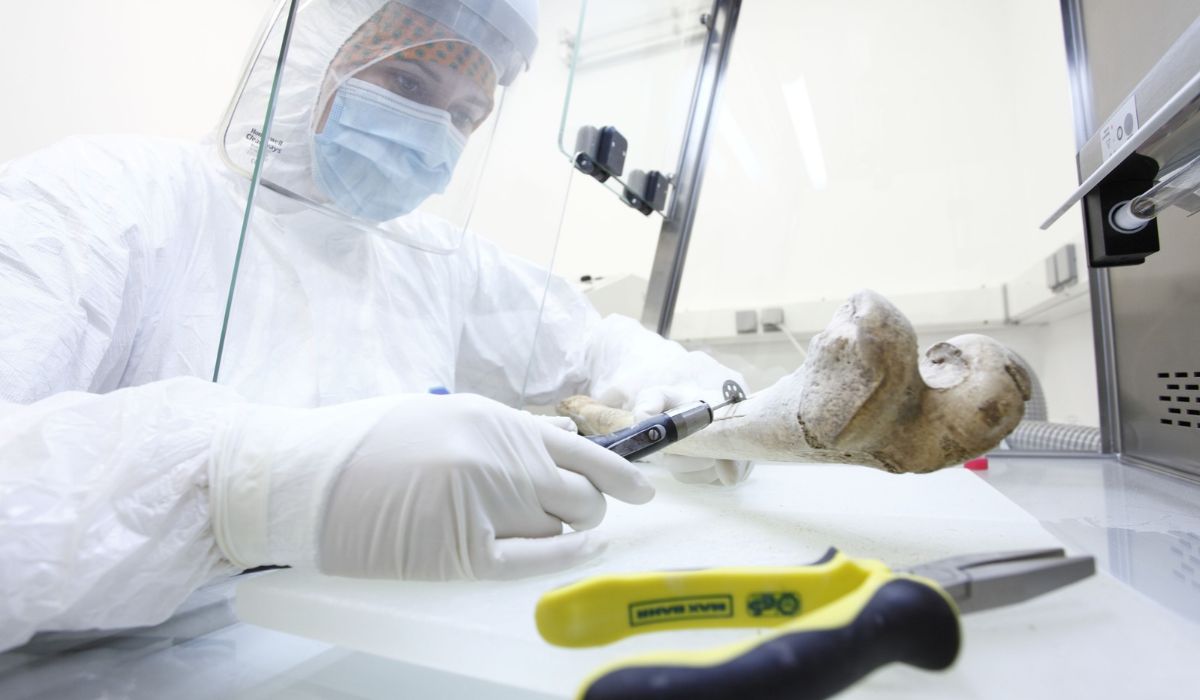
Working with this material, however, requires special care. DNA recovered from ancient bones is often degraded, while contact with genetic material from living people can compromise results.
For this reason, specialized laboratories use controlled environments, protective equipment and procedures designed to minimize contamination.
In the Amazon, heat, humidity and soil acidity make DNA preservation even more difficult.
Lab expands Brazil’s scientific independence
The University of São Paulo’s archaeogenetics infrastructure began taking shape years before the current investigation in Amapá.
In 2022, university researchers were already announcing plans for specialized facilities, funded by the São Paulo Research Foundation (FAPESP) and developed in collaboration with Germany’s Max Planck Institute for Evolutionary Anthropology.
The new laboratory, led by archaeologist André Strauss and geneticist Tábita Hünemeier, marks a step forward in that process.
The aim is to keep archaeological samples and every stage of genetic analysis in Brazil, while training professionals and building a scientific collaboration network across Latin America.
In Mazagão Velho, the research also addresses questions from residents about their ancestors and the community’s historical makeup.
Some samples began being sent to the University of São Paulo after consultations with local residents, with oversight from those responsible for the municipality’s archaeological collections.