Portuguese
 Spanish


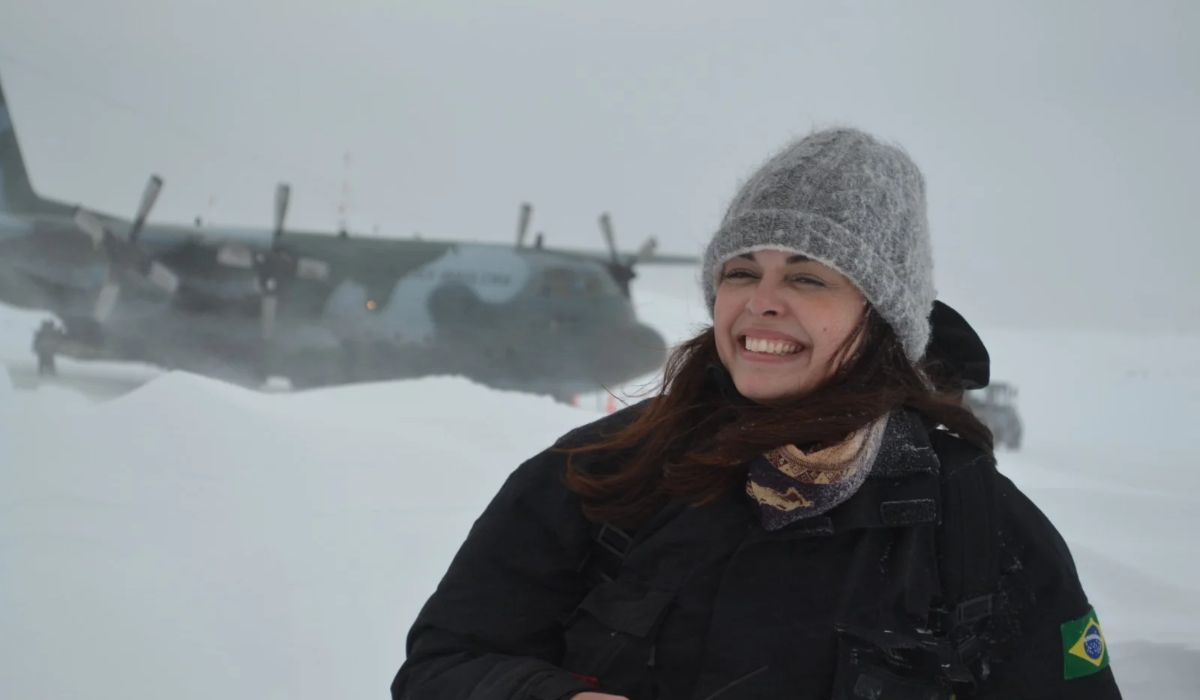

Researchers at the Federal University of Santa Catarina coordinate a scientific project that turns Mount Vinson into a natural laboratory to evaluate health and safety technologies, with potential applications in emergency operations and space environments.
At nearly 5,000 meters above sea level, in a region where temperatures can approach 20 degrees below zero even in summer, a Brazilian expedition aims to find out how technology can help protect lives in some of the planet’s most hostile environments.
Sisters Paola and Priscilla Barros Delben, researchers at the Federal University of Santa Catarina (UFSC), are leading the scientific project for an unprecedented mission to Mount Vinson, the highest point in Antarctica.
The team departed on Sunday, November 22, 2026, carrying technological solutions that will be evaluated in real-world conditions of isolation, extreme cold and limited access to resources.
-
Brazilian scientists will track up to 6,000 people for 10 years to find ways to slow human aging

-
Dead star races at more than 5 million km/h and may have overtaken the debris from the explosion that created it
-
With about R$10 million, scientists will use lasers and artificial intelligence to detect invisible contaminants in a São Paulo state city’s wastewater
-
Project manager Takeshi Hoshino says Japan wants lunar water for rocket fuel, as JAXA’s test rover for the LUPEX mission with India crawled over fake rocks in Tokyo ahead of a 350-kg flight model’s launch in fiscal 2028


The mission is the first scientific and technological validation mission focused on health and safety in remote areas to take place at this location.
The expedition is organized and led in the field by Brazilian physician and mountaineer Karina Oliani, who has taken part in expeditions to some of the world’s tallest mountains, including Everest and K2.
Mount Vinson offers extreme conditions for scientific research
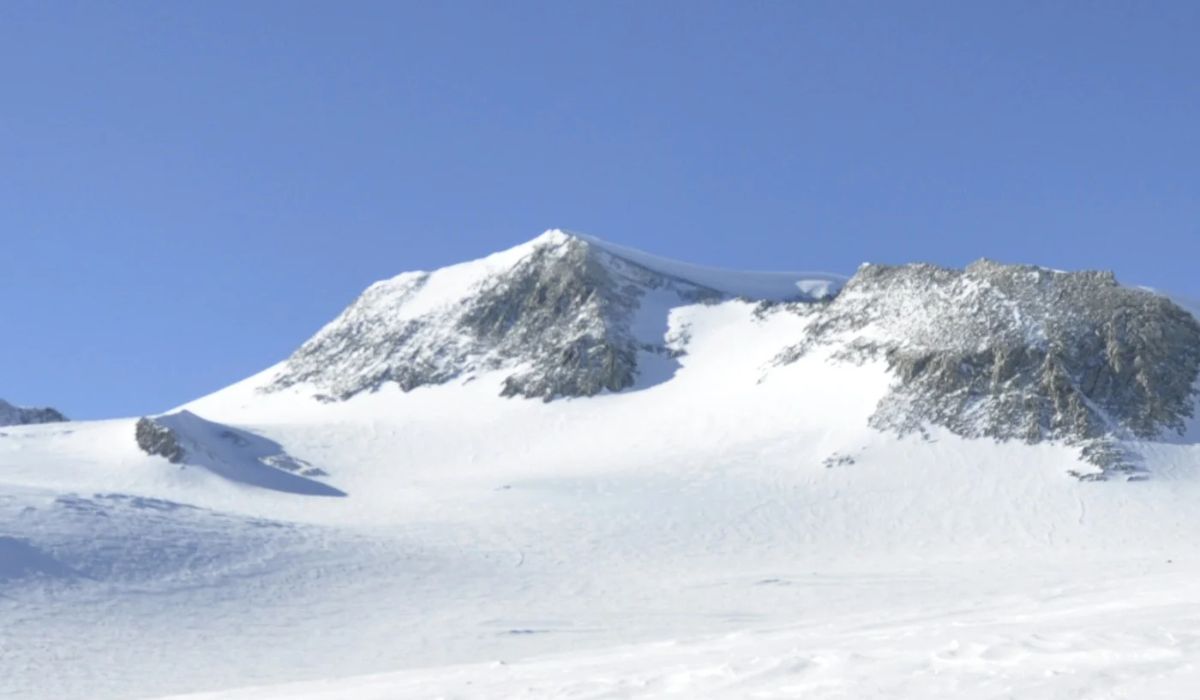
Located about 1,200 kilometers from the South Pole, Mount Vinson is part of the Ellsworth Mountains and rises 4,892 meters above sea level.
The first ascent to its summit took place during the Antarctic summer of 1966–67. Since then, the mountain has become one of the most challenging destinations for climbers seeking to reach the highest point on each continent.
The cold, however, is only part of the problem.
Even in December and January, when the region receives sunlight 24 hours a day, temperatures hover around -20 °C, according to National Geographic.
The altitude also reduces oxygen availability, while geographic isolation makes communication, resupply and emergency response more difficult.
These are precisely the conditions that make Mount Vinson an appealing site for researchers focused on human safety.
In an environment where resources are limited and outside assistance may take time to arrive, decisions about health, team organization and risk management carry a different weight than they do under conventional working conditions.
Brazilian technologies will be evaluated far from the lab
The expedition marks the launch of the ADA-Astra program, developed by Polar Sapiens, a Santa Catarina-based science and technology company specializing in risk management.
Founded in 2020, the company works with tools designed to identify factors that can lead to accidents, illness and crises in professional settings.
Its projects include systems that use artificial intelligence to identify indicators of psychosocial risks, as well as biosafety tools for situations in hard-to-reach locations.
Some of these initiatives received funding from the Santa Catarina Research and Innovation Support Foundation (Fapesc).
In Antarctica, the goal is to monitor how selected technologies perform under conditions that would be difficult to replicate fully in a laboratory.
The results could guide changes to the systems and help researchers determine which solutions are best suited to settings with limited infrastructure.
The full list of equipment and systems being taken on this first mission has not yet been released.
Three sisters take part in Brazilian research project
Paola Barros Delben’s experience helps explain how the initiative began. A psychologist and founder of Polar Sapiens, she has been to Antarctica seven times and taken part in research involving isolation and space simulations.
She is currently doing postdoctoral work in the Graduate Program in Law at the Federal University of Santa Catarina (UFSC).
Her sister Priscilla, a biologist trained in regenerative medicine, is doing postdoctoral work in food science. A third sister, Natasha Barros Delben, is also part of the project, contributing her expertise in physics.
The range of academic backgrounds reflects an important feature of the research: understanding extreme environments takes far more than developing equipment that can withstand the cold.
In the legal field, the researchers aim to create an analytical framework to help identify risks and establish better protections for professionals working in isolated regions.
The project also involves specialists in medicine, psychology and other scientific fields, including researchers from Poland and Argentina.
From Antarctica to emergency response and space missions
Although the experiments are being conducted on an isolated mountain, the research’s potential applications are closer to everyday life than they might seem.
Rescue operations, natural disasters and situations in which communities are temporarily cut off also pose challenges related to communication, access to health services and the coordination of emergency teams.
Polar Sapiens has cooperative initiatives with the Santa Catarina Military Fire Department, bringing its research closer to these needs.
Space exploration is another area of interest.
The company is developing the Shadows of Shakleton project, which aims to conduct space simulations in extreme natural environments, and signed a letter of intent with the Brazilian Space Agency (AEB) in 2025.
Polar regions can help researchers study factors such as confinement, isolation, team dynamics and decision-making under pressure, conditions also faced by astronauts.
The expedition to Mount Vinson is expected to return on December 7, 2026, weather permitting. Reaching the summit and the results of the scientific tests have not yet been confirmed.