Portuguese
 Spanish


Amazonas-based company plans humanoid robot factory in Manaus, with a projected US$2.5 million investment and an initial delivery of 50 units to schools in July 2027. Prototype has already been presented at UEA.
An Amazonas-based company aims to bring 95-centimeter-tall humanoid robots into Brazilian classrooms starting in July 2027. AMZ AI Robotics, part of Grupo Realms, announced a planned US$2.5 million investment to build a factory in the Manaus Free Trade Zone, fund research and support the launch of operations. The schedule calls for the first 50 units of the AMZ S1 model to be delivered to schools the month after the plant opens.
The announcement, made in an interview with Exame on November 19, has already produced a concrete milestone: the EduBot prototype was presented by the University of the State of Amazonas (UEA) at a public event on November 6. The planned industrial facility, however, still requires modifications. Founder Eduardo Giraldez said the property has been leased, but work is awaiting a municipal construction permit.
Property leased, but robot production line still awaiting approval for construction work
The company plans to open the factory in June 2027. At the facility, mechanical and electronic components will be integrated, software systems installed, and the equipment calibrated and tested. The company intends to carry out these manufacturing and integration stages in the Manaus Industrial District.
-
Explosion at Klabin sends 11 workers to hospital and shuts down Santa Catarina mill after damaging its only recovery boiler at a plant with 330,000 metric tons of annual capacity

-
Volkswagen begins production in South Africa of Brazil-designed, Tera-based Tengo SUV, with 4 billion rand investment and 45% local parts at Kariega plant

-
Minerva Foods faces occupation at its idle Paso Carrasco plant in Uruguay by 600 workers without unemployment benefits
-
Brazilian hot-rolled coil exports jump 804% in October, from 2,300 to 20,800 metric tons, with US buyers taking 11,800 tons at US$682 per ton


Giraldez told Exame that half of the US$2.5 million will come from the company’s own funds, while the other half is expected to be contributed by a partner with experience in electronics manufacturing. The budget covers the industrial facility, the laboratory and initial working capital. Grupo Realms also plans to spend another US$600,000 on software development through AMZ Academy before launch.
For the first production batch, the company is negotiating with Chinese suppliers for motors and other mechatronic components. The chest-mounted tablet is expected to come from a manufacturer in the Manaus Free Trade Zone, while the robot’s outer shell will be made in Manaus. The first exterior parts are expected to be produced using 3D printing; the company plans to switch to plastic injection molding as order volumes grow.
EduBot prototype already presented at UEA, while signed agreement calls for artificial intelligence lab
Before plans for the factory drew national attention, AMZ AI Robotics had already presented the AMZ S1, known as EduBot, at the first Robotech-In Workshop, organized by UEA’s School of Technology on November 6. The university confirmed that technical cooperation with the company was formalized in October, with the participation of the university’s leadership.
The partnership calls for the joint development of humanoid robots, quadruped platforms and artificial intelligence solutions focused primarily on education. The Avançus Laboratory, planned for the university, is expected to bring together researchers, students and company professionals to work on intelligent control, automation, and human-machine interaction systems.
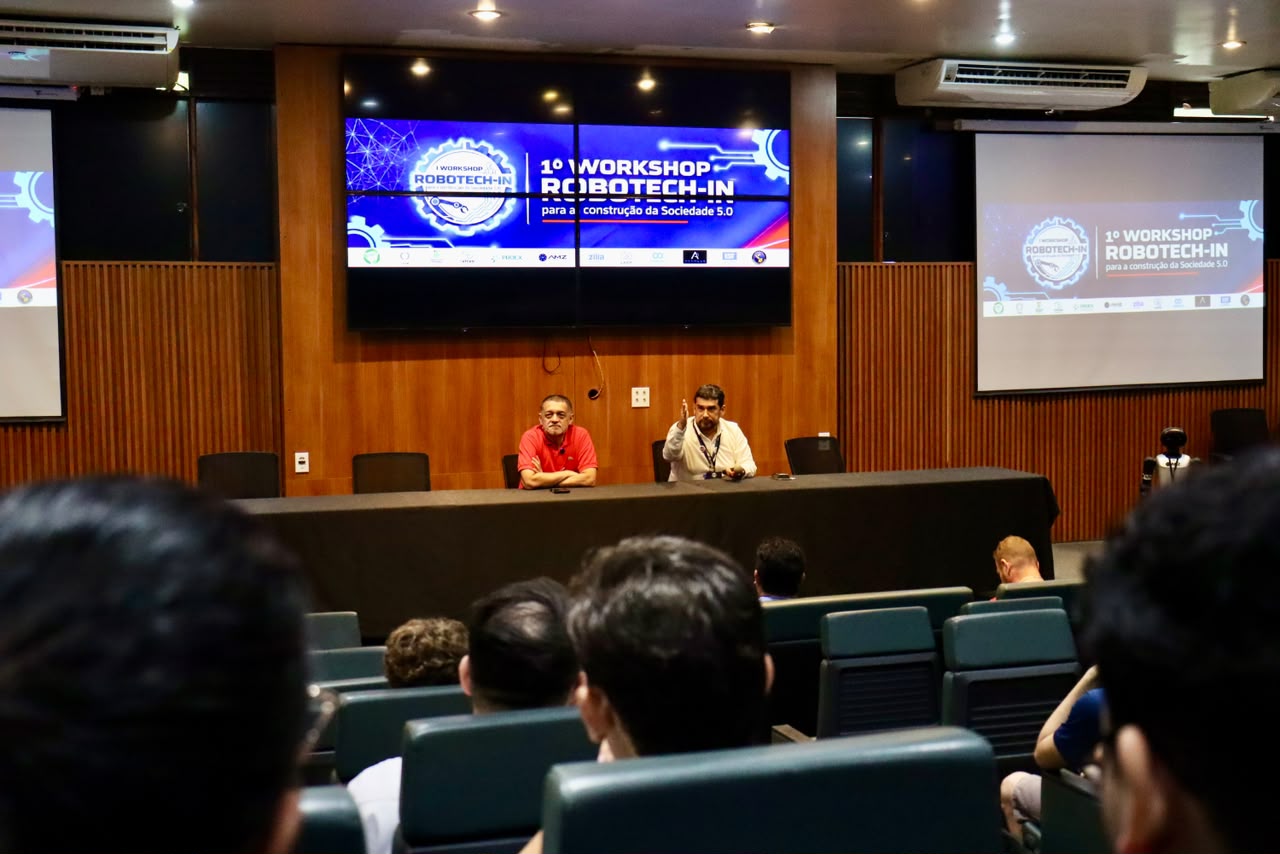
The company’s timeline calls for the laboratory to open in January 2027. The university unit has already received the prototype, which will be incorporated into its research activities. Scientific work, therefore, began with the public presentation and university agreement, while commercial mass production remains scheduled for the following year.
The 19.5-kilogram robot will have sensors, a chest-mounted tablet and programming tools for students
The AMZ S1 was designed for educational settings. Its published spec sheet lists a weight of 19.5 kilograms and 22 degrees of freedom to control movements of its limbs and head. The planned configuration includes a depth camera, a nine-axis inertial sensor, autonomous navigation, audio, and Wi-Fi 6, Bluetooth 5.2 and Ethernet connectivity.
The proposed setup uses two removable 48-volt batteries, each with an estimated runtime of one hour and 20 minutes. For computing, the company describes a Linux-based computer with Nvidia technology, as well as the ability to run smaller language models locally. The combination is expected to enable voice interactions and classroom activities without requiring a constant internet connection.
In robotics classes, students will be able to use block-based programming and, at more advanced levels, work with Python and ROS 2. Another feature under development is intended to track aspects of reading aloud, such as pace and intonation, to help teachers monitor students’ progress. These are planned product features, not results from large-scale educational trials.
Project includes pictogram communication for autistic students and targets public and private schools
The company is also developing a pictogram system on a tablet for autistic students who use visual communication. The tool, which is being tested, is expected to let users select messages related to everyday needs. Autistas Brasil is taking part in its validation, while ConsulTEA is providing specialized consulting, the founder said.
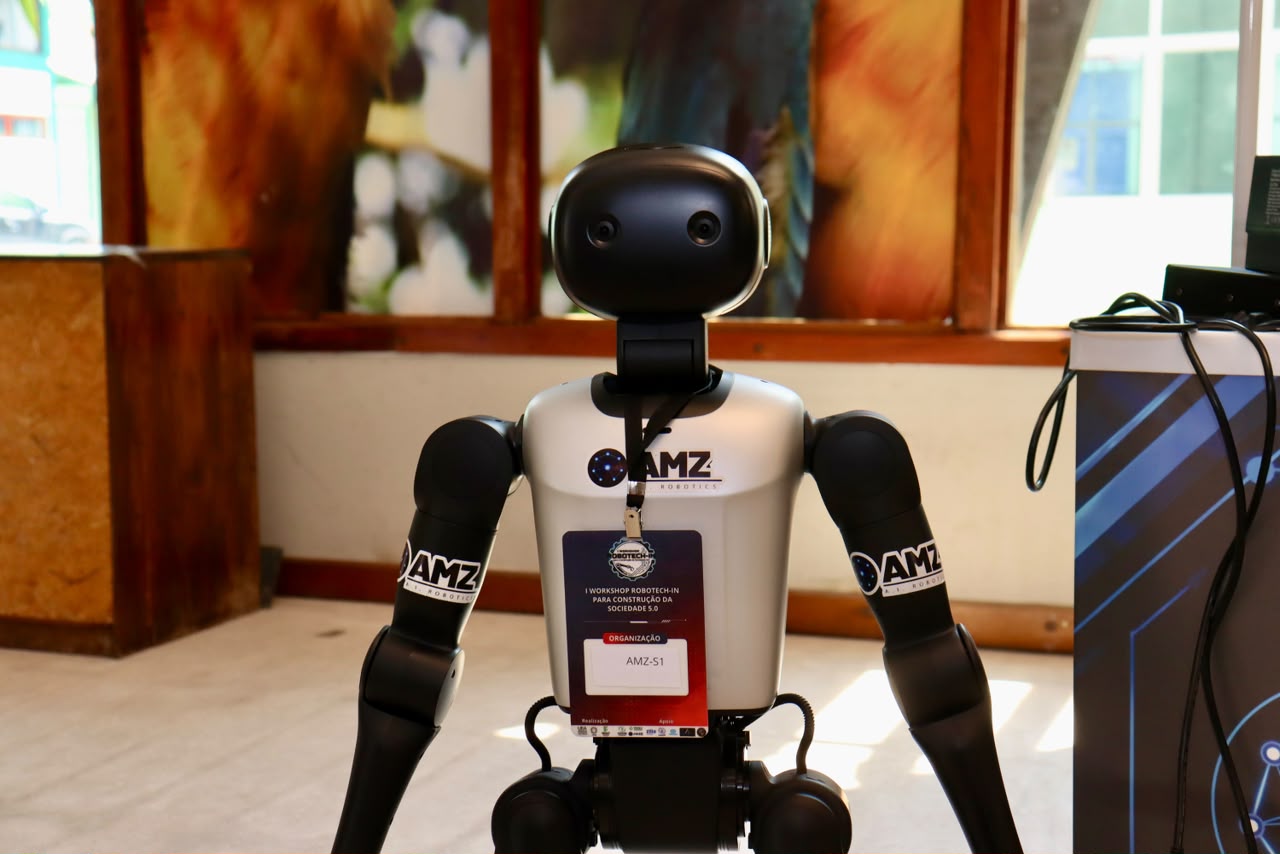
The prototype has already been presented at Chai School in Rio de Janeiro and at UEA in Manaus. This gives the team a chance to observe real-world needs in educational settings before commercialization. The initiative still needs to turn its prototypes and features into a finished product, with support, maintenance and integration into schools’ routines.
The estimated sale price for each unit is R$78,000, based on an exchange rate of R$5.50 per U.S. dollar. The company is considering additional cloud computing and support services at R$3,800 per month per school, as well as a subscription plan costing R$6,900 a month under a 24-month contract. These terms are still part of the commercial proposal and could change before launch.
Company targets 200 robots in 2027 but says it needs 400 a year to break even
The first-year target is to produce 200 robots and sell 160. The remaining 40 units would be used for demonstrations. For 2028, the company projects production of 1,000 units and sales of 900, a sharp increase that will depend on investment, suppliers, contracts with educational institutions and the new production line’s actual capacity.
Giraldez estimates that the operation would need to sell or produce about 400 units a year to break even. The founder is also considering seeking new investment in 2028 if demand warrants expanding production. Commercial revenue could begin in late 2027 or in 2028, according to the company’s published plans.
The expected July 2027 deliveries mark the project’s next test: turning a university presentation and a manufacturing plan into regular production. The opening depends on adapting the property, purchasing components, installing systems and completing testing. Schools will still need to assess the investment, the support offered and the equipment’s educational role.
The proposal puts educational robotics manufacturing at the center of the debate over technology produced in Amazonas. Can humanoid robots help teachers in Brazilian schools, or does cost still limit this market? Opinions can be shared in the comments, and the story can be shared with others following the domestic industry.