Portuguese
 Spanish


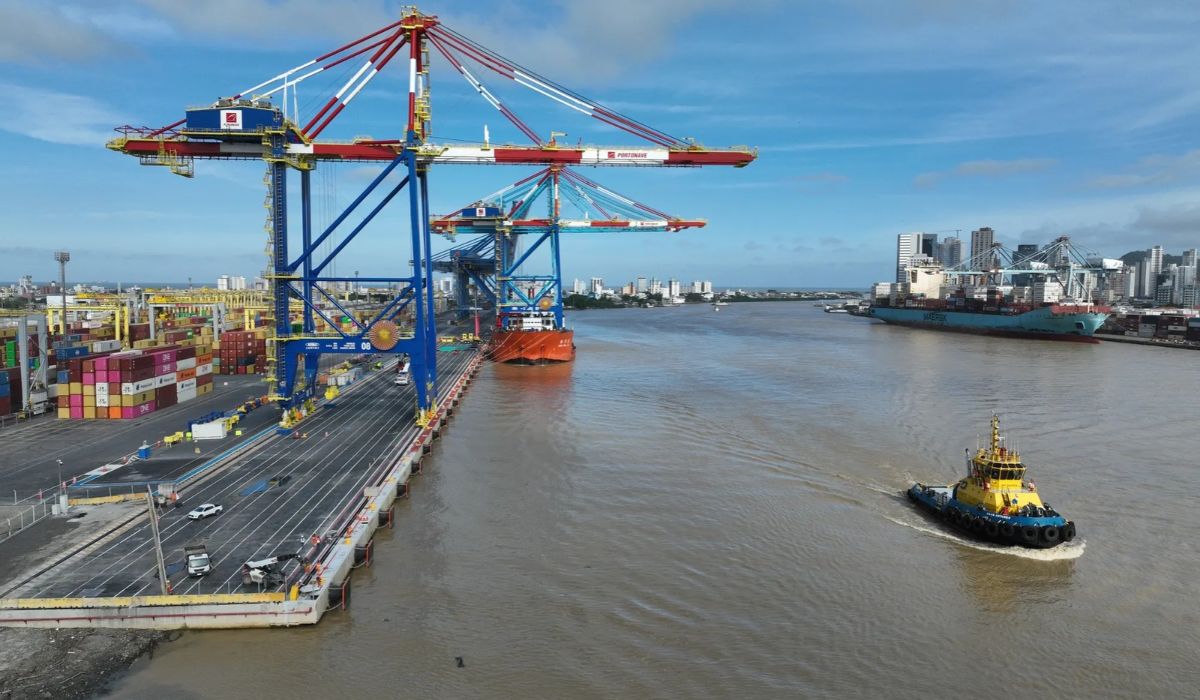

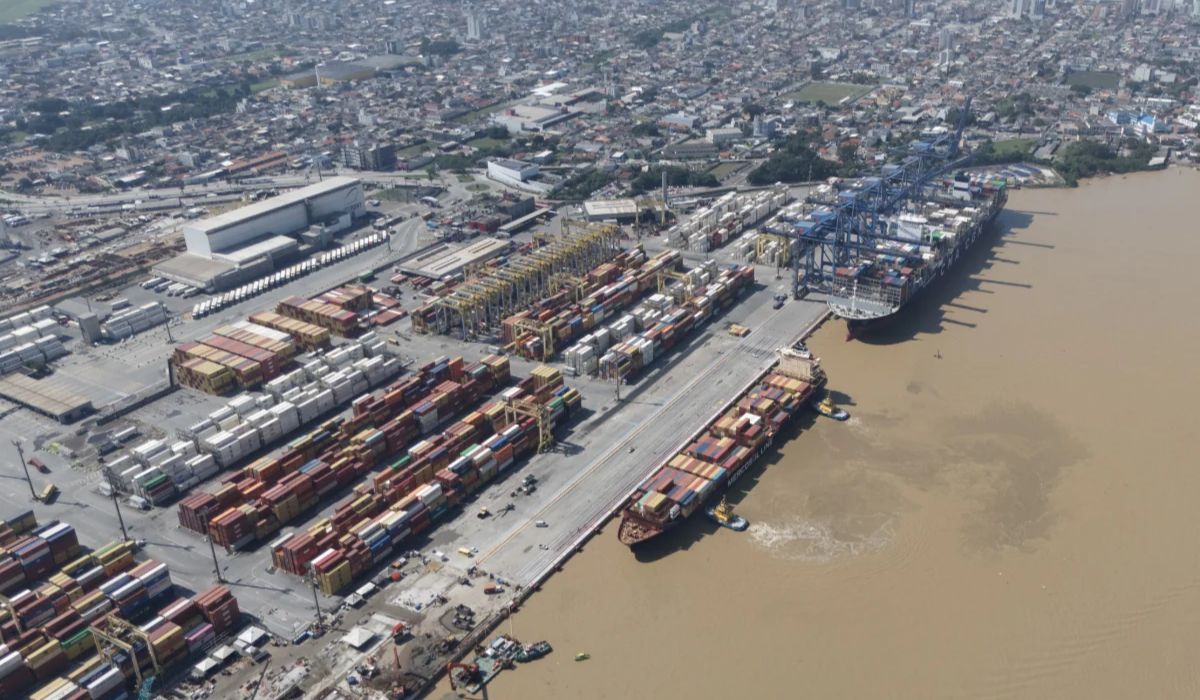
Navegantes Port Terminal in Santa Catarina, southern Brazil, completed a complex engineering project with foundations up to 60 meters deep, keeping cargo moving while preparing its infrastructure for the world’s largest container ships.
For nearly three years, container ships shared space with excavators, cranes and construction workers at Navegantes Port Terminal in Santa Catarina, southern Brazil. The mission was to rebuild the entire length of the quay without interrupting operations at one of Brazil’s main container terminals.
With an investment of approximately R$1.5 billion, Portonave completed the modernization of its 900 meters of quay, preparing the structure to receive vessels up to 400 meters long.
The project’s completion was confirmed on November 20, 2026, by Belgian construction company BESIX, which also helped build the Burj Khalifa in Dubai.
-
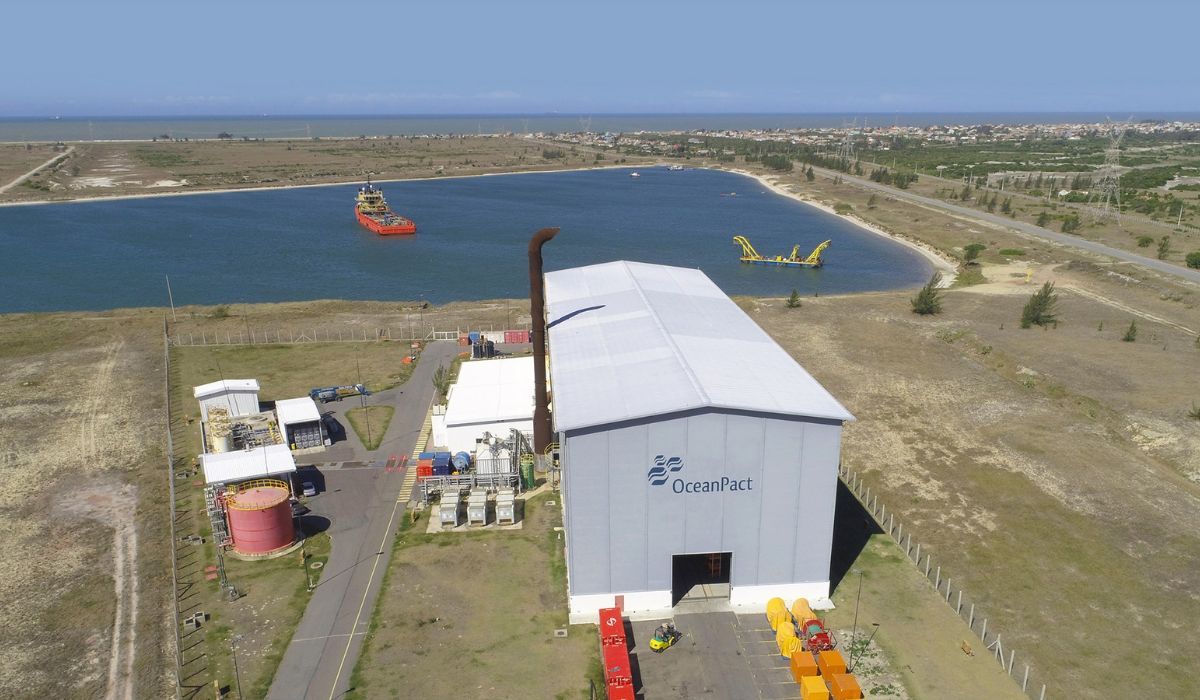
OceanPact secures up to R$198 million in BNDES financing for ship repair yard expansion at Port of Açu

-
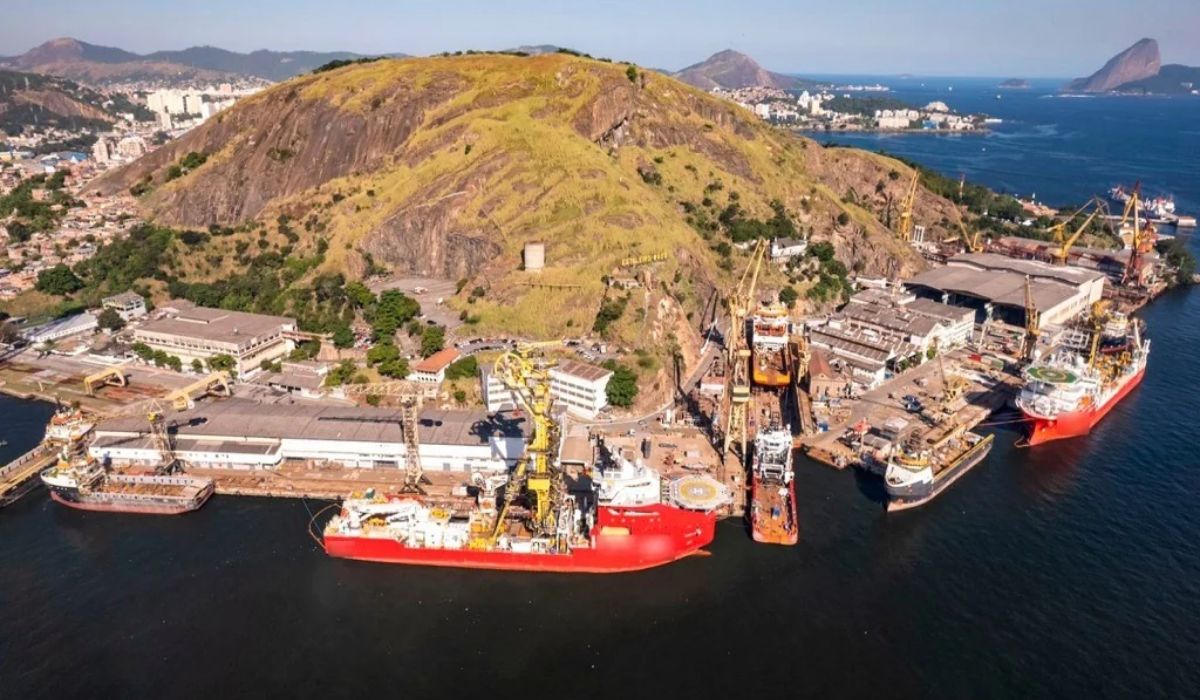
With 180 Years of History and a 180,000-Square-Meter Industrial Site, Mauá Shipyard Upgrades Facilities and Targets New Shipbuilding Contracts in Brazil
-
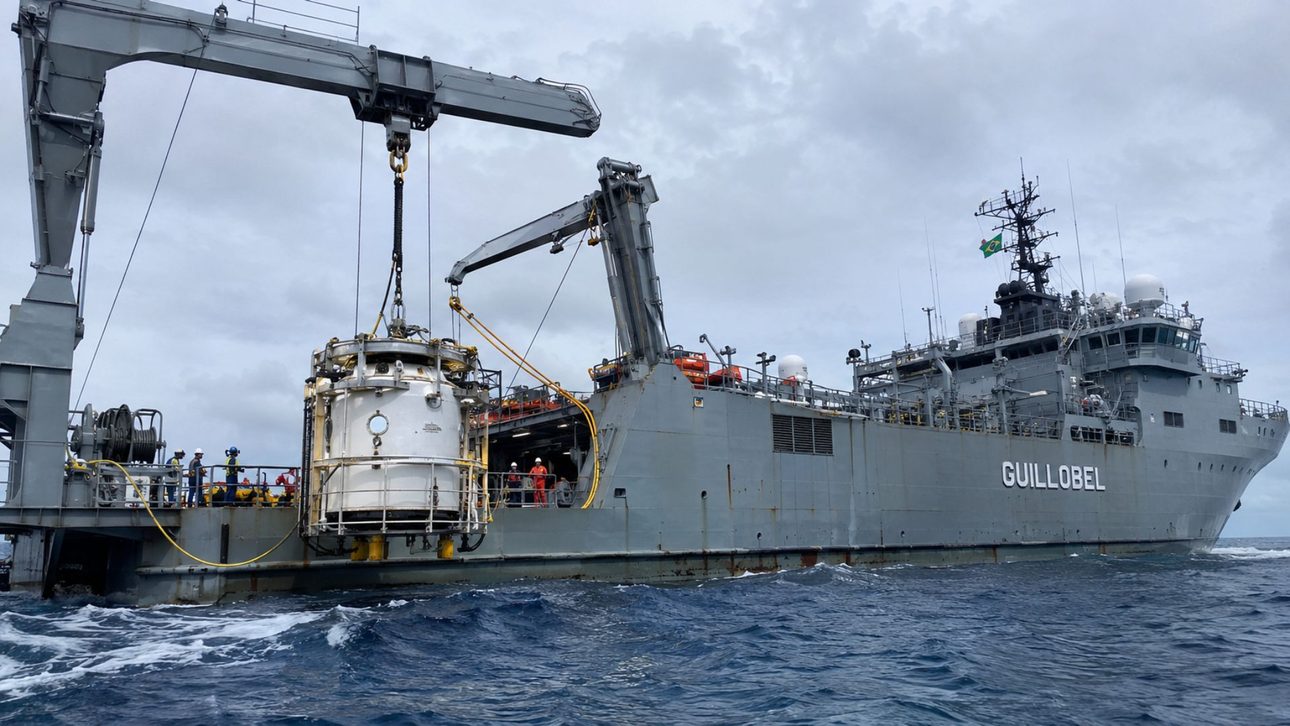
Guillobel drill: Diving bell descends to 160 meters and diver reaches 170 as Brazilian Navy ship tests pressurized chambers for rescue operations

-
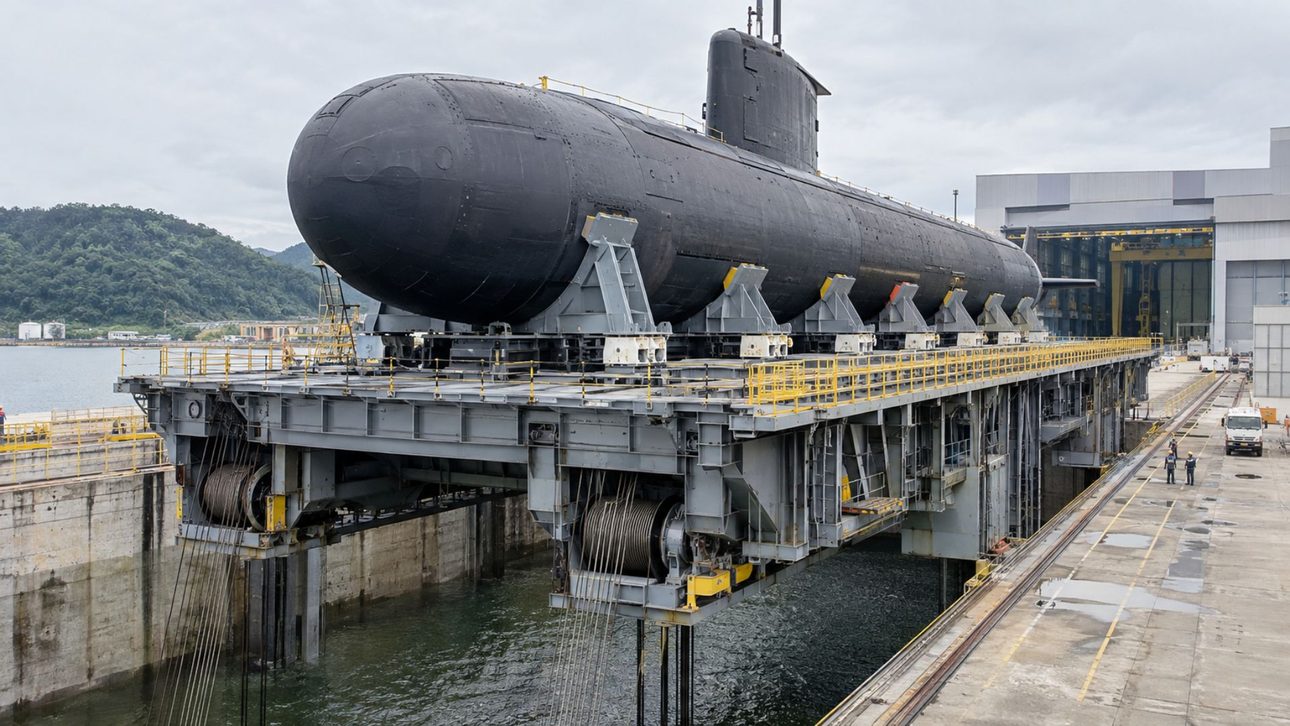
At Itaguaí, a platform lowers beneath a vessel and steel cables raise it to the yard on a shiplift designed for 8,000 tons
The challenge was not simply the scale of the project. Unlike the construction of a new terminal, the entire project took place on the same site occupied by the previous infrastructure, amid ongoing port operations.
How Portonave rebuilt the quay without closing the terminal
To keep cargo loading and unloading underway during construction, engineers divided the 900-meter quay into two 450-meter sections.
While work was underway on one half, the other continued to receive ships.
Permanent construction began in January 2024. Before demolishing the old structures, the ground had to be stabilized with rockfill, a technique that uses large blocks of rock to reinforce the area.
Foundation equipment was brought in next.
With Franki Foundations, a BESIX Group specialist in deep foundations, bored piles were installed, reaching 60 meters below ground level.
These elements help distribute the loads on the quay, which must support both the weight of container-handling equipment and the forces associated with ships docking.
Safety also required special attention because construction sites were close to operating areas. BESIX said the project logged nine million work hours without a serious incident.


Six cranes were moved in just two days
One of the most delicate stages of the work took place in October 2025, when the first 450 meters of the renovated quay were completed.
To clear the area designated for the second phase, six large port cranes had to be moved to the newly built section. The operation was completed in just two days, according to the construction company.
Although the terminal remained open during construction, it had to temporarily reduce its berthing capacity.
On August 18, 2026, the completion of another 250 meters brought the new quay’s operational length to 700 meters. That day, the ships CMA CGM Thorium and Mercosul Suape resumed simultaneous operations at the terminal.
With the work complete, Portonave is once again equipped to serve up to three vessels at the same time.
Cargo volumes also increased during the project. From January through August 2026, 868,427 TEUs passed through the terminal, 23% more than in the same period a year earlier.
New cranes and capacity for 2 million TEUs
The quay reconstruction is part of a broader modernization program, with more than R$2 billion invested in infrastructure and equipment.
On November 14, Portonave received two new electric cranes manufactured by China’s ZPMC and purchased for R$229 million.
Standing 55 meters tall and capable of lifting loads of up to 100 metric tons, the cranes were designed to reach containers stowed aboard large vessels.
The terminal said it expects to put both cranes into operation by December 31, after the necessary tests and training are completed.
At the end of the modernization program, Portonave’s annual capacity is expected to rise from 1.5 million to 2 million TEUs, an increase of about 33%.
Each TEU represents the capacity of one standard 20-foot container.
The new quay was also designed to accommodate a future shore power system, which would supply electricity to berthed vessels and allow them to shut down the auxiliary engines used to generate power while at the terminal.
400-meter ships still depend on work on the access channel
Although the quay infrastructure is ready, another challenge lies beyond Portonave’s boundaries.
The arrival of large container ships depends on upgrades to the access channel serving the Itajaí and Navegantes port complex and to the turning basin, where vessels maneuver.
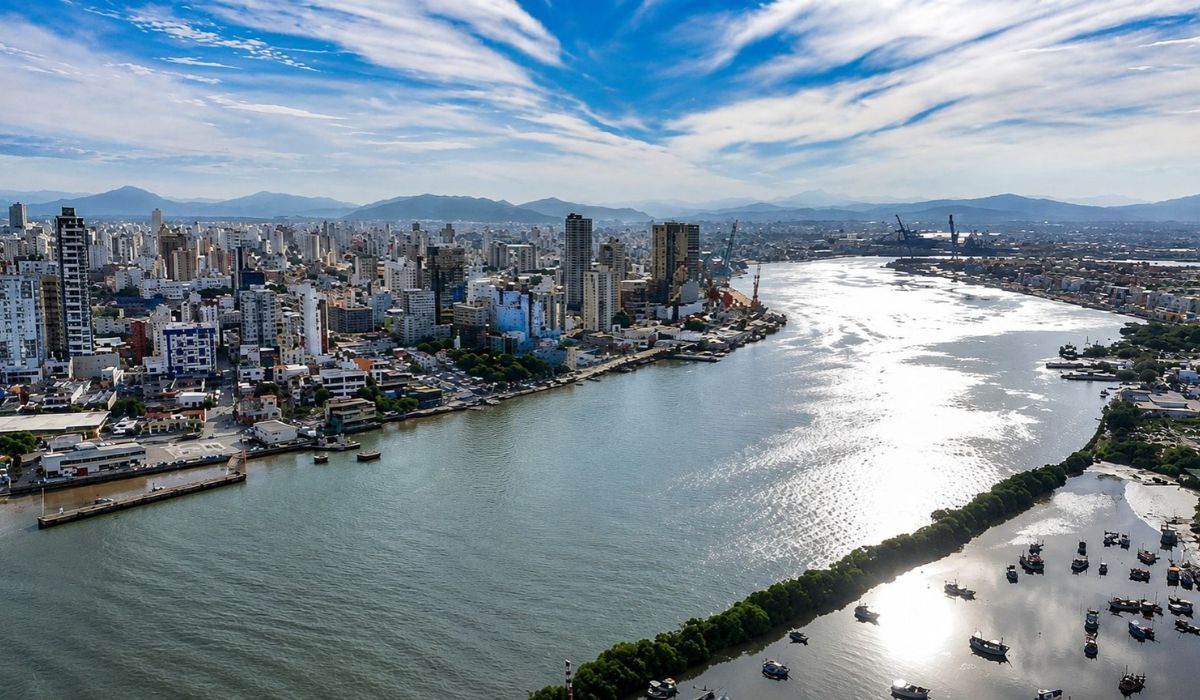
The channel concession project calls for work including deepening the channel and removing rock formations that hinder navigation.
However, on November 12, 2026, a vote on the proposal at Brazil’s National Waterway Transportation Agency (Antaq) was taken off the agenda at the request of the Ministry of Ports and Airports, which sought additional reviews of the dredging studies.
Under the plan presented by the federal government in June, the initial work is expected to allow ships up to 366 meters long to operate.
Beginning in the fourth year of the future concession, upgrades are planned to accommodate vessels 400 meters long, the size of the largest container ships operating in international maritime trade.