Portuguese
 Spanish




Brazilian company Wings created a digital vehicle passport that analyzes up to 24 months of rental-car use, compiles engine, driving and maintenance data, and assigns scores from 0 to 100. Here’s how the rating works before resale.
Two rental cars can enter the used-car market with the same model, model year and mileage, yet have very different histories of use. A technology developed by Brazilian company Wings aims to reveal some of those differences: a digital vehicle passport that compiles up to 24 months of usage data and rates each car’s operating condition.
Announced in November 2026, the solution is part of the VAI platform and combines data from the vehicle’s electronic system, driving patterns and maintenance records. The project was publicly confirmed by Felipe Serra, a partner at Wings, who described it as a way to assess a car’s actual history, not just its appearance on the lot.
Device connected to the car records far more than mileage
The monitoring system uses telematics devices linked to the car’s electronic diagnostics, including data gathered through the OBD2 connection. This type of equipment can track information that does not appear on the odometer, such as electronic alerts, operating conditions and driving characteristics.
-
Coach maker chief François Tremblay says Prevost’s first electric motorcoach, the 52-seat H3-45 Electric with 459 kWh of usable battery and up to 400 km of range, will sell for just under $1.5 million against about $900,000 for a diesel

-
GWM confirms R$149,990 ORA 5 BEV45 for Brazil, with a 45.3-kWh battery and 177 hp; new electric version arrives in January

-
Brazil’s tire industry sells more than 3 million fewer tires in 2026 as volume falls 10.4% to its lowest level since 2019

-
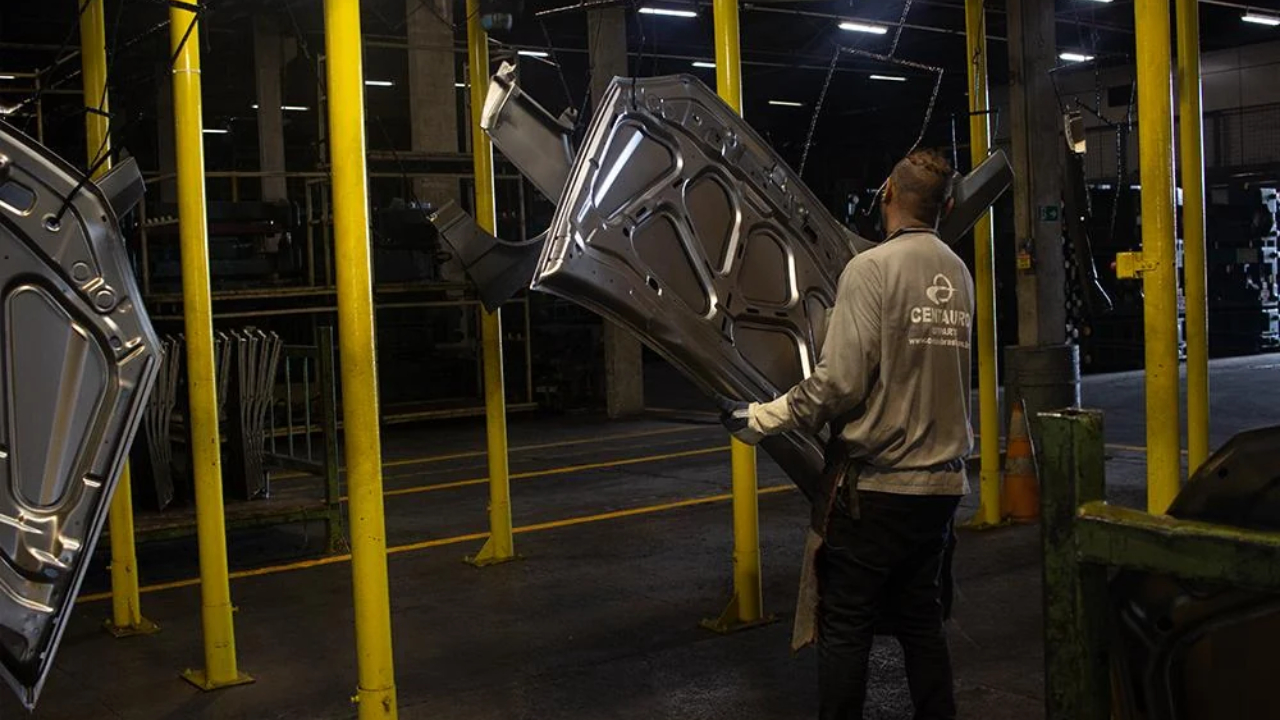
Manufacturer invests R$25 million in Guarulhos, modernizes plant and adopts anticorrosion coating for hoods on the Onix, HB20, Strada and Polo



The indicators include engine operating temperature, recorded faults, intensity of use, operating periods and driving-related events. The system also uses maintenance records and data available from sensors and the onboard computer to build the vehicle’s history.
The developer says the methodology was built using a database of more than 100,000 monitored vehicles. The data can cover up to 24 months, depending on how long each car was connected and whether operating records are available.
A used car monitored for only a short time will have a shorter observation window. The passport reflects the information actually captured during monitoring; it does not automatically reconstruct every year of the car’s history before it was connected.
Six criteria turn a car’s history into a score from 0 to 100
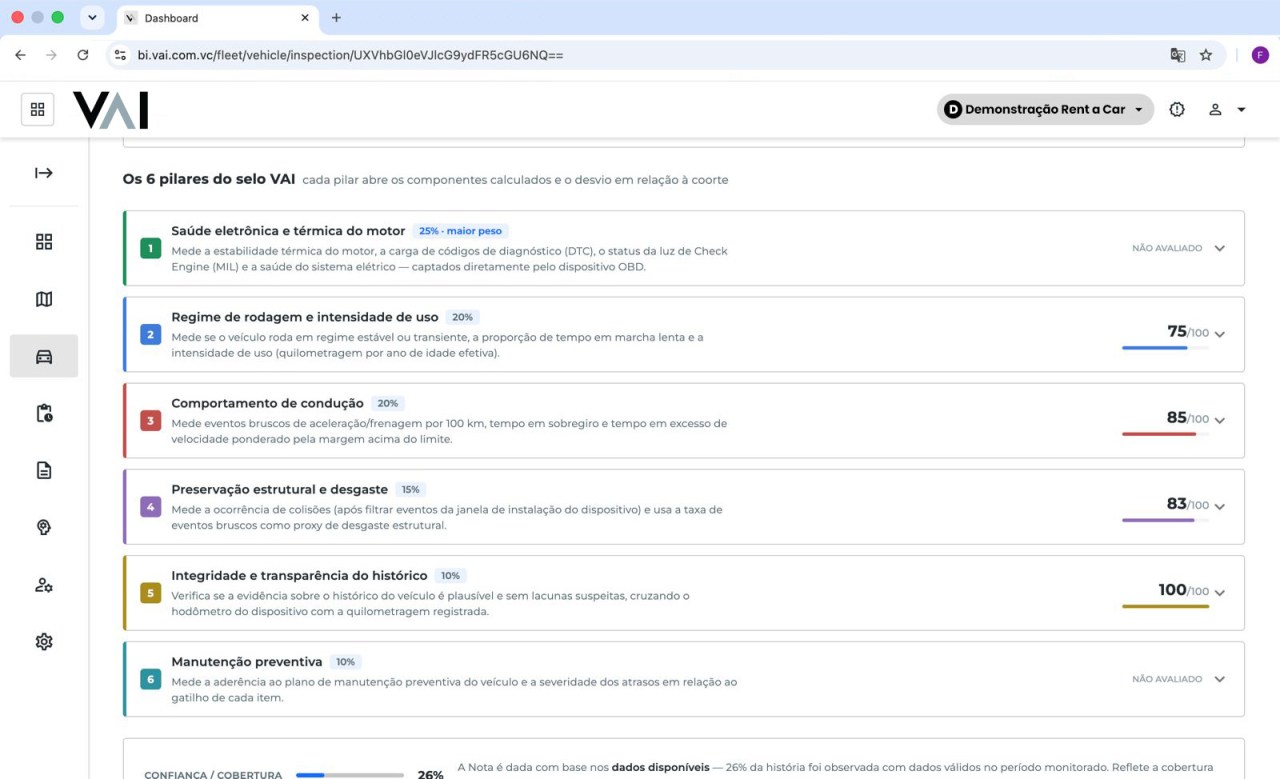
The VAI Vehicle Rating System combines its findings across six dimensions. The first assesses the engine’s electronic and thermal health; the second examines driving conditions and intensity of use, including situations that put greater demands on the mechanical system.
The assessment also considers driving behavior, structural condition and signs of wear, the integrity of the available data, and preventive maintenance. The algorithm compares the car’s performance with records for similar vehicles, taking characteristics such as model and year into account.
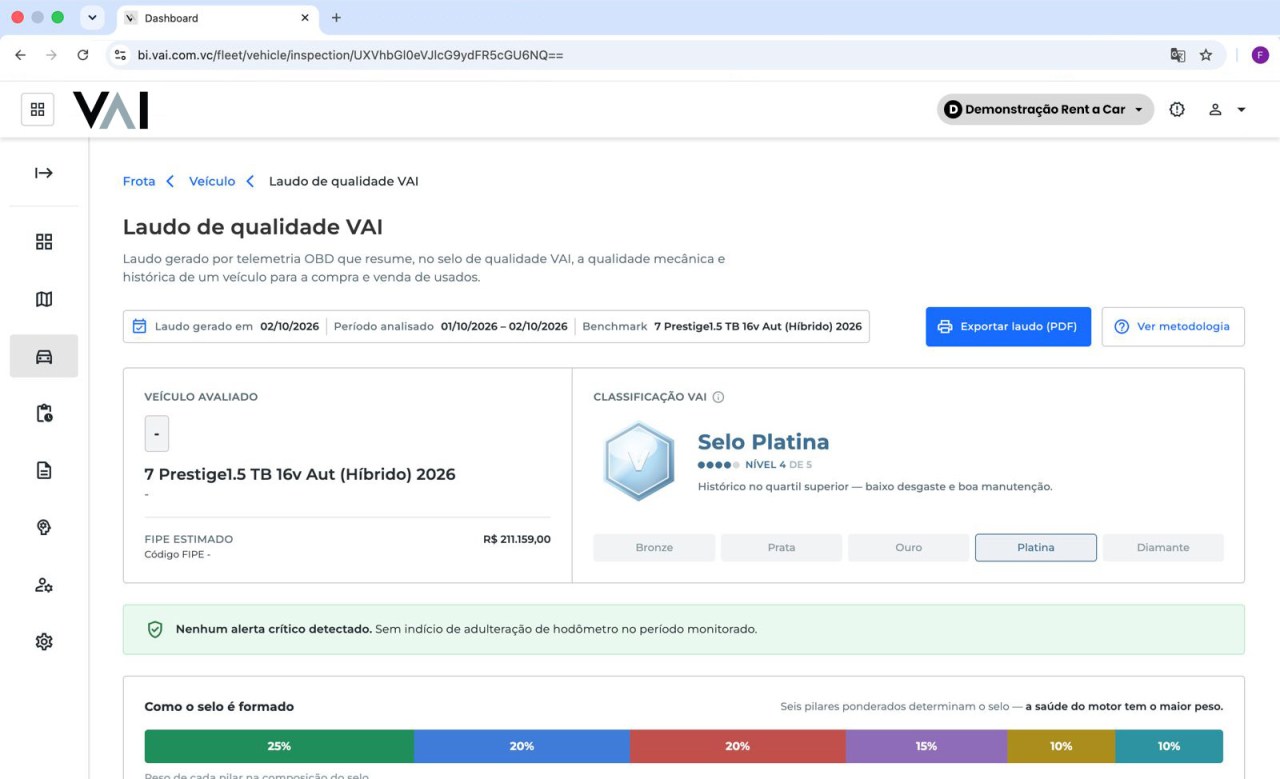
Each car receives a technical score from 0 to 100, which is converted into one of five rating tiers: Bronze, Silver, Gold, Platinum and Diamond. Diamond is the highest category in the company’s methodology.
The score is not an official certification of mechanical condition and does not replace an in-person inspection. Its purpose is to add a layer of historical information to the assessment made when the car is listed for sale.
Passport highlights areas of concern and lets users verify authenticity with a QR code
The VAI Vehicle Passport is the document that organizes the results for review. It shows the overall rating, performance across the six criteria, the monitoring period, and positive aspects or issues that warrant attention before a purchase.
The digital report includes a QR code for authenticity verification. The tool is designed to accompany the car in used-car sales transactions that adopt the service, allowing prospective buyers to review the documented history before closing a deal.
The difference from a conventional pre-purchase inspection report lies in when the data is collected. An inspection examines the vehicle on a specific date; telematics records data throughout its operation, building a record of how it has been used over time.
A low-mileage car may have seen harsher use than another with more miles
In another explanation posted by Felipe Serra himself, the company notes that cars that look alike can have different levels of wear. Their histories reveal details that are not apparent from a price guide, mileage or listing photos.
A vehicle that spends long periods with its engine running while covering little distance may experience a different operating pattern from one that makes regular trips with steady driving. Abnormal temperature events, recurring failures and maintenance records also help distinguish the two cases.
The rating can therefore identify vehicles from the same fleet that reached disposal in different operating conditions. For the rental company, the data can help determine which units to prepare for sale, keep in service longer or send to the resale market.
Service starts with rental companies, not open searches for any license plate
The technology is initially being offered to car rental companies and large fleet operators. The VAI platform describes itself as a telematics solution for managing connected vehicles, with monitoring of usage, maintenance and driver behavior.
The commercial model distinguishes between the basic rating and the issuance of a more detailed report. Documentation released by Wings says reports will be issued to partners, but prices for the full passport have not been made public.
Consumers are expected to find the service at dealerships and rental companies that adopt the system for their monitored vehicles. Issuance requires records accumulated during operation; the product has not been presented as a universal database for searching any car’s history by entering its license plate alone.
Brazilian rental companies bought nearly 629,000 cars in 2025
The potential market is substantial. According to the ABLA 2026 Yearbook, Brazil’s rental sector ended 2025 with 1,717,848 cars and light commercial vehicles in its fleet, up 6.2% from the previous year.
During the same period, companies registered 628,970 new vehicles, equal to 24.6% of the cars and light commercial vehicles sold in the country. Fleet renewal and expansion generated R$79.3 billion in purchases, the association said.
The average age of rental cars fell from 17.5 to 16.4 months in 2025. Because companies regularly replace some of their vehicles, used car resale has become an important way to turn fleet vehicles into funds for new purchases.
Data may affect prices, but inspections are still necessary
Wings also plans to use the system to support pricing and help determine the best sales channel for each car. A consistent maintenance history and less demanding driving may help distinguish vehicles that, without this information, would be listed based only on model year, trim and mileage.
The passport, however, depends on the quality and continuity of the recorded data. The technical rating does not replace an assessment of the body, paperwork, tires, brakes and other components that require a direct inspection, nor does it guarantee that no defects will emerge in the future.
The company has said it expects to gradually expand passport issuance as rental companies incorporate the rating into used car sales. For buyers, the change could add information that was previously difficult to obtain: how the car was used while it was part of a monitored fleet.